
Overbite and underbite in dogs
Overbite and underbite are serious defects in dogs. Malocclusion can be treated with braces and mouth guards. The correct treatment strategy is determined after a diagnosis, which is performed under anesthesia. Fixed appliances are individually selected, and precise impressions of the jaws and dentition are taken for mouth guards.
Content
Types of malocclusion in dogs
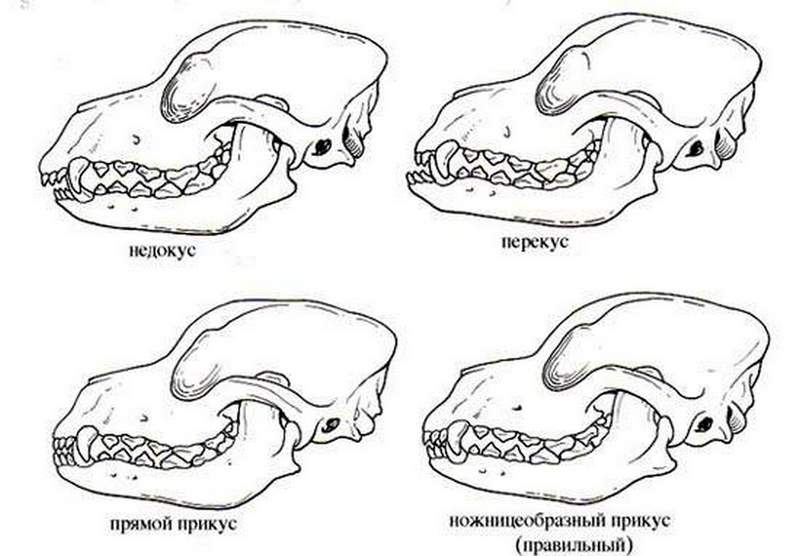
Occlusion is the position of the jaws when they are closed with maximum contact between the teeth. There are five main types:
- A scissor bite is when the lower jaw is subtended by the upper jaw. This position is correct, comfortable for grasping and chewing food without damaging the gum tissue or teeth. A scissor bite, which ensures a strong grip, is especially important for working dogs.
- A straight or pincer bite is present in most breeds. A bite position where the upper and lower incisors touch is also considered the correct bite for dogs, but it can lead to rapid wear of the canines.
- An underbite is a pathology in which the canines are pressed tightly together, and the upper and lower incisors do not fully close.
- An underbite is characterized by a forward-projecting lower jaw with exposed incisors and sometimes canines.
- Crooked jaw is rare and is considered a serious problem in which one side of the jaw grows too quickly.
An undershot bite with protruding teeth, as in the photo, is the standard for dogs with short muzzles: pugs, Shih Tzus, and bulldogs. An undershot bite in a Chihuahua, Yorkie, Pomeranian, German Shepherd, or any other breed is always a fault that must be corrected.
Causes and consequences of incorrect closure
There are several factors that can lead to a dog's bite defect:
- congenital genetic disorder;
- violation of the order of replacement of milk teeth by permanent teeth;
- jaw injury;
- insufficient mineral content in the diet;
- incorrect load on teeth during their growth period;
- development problems.
Unhealthy occlusion affects a dog's overall health. Common consequences include:
- difficulty chewing food;
- trauma to the tongue, gums and mucous membranes of the cheeks;
- accumulation of tartar at the base of the teeth, in the interdental spaces;
- development of chronic infections in the oral cavity, sinusitis.
Lack of treatment threatens problems with the respiratory, cardiovascular and gastrointestinal systems.
In most cases, the defect is genetic. Therefore, even after the bite has been corrected and the occlusion appears normal, the dog is not allowed to participate in shows.
How to treat the defect
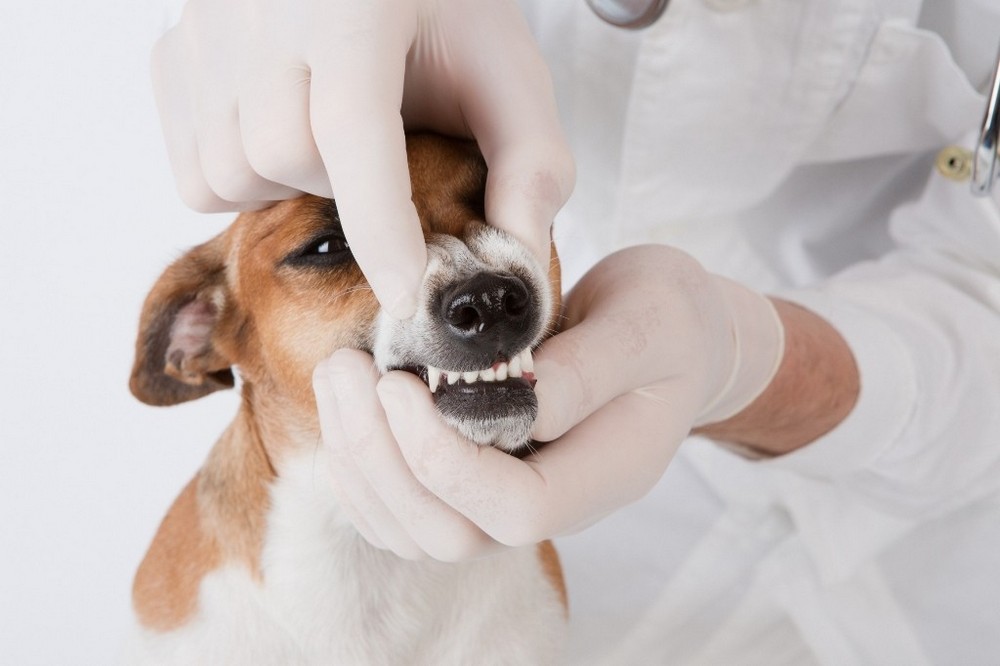
Correction of malocclusion is performed using fixed and removable appliances borrowed from human orthodontics. Each appliance is installed by a veterinary dentist after diagnosis.
Removable clear aligners
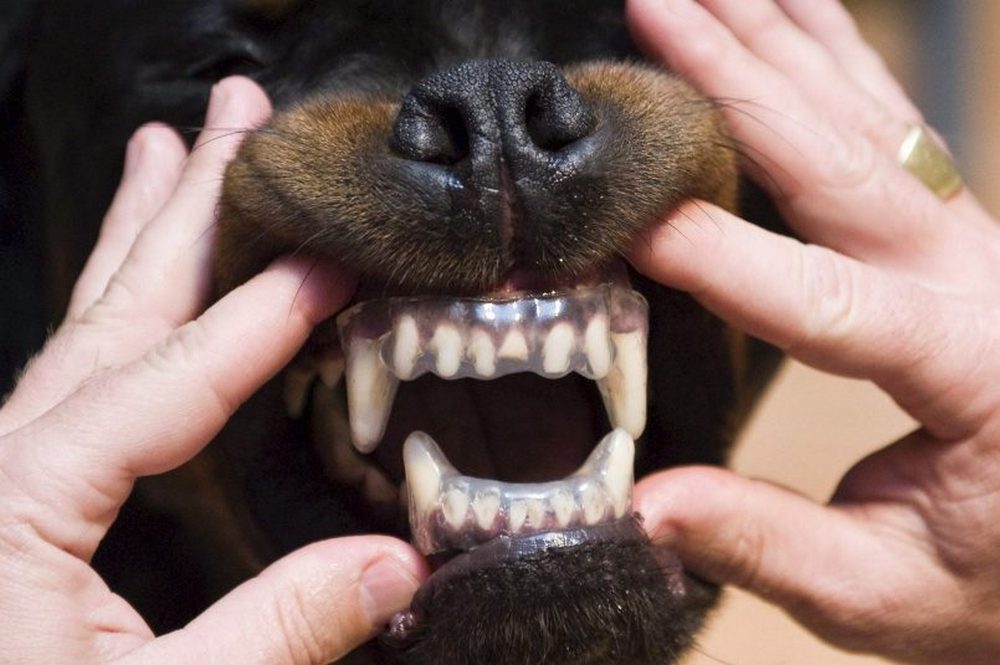
Invisible braces are made of acrylic using an exact impression taken of the jaw. Features of the aligners:
- The device is removed during meals and hygiene procedures.
- The impressions are taken under anesthesia.
- The aligners fit tightly to the teeth, correcting their position by applying pressure in the right direction.
Dental technicians prepare several trays at once, each with a 1-2 mm difference in occlusion. They are used sequentially during therapy, replacing the outdated model every 1-2 weeks. The teeth shift gradually, causing no significant discomfort to the pet. The trays must be rinsed and cleaned daily.
A simplified and inexpensive removable mouth guard, used for small puppies, is a rubber ring. This device should only be used on the recommendation of a veterinarian. Attempting to correct the defect on your own may have the opposite effect.
Braces
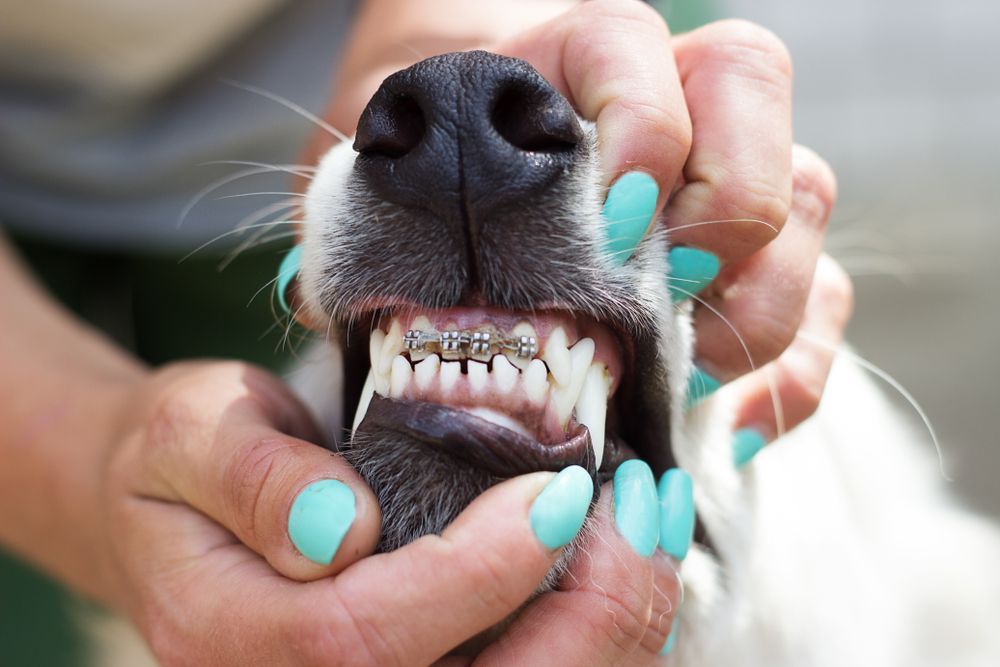
A removable, turn-key device that is installed for the entire period required to treat the defect. Periodic adjustments to the position of the plates, including adjustable tilt and pressure on each section, allow for quick correction of the dental arch. The device consists of wire and clasps and is attached to the teeth with a special adhesive. The clasps or brackets adhere securely to the teeth, and the wire can be adjusted to provide the optimal diameter for increasing or decreasing pressure.
Contraindications to installing braces:
- periodontitis;
- ulcerative stomatitis;
- oncology;
- allergy.
After braces are installed, owners should be careful when playing with their pet to avoid damaging the braces. Avoid giving the dog hard food or bones. Food debris should be cleaned daily to prevent cavities and tartar buildup under the braces.
Prevention of malocclusion
Correcting a dental malocclusion can be done within a year. Once primary molars are replaced by permanent teeth, treatment becomes more difficult. To prevent a malocclusion caused by external, rather than genetic, factors, it's sufficient to follow preventative measures:
- Choose food appropriate for your pet's age, ensuring it contains sufficient calcium, trace elements, and D3. Choosing the right option is easy, based on the manufacturer's description, veterinarian advice, and consumer reviews. When feeding a natural diet, it's essential to supplement with vitamins and minerals.
- On the advice of a doctor, give your baby cartilage and hard toys to chew on, which will help ensure the timely replacement of baby teeth with permanent ones.
- Visit your veterinarian regularly to have your bite checked.
If a dog is diagnosed with an incorrect bite, it is not suitable for show or breeding. Therefore, bite correction should only be considered if the defect is serious and poses a health risk. Minor deviations from the norm can be ignored—they won't diminish your love for your pet.
Read also:
- White and Pale Gums in Dogs: Causes and Treatment
- Periodontal disease in dogs: symptoms and treatment
- Inflammation of the salivary glands in dogs: symptoms and treatment


Add a comment