
Can coronavirus be transmitted from dogs and cats to humans?
Viral diseases are dangerous because, while highly contagious, many are anthropozoonotic, meaning they are common to humans and animals. One such infectious agent is the COVID-19 coronavirus, which caused a pandemic in late 2019—the global spread of a severe, potentially life-threatening disease. Consequently, many pet owners are concerned about whether the coronavirus can be transmitted from cats or dogs to humans, and whether someone infected with it can become infected. a person can infect their pet.
Content
Coronaviruses and their types
Viruses are microscopic parasitic organisms that can survive and reproduce only by invading living cells. The body of an RNA virus (virion) ranges in size from 20 to 300 nm and consists of a nucleic acid core and a protein shell (capsid). Viruses are highly unstable outside the host organism: they quickly die at temperatures above 56°C and are instantly destroyed by virtually any disinfectant.
Coronaviruses (Orthocoronavirinae), members of the virus family, are named for the unique structure of their capsid, which resembles a crown. Currently, approximately 40 species of Orthocoronavirinae are known, capable of causing diseases in humans, ranging from numerous forms of influenza to acute respiratory syndrome and atypical pneumonia. The main routes of viral transmission are airborne droplets and direct contact, from person to person.
On the likelihood of COVID-19 infection in humans from pets
Most coronaviruses are specific: some affect only humans, others only cats, or only dogs. Canine and feline coronaviruses generally pose no danger to humans.
However, in some cases, when a virus migrates from one mammalian species to another, the microorganism undergoes a mutation, allowing it to survive in the new environment. For example, the consumption of chicken and pork gave rise to the "human" pathogens of bird and swine flu.
The leading theory is that COVID-19 crossed over to humans from bats or a specific species of lizard called pangolins. It is believed that the Wuhan coronavirus is capable of extremely rapid mutation, thus infecting new species. This virus is still poorly understood, and information about it changes almost daily. While just a month ago, scientists claimed that cats and dogs were immune to COVID-19, today, cases of animals being infected by humans have already been recorded.

For example, at New York's Bronx Zoo, the tigress Nadia tested positive for COVID-19 using the most accurate PCR (polymerase chain reaction) diagnostic method conducted by the National Veterinary Service. It is believed that the tigress contracted the virus from an asymptomatic employee.
COVID-19 was also detected in a cat in Belgium, suffering from diarrhea and respiratory problems. The cat's owner had developed symptoms a week earlier, and she had infected the cat.
Two dogs in China also contracted the virus from their owners. An elderly Pomeranian tested positive for COVID-19; the dog's owner had previously been hospitalized due to the virus. The owner recovered and returned home, but the dog did not survive. A German Shepherd in Hong Kong was also diagnosed with COVID-19. The dog showed no symptoms of the disease, and the test was performed due to its owner's illness.
Many reputable scientists agree that the detection of low concentrations of COVID-19 RNA fragments in domestic animals does not provide convincing evidence of infection. It is possible that the sample being tested was contaminated from outside sources, or that a false-positive result was the cause. Furthermore, all of the described cases involved transmission from humans to dogs or cats, not infection from animals to humans.
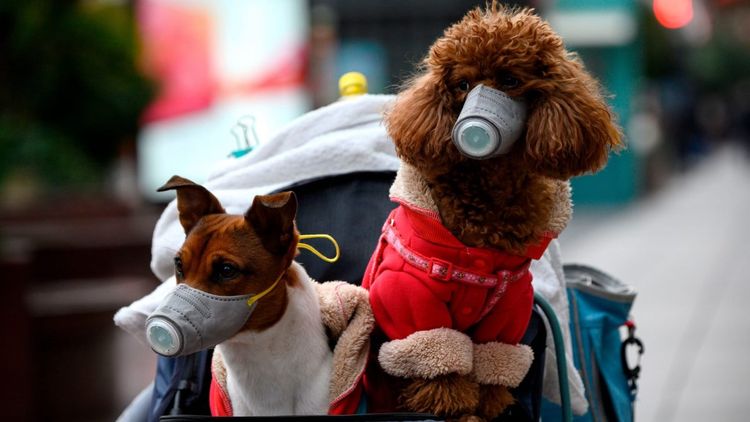
The research is categorical:
-
There are no documented cases of transmission of the virus from animals to humans in the domestic environment.
-
The CDC and WHO confirm that the risk of transmission from dogs and cats to humans is extremely low.
-
Contact with wool and licking is safe; the virus dies quite quickly from the external environment.
So, can a cat infect a person with coronavirus? Again, no. There's no evidence for either cats or dogs.
There's no need to cause unnecessary panic—pets rarely get COVID-19 and are not a source of infection.
Why this happens (and doesn't happen)
Coronavirus is species-specific:
-
The human virus (SARS-CoV-2) differs from the coronaviruses of domestic dogs and cats.
-
Animal-to-human transmission requires adaptation, but it did not happen.
-
The only cases of animal infection are human → animal.
Risk for owners
| Question | Answer |
|---|---|
| Can a dog infect a person with coronavirus? | No evidence |
| Can a cat infect a person with coronavirus? | Also not confirmed |
| Can a person infect a dog/cat? | Yes, but rarely and asymptomatically |
| Can you get coronavirus from wool? | No, the virus quickly loses activity. |
This table summarizes the current picture: the risk from pets is minimal.
Why mention pets then?
-
Some owners are wondering: Is it possible to become infected with coronavirus at home?
No. The domestic type of coronavirus is not transmitted to humans. -
However, during the COVID-19 pandemic, pets can become temporary carriers if the owner is sick.
-
Their fur may contain the virus, especially immediately after contact. However, this risk is insufficient to consider pets a source of infection.
Official statement from the World Health Organization:
To date, there is no evidence that pets transmit coronavirus, and there have been no recorded cases of companion animals transmitting COVID-19.
Precautionary measures
Due to the highly contagious nature of the COVID-19 virus, special measures have been introduced in almost every country to protect the population from the disease. In addition to the generally accepted quarantine requirements in such cases—avoiding unnecessary leave of home, working remotely if possible, and wearing protective masks—pet owners should consider adding a few additional recommendations:
- limit the time spent on daily walks with animals;
- After returning from a walk, wash your hands thoroughly and treat your dog’s paws using detergents;
- When going for a walk, dogs can wear disposable socks, which can be made from thin fabric or non-woven fiber (spunbond);
- carefully maintain cleanliness in the premises where pets are kept;
- Treat animal trays and bowls with disinfectant solutions more often than usual.
What to do if the owner is ill
Recommendations from the CDC, Mayer Clinic, and UCSF include the following measures:
-
Isolate yourself by limiting contact with your pet.
-
No hugging, no licking of face.
-
Monitor your pet for symptoms (cough, lethargy).
-
If your pet is healthy, leave it at home with another healthy family member.
-
Maintain hygiene: wash your hands after contact.
During the COVID-19 epidemic, pet cats and dogs should not be allowed to roam freely. The virus can be transferred to the animal's fur or skin, and then, through contact, to human mucous membranes.
Read also:
- Giardiasis in dogs: symptoms and treatment
- Parvovirus enteritis in dogs
- Small Dog Stairs: Which One to Choose?


Add a comment