
Dog diapers: how to train
With the arrival of a small puppy, owners can expect significant changes to their lifestyle. If you're not a breeder and are new to owning a dog, you'll have to navigate many issues, one of the most pressing being how to housetrain your dog. This is especially important for owners of toy and toy breeds.
Content
Which diapers to choose: reusable or disposable
It's easy to get overwhelmed at a pet store with the vast selection of dog pads from different brands and manufacturers. Depending on the material and durability, they are categorized as disposable or reusable.
Disposable diapers are a more affordable option suitable for most owners. Their bottom layer is made of a moisture-resistant film, and the filling is made from various materials, such as cellulose or the patented Bio-eslon.
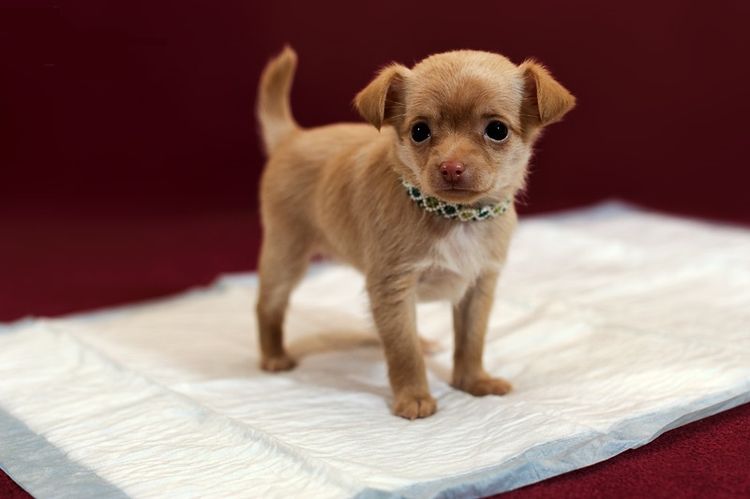
Reusable towels can be daunting due to their high cost, although they last 10-12 months. They consist of several layers, which help retain moisture and odors. The top layer is made of natural materials (such as flannel), the filling is a non-woven absorbent material and a moisture-resistant membrane fabric, and the bottom layer is made of a waterproof film.
There are several advantages of such absorbent products:
- strength and safety: the puppy will not be able to tear them or chew (eat) them;
- the edges firmly retain moisture, which eliminates the possibility of leakage;
- convenient to wash and easy to dry.
Depending on the manufacturer and the size of the absorbent product, the price reusable diaper Prices can start at 400 rubles. Disposable ones start at 250 rubles for 10 pieces. When choosing, consider reviews and recommendations from experienced owners and breeders.
How to train a puppy
To train your dog to use a pad indoors, you can seek help from a dog trainer, who will provide detailed recommendations on how to properly organize the process and avoid serious mistakes. You'll need to be patient, as rushing and punishing your puppy will affect its behavior, which will then require extensive correction with a professional.
You should begin potty training your puppy from the first day it arrives home. If you acquired your puppy from a reputable breeder, the breeder may have already begun the potty training process, making your task easier. In this case, you should take home the pad the puppy has urinated on, which will help it understand where it can go to the bathroom.
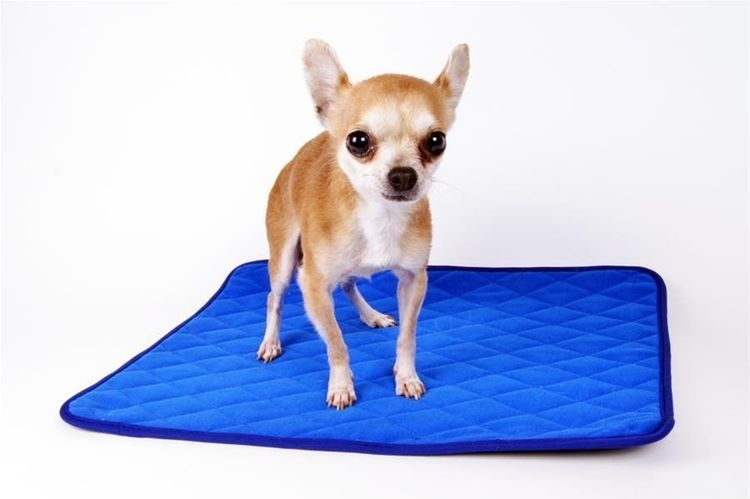
Initially, the floor of the room where the puppy has access (for example, at first this could be one room of the apartment or a hallway) should be covered with diapers as much as possible, effectively depriving the puppy of the opportunity to go to the toilet on a smooth floor.
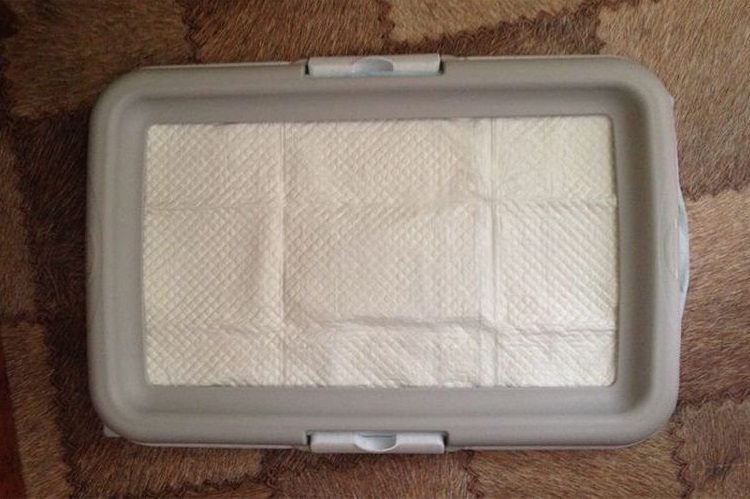
Each week, you should reduce the number of litter boxes by 1-2, removing any that remain clean (it's best to do this discreetly, while the puppy is sleeping or playing). When one litter box remains, it should be gradually moved to the location where you plan to set up your pet's toilet, or placed in a special litter box designed for such purposes (the maximum amount of movement per week is 50 cm).
House training a 1-month-old puppy
At one month old, a puppy still lacks urinary and defecation control, so it can relieve itself anywhere. Scolding or punishing it is not recommended—this will only frighten the pet and slow down its adaptation.
To accustom a puppy to a diaper at 1 month, it is recommended:
-
Remove carpets, newspapers, books, and other items from the floor that the puppy might mistake for a toilet area.
-
Make the floor non-slip. If necessary, cover it with an easy-to-clean surface.
-
Place the pads in different places around the puppy's room. Dogs often choose secluded corners—near walls, furniture, doors, or windows. It's important to ensure there are no drafts.
-
Observe your pet: if it always chooses the same place, that's where you should put the diaper.
-
Keep in mind that at this stage, your puppy may go potty anywhere. Sometimes it's more convenient to cover the entire area where he runs with pads.
How to potty train a 2-month-old puppy
At two months, a puppy begins to go to the toilet less frequently, so the approach to training changes slightly:
-
Some of the diapers are removed, leaving them only in a few convenient places.
-
They monitor the regime: most often, the puppy wants to go to the toilet after sleep, eating, and active play.
-
If your pet persistently wanders into inappropriate areas, you can use a safe spray with a repellent scent. Before using, thoroughly clean the floor without using chlorine-based products.
-
You can place bowls of food and water in the unwanted toilet area - dogs usually do not relieve themselves where they eat.
-
Mistakes are still possible at this age. Punishment for them is not allowed, but successful attempts should definitely be praised.
How to potty train a 3-month-old puppy
Three months is a good age to begin more deliberate training. By this time, a puppy is usually already familiar with basic hygiene rules.
The training process goes like this:
-
Place your puppy on the pad after eating, sleeping, and active play.
-
Clean up any puddles in other places immediately and treat the floor with an odor remover.
-
If you notice that your puppy is about to do its business in the wrong place, carefully transfer it to the pad.
-
If your pet has already eliminated in the wrong place, you can blot the urine with a napkin and place it on the diaper so that the smell is associated with that particular place.
Don't poke your puppy's nose in a puddle, yell, or punish him. Fear will only hinder training and may lead to the dog hiding and choosing hard-to-reach places to relieve itself.
How to potty train an adult dog
If you decide to adopt an adult dog that isn't potty trained, you may need even more time to "retrain" it, as its personality is already fully formed and it already has certain habits that will need to be worked on. In this case, you'll also need to exercise maximum patience and allow for the animal's significant stress due to the change of environment and the arrival of a new owner.
The process of potty training a dog is exactly the same as training a puppy, with the only difference being that you shouldn't constantly follow the animal around, "persuading" it to go potty. It needs time to adapt, rather than demanding immediate results, especially if the dog is used to it. for a walk on the street and now is forced to adapt to a different owner.
Retraining may take longer, and unpleasant "mishaps" like going to the bathroom in the wrong place may occur more frequently. You should approach this calmly and without undue emotion. Finally, remember that an "older" pet may suffer from serious illnesses, so if all your efforts are unsuccessful, it's worth taking it to the vet.
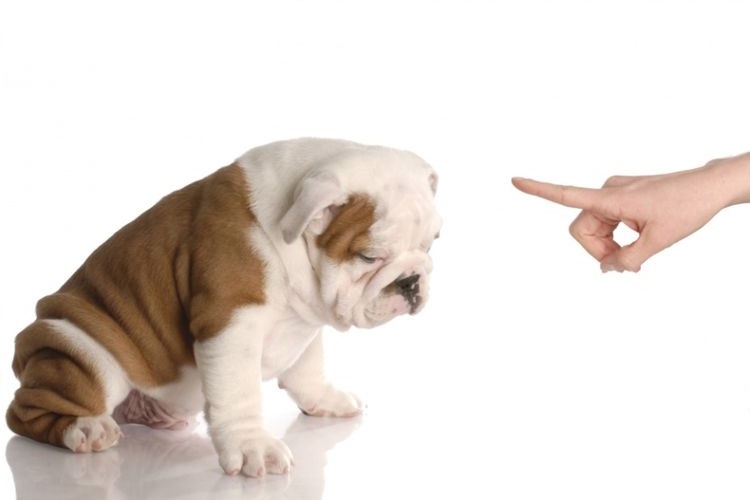
To avoid serious problems when training your pet, follow these tips and recommendations to help you quickly train your dog to use a pad:
- never scold or punish an animal, as this will only increase stress;
- If your pet has gone to the toilet directly on the floor, do not use chlorine-containing solutions for cleaning, as this will only intensify the ammonia smell;
- Reusable products should be washed regularly, otherwise the animal, which is squeamish, will start to pee in another place;
- To train the dog, you can use special products (they can be purchased at a pet store) that will attract the dog with a smell, stimulating it to pee where necessary;
- If potty training is a long-standing challenge, you can purchase a crate to limit its space. This will force the dog to pee on the pads, speeding up the training process.
Reviews
Tatyana, Tyumen
"We bought a reusable one, spent a lot of money, and it still didn't live up to our expectations. I suspect it was defective, as it leaks, which shouldn't happen. We've switched back to disposable ones and don't feel like experimenting anymore."
Anna, Ryazan
"When I got my Yorkie, I also thought I'd train him to do his business inside the house. But while he was a puppy, that was fine, and then we finally decided to take him for walks, even though we were sleepy in the morning. I'm not very happy that he pees right in the apartment. Perhaps it played a role because we didn't really train him properly and there were still some hiccups. But going outside is no problem."
Read also:
- How to potty train a dog in an apartment
- How to train a dog to use a litter box
- Which dog is better to have in an apartment or house?


2 comments
Valentina
I've had dogs before, and I've never used any diapers. Puppy puppies were taken out immediately after napping and eating. After three months, they begin to understand. And there's no stink in the house. Then they get used to being walked two or three times a day and tolerate it. Before getting a dog, you need to carefully weigh the pros and cons. And don't torment the animal, and don't torment yourself if you're too lazy to walk or don't have the time.
Dasha is a veterinarian
I completely agree with you that a pet is not a toy. And you always need to weigh the pros and cons and decide upfront who will be responsible for what (if there are multiple family members). Many people "gift" their pets to children, but then problems arise: no one wants to walk them, no one takes them to the vet for vaccinations, and then there's no money for good food or preventative treatments.
Small breeds or very tiny puppies are usually trained to use a pad. This also helps between vaccinations (it's recommended to let them outside for a proper walk two weeks after the second vaccination, to allow immunity to develop). But for adult animals, just because it's more convenient... I don't understand why people would get dogs and then abuse them. Dogs need proper walks with good exercise and plenty of time outdoors.
Add a comment