
Paranal glands in dogs: treatment of inflammation, cleaning
Caring for and maintaining a pet's health includes regularly cleaning their ears and teeth, trimming their nails, and washing their eyes. However, dog owners don't always pay attention to other, equally important organs. Specifically, the anal glands, which also require regular care. It's important to know how and when to help your pet yourself, and when it's best to consult a veterinarian.
Content
What are the paranal glands?
The paranal glands are specialized sacs located symmetrically on each side of the rectum, where it transitions to the anus. They are responsible for producing a distinctive, pungent secretion that:
- animals mark territory or attract the opposite sex;
- a kind of lubrication occurs to facilitate the process of defecation.
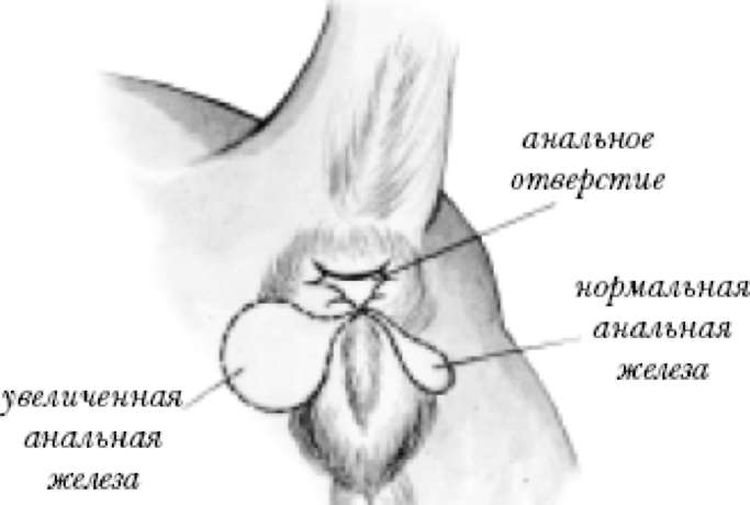
Normally, the sacs are self-cleaning due to the pressure of feces during defecation, so some owners are unaware of their dog's presence. However, sometimes they become blocked, making regular drainage impossible, requiring intervention by the owner or veterinarian. This can be caused by:
- irregular or infrequent walks, which requires restraint of bowel movements;
- sedentary lifestyle;
- unbalanced diet (including feeding bones or excess protein in the diet);
- the presence of certain parasites in the body;
- frequent bowel disorders;
- anal trauma;
- hereditary factors.
How to determine if cleaning is necessary?
If the secretion accumulates over a long period of time, the dog may experience discomfort in the affected area and attempt to eliminate the contents of the sacs on its own. In such situations, the animal may:
- ride on the butt on the floor (especially on fleecy surfaces) to squeeze out the contents of the bags and get rid of discomfort;
- licking and gnawing the area under the tail (even to the point of chewing out fur)
- suddenly jump up and wriggle towards the tail in search of non-existent fleas.
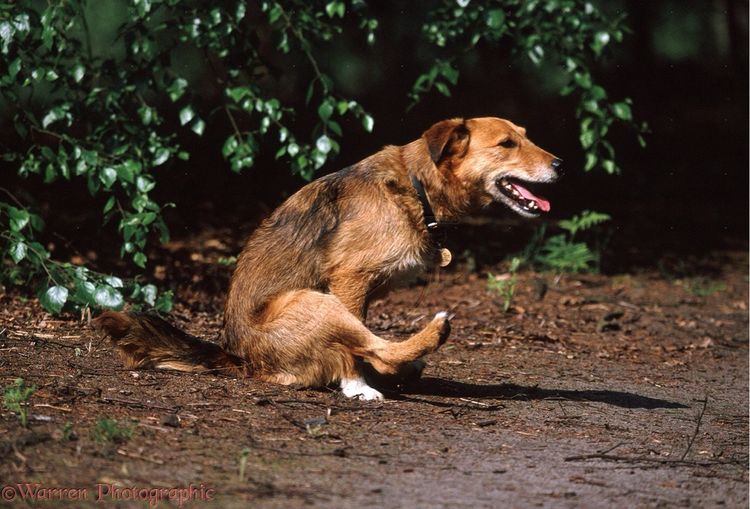
Obstruction of the paranal glands should be distinguished from the presence of worms, perineal hernia or manifestations of allergies.
An unpleasant odor may also appear from the anus that was not previously observed.
If your pet exhibits the symptoms listed above, it's likely that their anal glands need to be cleaned. If there's no inflammation in the anal area and the dog doesn't experience pain when pressure is applied, you can perform the procedure yourself. This procedure doesn't require any special skills, but it's not the most pleasant, so squeamish individuals should seek veterinary help.
General recommendations
If the dog's owner can tolerate the strong and unpleasant smell of the discharge, cleaning can be done at home. Before doing this, it's important to confirm that the animal is actually bothered by clogged sacs by palpating the inside of the anus. To do this, put on gloves, insert your index finger into the anus, and gently probe around the opening:
- If the bags are soft, without any seals, then there is no need to clean them;
- If you can feel any lumps even with light pressure, you need to start cleaning.
For this you will need:
- rubber gloves;
- petrolatum;
- a napkin or a piece of cloth;
- basin.
The procedure won't be enjoyable for the dog, so it's important to have an assistant. They'll hold the animal firmly in a specific position to prevent it from struggling during the procedure. Talk to the dog, reassure it, and offer praise throughout the process.
How to clean?
Below are two methods that allow you to clear the bags of accumulated secretions at home.
The first method.
- Place the animal in a bath or basin.
- Ask an assistant to hold the pet's body and muzzle so that it does not break free or squirm.
- Put on gloves and feel the seals from the outside.
- Raise the base tail as high as possible to relax the sphincter without causing pain to the animal.
- With your free hand in a glove or using a napkin, squeeze the sides of the anus with your thumb and index finger.
- If everything is done correctly, a viscous, beige-colored liquid with an unpleasant odor will be released from the bags.
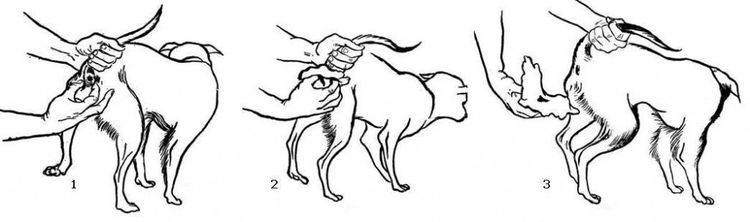
If after all these steps the anal sacs are still not free, do not apply further pressure. They may be so clogged that cleaning them at home is impossible, and you should consult a veterinarian.
The second way.
This method is only suitable for large breeds.
- Place the animal in a basin or bathtub and ask another person to hold it.
- Put on gloves and lubricate the index finger of your right hand with Vaseline.
- Using your left hand, lift the base of the tail upwards, just like in the first method.
- Slowly insert your Vaseline-lubricated index finger into your anus, keeping your palm perpendicular to the floor.
- Feel the gland inside the anus with your index finger.
- Squeeze out the secretion by pressing simultaneously with the index finger from the inside and the thumb from the outside of the anus.
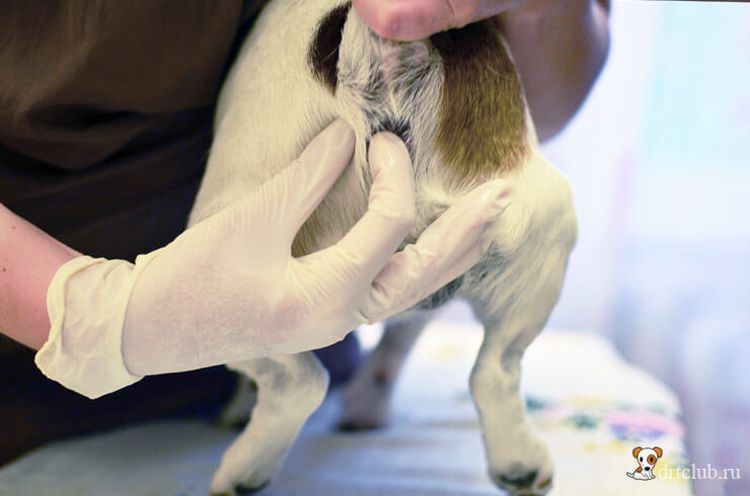
After completing all procedures, you should wash your pet to get rid of the strong odor of the discharge. On average, cleaning lasts for six months at most, but the frequency of cleaning is determined by the individual animal and depends on the rate of blockage. However, if you pay sufficient attention to preventative measures, there's a chance such treatments won't be necessary in the future.
Even if you managed to clean it yourself, it is advisable to consult a veterinarian for an examination and consultation to identify and eliminate the causes of this phenomenon.
Complications
Failure to cleanse the anal glands promptly can lead to complications that require longer and more complex treatment. These include inflammatory processes caused by bacterial decay of the accumulated secretions in the anal sacs. In addition to the symptoms listed above, the following may also occur:
- swelling and redness of the anus;
- rash and irritation around the anus;
- Wetting and hair loss around the base of the tail;
- obvious pain during defecation in a sitting position
Inflammation It is more common in young animals, but there are no breed-specific patterns.
If inflammation occurs, self-cleaning is not recommended. Consult a veterinarian for proper treatment.
The treatment process includes:
- mechanical cleaning of inflamed sacs;
- sinus lavage;
- treatment of the skin with an antiseptic;
- administration of antibiotics;
- further monitoring and preventive measures.
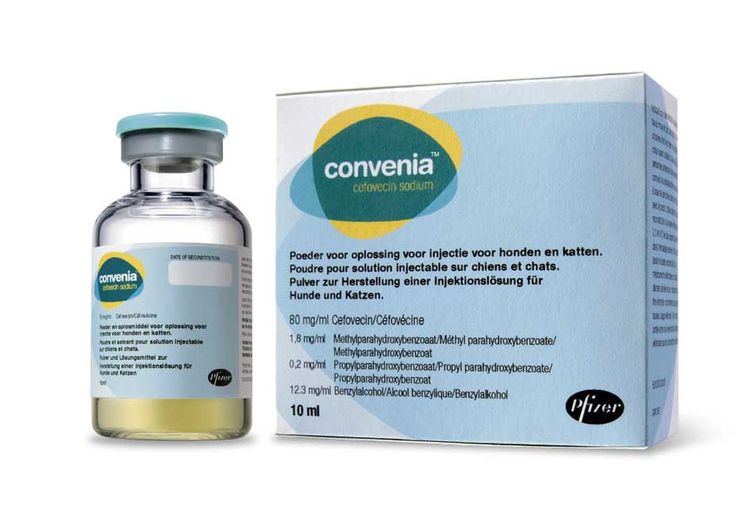
Rectal suppositories, which are considered more effective than topical treatments or tablets, can be a treatment option. Although they can be uncomfortable for the dog, using them is not particularly difficult: the suppository is gently inserted into the dog's anus, after which the opening is pinched with the tail or a finger for a few seconds. For small breeds, the suppository should be cut in half lengthwise with a sharp knife before use.
Caution: If inflammation in the anus is ignored, irreversible consequences may occur, and in advanced cases, a fatal outcome is possible!
Need for removal
Some animals experience recurring blockages, and even regular cleanings prevent the secretions from escaping. If this has to be done frequently (almost weekly), a veterinarian may recommend anal gland removal surgery as the only possible option to prevent recurrence. Since the glands are not vital, surgery is a more humane option than the stress the animal experiences during cleaning.
The removal procedure is called a saculectomy and is considered a simple procedure. The veterinarian makes shallow incisions in the skin around the glands, then removes them and sutures the wounds. The rectum or anus is not affected during the procedure, so the dog can defecate on its own the following day and feels normal. To prevent the sutures from coming apart or stretching, veterinarians recommend a light diet and frequent walks. The pet should not urinate until the wounds are completely healed.
Prevention
To avoid clogged anal glands and the hassle of treating inflammation, it is recommended to follow these preventative measures:
- take long and active walks, preferably with physical activity;
- maintain optimal weight for the breed;
- achieve regular, formed stools (constipation and diarrhea increases the risk of developing inflammation);
- regularly monitor the condition of the glands and visually inspect the anus area (especially in decorative breeds);
- carry out deworming in a timely manner;
- take care of maintaining hygiene and the general health of your pet.
You can also ask our website's staff veterinarian a question, who will answer them as quickly as possible in the comments box below.
Read also:


20 comments
Marina
Good afternoon. Yesterday, my dog had surgery to remove his anal glands. He was prescribed Duphalac and chlorhexidine to clean his bottom twice a day. Today, he's had diarrhea all day. Is it possible to clean the stitches more than twice a day to remove the feces? Also, the dog is breathing very heavily. What does this mean?
Tatyana Shmonina - veterinarian
Hello! Yes, you can apply it more often, but don't overdo it.
Olga
Good afternoon. Is castration necessary for prevention? Can hormonal levels influence the growth of tumors in the anus?
Daria is a veterinarian
Hello! If your pet's hormonal levels are normal, it shouldn't cause any problems. If you don't breed your pet, can't afford regular preventative veterinary checkups (at least once a year), and can't manage their behavior (because hormones will affect their behavior anyway), then castration is a preventative measure. Regarding anal growths... the anus is, very roughly speaking, a hole. An empty space. How could there be a tumor there? The sphincter, the rectum. Where exactly? What kind of growth? Could it be hemorrhoids or something else? They'll examine it, and they'll tell you what the problem is.
Lydia
How much does anal gland removal surgery cost?
Daria is a veterinarian
Hello! You should check this information with veterinary clinics in your city and region, as the cost will vary depending on the veterinarian's qualifications and the clinic's prestige.
Julia
Hello, please advise! My 12-year-old female German Shepherd had her glands cleaned at the vet and was given ichthyol suppositories for five days. A week later, the glands were clogged again and pus was dripping during defecation! I had the vet clean her again and was given ichthyol suppositories again, but this time for 10 days! I cleaned her externally, as they do for small dogs! About two weeks later, the symptoms returned: she has difficulty going to the toilet, her stool is normal, not hard, and sometimes mushy. Today, before taking her temperature (since she's depressed), I noticed some pus draining! Please help. Maybe she needs to clean it by inserting her fingers into her anus, not externally! And please recommend an antibiotic! I suspect the vet isn't cleaning it thoroughly! I've never had problems like this before!
Daria is a veterinarian
Hello! Yes, they're most likely not cleaning out the glands thoroughly, leaving a small amount of pus inside, and the process starts all over again. It's advisable to clean them out and, if possible, flush them with an antiseptic solution (at least an aqueous solution of furacilin). Intramuscular antibiotics are essential. The weakest is amoxicillin. You can choose stronger ones, such as fluoroquinolones (floxacin, there are many). If you can't find any, then at least find Bicillin 3 or 5 (a single injection is enough). Add nonsteroidal anti-inflammatory medications for 3-4 days. And review your diet.
Victoria
Hello, we have a male pug, he is 6.05, he will be 2 months old. His anal glands were cleaned, but he still continues to scoot his bottom on the carpet and it bothers him... What can be done to ease his condition? The vet said it could be a microcrack. Is there any remedy for healing the cracks faster?
Daria is a veterinarian
Hello! Panthenol and Vinylin (you can find these at veterinary pharmacies) are good for healing. In general, deworm your puppy (the puppy's age allows for this) and review his diet! The puppy is too young for this condition. What could possibly cause clogged glands at such an age? Add vitamins and minerals to the food (be sure to include vitamins A and E, they're great for regenerating the mucous membrane). Another possibility is that the itching is related to the healing process (think about yourself, when a wound is healing, and how you want to scratch it; this is a normal process of tissue contraction during healing).
Boris Werniger
Dear Doctor, I have a female miniature poodle. In mid-December 2018, she became lax. This lasted for about two days. Then, during a walk, she tried to sit down several times, but apparently this caused her either pain or discomfort, and she gave up. It was already the third day, and that evening, she finally had a bowel movement. Her stool was loose and bloody, and the blood was scarlet. We rushed to the veterinarian, who examined her and declared that, judging by the results of the examination, the dog was healthy, but nevertheless prescribed antibiotics and a rice diet. We followed the diet, and since my girl's health returned to normal, I did not give her the antibiotics. Late in the evening of December 27th, during a walk, I again discovered scarlet blood in her stool.
Early in the morning of the 28th, we went to the vet, who diagnosed an anal gland infection. He injected a medication into the anus, gave two antibiotic injections, and prescribed a five-day course of antibiotics and Melosus suspension. We used all of this during the course of treatment. After the visit, I discovered an open, bleeding wound, about 12 mm in diameter, under the dog's tail, to the right of the anus. We cleaned it and applied zinc ointment.
We used the ointment for about three days until the wound was completely healed, then sprinkled the scab with a special powder for a while. The dog recovered and felt great until yesterday morning, when she woke me up at 7:30 (which is completely unusual for her, as our first walk is no earlier than 9:30), asking to go outside, where she pooped twice, the second time very soft and thin. This morning, the story repeated itself, and during the second walk, scarlet blood appeared in the stool again. Characteristically, during the described period, the dog began to sit on her bottom frequently during walks, which she had not observed before. I read everything there is to know about inflammation of the anal gland online, but did not find blood in the stool among its symptoms. I kindly ask you to give me a preliminary opinion on the possible causes of what I described as soon as possible, for which I would be deeply grateful.
Daria is a veterinarian
Hello! How can there not be blood? With anal gland fistulas, when the tissue is destroyed, the contents of the inflamed gland can leak into the rectum, causing blood to appear in the stool. However, blood can also leak from the glands during defecation (feces compress the inflamed glands, forcing their contents out, which then ends up in the stool). This is where the blood comes from. Relapses are common with this type of inflammation. It's necessary to flush the glands with chlorhexidine and dioxidine, and use antibiotics (cyclosporine is best, but it's not cheap).
Jamila
Hello, a month ago my Chihuahua had an anal gland abscess that ruptured on its own. We treated it with antibiotics, flushed it, and applied ointment. Now it's inflamed again, so we cleaned the glands and gave him injections of Detrim and Bicillin. A week has passed, but the redness remains. Can I use a Proctosedyl suppository? And do I need to cut it? It's in a capsule, so I'm afraid of an overdose.
Daria is a veterinarian
Hello! Have you at least taken a course of Ditrim and Bicillin (more than just one)? These are among the most powerful broad-spectrum antibiotics. If they don't help, you need to find the cause (incomplete cleaning, poor processing). Self-prescribing medications is not recommended. Take your child to an in-person appointment, have a doctor examine them, and rule out complications after surgery.
Olga
Good afternoon. I have a 7-year-old Yorkie. His glands were getting clogged so often that we decided to have surgery, which was performed on September 21, 2018. The doctor said the glands were already rotten and he took them out piece by piece. After the surgery, everything healed well. And then a NIGHTMARE began. My whole family now revolves around our dog's butt. He started having panic attacks. He constantly looks at his butt, sometimes followed by aggression, he just cries to be picked up, breathes heavily and rapidly, and his butt bothers him. After a while, this goes away, but then it happens again. He has started eating poorly, sometimes not eating for a day. When I scratch him along the lower spine, he licks my hands and thanks me. His butt has become bothersome every minute. What could this be? Help!!! We live in Moscow, and the surgery was done in another city.
Daria is a veterinarian
Hello! There are a ton of good clinics in your city. Let them examine it. Maybe they didn't remove or clean out the bottom. It may have healed on the outside, but inside (there were glands, deep in the tissue) there's inflammation or dead tissue left. That's why the animal is worried.
Lyuda
Hello! How often should I cleanse my anal glands?
Dasha is a veterinarian
Hello! As needed. When they become clogged, take them in for cleaning. There's no specific schedule, like with preventative treatments (deworming every three months, vaccinations once a year, for example). Some dogs need this procedure almost every month, while others never go through this procedure in their entire lives.
Victoria
Good afternoon, could you please tell me? My Chihua's sebaceous gland became inflamed. We went to have it blocked and cleaned. As soon as that one cleared up, the other one immediately became inflamed. We're doing another block (today is the third day). Is it possible to avoid torturing the dog with this cleaning and just remove the sebaceous glands right away? The surgeon says we should clean it first until it heals... once it heals, then we can just remove it! I just don't see the point in torturing the dog with this block and cleaning for a few more days!
Dasha is a veterinarian
Hello! Before removing them, it's important to determine the cause of the inflammation. Otherwise, a relapse will occur after surgery, requiring further surgery. The doctor will decide based on the situation whether to remove them immediately or clean them first. Perhaps the dog is afraid to touch the inflamed area for fear of complications during surgery. Besides, the dog is small. Lymph nodes may be nearby, or there may be other underlying causes. The animal needs to be seen and the situation assessed individually. For one, cleaning and surgery may be appropriate, for another, surgery first, and for a third, surgery is completely dangerous.
Add a comment