
Papillon/Papillon (Continental Toy Spaniel)
The Papillon, also known as the Continental Toy Spaniel, was a favorite breed of French royalty for centuries. Its luxurious appearance only complements its remarkable intelligence. It's no wonder the breed is ranked among the top ten most intelligent companion dogs in the world. The word "paapillon" means "butterfly" in French, hence the breed's nickname, the butterfly dog.
Content
History of origin
Some experts believe that these amusing butterfly-shaped dogs first appeared more than eight centuries ago in Lower Lorraine, part of the Roman Empire that occupied the territory of modern-day Belgium, France, and the Netherlands. The exact origin of the breed is difficult to pinpoint, but it is certain that it is closely associated with royal dynasties and fascinating palace histories.
Legend has it that King Henry III doted on these dogs and spent enormous sums, naturally from the state treasury, on their upkeep and breeding. When a monk came to visit the king, one of the palace dogs barked so loudly that it had to be removed from the chambers. This barking was a harbinger of disaster. The monk, wishing the king's death, plunged a dagger into his heart. After Henry, papillons continued to hold a place of honor as favorites of many monarchs, not only in France but also in Belgium, Italy, and Spain. For a long time, they were even called "the king's lapdog."
Interestingly, the breed's modern appearance has remained virtually unchanged. This can be seen in Titian's 1542 portrait of the royal family, which included the royal pets. However, at that time, most dogs had floppy ears.
At the beginning of the last century, English dog breeders came up with the idea of crossing a Papillon with a Spitz, and it's worth noting that this decision was a very successful one. As a result, the coats of these "renewed" dogs became healthier and richer, acquired a silky sheen, and the ears of many representatives of the breed became erect. Thus, continental toy spaniels with erect ears became known as papillons or papillons (from the French paapillon, meaning butterfly), while those with drooping ears became known as papillons. phalenes (from French Phalen - moth).
Character
These small dogs Papillons are distinguished by a very lively temperament and are incredibly devoted to their owners. Contrary to popular belief, they are not the type to sit and watch the world while sitting in their owner's arms. Papillons are very energetic and have a clear passion for hunting, although only for similarly small creatures, such as butterflies, moths, or flies. As puppies, they can be timid and overly independent, so special attention must be paid to their training and socialization.
The Papillon dog breed is distinguished by its very cheerful nature. They love to play and try to involve everyone around them, both people and animals, in their play, and they get along well with most of them. Only larger dogs, if aggressive, are likely to be wary. Toy spaniels strive to be close to their owners at all times, and without attention and companionship, they can become irritable.
They become so strongly attached to their owners that this attachment sometimes borders on pathology. Therefore, it's best not to leave Papillons alone for long periods of time. Left alone, boredom and melancholy can cause prolonged depression and sometimes even serious illness. When handling this breed, be gentle and patient, as they will not tolerate rough handling or cruelty. Extremely sensitive, these dogs can be offended by even the slightest shouting or cursing.
Papillons' personality traits are in many ways similar to those of humans. These intelligent animals possess an amazing memory. They are very sociable and inquisitive. Emotionally, they are often capable of displaying an almost "human" jealousy toward all people and animals in their owner's vicinity. However, it should be noted that these dogs generally behave quite calmly, and only bark in cases of danger.
Early socialization is key for the Papillon breed.. Puppies begin socializing before they even open their eyes, due to their timidity and tendency to bite when frightened. Dogs need to develop a calm, trusting nature, and then they will grow into curious yet calm pets who react to new experiences without much fear.
Training and exercise
Continental Toy Spaniels are considered among the most easily trained and obedient dogs. Their natural curiosity allows them to be interested in almost anything. However, new owners should be aware of the Papillon's tendency to dominate both other pets and people, as noted by experienced dog breeders. Therefore, it is recommended to train and discipline your puppy from an early age, devoting sufficient time and attention to this task.
The Papillon is excellent at remembering and quickly following commands, easily mastering new skills, and happily repeating exercises. However, it's important to note that he is very sensitive and even somewhat easily offended, so it's best not to be aggressive towards him. A gentle and unobtrusive approach is much more effective.
Training Papillons should begin with instilling basic social skills. It's best to begin this important task in the pet's first few months of life. Don't worry, even a seemingly unintelligent puppy quickly understands what's required of him and successfully masters the lessons taught by his owner.
At the same time, the owner must be assertive, using a stern and confident tone to communicate to the pet which commands it must obey and which actions are prohibited. Don't ignore any of the dog's actions, responding appropriately to both correct and incorrect execution of instructions. This way, you'll let the dog know "who's boss."
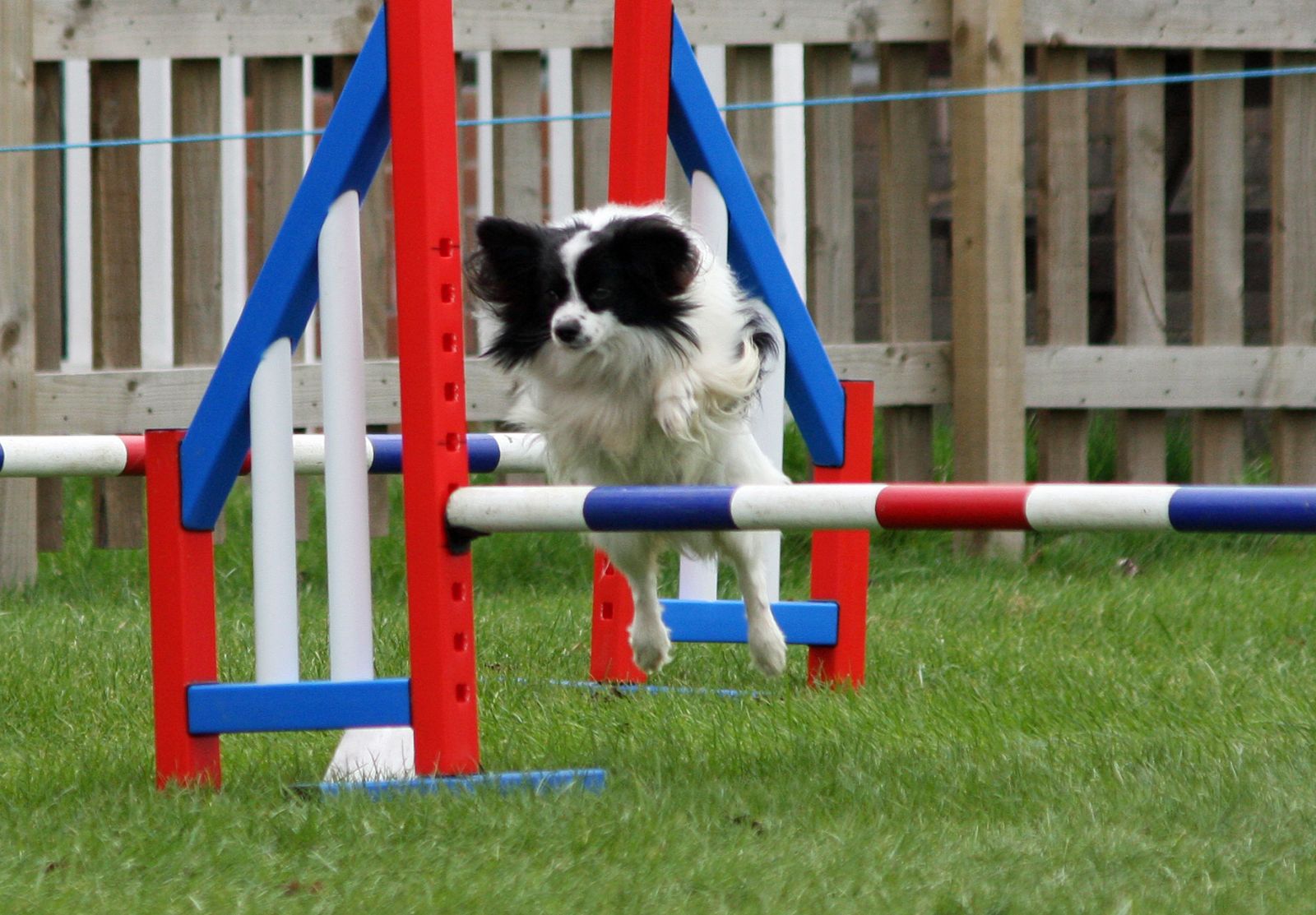
Papillons don't require much exercise. Active play and daily walks, but not too long ones, are sufficient for a happy life and good health. It's crucial to monitor the mental state of timid young dogs; if a puppy is frightened, pick it up and take it to a quiet, secluded place where it can calm down.
Maintenance and care
First and foremost, Papillons are toy dogs that aren't accustomed to being outdoors, but they thrive in apartments and don't cause any trouble, making them easy to handle even for novice dog owners. They get along well with other pets in the house and love to play with children, but only well-behaved pets that aren't startled by loud noises or sudden movements and definitely won't bite should be left alone with a child.
Looking at this graceful, picture-perfect butterfly-shaped dog, you might think it would require extensive and complex care. In fact, this breed doesn't have any special care requirements.
Of course, a new little pet will require a great deal of attention and care from its owners. A puppy, curled up like a sweet little ball of fur, will require a lot of care, showering it with warmth and affection. It's important to remember that even at a young age, these animals are so sensitive that they can detect the slightest hint of irritation or rudeness in their owners' voices. A "heartless" atmosphere in the home can cause the pet to withdraw and become unresponsive to the world around them.
Proper care for puppies of this breed requires observing several basic conditions:
- Maintaining a clean and tidy appearance – regular cleaning of the ears, eyes, and nose is recommended (the coat requires special attention);
- properly selected healthy nutrition for a growing body;
- Daily walks outside - at least twice a day for 20-30 minutes is enough, during which the pet will expend some of its energy frolicking in the fresh air.
- To ensure the ears stand up nicely, they are fixed in place for about 2-3 months, secured with paper tape or a band-aid.
As an adult, grooming is also straightforward and requires little extra effort. Grooming is somewhat different from regular grooming, but not overly difficult. Brush this breed a couple of times a week, and every other day during shedding season. In addition to the seasonal coat change, dogs may shed after nursing. When bathing Papillons, it's important to choose the right shampoo to prevent their snow-white coat from taking on a yellow tint. Rinse thoroughly after use.
If the dog is healthy, its coat doesn't require additional moisture; however, in summer, moisturizing masks and conditioners may be necessary. Trimming the hair on the belly, paws, and around the pads is recommended for hygiene reasons. Ears should also be checked periodically to ensure they are clean and dry. Teeth should be brushed regularly, and nails should be trimmed as needed.
Appearance
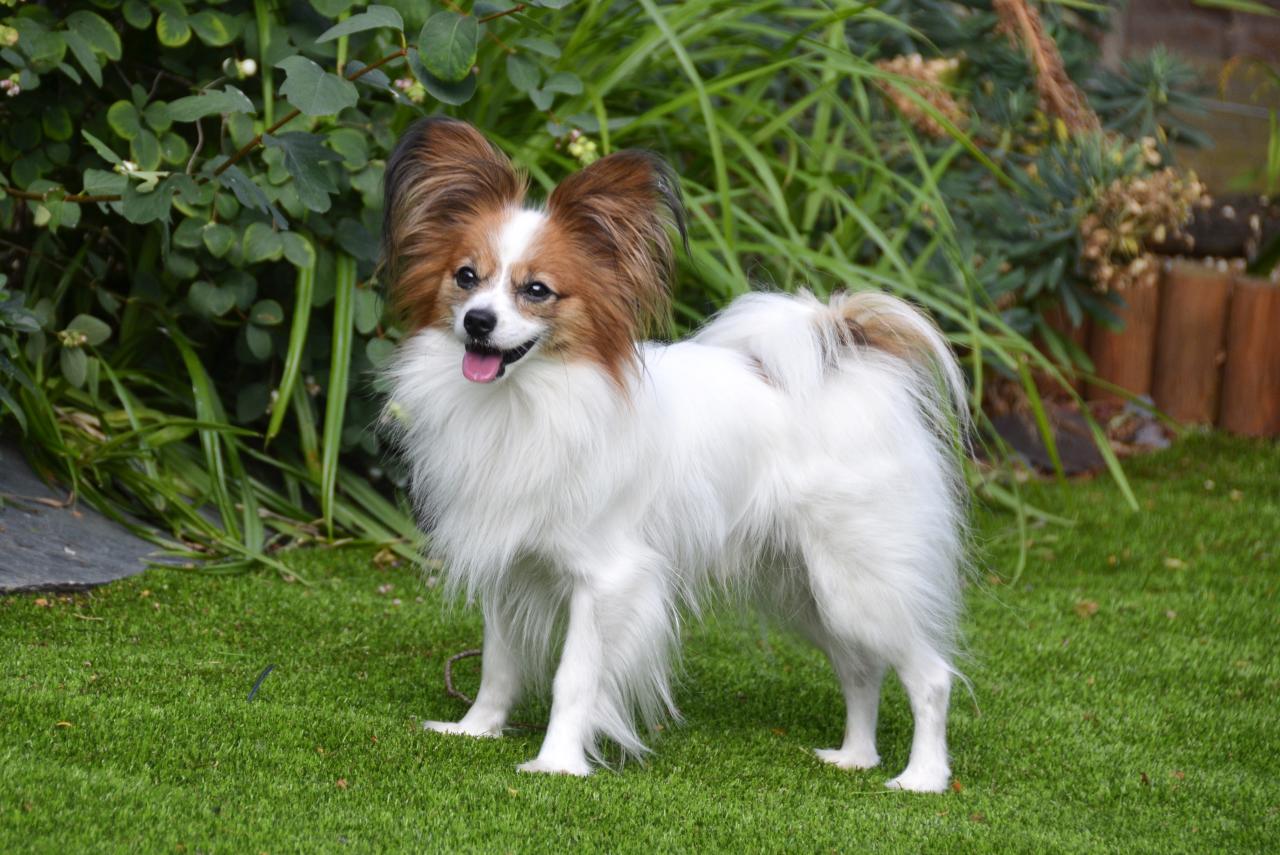
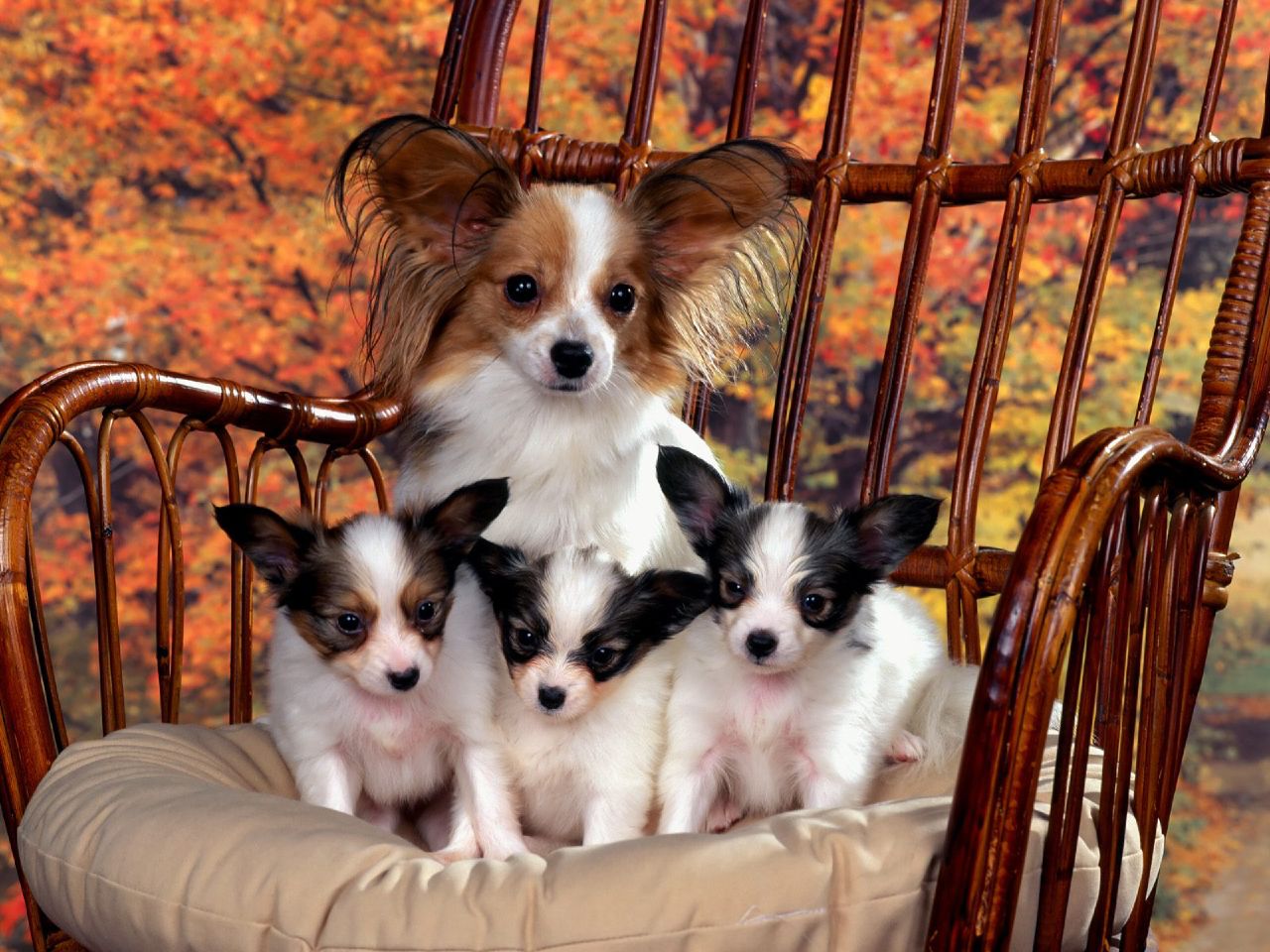
These luxurious little dogs have a very harmonious build. Their coat grows continuously, has a silky sheen, but is not soft, with no undercoat. The Continental Toy Spaniel moves smoothly and gracefully, as if emphasizing its "aristocratic" origins. Height at the withers should not exceed 28 cm. The breed is classified into two weight categories:
- Mini: 1.5-2.5 kg.;
- Standard: 2.5-5 kg.
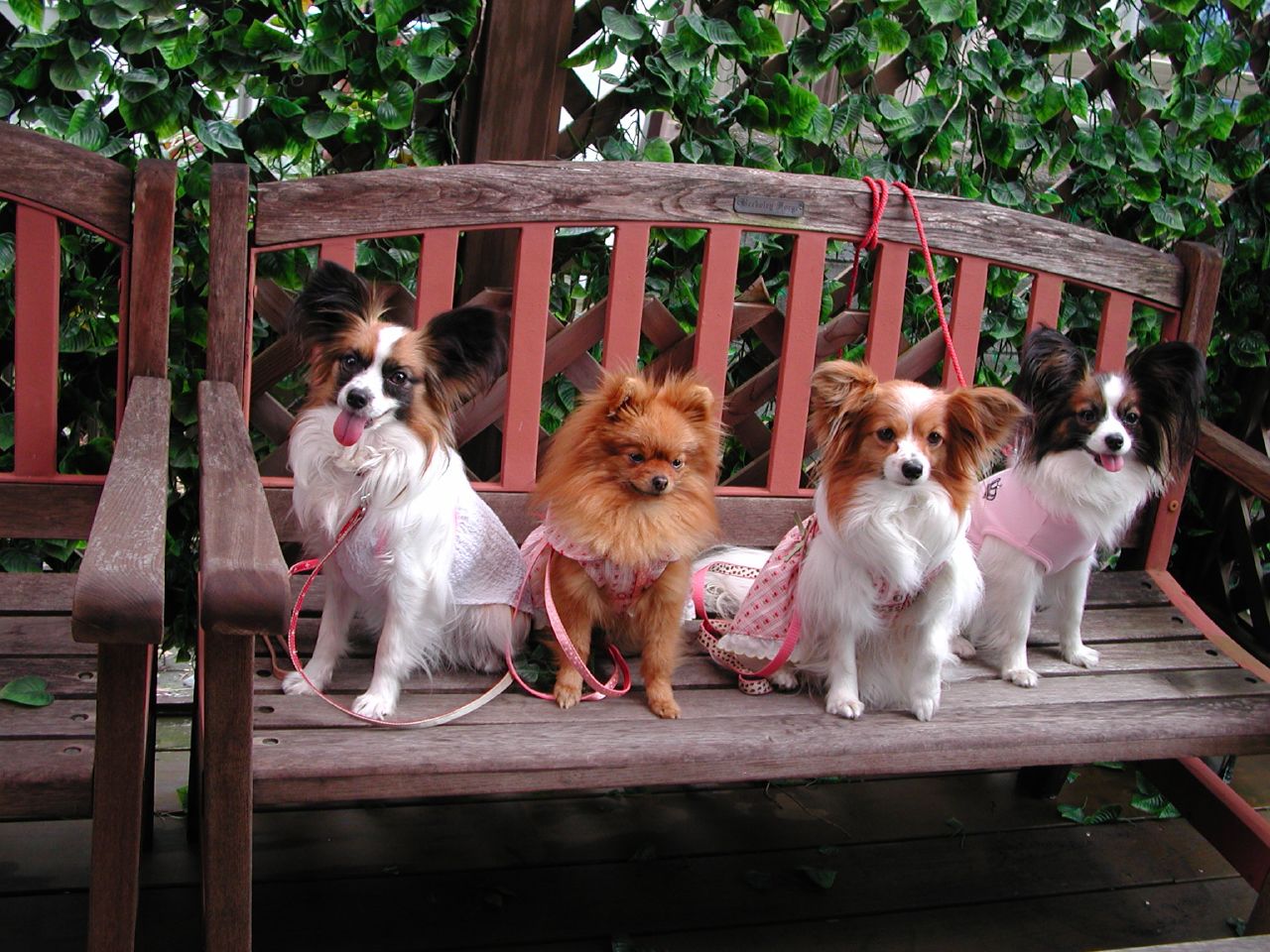
The head is rounded, with a distinct stop. The bridge of the nose is straight. The muzzle is slightly pointed. The scissor bite is well adjusted. Large, almond-shaped eyes are set fairly low and are usually dark in color. The eyelids, nose, and lips are always brightly pigmented. The ears are large, set slightly back and noticeably apart, erect, covered with abundant fringe, and set wide apart with rounded tips. If you choose a butterfly puppy based on appearance, the nose should be black, small, and rounded. When viewed from above, it appears somewhat flattened, although the back is straight and level.
The body is slightly longer than tall. The chest is broad and deep. The limbs are not too long, and the front and back are parallel. Any color markings are permitted, but white is the dominant color throughout the body, except for the head. A white blaze down the center of the forehead is desirable. The medium-length neck is slightly arched at the back. The tail is fairly feathered and resembles a flowing fountain, originating high on the back. When active, the dog carries it over the back or hip. A tail curled into a ring or semi-ring, or lying flat on the back, is a fault in the breed.
Nutrition and health
There are no special feeding rules for Papillons, other than those for other dogs. The diet should be nutritious and balanced. Whether the food is natural or prepared doesn't matter much, as long as it meets all the dog's physiological needs.
Papillon owners should be aware that the breed has a very large appetite and is prone to overeating, which should be avoided. Constant access to drinking water is essential.
If you prefer prepared foods, then, of course, in this case it is worth using high-quality holistic foods or at least super premium foods.
Despite the breed's age, no significant hereditary diseases have been reported. There is a slight predisposition to entropion, corneal dystrophy, cataracts, and congenital deafness. Papillons generally do not tolerate anesthesia well, and in old age, they often suffer from fractures. Their lifespan is up to 16 years.
Photos and videos
Photos of Papillon/Papillon dogs:
Video about the Papillon dog breed
Read also:
- English Cocker Spaniel
- American Cocker Spaniel
- The King Charles Spaniel (toy spaniel) is a dog breed


Add a comment