
Distemper (panleukopenia) in cats: symptoms and treatment
Feline panleukopenia is the scientific name for the familiar disease distemper. This name originates from the fact that this disease causes the animal to virtually completely lose all types of white blood cells. Without white blood cells, the body's defenses are weakened.
Content
Useful information about distemper
A lack of white blood cells is far from the only symptom of distemper in cats. The list of signs is long, but they are quite characteristic. Kittens are most susceptible, but adult cats can also become ill if they are not vaccinated. Immunity lasts for a year, so preventative vaccinations should be renewed annually. Obtain a veterinary passport for your pet, recording all preventative vaccinations and treatments (deworming, tick and flea control).
Is feline panleukopenia dangerous to humans? There's no need to worry about your health. The panleukopenia virus is highly specific. That is, it only affects members of the feline family, as well as some species of raccoons and minks. Dogs and people do not get feline distemper!
Other cats, however, become infected almost 100% of the time (personal contact is not required). The fatality rate is very high, approaching 100%. Kittens and adolescents (up to one year old) are most susceptible and die more often. Older pets may become ill less clearly, meaning their clinical signs are somewhat blurred, which often complicates diagnosis and promptly administering effective treatment.
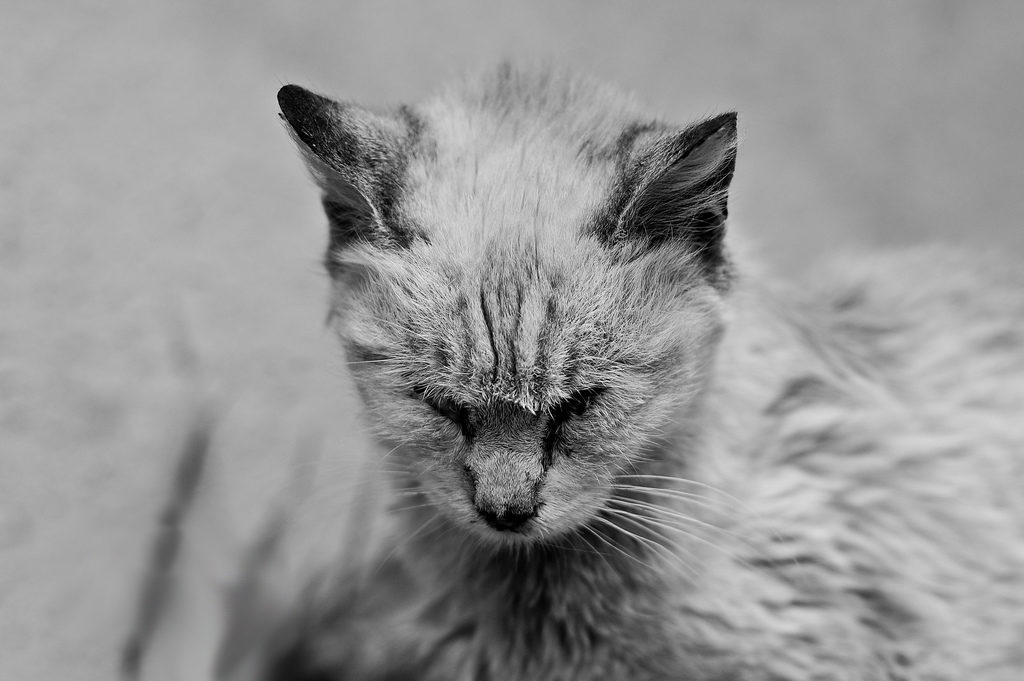
The causative agent of the disease
It's worth noting that the feline distemper virus remains viable in the environment for a long time. Furthermore, it belongs to the same family as the canine distemper virus (canine distemper), the Parvoviridae. And just like the canine distemper virus, the feline panleukopenia virus prefers intestinal cells. However, its most favored "site" is lymphoid tissue. Because the lymphoid tissue is damaged by the virus (when it inhabits a cell, it "kills" it), white blood cells cease to be produced. Old white blood cells die, and new ones are lost. This is the "death" of the immune system. And that's exactly what parvovirus wants. Once it weakens the immune system, the panleukopenia virus begins to actively multiply in the cells of other tissues and organs.
Symptoms of panleukopenia in cats
From the moment the virus enters the body of a susceptible animal until The first symptoms of distemper in cats will begin to appear within three to twelve daysAnd this period is called latent or hidden.
The first signs of the disease
The first change is observed in behavior. Depression, lethargy, increased sleepiness, and fatigue are noticeable. Although panleukopenia is caused by a parvovirus, the body temperature rises due to the viral infection raging through the body.
Cats with panleukopenia typically have a temperature of 37.5-39.5 degrees Celsius (99.5-100.5 degrees Fahrenheit), which is a serious symptom of the disease. A fever is defined as a temperature reading above 39.5 degrees Celsius (100.5 degrees Fahrenheit).
Since the intestines are affected, one of the first symptoms of distemper in cats is watery diarrhea and vomitAppetite is reduced, and fluid is eliminated from the body. This leads to developing dehydration. The mucous membranes are dry and dull, and the eyes are dull. The skin is inelastic and slowly smooths out after being pinched. Vomit is initially light yellow, then becomes a deeper color, with streaks of blood, greenish matter, and mucus appearing. Diarrhea is also initially yellowish, then becomes greenish-yellow with blood. Fibrin films can often be found in it. The odor is unbearable, foul, and slightly putrid due to the dead mucous membrane.
Due to intestinal inflammation, the cat's stomach hurts intensely. You don't even have to touch it to notice. The cat doesn't lie down; instead, it stands arched. The pet wants to drink, but is unable to due to constant nausea and vomiting.
Extreme symptoms of panleukopenia in cats
Beyond the lymphoid tissue, the bone marrow is also affected. It can even be said that the symptoms of panleukopenia in cats are similar to leukemiaThe brain also suffers. This may be followed by changes in the pet's behavior, impaired reaction time and coordination, and disruption of internal organs. The cardiac system is primarily affected. Heart failure is often recorded. The pulse rate increases significantly. Respiratory movements also increase, but the breathing itself is shallow (costal arch movements are very rapid and almost imperceptible).
Symptoms of distemper in cats are often mistaken by owners for poisoning or something else. Therefore, it's crucial to contact a veterinarian immediately if you notice your pet vomiting, having diarrhea, refusing to eat or drink, or developing a fever. Otherwise, you may not be able to provide qualified treatment.
Cat treatment
A veterinarian will assess all the symptoms and prescribe treatment for feline distemper based on the collected data. Only after a definitive diagnosis can treatment for feline panleukopenia be prescribed and administered, including at home.
There is no specific treatment for this disease.However, in the first days, the use of hyperimmune serum (a preparation made from the blood of an animal that has recovered from the disease, containing ready-made antibodies to panleukopenia) is very effective.
Since dehydration is common with distemper in cats, treatment should focus on restoring fluid and electrolyte balance. IVs with saline solutions and subcutaneous saline solutions are necessary. Feeding small amounts of saline solutions designed to treat dehydration (for example, Regidron and similar products) can also help. These solutions contain baking soda, glucose, salt, sodium, and potassium ions. Feeding alone won't cure your cat. While it's possible to alleviate the symptoms of dehydration associated with distemper, it won't kill the virus itself.
The use of antibiotics (penicillin or cephalosporin) is permitted. This is not to kill the virus, but to "kill" the bacteria that "layer" the underlying disease due to a weakened immune system. Antibiotic treatment helps reduce the number of pathogens in the sick pet's body.
Nutrition during illness
Vitamin therapy will help strengthen the immune system, which will speed up the cat's recovery from panleukopenia.
If your animal is vomiting and has diarrhea, do not use antiemetic or antidiarrheal medications without your doctor's permission.
If treatment with serum and antibiotics is effective, diarrhea and vomiting will stop on their own. Their occurrence is the body's protective response, eliminating toxic substances as quickly as possible, preventing their absorption through the intestines. In some cases, vegetable oils (often Vaseline) are prescribed to prevent the absorption of harmful substances through the walls of the digestive tract.
A starvation diet is often prescribed. Firstly, the digestive tract is not ready to fully digest food. Secondly, after digestion, the absorption of nutrients begins, along with the toxins formed by pathogenic microorganisms. Thirdly, the cat still has little desire to eat after prolonged vomiting and diarrhea. However, to maintain vitality, saline solutions must be administered intravenously, subcutaneously, and in some cases, as enemas.
Caring for the sick
Immunomodulators help restore the immune system. For severe pain, antispasmodics in injectable solutions are prescribed. As you can see, treating distemper in cats is quite complex, requiring a lot of time, effort, and skill. Therefore, it is extremely important to contact a veterinarian within the first 24 hours.
In some animals, panleukopenia can be extremely acute, with virtually no time for clinical signs to develop. In this case, veterinary care may simply not be provided in a timely manner, and the animal will die in agony. This is why it's so important to vaccinate your pets prophylactically.
Remember to thoroughly clean up any vomit and feces from the sick animal. This will help prevent reinfection of an already weakened pet. Ventilate the room frequently to reduce the concentration of the pathogen in the air. However, avoid drafts or extremely low temperatures. Your cat doesn't need pneumonia. And be sure to provide your pet with rest. This will help it recover.
Prevention of plague
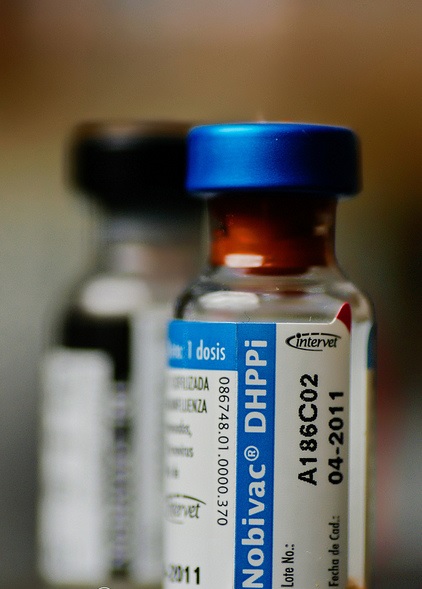
As soon as a kitten turns two months old, it should be vaccinated against panleukopenia, repeating the procedure 2-4 weeks later. And don't forget to renew its immunity annually. It doesn't matter whether the animal has contact with other cats or dogs, or whether it goes outside or stays indoors. You can bring the plague pathogen into your home with your shoes without realizing it. Also, using bedding, dishes, or toys that belonged to a sick cat can lead to infection of another cat. Vaccination will help preserve the life and health of your furry beloved purr.
Furthermore, if you recently lost a pet to a similar disease, it's recommended to wait at least a month before getting a new one. Be sure to sanitize the premises. The virus is very stable in the environment and can persist indoors for a long time (up to a year).
If your pet survives this disease, they will develop strong immunity. However, veterinary monitoring is essential, as complications from panleukopenia in cats are often numerous.
Any questions? You can ask our website's staff veterinarian in the comments below, who will answer them as quickly as possible.
Read also:


47 comments
Elena
Hello! Is it safe for a pregnant cat to have a cat after distemper, and is there a risk to other cats in the house?
Daria is a veterinarian
Hello! Your question is a bit unclear. Who is pregnant? You, the cat that's currently home, or the cat you're considering getting but has recovered from distemper? A cat that has recovered from distemper remains a carrier of the virus for a long time (from several months to a year), meaning she no longer gets sick, but she sheds the pathogen into the environment through secretions from her body (saliva, urine, feces, milk, tears, nasal and genital secretions). Animals around the carrier can also become infected! Therefore, it's important to vaccinate your pets, even if they are completely domestic (and especially if there's a risk of contact with other animals, even if they appear healthy).
Olga
Hello. We treated our seven-month-old kitten for panleukopenia. We had a test done at the initial visit, and it was confirmed. As a result, we gave the kitten three injections of Tavegil, Ribotan, and something else. His stool returned to normal, and he recovered. However, after five days, he became lethargic, refused to eat (he had been active before treatment), and had loose, yellow stools. He wasn't vomiting. What's wrong? Are we still not cured?
Daria is a veterinarian
Hello! Three injections won't cure a viral infection. It'll take at least a week, maybe longer. I should have continued the treatment course and added a pre-made serum (it already contains antibodies, which will help you overcome the disease faster and "tell" your immune system which antibodies it should produce).
Valentina
Hello. Urgent help. We adopted a 2-year-old cat from an owner who wanted to euthanize him. Two months passed, his gums became inflamed, and at the clinic they said he had cavities and needed a dental cleaning. We did all the tests. On February 11, 2020, they did an echocardiogram. Everything was normal. On February 26, 2020, they performed surgery. And on March 1, 2020, at another clinic, they discovered distemper. What should we do? Can it be cured or not?
Daria is a veterinarian
Hello! Yes, of course, it is treatable. But specific therapy must be started as soon as possible. It's also important to remember that an animal may not be actively ill, but rather have already recovered from the disease, hence the virus carrier and positive test results. Are there any clinical signs of the disease, or were the test results the only basis for the diagnosis?
Valeria
Hello! Please help me figure this out. We got a kitten 7 days ago. Three days later, she started having diarrhea, not much, but quite foul-smelling. I started giving her smecta, it helps, but not for long. I gave her a quarter of a phthalazole bottle, but she still has loose stools, and drops of it while walking. Her stomach is swollen, and she even farts. Please advise me on a treatment plan. I can't get to the vet yet. Thank you in advance for your reply.
Daria is a veterinarian
Hello! No one prescribes a treatment plan without a diagnosis, as there's a high risk of causing more harm than good. First of all, should you have noted the animal's age, feeding and living conditions, and whether deworming and vaccinations have been performed according to age? First, I would recommend applying smecta to the stool for at least 24 hours, then giving a broad-spectrum anthelmintic suitable for a single dose. Then add probiotics (like Fortiflora), review and balance the diet, and observe for 3 days to see if there's any improvement. If not, then antibiotic and antiviral therapy plus symptomatic treatment. But the kitten needs a checkup!
Larisa
Hello, I rescued a kitten 10 days ago, now we are undergoing antibiotic treatment (injections) at the veterinary clinic... We had a stool test done today and the result came back: panleukopenia virus... He has been quarantined in a cage for a while now..., but I also have 7 cats of different ages, from 10 years old to 1.5 years old. And all of them are not vaxed, because they are indoor cats, but I give them deworming every six months... The kitten himself feels well... He hasn't vomited, he had diarrhea, but I gave him phosphalugel and the diarrhea went away, the light near the stool has always been normal, like all my cats... I feed the kitten 4.5 times a day, he eats boiled chicken breasts and super premium wet food for kittens... What should I do next??? Should I vaxen all the cats or something just for him???? Thank you
Daria is a veterinarian
Hello! Blood tests were needed to determine whether the kitten was a carrier or had actively recovered from the disease (currently sick). Sick kittens cannot be vaccinated! You can administer a specific serum, antibiotics, and symptomatic therapy. Healthy cats should be vaccinated immediately, but have the serum and antibiotics ready, as the incubation period, when there are no clinical signs of the disease, is important to remember.
For the future: if you value the health and lives of your pets, do not bring home an unvaccinated or sick animal. You failed to ensure the safety of your 7 pets in advance and failed to vaccinate them. Now they are at risk. It will be especially difficult for older animals, as their immune systems are no longer as strong.
Tatiana
Hello. After two kittens died (for an unknown reason), is it possible to get another kitten? What should be done? Will vaccinating the new kitten before weaning it help? Or treating it at home?
Daria is a veterinarian
Hello! I wouldn't recommend getting a kitten so quickly. If the kittens died and the cause is unknown, it could be a viral infection, which is extremely persistent in the environment (the pathogen could be found on furniture, carpets, floors, pet grooming items, or your belongings). Choosing a disinfectant without precise specifications is not easy. I would recommend leaving the house pet-free for at least six months to allow even the most resistant viruses to die off without introducing susceptible animals. Even getting a fully vaccinated kitten is dangerous, as it's unknown which strain of virus killed the kittens and which one is in the vaccine. They may not match. Or the virus was a virus that won't be in the vaccine I'll be using for immunization.
Leah
And the last question about this disease….
Does a mother who has had distemper pass on immunity to this disease to her children?
Daria is a veterinarian
Hello! A mother who has recovered from the disease (as well as a vaccinated one) passes on antibodies to the disease through her milk. But! Like any colostral immunity (passed on through mother's milk), it only lasts for 2 months! That's why it's important to vaccinate babies as soon as possible after weaning (since the first vaccination lasts 21-28 days, and the second vaccination lasts 14 days; only after that does active immunity develop for 12 months). So, add 21-28 days to 14 days = 35-42 days (that is, with timely vaccination, active immunity develops before the passive colostral immunity received from the mother expires). I hope I've explained it clearly.
Leah
More than! Thank you!
Daria is a veterinarian
Hello! Glad it helped =) I was worried I was overcomplicating the explanations.
Leah
While the first message is being sent for moderation, I'll immediately clarify why I asked.... Kittens who have had panleukopenia are generally all outwardly healthy, the only thing that gives them away compared to those who haven't is their developmental delay (height, and the size of their eyes in relation to their muzzle, alien eyes with a small head). Their appetite is like that of piglets, i.e., they eat everything... including cookies and bread, and some of them devoured my fresh and salted cucumbers, a perversion of taste...
But one of my dogs suddenly had a cloudy eye. There was no conjunctivitis, inflammation, or injury, I assure you! I went to the vet, they prescribed drops with ciprolet (for some reason). A week later, the other eye became the same... He can't see well (for example, in a dimly lit room), but he can still see!
A month has passed since the illness (if I'm not mistaken, he also had seizures similar to epilepsy, but they started abruptly and then stopped abruptly)... all black, without identifying marks, the mother is a Bombay cat, the father is a scoundrel, so I'm confused about them... Please advise the situation!
Daria is a veterinarian
Hello! The nervous attacks and eye problems could have developed as a result of panleukopenia. Growth retardation is also a possibility, as the virus leads to severe weakening of the body (bone marrow and lymphoid tissue are affected, the immune system is compromised, and all energy is spent fighting the infection rather than on growth). Improve their feeding! It's good that they have such an appetite; I hope they gain strength faster. But, excuse me, feed them like pigs! Buy them good kitten food to ensure they get all their vitamins and minerals. Have you ruled out genetic abnormalities (since the father is unknown)? Could that be why their facial expression and eyes are so strange?
Leah
Thank you so much for your consultation, Daria. As always, it was clear, competent, and compassionate! And to the moderators, for the insight. It was concise and clear, without any lyricism or bias!
Leah
P.S. A parable: "A dog and a cat are sitting at the market, for sale, and dreaming out loud among themselves..."
The dog says: “I wish I lived in a family with a lot of little children, they have crumbs and pieces, and they don’t really like to eat...”)
The cat listened and listened - "And yet you are stupid creatures - dogs, ... lots of children, crumbs and pieces! Paradise on earth is with an old maid, half-deaf and half-blind!"
No matter how you feed a cat and what kind of food it is, stealing from the table is a sacred thing!!! ))))
Daria is a veterinarian
Hello! Yes, cats do like to steal from the table. But! First, don't leave food on the table unattended. Second, cats still need training. My old lady never climbs on the table because she knows what she'll get. She won't even put her paws on it, let alone steal anything =) So, where there's a will, there's always a way =)
Leah
Hello, Daria. What complications can a kitten develop after distemper?
Eyes, hearing, etc.?
Thank you !
Daria is a veterinarian
Hello! The consequences can be very varied. Kittens may develop problems with the retina, as well as the back of the eye, which receives light and sends signals to the brain. Conjunctivitis is common. Nervous system damage (resulting in seizures) is possible. Gastrointestinal system damage (including the liver and pancreas) is also possible. The spleen is also affected. Hearing is rarely affected (except during illness, provided the disease is neurological, meaning the nervous system is affected).
Leah
Hello Doctor!
I have a couple of questions….
1. Can an elderly animal get panleukopenia from kittens?
2. If puppies are born, can they get sick?
The situation is this: my cat had kittens back in May 2018, and two or three of them contracted distemper, even though their mother was nursing them! Pasha (the male cat) had the most severe case of the disease; he literally looked like a mummy. I even considered euthanizing him, but strangely enough, he survived. Now he has bizarre food cravings, such as honey, jam, bread, and so on.
At the end of the year, 18 kittens were born, the second time, and I think the feces left under the kitchen cabinets (they're simply impossible to get out) caused the subsequent kittens to become infected. The same thing happened... but oddly enough, not all of the seven kittens were sick! Only two or three...to varying degrees...
I have a female Pomeranian, and it's time to mate her, and then there are puppies... I haven't bred her yet, so I'm worried about whether the puppies will get sick. And there's an old 11-year-old female dog, and she threw up something, maybe she overate... I'm worried...
Unfortunately, I can’t find caustic soda for treating under the kitchen cabinet!
Daria is a veterinarian
Hello! An older cat can become infected because she is susceptible (the only chance of avoiding infection is if the cat has been vaccinated up-to-date). Regarding dog infection: the panleukopenia pathogen is similar to the canine distemper pathogen, but the risk of a dog becoming infected from a cat is minimal (assuming the dog's immune system is weakened). However, if you are breeding a dog, she must be fully vaccinated against viral infections! The only thing is that even if your dog remains healthy, she, as an animal in contact with sick kittens, will be a carrier (that is, if she comes into direct contact with another cat or through someone else). All kittens should be treated with Vitafel or other specific serums, antibiotics, and symptomatic treatment.
Leah
Thank you very much Daria, and by the way, not quite on topic...
This is about a female Spitz. She's been giving birth since her first heat, while our male dog was alive (a tragic situation). We lived for a year without any problems, and now this is the third time. She's been in heat every four months—May 2018, then September... bloody discharge. She adopted kittens from a cat and raised them, her milk came in, she shed as expected, and now the bloody discharge is back. This all happens every four months. I decided to breed her this time... all the preparations are made, I'm waiting for the 11th or 12th day. I've never encountered a situation like this before... she's gained a lot of weight over the entire period...
Daria is a veterinarian
So why don't you spay them? If there was a false pregnancy, you should understand that female puppies will be prone to it in the future. Bitches that have ever had a false pregnancy should not be bred, especially if the matings are not purebred, but simply for the sake of puppies. Moreover, spayed dogs have a lower risk of developing cancer in the future. No offense, but think about it.
Leah
This is the first I've heard of this! It's an inherited tendency for false pregnancy. The bitch is a purebred, and so are the puppies... Honestly, it's under contract with the kennel! They don't seem to worry about it much, they give birth all the time, and it's impossible to figure out which one is the false pregnancy. I've never kept female dogs, only males. I gave my dog a break, and this happened...
Everything is clear now, there is something to think about!
Thanks for everything! And to the site for existing!
Daria is a veterinarian
Hello! This is, to be more precise, a psychological disorder. It can recur in the same female if you miss another heat. And if puppies appear in the house (even if not hers, but that of the same female), this will only provoke an exacerbation. She may start dragging stuffed toys (if any are publicly available) into a corner, creating a "nest," and taking care of the toys. During training, we encountered a tendency to register false pregnancies in females who were the offspring of the same dogs. It may be a "coincidence," but I don't like such accidents in my work. Better to be on the safe side. Especially since you yourself say the kennel doesn't monitor the purity of the breeding. Where is the guarantee that you were sold a puppy from a truly "pure" line, that the parents are healthy? That there is no inbreeding. To breed puppies, you need to understand cynology and be able to trace a dog's pedigree back more than three generations... But don't worry. Get well soon and stay healthy =)
Leah
Daria, good luck to you and thank you again...
Just now, I came back with kittens again!
The thing is, I discovered something resembling epilepsy in one of the kittens that had recovered from distemper, and I'll go even further - he had completely recovered, gained weight, and his stool and appetite were normal, his mood was cheerful and active. I had an epileptic cat, I know perfectly well what it is... but these aren't exactly the same seizures, but they are seizures!
It's as if a cat were spun around on the floor and released, and it tried to run, but couldn't get up... It falls on its side, makes convulsive movements, its tongue sticks out, like it's having an attack of suffocation... then it calms down, gets up and walks as if half-drunk, after a while it finally comes to its senses... It doesn't meow after the attack, doesn't ask for food, doesn't pee or poop during the attack (like my ex-epileptist), there is no drooling...
Could this be related to a previous illness or is it congenital?
Daria is a veterinarian
Hello! It's difficult to say if you don't constantly look after the animal. If a kitten was born to a mother who had epilepsy or nervous system problems, there's a high risk of inheriting a predisposition. And panleukopenia could have triggered the development of nervous system symptoms (either triggering a relapse of epilepsy or becoming the underlying cause). It's important to monitor them closely. Especially if you've had experience with a cat with epilepsy, you'll know the warning signs of a seizure. So keep an eye on the kitten. Does it have the same symptoms?
Leah
Hmm... I think the attacks only happen at night (I saw it at night, by accident), during the day everything is as usual... The mother, Dima, is crazy, of course, she is neurasthenic))) she is wild, she does not come to be picked up, does not let you pet her, she shies away when she hears her name, her pupils begin to dilate to the edge of her eye))) ... In her life, no one has ever hit or offended her... I "scold" them, of course, (the cats, I mean), according to Durov's principle, I have a sprinkler for linen, flowers, with water... The cats know it, so I don’t even have to use it... it’s enough to pick it up)))
Thank you again, Daria, for the pleasant conversation and qualified online assistance in the direction of my activities.
Unfortunately, veterinary medicine (like many other things) is a well-established business, so it's difficult to talk about honesty in clinics...
Thank you for these websites, and thank you to the veterinarians who participate in these websites!
Daria is a veterinarian
Hello again! It's unfortunate that you have such an impression of clinics. Not all doctors are like that. We don't send people for "unnecessary" tests, only those we deem necessary to confirm or refute a presumptive diagnosis. The way we operate is that "unnecessary" tests not only turn people off but also waste the specialists' time, which they could spend examining another animal that needs their help far more. Regarding your cat: my old lady is the same way: she always hissed, bit, and behaved inappropriately. In the last few years she's been with me (before that, she lived with my parents for 10 years), she's become calmer (she still has her quirks, but she no longer hisses and comes to my arms, and even purrs). Stress can cause all sorts of problems in cats; they don't know how to cope with stress at all. Even loud noises, bright lights, or sudden movements can be a nervous shock for them (some are just that soft). And if there is a predisposition to nervous attacks (hereditary, for example), then any stress will become a trigger.
Tatiana
Hello. Thank you for your reply. One more question, if I may. What outdoor temperature is critical for cats? Thank you in advance.
Daria is a veterinarian
Hello! What does "critical" mean? It's like with people. Some can be outside at -20°C, while others freeze at -5°C. It's the same with cats. Much depends on the humidity, the length of time they're outside (5 minutes or all night), and the animal's condition (fed or hungry, healthy or sick, thin or plump, short-haired or long-haired). Some cats are used to being indoors, so even a slight frost is undesirable for them. Others are outside every day, so they can run for hours at -10°C. Remember that cats can get frostbite on their paw pads. Avoid letting your indoor cat out for long periods of time when the temperature drops below -10°C to -15°C.
Tatiana
Hello. I'm very worried that I didn't help my cat in time and she died. She was a stray cat, lived in a box under a ramp, ate, was active, and I was just looking after her, trying to shelter her, but my cat wouldn't accept her. On December 31st, she was still fine, eating and running around, but on January 2nd, she refused to eat, became lethargic, had some kind of ulcer in her mouth, and then died. I blame myself for not saving her; I even thought she was just fast asleep. My girlfriend took her in that night and tried to save her, but she was gone. What could have caused her to die so suddenly? Distemper or calicivirus?
Daria is a veterinarian
Hello! Before I even finished reading your suggestions, I already suspected eosinophilic granuloma (calicivirus). Unfortunately, stray animals often die from infectious diseases (lack of vaccinations, weakened immune systems, poor nutrition, and lack of emergency veterinary care within 24 hours of the onset of clinical signs). Now it's important to protect your pet, especially if they haven't been vaccinated. You can administer a special antiviral serum with pre-existing antibodies to strengthen the animal's immune system, as there's a risk that you could have brought the infection home from a sick cat (by touching the animal or stepping on its natural secretions, such as saliva, urine, or feces).
Tatiana
Thank you very much for your answer.
Vlada
Hello. What disinfectants kill the panleukopenia virus? (Can I have the brand names, please?) Do germicidal lamps kill the virus? Thank you for your reply.
Daria is a veterinarian
Hello! The panleukopenia virus is highly resistant to disinfectants. It belongs to the second group of resistance. The only options are caustic soda or formalin, but that will ruin your furniture and floors (if laminate, parquet, tile, or linoleum). It will eat away everything. And the stench will be terrible. Germicidal lamps are useless against this virus. If strong disinfectants don't kill it, then the lamp will certainly not help. Unfortunately, you'll have to quarantine and wait it out (neither cats nor dogs are allowed, as the panleukopenia virus is genetically related to canine parvovirus enteritis).
Irina
Hello. I decided to get tested for feline distemper. I tested positive, and the doctor said she's a carrier. She seems to be running around, eating well, and everything's fine. How should I treat her now?
Daria is a veterinarian
Hello! There's no point in treating a carrier. They've already recovered. And carrier status lasts for months. Ideally, they should have also tested for antibodies: A and G. These should then tell you how long ago your pet was infected. Monitor your pet's immune system and completely limit contact with other cats, as your seemingly healthy cat could infect others.
Irina
Hello! My cat was diagnosed with this virus, and we administered a serum in time. We also administered other medications for 5-6 days. He immediately started eating and became active. The next day after we stopped giving him vitamins and antibiotics, he developed diarrhea. Should I take him back to the clinic?
Daria is a veterinarian
Hello! Yes, it's worth it. It's best to make sure there are no complications and that pathogenic microflora (disease-causing bacteria) haven't joined in. It's fine if it's just dysbiosis and nothing serious. But it's still better to be on the safe side and have your pet examined.
Tatiana
Good afternoon! Could you please clarify my next steps? I'm adopting a kitten. His sister was diagnosed with panleukopenia today, and we're awaiting test results. The kitten I'm adopting has been physically examined, and no obvious symptoms were found. The kittens recently turned two months old. It's time for vaccinations, but the vet said today it's best not to do them yet. My question is: I'm worried about my kitten showing signs of the disease. How long might this last? And what should I do about vaccinations, and when should they be administered?
Dasha is a veterinarian
Hello! The veterinarian is right. It's best to hold off on vaccinations. Only healthy animals are vaccinated. Infectious diseases have an incubation period (lasting from several days to several weeks), so the animal needs to be examined thoroughly. And since there's a risk that the animal has contracted panleukopenia, it's best to wait. First, wait for the results of your sister's test. Second, if the clinic has a lab, have the kitten tested for panleukopenia. Third, the disease may manifest. If all three tests are positive (negative), then vaccination is possible. If the disease is confirmed in your sister or the kitten itself, treat them until they are fully recovered.
Tatiana
Hello, please clarify information regarding canine distemper; it is not caused by parvovirus.
Add a comment