
Burns in dogs: what they are and what to do
Veterinarians acknowledge that burns in dogs are quite common, and owners don't always witness the incident that results in the characteristic injuries. Therefore, every owner should know the different types of burns, how to assess the severity of their pet's condition and provide first aid, as well as when burns can be treated at home and when it's necessary to take their pet to the veterinarian immediately.
Content
Classification of burns
A burn in a dog, as in a human, can be caused by exposure of the skin to various potentially dangerous factors.
Burns are classified according to three criteria:
- Burn type - thermal, solar, electrical, chemical, phyto.
- Affected area – skin, mucous membranes, internal organs.
- The degree of tissue damage.
There are 4 degrees of severity of the burn process:
|
Degree |
Heaviness |
What does it look like? |
|
I |
initial stage |
redness of the surface; swelling; pain when touched. |
|
II |
moderate severity |
redness of the surface; constant pain; formation of bubbles (the liquid is initially clear, but then becomes cloudy); The hair on the damaged area of skin may be rejected (if the hair follicles are damaged). |
|
III |
severe burn |
swelling of the surface; white or bluish tint of the affected skin; formation of blisters containing blood; baldness of affected areas (if hair follicles are damaged); severe pain. |
|
IV |
deep defeat |
the damage extends beyond the skin and covers the lower layers; the skin dies (in case of a thermal burn it is charred); the animal may be in a state of pain shock. |
Important! First-degree burns and localized second-degree burns involving a small area of skin can be treated at home. If your dog shows symptoms of a second- or third-degree burn, the affected area is extensive, or there is damage to the eyes or mucous membranes, you should take the animal to a veterinarian immediately.
First aid and treatment for burns largely depend on the cause of the skin damage, as well as any associated problems that arise from exposure to various potentially hazardous substances.
Thermal burn
Thermal burns occur when in contact with boiling water, steam, open fire, hot asphalt or hot objects.
Main reasons
This is the most common problem owners of restless puppies often face. But it's important to know that dogs can suffer from more than just direct contact with fire, boiling water, or oil:
- For newborn puppies, danger may lurk in a heating pad that is too hot;
- a mucous membrane burn can easily occur if you give your dog hot food;
- A burn on the paw pads can occur from hot asphalt (when walking on hot summer days).
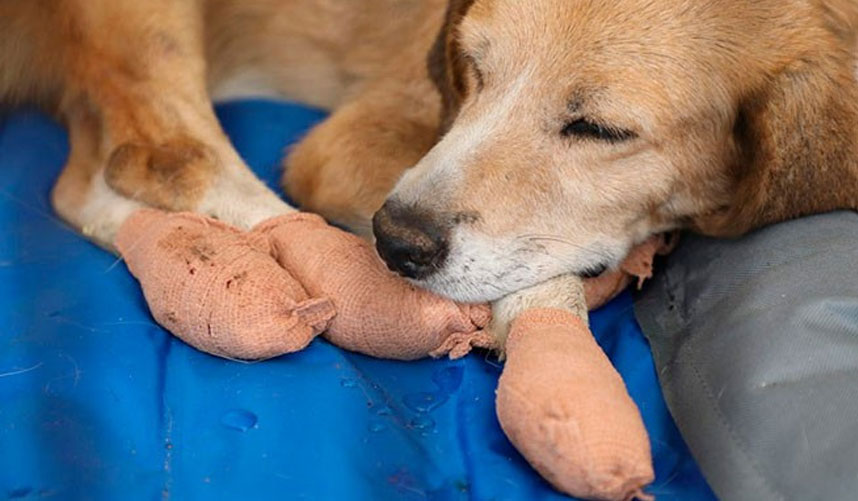
The most severe thermal burns occur from contact with open flames or hot objects. Animals rescued from fires may also suffer from combustion product intoxication and respiratory tract burns. Moreover, the higher the temperature of exposure, the more severe and profound the thermal injury.
First aid and treatment
The owner's basic steps if the dog is burned:
- Protect the animal (stop exposure to the negative factor).
- Assess the severity of the lesion, the extent of the affected area and the condition.
- Cool the affected area.
- Apply ointment and cover with a sterile bandage.
To quickly cool the skin, you can resort to rinsing the affected area with running cold water.
Do not apply ice to burned skin! This can cause further tissue damage and worsen the condition.
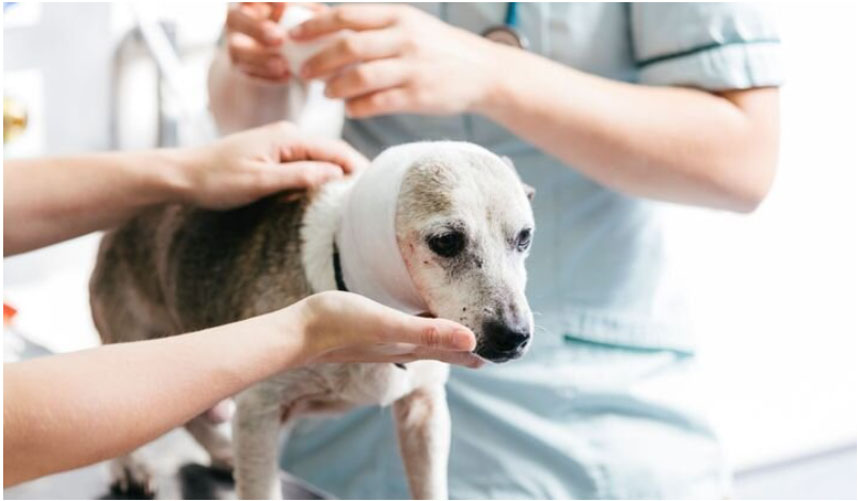
The prognosis depends on the severity and extent of the injury. Treatment of minor thermal burns at home involves applying special Panthenol-based sprays or ointments under a bandage, as well as pain relief. It's important to prevent your dog from licking the wound!
In case of extensive and severe burns, treatment is only possible in a veterinary clinic, as the animal may require:
- constant monitoring of the condition and functioning of internal organs;
- IV drips to prevent dehydration;
- long-term pain relief;
- resection of severely damaged areas of skin;
- antibacterial therapy, etc.
In cases of severe thermal burns covering more than 30% of the skin surface, as well as damage to the mucous membranes and respiratory tract, the likelihood of death increases sharply.
Electrical burn
Occurs when an animal is exposed to electric current.
Effect on the body
When passing through the body, the current causes:
- skin burns;
- damage to internal tissues and organs;
- heart failure;
- respiratory dysfunction.

It is not always possible to assess the severity of the condition in the first hours after the incident, so regardless of the condition, it is necessary to take the dog to the clinic as quickly as possible.
First aid and treatment
Every person should know what to do if someone is exposed to electric current (the rules are the same whether you are rescuing a dog or another person).
- Stop the exposure (turn off the power, push the cable away with a dry wooden stick).
- Assess the condition of the victim.
- Deliver to the clinic as quickly as possible.
Damage depends largely on how the electric current passes through the animal's body. Assessing the severity of the injury early on is possible only through a comprehensive examination. The results of this examination will determine the veterinarian's treatment plan and the prognosis for recovery.
Sunburn
Sunburn can occur when an animal is exposed to the sun for a long time (in this case, it can be combined with heat stroke), as well as under the influence of UV lamps.
Causes and symptoms
These problems most often occur in short-haired, shorn, and naturally hairless dogs, whose skin is unprotected from ultraviolet radiation. The risk of sunburn is high in regions with high solar radiation (southern latitudes, high altitudes).

Symptoms:
- redness of the skin (blisters may appear);
- pain in the affected area;
- increase in body temperature;
- chills;
- diarrhea, vomiting (with heat stroke).
UV lamps, used for tanning, room disinfection (quartzization), and treating skin conditions, also have an effect similar to that of sunlight. Quartz lamps are harmful not only to the skin but also to the eyes, causing retinal burns. Such lamps should be used in a room where all animals and plants have been removed beforehand!
First aid and treatment
If you notice the first signs of sunburn on your pet, you should cool the skin with cold running water, gently pat it dry with a towel (do not rub), and apply a Panthenol-based ointment to the skin to relieve inflammation and pain.
Not recommended:
- bathe the animal with detergents;
- lubricate the skin with oil, lard, sour cream, alcohol-containing products, creams or ointments not intended for the treatment of burns (especially those intended for humans).
Uncomplicated first-degree sunburn in dogs can be treated at home by periodically applying a special ointment. When taking a sunburned animal for walks, it's recommended to dress it in a thin jumpsuit and walk it off-leash, as a harness or collar can cause pain when in contact with damaged skin.
If the burn is accompanied by heat stroke, or blisters appear on the body, it is necessary to show the dog to the veterinarian.
Burns can be complicated by bacterial or fungal infections (in this case, the damaged skin does not heal for a long time, weeping lesions, scabs and a characteristic odor appear).
Chemical burn
Chemical burns occur when the skin or mucous membranes come into contact with hazardous substances.
Causes and symptoms
This category includes:
- paw burns from reagents (salts) in dogs in winter;
- burn of the mucous membrane of the nose and nasopharynx when inhaling hazardous vapors;
- burns from contact with acids, alkalis or quicklime, etc.
Each type of chemical burn has its own symptoms, but dog owners in large cities most often encounter paw burns (usually on all four paws) during the winter after walking on chemically treated streets. Symptoms include pain, redness, and swelling of the paw pads and the skin between the toes.

However, chemical burns caused by contact with acids or alkalis can be very deep.
First aid and treatment
The owner's actions depend on the substance that caused the skin damage:
- reagents (salts) are washed off the paws with running water;
- acids are neutralized with an alkaline 2% soda solution;
- alkalis are neutralized with a 2% acid solution (vinegar or citric acid);
Important! Do not rinse acid or quicklime with water! When removing the substance, it's also important to prevent it from coming into contact with other areas of the skin.
In most cases, after the substance has been neutralized, treatment consists of supportive care, application of healing ointments, and prevention of complications. Burns of the mucous membranes in the nose and nasopharynx, as well as the esophagus (if the dog has inhaled or ingested the hazardous substance), are the most difficult to treat.
Phyto-burns
Phytophotodermatitis can occur in humans and animals after contact with various types of potentially dangerous plants. For example, this type of burn can occur after contact with nettles or hogweed.
Causes and symptoms
Symptoms:
- redness of the skin;
- swelling of the affected area;
- rash or blisters;
- itching and soreness.
The most dangerous burn for residents of Russia is from Sosnowsky's hogweed, since with a high percentage of damage, the dog may develop complications, as with other types of burns (even death is possible).

Important! The reaction may not appear immediately after contact with the grass, but rather some time later, after the affected area is exposed to sunlight.
First aid and treatment
If you see your pet come into contact with potentially dangerous grass, it is important to wash the animal thoroughly with plenty of soapy water (the juice may be on the belly, paws, face, sides, or back) and protect it from sunlight for 3-4 days.
Phytophotodermatitis develops quickly, but not instantly. If you notice a change in skin tone where the grass has been in contact, treat the area with burn ointment and consult a veterinarian.
Everything depends on the extent of the damaged area. For minor injuries, applying a special burn ointment may be sufficient. However, if a significant portion of the skin is damaged, the animal will need:
- long-term pain relief;
- system support;
- antibacterial therapy;
- surgical intervention.
Advice from veterinarians
Read also:
- Avitaminosis in dogs: symptoms and treatment
- Brachycephalic syndrome in dogs
- Hypoglycemia in Dogs: Symptoms and Treatment


Add a comment