
Eye burns in cats and dogs
Eye burns in cats and dogs have become increasingly common in veterinary clinics recently. This is because pet owners don't always prioritize their pets' safety, relying on their pets to know what's good for them and what's harmful. But any animal is curious, and they're always drawn to jars and bottles with unusual scents.
In addition to accidental burns from household chemicals, dogs and cats can also develop eye damage from medications (not all human medications are suitable for animals) and fumes (paints, varnishes, fuels). In fact, there are many dangerous substances that can cause chemical eye burns in dogs and cats.
However, in addition to chemical injuries, there are also thermal ones. They have different symptoms and completely different treatment methods. Therefore, every owner should be aware of the possible causes of eye burns in dogs and cats.
Content
Causes of eye burns in cats and dogs

The causes of eye burns in dogs and cats are simple: exposure to aggressive substances and their vapors on the mucous membrane (conjunctiva) and other tissues of the eye. Burns can be superficial (damaging only the mucous membrane) or deep (damaging multiple layers of tissue).
- High temperatures (boiling water splashed in the eye, steam from cooking food, burning eyebrows or fur on the face). Thermal burns don't just affect the skin. Sometimes a pet simply doesn't close its eyes tightly enough to protect the conjunctiva and cornea. But even if they do, the eyelids will be damaged. Treatment is still necessary.
- Acids, salts, alkalis, and heavy metals are the main "irritants." Much depends on their concentration and the time of exposure to tissue. How do they cause burns? We'll now discuss the mechanism by which this injury develops.
Acids react with blood proteins, forming insoluble compounds. The blood coagulates, and the proteins coagulate. Tissues are deprived of water, and their "reserves" are used up. The result is dehydration. A scab appears on the surface. The color of the scab can often indicate what exactly burned the whiskered animal. For example, a black scab indicates that the eye burn in dogs and cats was caused by sulfuric acid. A yellow scab is caused by nitric acid, while a brown scab is caused by silver nitrate.
If a cat or dog's eye burn was caused by exposure to an alkali, proteins do not coagulate. However, fats begin to break down into nitrogenous bases. As a result, scabs at the site of the burn take on a whitish tint. This allows one to determine whether the pet was burned by an acid or an alkali. However, the scab's color change does not occur immediately. First aid, however, must be provided immediately to prevent vision loss.
Symptoms of an eye burn in cats and dogs
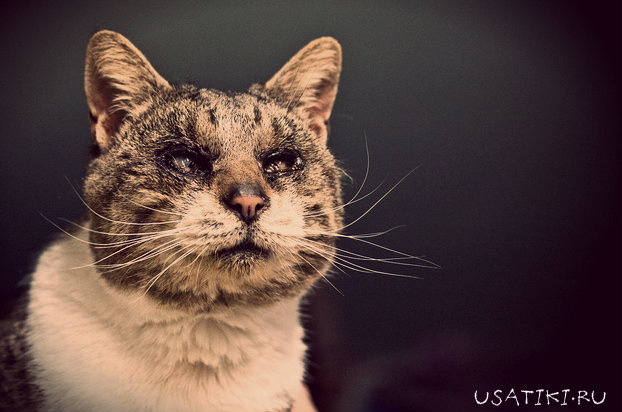
Symptoms of an eye burn in dogs and cats are hard to miss:
- This is severe lacrimation, redness in the conjunctiva, and the white of the eye becomes bloodshot.
- The pet is restless, tries to scratch its eye on soft objects or rubs its face with its paw.
- The eyelids don't open, and there may be frequent blinking. If you look at the cornea, damage will be visible (you won't be able to determine its integrity at home).
If you don't see that your pet has come into contact with chemicals, you might not even immediately realize that these are all symptoms of a chemical eye burn in a cat or dog. They can be mistaken for signs of conjunctivitis, corneal ulcers or any other eye diseases.
First aid and treatment for eye burns in cats and dogs
Without first aid, a cat or dog with a chemical eye burn can lose their sight. First, flush the eye with copious amounts of water. Not a liter, not two, but much more! Rinse the eye constantly for 10-15 minutes (ideally, with a shower or hose to flush as much water as possible). This will reduce the concentration of the "aggressive substance." The damage will be less severe.
Neutralize whatever burned your pet. Remember chemistry. Acids should be neutralized with alkalis (a weak solution of baking soda, no more than 2%, will do), and alkalis should be neutralized with acids. The most readily available "household" acid is acetic acid (a weak 2% aqueous solution).
Treatment for a cat or dog with an eye burn
After providing first aid, your cat or dog will need treatment for an eye burn. Be sure to get the jar, or at least the label, from the jar your pet poked their nose into. Once the veterinarian has a list of the ingredients, it will be easier to select medications that will restore the damaged eye.
Don't apply any ointments or drops yourself. Let your veterinarian advise you on what drops or ointments your pet needs. The more severe the injury, the longer the treatment will take.
Preventing eye burns in cats and dogs
Preventing eye burns in dogs and cats involves avoiding any contact with household chemicals or other harsh substances, keeping them away from jars, tubes, and bags. When cleaning your home, keep animals away from you to prevent them from sniffing or licking surfaces you've accidentally treated. Washing your floors with chemicals? Rinse thoroughly with water, more than once. Cats don't necessarily need to lick the floor or tiles; they can walk on wet surfaces and then use their paws to wash their faces. This can cause a chemical burn.
Any questions? You can ask our website's staff veterinarian in the comments below, who will answer them as quickly as possible.
Read also:


1 comment
Xenia
What should you do if you find a kitten with bulging eyes? It's splashed with something (probably foam). The kitten is very small, about 1 month old!
Please tell us what we should do?
We can't take them to the veterans!!!
Add a comment