
Obesity in dogs
Obesity in dogs is a serious condition that, if left untreated, can significantly reduce a pet's lifespan and quality of life. The problem arises not only from an improperly chosen diet but also from excessive portion sizes and other factors. Many owners believe that the more food in the dog's bowl, the more satisfied their dog will be, but in reality, this approach does more harm than good. Improper feeding practices often lead to negative health consequences.
Content
Reasons
Before starting treatment, it's important to understand the underlying cause of the excess weight. There are many causes of obesity in dogs, and one of the most common is overfeeding.
Overfeeding
Owners often overdose, ignoring recommended dosages, or feed a portion that exceeds their dog's daily calorie requirements. Therefore, it's crucial to calculate the correct amount of food. If dry food is used, the packaging usually indicates how many grams are required per kilogram of body weight. When feeding natural food, the food should be easily digestible—not too fatty or excessively caloric.
Be sure to pay attention to the animal's activity., age, and health status. Females need smaller portions, but if they're pregnant or nursing, you'll need to increase the amount. It's best to feed more frequently, but in small amounts. A smaller bowl will make things easier.
Low animal activity
Obesity in dogs occurs not only because of high calorie intake but also because they aren't expended. If a pet is inactive, and walks are limited to five minutes only to relieve themselves, the risk of obesity is high.
Metabolic disorder
Animals also often suffer from metabolic imbalances. If it's too fast, your dog will be thin, even if he eats a lot (but you should be sure the animal doesn't have worms or any underlying pathological processes). But often, the imbalance slows down. And that's where serious problems begin. Not only does obesity develop, but the pet may also develop diabetes mellitusBecause of this, excess weight in dogs becomes a real problem.
Stress
Many have heard the expression "stress eating." Animals also experience stress. But they can only eat if a person succumbs to their sweet, pleading eyes and puts food in their bowl. Remember, dogs eat as if they're in reserve, as if no more will be given. Dogs who previously lived on the street are especially susceptible to this "eating habit." They often fear that they won't be fed again. And fear is a stress factor for them. Be patient; it takes time for an animal to realize that its hungry days are over. But even if your dog was brought home from a kennel, try to monitor its mental health.
Predisposition
Some breeds (Dachshunds, Labradors, and Rottweilers) are genetically predisposed to obesity. Their diet should be monitored, choosing a special dietary food. If your pet's parents were overweight, there's a high risk that your pet will also become round and covered in fat.
Symptoms of Obesity in Dogs
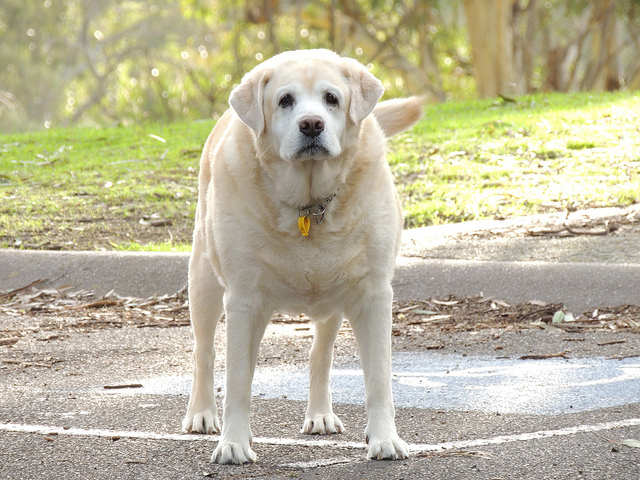
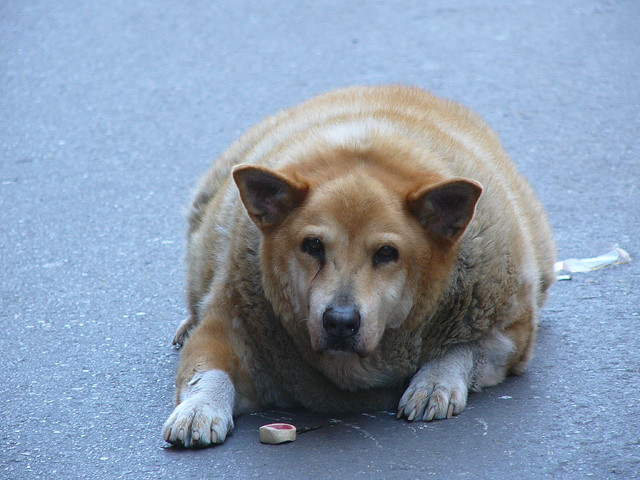
Obesity in dogs has symptoms almost identical to those in humans. Fat deposits appear, first under the skin and then on the internal organs. However, it's crucial not to confuse excess weight with edema or other medical conditions. For example, many owners think their puppy is simply plump and well-fed, when in fact, they have a severe intestinal infestation—a worm infestation.
The main sign that a dog is already developing obesity problems is difficulty seeing the ribs. Normally, when a dog runs or moves, the last two ribs are visible (they are shorter and don't connect to the sternum). When a dog is obese, they are no longer visible. Furthermore, they are extremely difficult to palpate. There is already a significant amount of subcutaneous fat.
Your belly gradually becomes rounder, and fat is deposited evenly throughout your body. The thicker the fat layer, the greater your obesity and the higher your risk of developing serious internal diseases. This means you should sooner replace your usual diet with dietary fat-fighting foods.
Another symptom is a "waddling" gait, caused by fat pads on the hips. Excess weight makes it difficult for the dog to walk, and shortness of breath may develop. And it's a vicious cycle. If the animal walks little, it's not losing weight, but rather gaining it, and the more weight it has, the harder it is to walk. This is why the animal spends more time lying down.
Why is it necessary to fight obesity?
If obesity in dogs is left untreated, a number of health problems will quickly arise. It's impossible to immediately predict which organ will be affected first. Everything suffers, albeit gradually, at the same time.
Heart
It's forced to work almost to the point of exhaustion. Furthermore, cholesterol levels in the blood increase. There's a high risk of plaque formation, clogged blood vessels, or impaired blood flow. Blood pressure rises. Anyone who's ever had hypertension understands how terrible it can be. High blood pressure is dangerous because it can cause blood vessels to burst (including those in the brain).
Joints
Due to their heavy weight, they experience enormous stress, become deformed, and thicken. Osteochondrosis develops. Over time, it becomes extremely difficult for the animal to simply move. The joints become increasingly difficult to bend.
Liver
Fatty degeneration develops. The liver performs dozens of functions, and not all of them are related to digestion. And if this organ suffers, everything in the body goes haywire. The eyes, or more precisely, the whites of the eyes, can give clues to a diseased liver. They begin to turn yellow. And the more pronounced the yellowing, the more serious the problem. Jaundice It occurs due to increased bilirubin levels in the blood. It affects the brain, so the animal needs to be treated as soon as possible.
Pancreas
The pancreas also has a hard time. This can lead to diabetes. Then, the diet will need to be carefully calibrated, with carbohydrates carefully considered to avoid harming the animal. In very severe cases, insulin injections are necessary.
Treatment
Treating a dog for obesity is absolutely necessary. Even though it may seem funny and endearing in some cases, there's nothing funny about it. The animal suffers, and the entire body experiences significant stress, which will ultimately shorten its lifespan.
Natural nutrition in the diet
If your dog is confirmed to be obese, treatment should begin the same day. Avoid adjusting the diet yourself. Many owners make a huge mistake: starving their dogs. This will only cause more harm.
- Review your diet. Reduce the amount of food per serving. Feed more frequently, but in smaller amounts. This is called fractional feeding. Eliminate all fatty foods.
- Enrich your diet with vegetables. Firstly, they're full of vitamins. When dieting, it's crucial to maintain a healthy intake of these nutrients. Secondly, vegetables are rich in fiber, which cleanses the intestines, allowing them to function better. Thirdly, you can eat plenty of vegetables because they're extremely low in calories.
- Porridge for dogs Choose low-calorie options: oatmeal, buckwheat. Cook them in water without salt or oil. Porridge will quickly fill your pet up. No potatoes or rice. These are extra carbohydrates that will add even more pounds. But don't overindulge in grain-based foods.
- It cannot be ruled out meatProtein is essential for muscle growth. After all, in addition to diet, your dog will need to exercise to burn calories. But be sure to consult your veterinarian about the specific types of exercise and the appropriate amounts. If your dog is very overweight, running will be very difficult, and it will also put additional strain on the heart and joints.
Choose lean meats, removing all fatty particles. Chicken, beef, turkey, and rabbit are good choices. Along with diet, symptomatic treatment is necessary (to strengthen the heart and blood vessels, restore the liver, and bind and remove bilirubin from the intestines so it doesn't have time to be absorbed and enter the bloodstream). A veterinarian will provide a detailed treatment plan and prescribe medications in therapeutic doses.
Industrial feed
If you feed your dog dry food, immediately stop feeding him the dry food he's always been given. It's likely the cause of his obesity. You need to find a new dietary food for dogs prone to obesity. It's rich in vitamins but low in calories, so the extra pounds will be lost slowly. Choosing a dietary dog food isn't easy. Grain-free is best. Wellness Core Reduced Fat, EVO Reduced Fat, and Orijen Senior are popular weight-loss foods worldwide. They're not cheap, but they're worth it. They're perfectly balanced, with all the right ratios.
Physical activity
Your dog shouldn't lose weight too quickly! It's better to do it slowly, gradually, so their metabolism can speed up and their body can adjust. Exercise should also be increased gradually. Start with just long walks; your dog should walk a lot. Increase the distance by a kilometer each day. It will be beneficial for you.
As soon as you notice your dog starting to lose weight, you can add exercise. Try sprinting (fetch, run), jumping over hurdles. Increase the amount of time you spend on walks. If possible, take your dog to special exercise areas, or seek help from a dog training center. A dog trainer will develop a special weight-loss program. First, your dog needs to lose weight.
Over time, the body will adapt to the exercise, so it's important to increase it wisely. Once the fat disappears, you'll notice how much your dog enjoys the workout. She'll happily continue to do all the exercises. Her muscles will begin to build, and her heart will strengthen.
Consequences of obesity and associated diseases in dogs
The consequences of obesity in dogs can be quite serious and affect many body systems. Key health conditions that often accompany obesity include:
- Metabolic disorders (hyperlipidemia, insulin resistance, glucose intolerance, complications of anesthesia)
- Endocrine pathologies (hyperadrenocorticism, hypothyroidism, diabetes mellitus, insulinomas, pituitary adenoma)
- Functional disorders (shortness of breath, hypertension, difficult labor, intolerance to physical activity and heat, diseases of the musculoskeletal system, especially joints)
- Cardiovascular diseases
- Increased susceptibility to cancer
Additionally, overweight dogs live, on average, approximately 20% less than pets in normal condition.
Any questions? You can ask our website's staff veterinarian in the comments below, who will answer them as quickly as possible.
Read also:
- Pancreatitis in dogs
- Stroke in Dogs: Symptoms and Treatment
- Ataxia in dogs: what it is, symptoms, and treatment
- Diabetes Insipidus in Dogs: Symptoms and Treatment


5 comments
Karina
Hello, I would like to know how many grams of dry food does a Maltese (5.7 kg) need?
Pohudet.Org
Given the negative health consequences of obesity for a pet, treatment should be supervised by a veterinarian. Losing excess weight is a comprehensive and long-term process.
Dasha is a veterinarian
I completely agree with you. Obesity isn't always due to poor nutrition alone. Often, excess weight is caused by a serious medical condition (for example, endocrine gland dysfunction, gastrointestinal problems, or metabolic disorders). Simply stopping feeding and increasing exercise isn't the right approach. Weight loss should be slow, monitoring your pet's condition. Supportive therapy may be necessary.
Irina
Hello. I have a 9.5-year-old female spaniel. I feel a lump on her left side. An X-ray showed an enlarged kidney and heart. Blood work is normal. Urination is normal, no blood was detected. However, in the evenings, her breathing becomes rapid. Please tell me: could an enlarged kidney be due to obesity? And how can I help her? What should I do with the kidney? The doctors are not saying anything clear. Lose weight and that's it. But the lump won't go away. When I palpate her, I can see that she's uncomfortable. Thank you in advance for your advice.
Dasha is a veterinarian
Hello. Your pet is already advanced in age, so changes in the internal organs may be occurring. Shortness of breath in the evenings is due to heart problems (edema may also appear in the evenings; unfortunately, these are symptoms of problems with the body's "motor"). And as the heart begins to function less efficiently, other organs gradually begin to fail. What exactly did they say about the kidney? It wasn't just that the organ was enlarged. Did they explain the enlarged renal pelvis, the medulla, or the general hypertrophy? Could there be hydrocephalus or inflammation? Were there any other changes mentioned? Obesity triggered heart problems, and then other problems followed. Losing weight won't improve the kidney's health, but it will significantly reduce the strain on the heart and diseased organs, the joints, and the spine. No medication will restore the kidney's size, but losing weight will indeed improve your pet's well-being. Now you need to reduce the calorie content of your diet, enrich it with vitamins and micro- and macroelements (especially magnesium and potassium, but don't overdo it, as you need to be careful with them), and gradually increase physical activity (start by increasing the time you walk).
Add a comment