
Obesity in cats
Obesity in cats isn't just unsightly, it also has detrimental effects on their health. You'll learn about the impact of extra pounds on a cat's body below. First, let's explore the causes of weight gain in cats.
Content
Reasons
Let's look at the objective causes of obesity in cats. The most common is overfeeding. Many people think their cat knows when to stop, so they stuff their food bowl with as much as they can. As a result, their pet may overeat, which inevitably leads to excess weight.
The most common
- Incorrect feeding. You can feed a little, but incorrectly (we will tell you what is correct later), which leads to metabolic disorders.
- Metabolic disorderWhen metabolism deviates from the norm, two scenarios are possible. Either the cat becomes very thin (this occurs with an accelerated metabolism), or the cat becomes obese (if it's slow). Metabolism can be disrupted by improper nutrition (including mixing or alternating natural food with dry food), an infectious disease, or even diabetes.
- Lack of physical activityIf your pet is extremely lazy, unwilling to move, or doesn't have enough space for active play, sooner or later your cat will begin to accumulate fat on its sides.
- PredispositionSometimes a tendency toward excess weight in cats is inherited (for example, the British breed), and such pets need to be fed very carefully! Overfeeding or an imbalance will inevitably result in a furry lump of hair lying on the couch instead of an active pet.
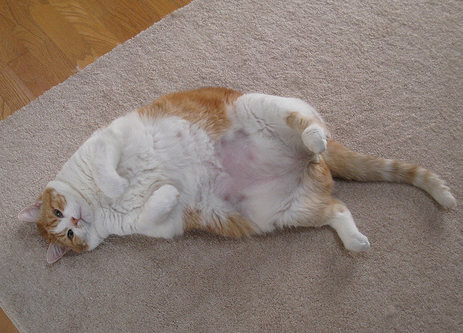
Hormonal disorders
When hormonal levels fluctuate, everything in the body goes haywire. Not only does the cat become obese, but their coat also becomes significantly less healthy, and their skin may lose elasticity. These changes can also be caused by a gland malfunctioning (the pancreas, thyroid, or, in females, the ovaries, among other glands). Therefore, if you notice your pet gaining weight, even though you're still feeding them the same, running around, and acting just like before, take them to the vet! Hormones are no joke.
Neutering and spaying as causes of obesity in cats
Some people notice that male cats gain weight after castration and female cats gain weight after spaying. They try to blame this change on the surgery (the consequences). In reality, excess weight in cats occurs due to changes in their metabolism. After all, the testicles and ovaries are not just organs, but glands with mixed secretions. Their removal leads to changes in the animal's hormonal balance. And this change inevitably leads to a weight gain. Therefore, pets who have undergone surgery require special feeding.
If you feed your pet dry food, you should switch to a special food for neutered/spayed cats. Don't skimp on nutrition. Be sure to provide clean water, which you change regularly. It's best to filter the water, otherwise there's a high risk that insoluble salts in tap water can lead to the development of urolithiasis in catsIf you skimp on water when feeding dry food, your pet may also develop urolithiasis.
Symptoms
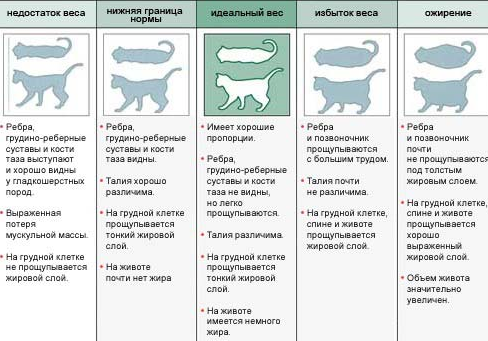
How to identify the symptoms of obesity in cats. First, a cat's ribs become prominent. The more excess weight they have, the harder it is to feel them. Over time, they become increasingly difficult to see. Even breathing becomes almost imperceptible. Walking becomes more difficult. The cat has a "duck-like" gait, as if waddling from one paw to the other. It's one thing when a cat is carrying kittens—that's normal physiology—but when a non-pregnant pet waddles like this, it's essential to pay attention.
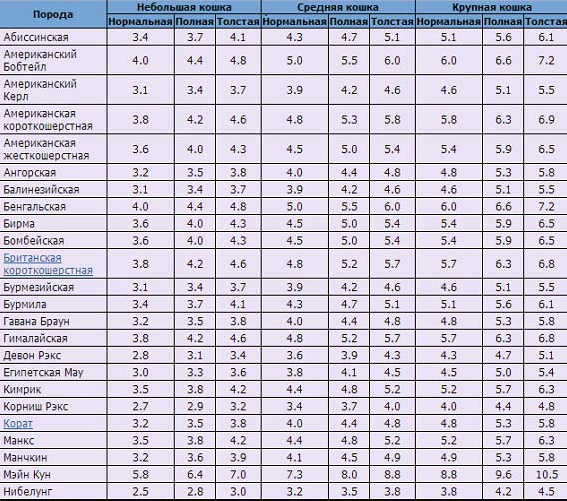
See the images below to learn exactly how to determine the degree of obesity or emaciation in a cat, as well as to become familiar with the normal weight of a pet depending on its breed and gender.
.png)
What are the dangers of obesity?
Obesity in cats is far from harmless, as it may seem at first glance. What are the dangers?
| Musculoskeletal system | This places enormous strain on the musculoskeletal system. Joints suffer greatly and become deformed. Excess weight makes a cat less agile, less agile, and less playful. This only leads to even less exercise, further weight gain, and a slower and slower metabolism. And if a fat pet decides to jump, their joints will be in serious trouble. |
| Internal organs | Of course, there's a layer of fat around them that protects the organ (like a cushion that cushions impacts). But if the amount of fat exceeds the norm, the organ begins to degenerate, and the animal develops fatty degeneration (the liver is the first to suffer). |
| Cardiovascular system | We can't forget about the cardiovascular system either. The vessels are full of plaque, and atherosclerosis is developing. The heart has increasing difficulty pumping blood. Because of this, the organs are not receiving enough oxygen and nutrients. |
| Metabolism | Obesity is not only a consequence of diabetes but can also trigger its development. Therefore, it's important to be extremely vigilant. As soon as your cat becomes overweight, immediately address its feeding and investigate the underlying cause! Otherwise, you'll need to treat your diabetic cat later. |
What to do?
How to combat obesity in a cat? The first step is to seek veterinary help. This is necessary to rule out any underlying medical conditions (chronic or related to the endocrine glands). The veterinarian will recommend how and what to feed your obese pet.
Don't expect miracles, like your cat will quickly lose weight and become a svelte creature if she's overweight. No, she won't. The pounds should come off gradually—this will be a normal weight loss process. And the closer she gets to the normal weight, the slower the fat loss will be.
No hunger strikes
Never starve your pet!!! This will not only worsen the problem and slow down the metabolism, but also lead to the development of other diseases (gastritis, ulcers, enteritis, and others). It's better, on the contrary, to feed more frequently, but in small portions. Roughly speaking, the daily food ration should be divided into equal portions (the number of times you'll be feeding, for example, 3-4).
This will cause the stomach to gradually shrink. The amount of energy needed per day will remain the same, but it will be supplied gradually. And if the body needs it, it will begin to break down its reserves. It's as if the body understands that it no longer needs to "hoard" or store food, because food will be available. This principle is called fractional eating. It is also widely used by people suffering from excess weight.
Feeding an obese cat
You shouldn't limit your pet to a single diet (for example, only meat, only cereal, only vegetables). Such diets for obese cats are only prescribed when a medical condition is diagnosed. However, weight loss (without health consequences) is unlikely. A protein-only diet is harmful to the kidneys. Therefore, the diet should be varied.
It's best to switch your cat to a specialized food for overweight cats if they're already eating commercial pet food. Almost every brand has one, and more than one.
If, for ideological or any other reasons, you feed only natural food, then the recommendations are as follows:
- Lean meat (skinless chicken, no salt, no seasonings);
- Boiled fish;
- Low-calorie and easily digestible porridges (buckwheat, oatmeal), boiled vegetables (but not potatoes, onions and garlic are generally prohibited);
- Cottage cheese, kefir, yogurt with a low percentage of fat or completely fat-free (they are full of calcium).
Let us repeat once again: when feeding an obese cat, you need to feed it a balanced diet – you cannot give just one thing from this list.
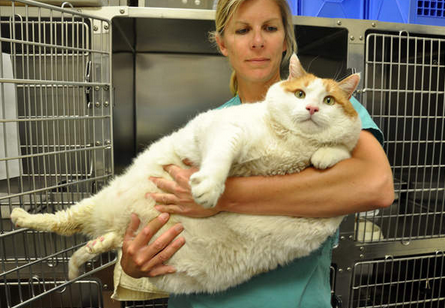
Prevention
Preventing obesity in cats is quite simple—there are a few simple rules to follow:
- Don't overfeed! And also, monitor the quality of the food. Don't skimp on it. Don't mix or alternate dry and natural foods. You can often tell by eye how much food is normal for a cat and how much isn't. And even if your plump little furry friend demands his portion, be firm and feed on schedule. After a week or two, he'll give in.
- Don't limit your pet's playtime. Provide plenty of exercise, as cats are predators by nature and need to run to feed themselves. Don't deprive them of this opportunity. Food is put in their bowl at the first meow, so what else is there to do with all that energy? Play more often, let your cat run around, otherwise they'll quickly become overweight.
- Change their diet. If your pet is spayed/neutered, be sure to review their diet and consider a special diet. And be sure to play with your furry four-legged friend more often.
If you have any questions about obesity in cats, ask them in the comments!
Read also:
- A cat wants a male cat and vice versa: what to do
- Pancreatitis in cats
- Laparoscopic sterilization of cats


4 comments
Julia
Hello. Our cat has been diagnosed with diabetes, with a blood sugar of 13.7. Yesterday we started Lantus injections, one dose morning and one dose evening after meals. We're following the doctor's instructions. We feed him half and half Royal Canin Obesity and Satieti food: half a soft packet in the morning and about 17 grams of dry food. The doctor told us to feed him as directed. But he's clearly hungry, screaming and trying to gnaw on plant leaves. He weighs 6.3 kg and needs to lose weight to 5 kg. Is it possible to give him at least a little food at lunch, or should we split the daily ration into three feedings? Thank you.
Daria is a veterinarian
Hello! It's recommended that feeding for diabetes be organized according to the medication schedule. If you administer the medication twice a day, then feed twice. If you administer the medication three times a day, then you should also feed at lunch. However, fasting is also unacceptable with diabetes. Generally, cats losing weight require food at first (they're used to eating larger amounts, and their stomachs are still large). Choose a low-carbohydrate diet (6-15%). Are you monitoring your cat's blood sugar in the morning? How is he drinking and urinating? Have you had an ultrasound examination of his pancreas? Is it severely damaged? If your cat is particularly fussy, divide the meals into three meals, giving a small snack at lunchtime, but monitor his blood sugar. If the levels aren't normal, then return him to two meals a day.
Natalia
Hello! I have a plump, spayed British Shorthair cat who continues to gain weight. We feed her dry food (usually Royal Canin) for spayed cats, and we also give her pouched wet food (Felix, Whiskas).
Question: Should I mix dry and wet food? Or is it better to feed only dry food? If so, is it essential that they be from the same brand and series?
Thank you in advance for your reply.
Sincerely, Natalia
Dasha is a veterinarian
Hello! Let's start by saying that you're mixing super-premium and budget-class foods. It's like eating instant noodles (like Rollton or Doshirak) or cheap chips in the morning and veal in the evening. Is that healthy and proper nutrition? Therefore, feed only high-quality food. Ideally, you should feed either dry or wet food. But if you really want to pamper your dog, then feed wet food (just don't mix them in the same bowl) and choose high-quality food.
As for weight gain, how long ago was it spayed? Animals typically gain a couple of pounds quickly after castration. That's why you need to watch their diet.
Add a comment