
Otterhound
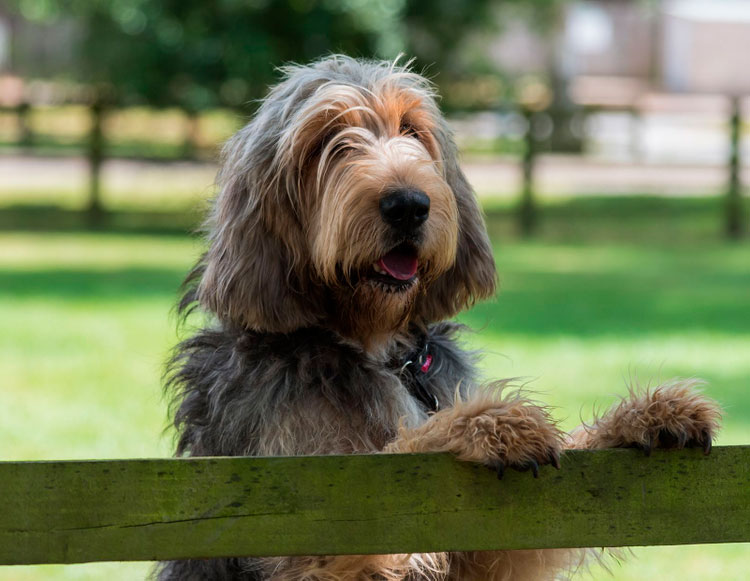
The Otterhound is a large, wire-haired dog bred in England to hunt otters, hence its other name, the Otterhound. Today, it is used as a gundog and companion. It is listed as a rare and endangered breed.
Content
History of origin
The modern Otterhound is a vulnerable native breed native to Great Britain. No more than 30 puppies are registered in the UK each year.
Otterhounds are believed to have been developed from bloodhoundThe first written mention of the breed dates back to the 1100s. At that time, otters were considered vermin and were hunted not only for food but also to protect fish in ponds. Various hounds were used, but many were unsuitable for this type of work for various reasons. The Otterhound as we know it today developed around the 18th and 19th centuries. It was first shown at a show in Leeds in 1861. It was recognized as a distinct breed by the English Kennel Club in 1910. The Otterhound Breeders' Association was also founded at that time. The breed was recognized by the Fédération Cynologique Internationale in 1974.
In the late 1970s, otter numbers declined sharply, and hunting was banned. Only two kennels remained, housing 65 purebred otterhounds. These dogs were registered with the English Kennel Club and became the core of the breed, the progenitors of all modern otterhounds.
The Otterhound was one of the fundamental breeds in the development of Airedale Terriers.
There are approximately 1,000 Otterhounds in the world today. Just under half of them live in the United States, the rest in the UK and other European countries.
Purpose
For centuries, otterhounds have been used to hunt otters in rivers and lakes. The dogs worked in packs and on their own. They tracked, pursued, and killed the animals. Their keen sense of smell allows them to detect otter scents up to 12 hours old, even if they pass through water.
The Otterhound can pursue game on land and water. This ability makes it unique.
Otterhounds are excellent swimmers and divers. With proper training, an Otterhound can work all day long, tracking a trail on land for up to 12 hours without a break, and swimming for up to 5 hours on water. The dog is very strong, courageous, and agile enough to handle a sharp-toothed, 7-kilogram creature. An Otterhound tracks with a voice.
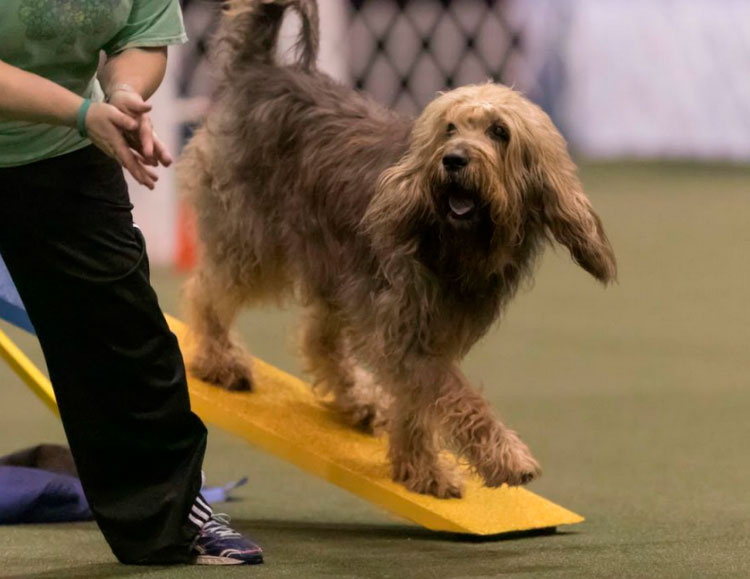
With the ban on otter hunting, otterhounds have had to find other uses. They are primarily used for drug detection and hunting other small game. Some dogs compete in agility, tracking, and other competitions.
Appearance
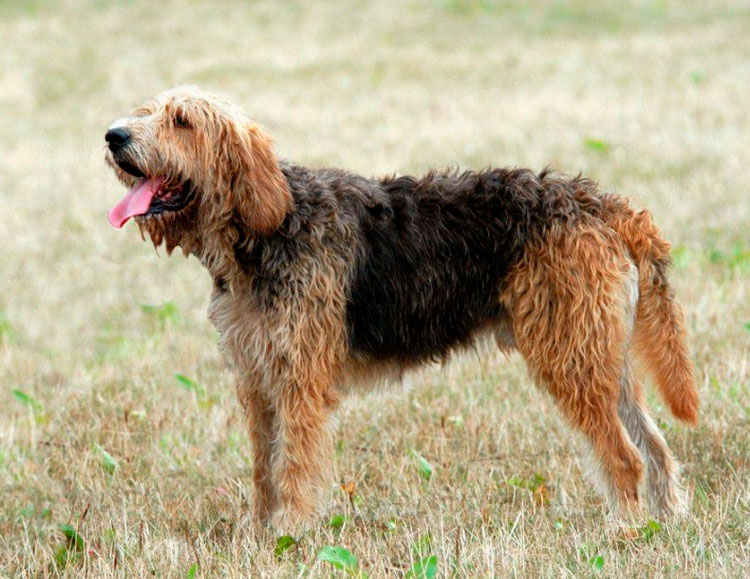
The Otterhound is a large, wire-coated dog with a massive head and straight legs, a strong body, and a sweeping gait. Sexual dimorphism is pronounced.
- Height at the withers of males is 69 cm, weight is 52 kg;
- The height at the withers of bitches is 61 cm, weight is 35 kg.
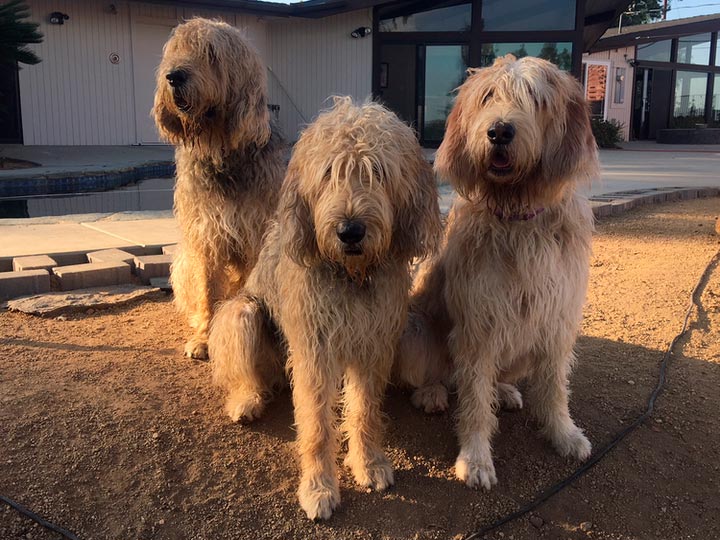
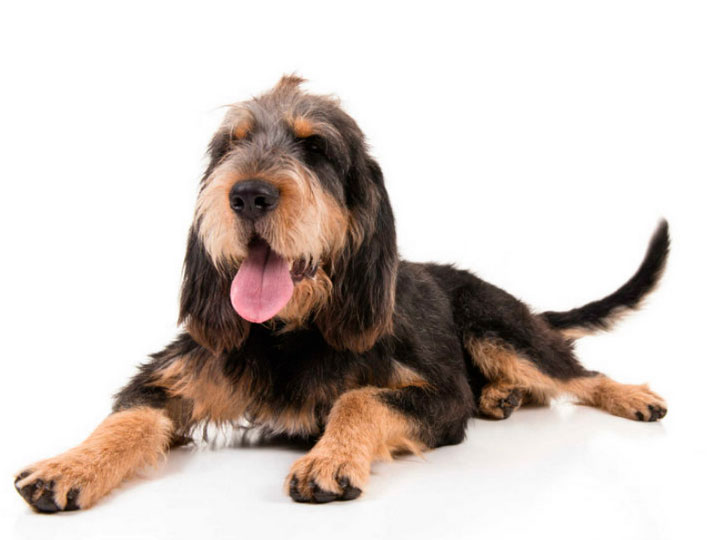
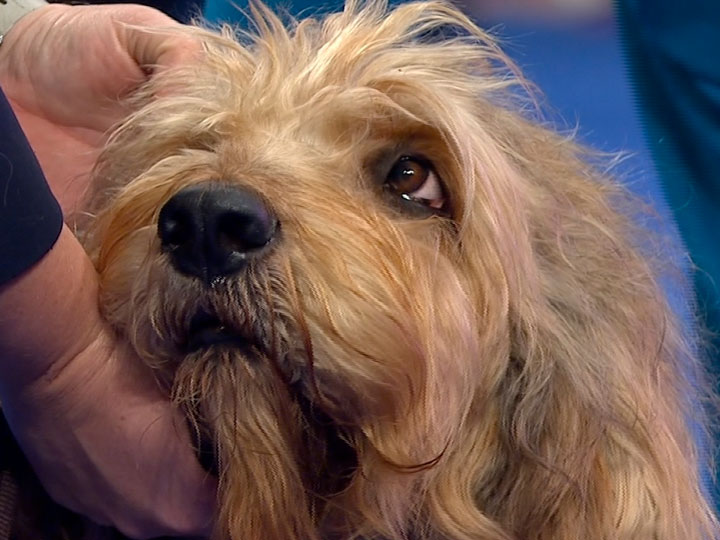
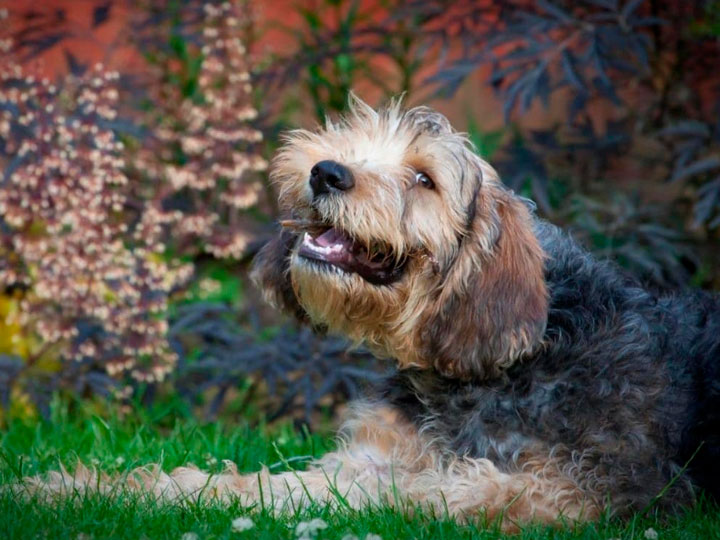
The head is impressive, well-covered with coarse hair, which forms a small beard and mustache. The skull is domed. The stop is distinct. The muzzle is strong and deep. The nose is wide and open, with open nostrils. The lips are large, forming slightly overdeveloped flews. The jaws are strong and large, with a scissor bite. The eyes are moderately deep-set, and their color depends on the coat color. The ears are long, set level with the corners of the eyes, and pendulous, reaching to the nose. The auricle has characteristic folds, with the front edge folded and curled inward.
The body is very strong with a long, powerful neck. The topline is level. The back is broad. The loin is strong and short. The chest is deep, fairly long, not too wide, with well-sprung ribs. The tail is set high, thick at the base, tapering to a point, and carried straight or with a slight curve. The underside of the tail has longer and more abundant hair. The limbs are strong, with strong bone. The forelegs are absolutely straight. The hind legs are moderately angulated. When standing naturally, the hocks are perpendicular to the ground. The feet are large and round, with arched toes and strong, thick pads. Compact, but may spread. There is webbing between the fingers. The hind legs are slightly smaller than the front ones.
The coat is long, dense, harsh, coarse, and water-repellent, but not wiry. The coat is 4-8 cm long. The head and lower legs have a softer, shorter coat. The undercoat is prominent. The coat may have a light oily sheen. All colors permitted for hounds are acceptable. Small white markings on the chest, head, paws, and tip of the tail are permitted.
Character and behavior
The Otterhound is a friendly, amiable dog with a loud, resonant voice, which it only uses when necessary. It has a pleasant, even temperament; nervousness or aggression are disqualifying factors. It is very passionate about work and devoted to its owner. It is very attached to all family members. Active and resilient, it behaves calmly during walks at home. It is not a tidier dog and enjoys rolling in the nearest swamp.
The Otterhound is a wonderful family dog that adapts to any living conditions, gets along with childrenUsually gets along well with dogs. Small animals may be considered potential prey.
The Otterhound is highly energetic, with a strong hunting instinct. It was bred for hard work, endurance, and a single-minded focus—the chase.
Otterhounds can be somewhat independent and stubborn. They are overly active when young, making training and education challenging. Owners will need patience and a great deal of time to achieve good results. Otterhounds respond best to positive training methods. Some can be clicker trained.
Content Features
Otterhounds adapt well to apartment life, provided they receive adequate physical and mental stimulation. The ideal environment is a free-range yard in a private home. The yard should be well-fenced. A low fence will easily allow the dog to jump over it or attempt to dig under it. When on walks, remember that the Otterhound is a hound. If the dog doesn't respond perfectly to commands, it's best to keep it on a leash.
The pursuit instinct remains very strong. If an otterhound is truly attracted to a scent, it's very difficult to stop.
Owners should pay special attention to nutrition and injury prevention until the dog reaches one year of age. Otterhounds require long walks and will enjoy hikes along rivers and playing on the beach. Once the dog sees food and a sofa, its preferences will become clear. Otterhounds have long, wiry hair with a thick, oily undercoat. This type of coat provides protection in hot and cold weather, preventing hypothermia after hunting in cold water.
Care
Otterhounds need to be combed and brushed once a week. Particular attention should be paid to the beard, behind the ears, under the elbows, in the groin area, and on the tail, where mats are most likely to form.
At exhibitions, Otterhounds are shown in their most natural form. Trimming not required.
The ears are cleaned once a week to remove accumulated dirt and wax. Teeth brushing is recommended weekly. Nails usually wear down on their own. If not, they are trimmed to an optimal length as they grow. Dewclaws are not forgotten. The brushes between the toes are trimmed for the dog's comfort. Bathing is infrequent, only as needed. The natural oils moisturize the coat and skin and enhance water-repellent properties. For washing, use a shampoo that is not too drying and suitable for dogs with coarse coats.
Health and life expectancy
The breed is prone to several health issues. The most common are hip and elbow dysplasia. Otterhounds can also suffer from:
- epilepsy;
- ear infections;
- gastric torsion;
- thrombasthenia;
- degenerative myelopathy;
- lymphosarcoma;
- angiosarcoma;
- autoimmune disease;
- atheroma;
- heart disease;
- allergies.
As dogs age, their coats become coarser, and they experience loss of muscle tone, excess weight, weakness, development of arthrosis and arthritis, impaired vision, hearing, and other age-related problems. Life expectancy is 10-12 years.
Where to buy an Otterhound puppy
Otterhounds are primarily found in the United Kingdom and the United States. A small number of these dogs also live in Germany, Switzerland, Denmark, and Canada. Otterhounds are rare in other countries. The easiest way to find a puppy is through international breed clubs, which have information about breeders, planned litters, and puppies. Given the small number of dogs, there's a good chance you'll have to wait years to get a puppy.
Price
According to the English Kennel Club, the minimum price for a puppy is 700 pounds sterling.
Photos and videos
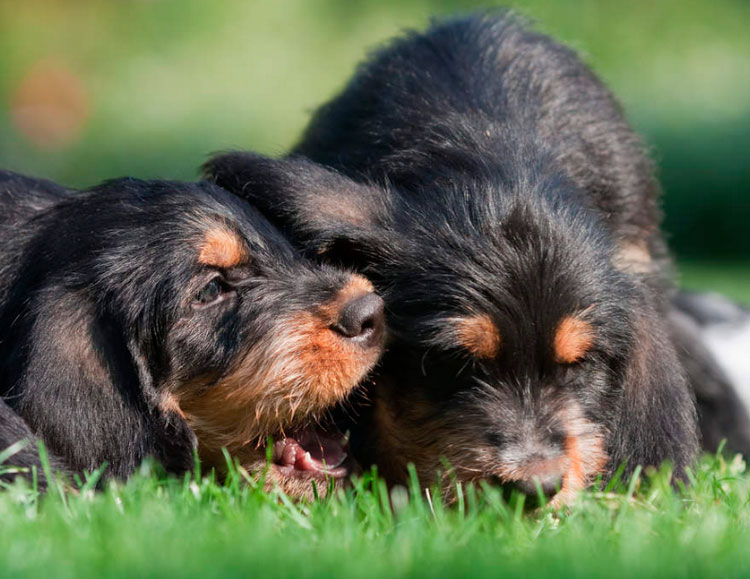
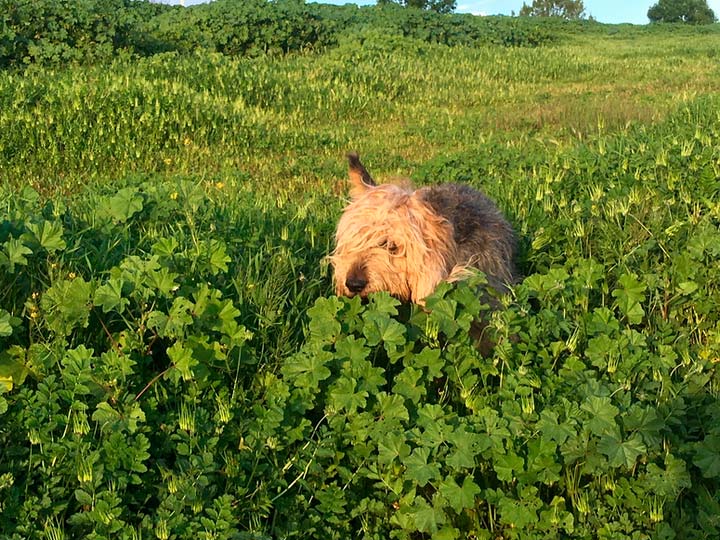
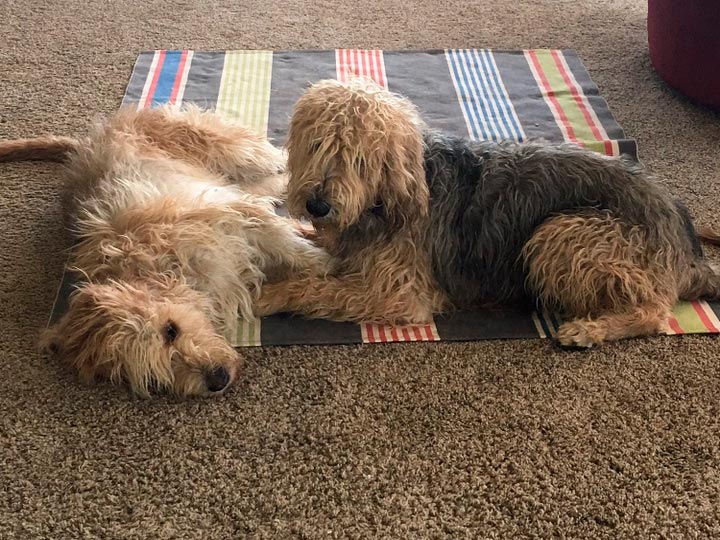
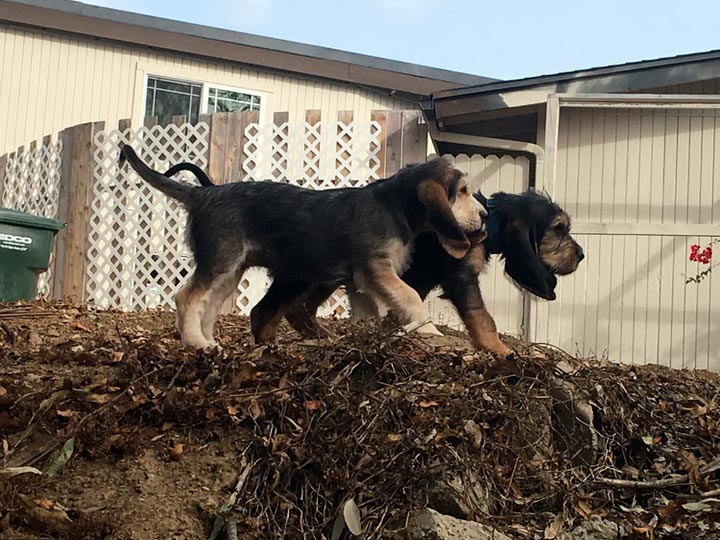
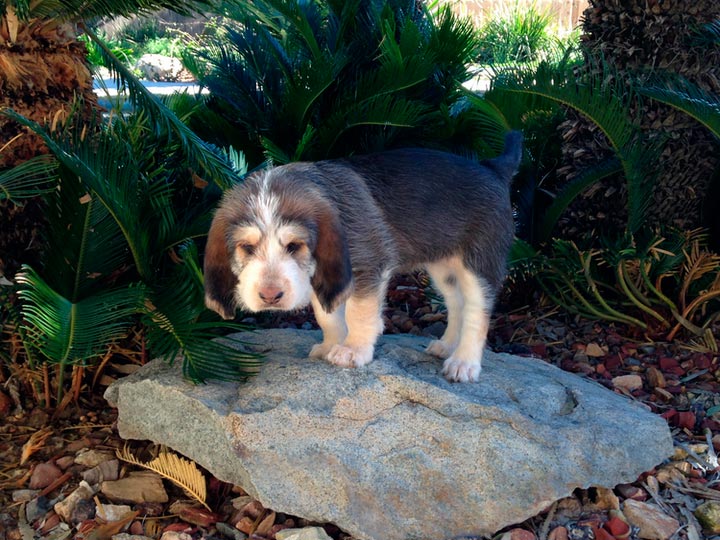
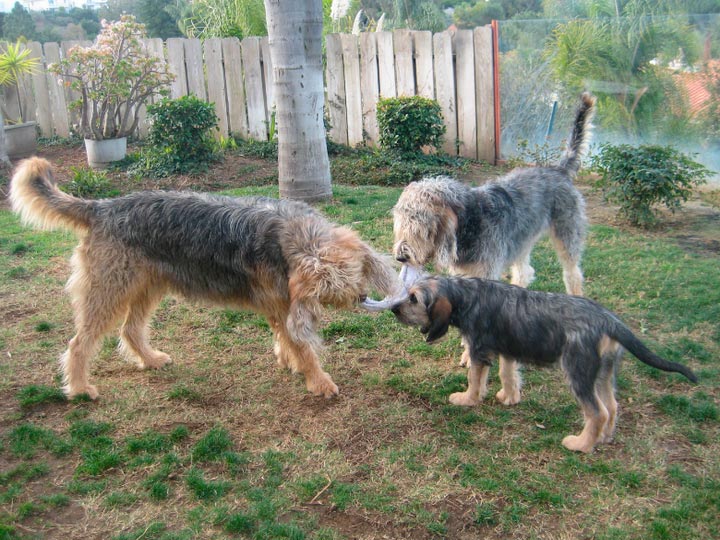
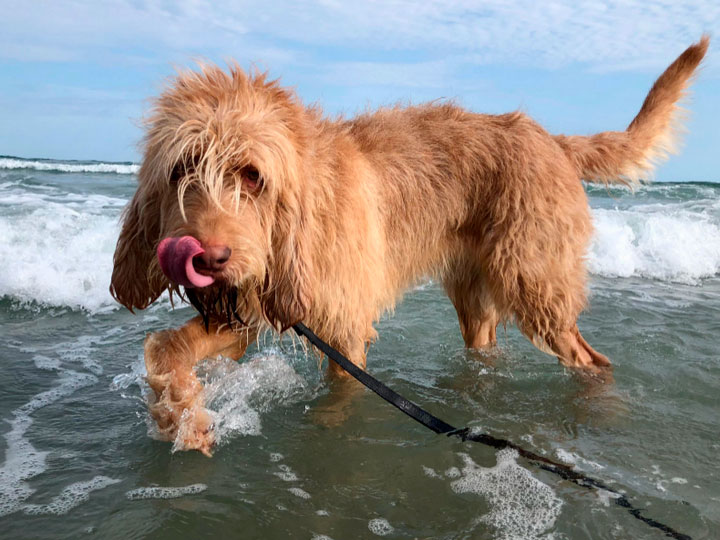
The gallery features photographs of Otterhounds of various ages, genders, and colors.
Video about the Otterhound dog breed
Read also:


Add a comment