
Ocelot is a cat
Ocelot Ocelots are a wild cat found in South and North America and have one of the most beautiful colors of all cats. They resemble a small leopard in appearance. They weigh approximately 13 kg, and their body length, including tail, is about a meter. Ocelots are rarely kept as pets; they are difficult to tame and are listed as endangered, meaning their capture and sale are strictly regulated.
Content
Ocelot in the wild
The ocelot's habitat extends from the southern United States (Texas, Arizona) through Central and South America and as far south as northern Argentina. These cats are most common in the dense jungles of the Amazon basin, but are also found in grasslands, tropical forests, mangroves, and swamps.
The Latin name for the species is leopardus pardalis, meaning "like a leopard." The name "ocelot" is most likely of Aztec origin and means "field jaguar."
Ocelots are solitary by nature. Each cat occupies a territory of 2 to 15 square kilometers. Males' ranges overlap with those of several females, but never with the territories of rivals. They are awake for about 12 hours daily. During this time, they manage to travel up to 10 kilometers, hunt, and renew their territory markings. These cats are excellent swimmers and capable climbers, but spend most of their time on the ground. In the wild, their lifespan is about 10 years. In zoos, their lifespan is typically 12-15 years; the oldest ocelot recorded was 21.5 years old.
Hunting and diet
Ocelots emerge to hunt at dusk. They spend most of the day resting in the dense vegetation of tall trees. Ocelots are highly skilled hunters, tracking their prey by scent and possessing excellent vision, including at night. Most attacks are successful. These cats kill their prey on the spot and eat it, usually hiding the remains.
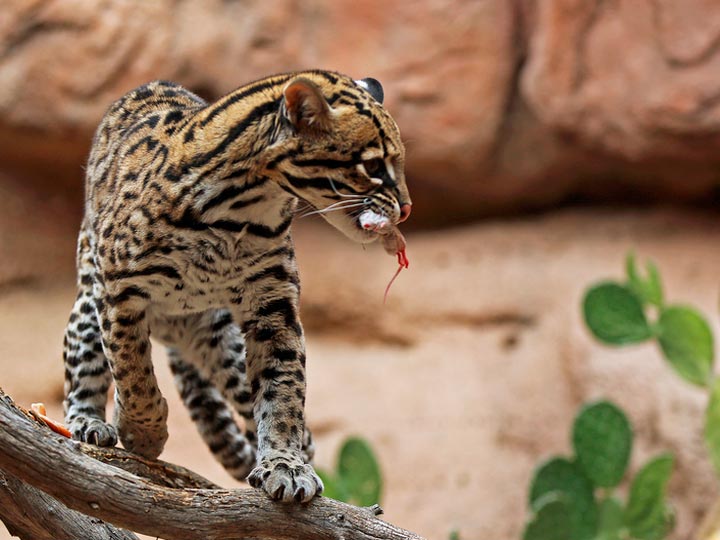
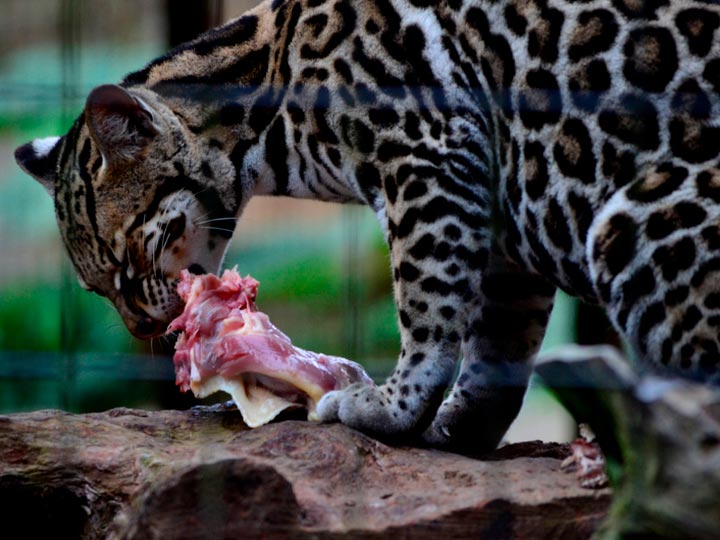
Under cover of night, the ocelot begins stalking small mammals, which form the bulk of its diet, primarily rodents. It also feeds on fish, crabs, lizards, and snakes. Occasionally, it may catch a small deer. Attacks on monkeys, armadillos, turtles, anteaters, and poultry have been recorded.
Reproduction
Ocelots can breed year-round. Like domestic cats, they are polygenic, meaning that during estrus, the female attracts several males. After courtship, which typically lasts about five days, the lovers separate. Gestation lasts 79-85 days. Litters are small, up to three kittens. Kittens weigh 200-300 g at birth. They open their eyes at 10-15 days. For the first two months of life, they feed on milk, but by three to four weeks they begin to try other foods, which their mother brings to their den. For their den, the female chooses a secluded spot in dense thickets or an abandoned burrow.
Kittens remain with their mother for up to one and a half years, sometimes a little longer. Females reach sexual maturity at 18-22 months, and males at 15 months. The fertile period lasts up to 13 years.
Threats
The main threat to the species is habitat loss due to deforestation. Cats sometimes fall prey to larger predators, such as jaguars. Kittens and young cats can also be threatened by boa constrictors, caimans, and anacondas.
The beautiful ocelot pelt has always been in demand among traders, but sales peaked in the 1960s-80s. At that time, an ocelot coat could sell in Europe for $40,000. A live kitten could fetch up to $800, a considerable sum at the time. In 1975, when ocelots were protected by CITES, hunting them became illegal, but it is still possible to buy a kitten illegally in most South American countries.
Video about ocelot cats:
Appearance
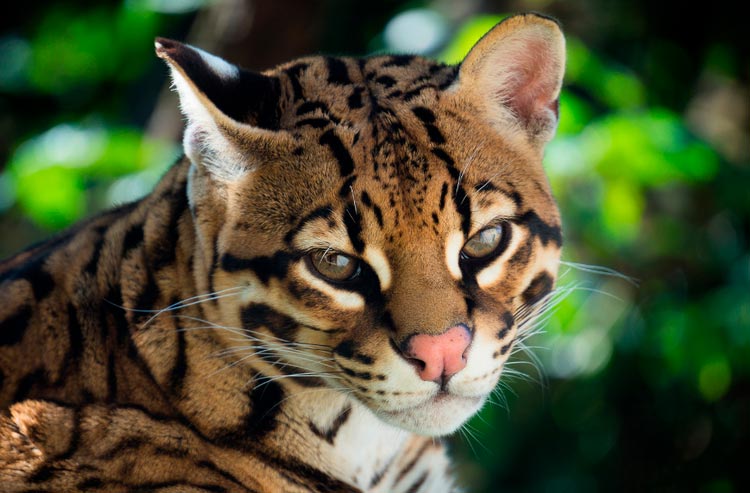
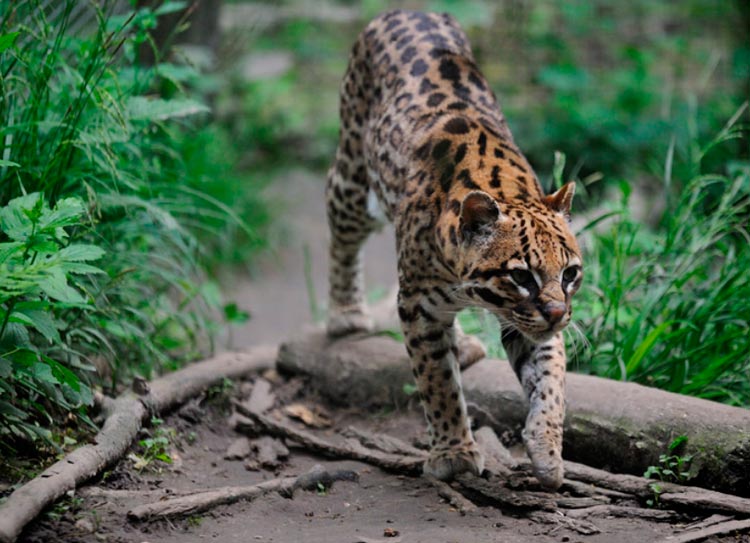
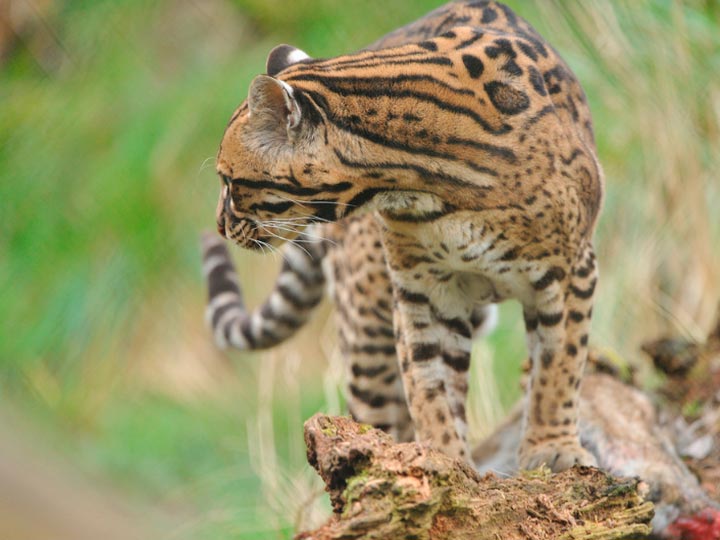
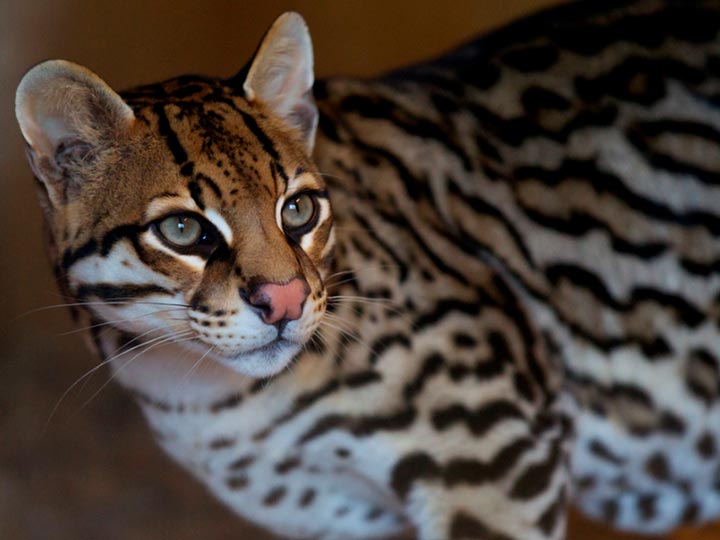
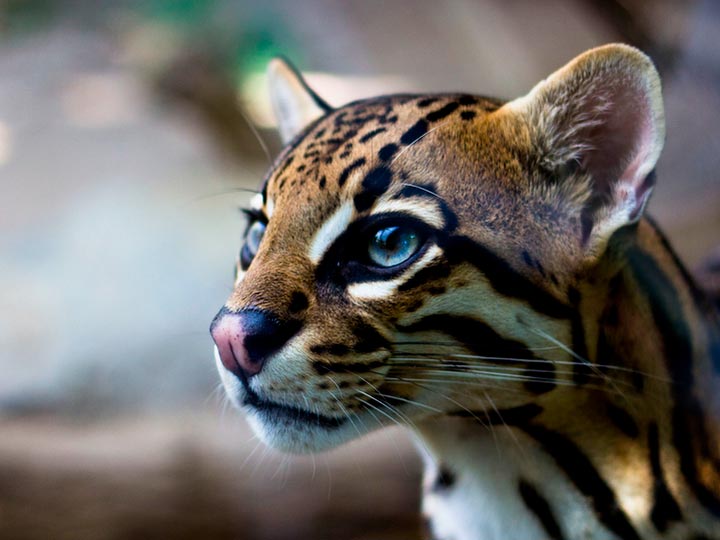
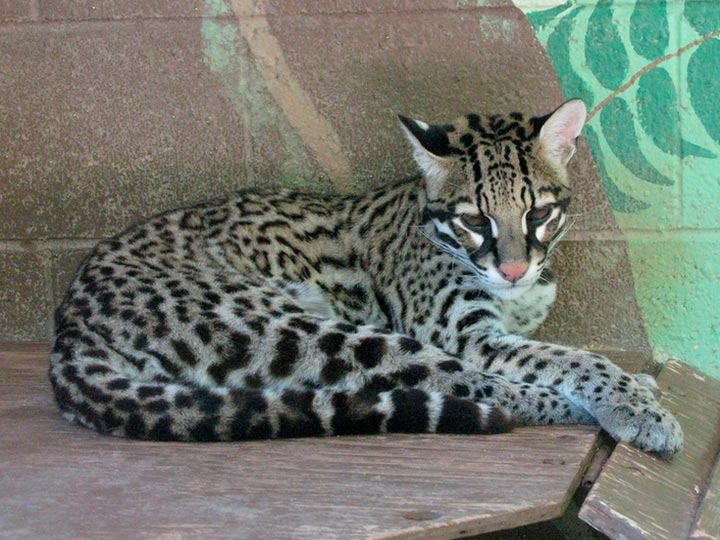
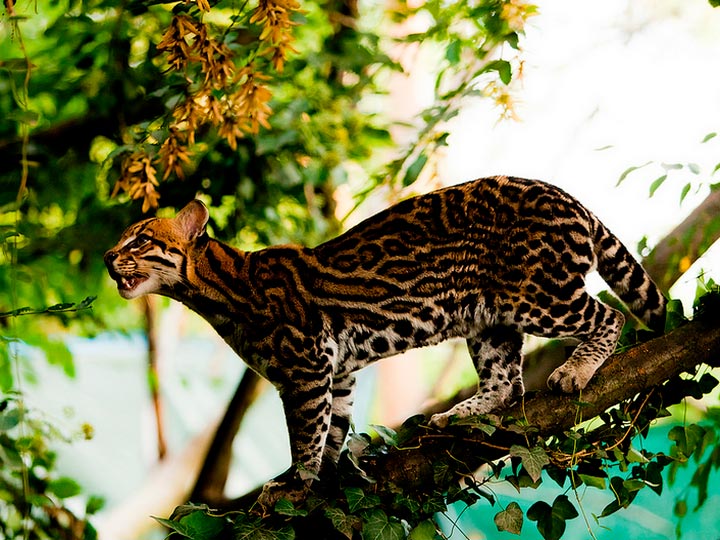
The ocelot, as seen in the photo, is one of the most colorful members of the cat family. The ocelot's length from head to tail tip ranges from 100 to 140 cm. Its height at the withers is approximately 50 cm, and its weight ranges from 10 to 16 kg. Its fur is yellowish-brown with black rings and spots. The fur inside the rings is somewhat darker. On the neck and around the shoulders, the spots merge into stripes, and on the paws, they become dots. The chin and belly are white. The ears are black with large white dots on the back. In appearance, the ocelot strongly resembles a leopard cub or a long-tailed cat.
There are 10 subspecies of ocelot. They inhabit different regions and differ slightly in appearance, primarily in coloration.
The ocelot has a relatively small head and medium-sized ears with strongly rounded tips. The eyes are large and expressive. The nose is large and pink. The cheekbones and chin are well-developed. The paws are very large and powerful. The body is elongated.
Character and behavior
Ocelots are solitary creatures by nature, strongly attached to their territory, and generally follow their habits. Agile and strong, they are not prone to attack, leading a secretive lifestyle. Only at night do they venture into open areas, and in extreme cases, they approach human settlements. Ocelots communicate with each other using soft meows, purrs, and other sounds, which turn into loud screams when searching for a mate. Kittens, as befits babies, are very playful and curious, but already in the first weeks of life, they exhibit a pronounced hunting instinct.
In captivity, ocelots remain independent and self-sufficient, although they do show some affection for the person who feeds them. Owners claim that ocelots are highly intelligent animals, easily trained and tame, and quickly learn to use a litter box. However, even in a captive environment, they exhibit distinctly wildcat-like behavior.
Keeping an ocelot at home
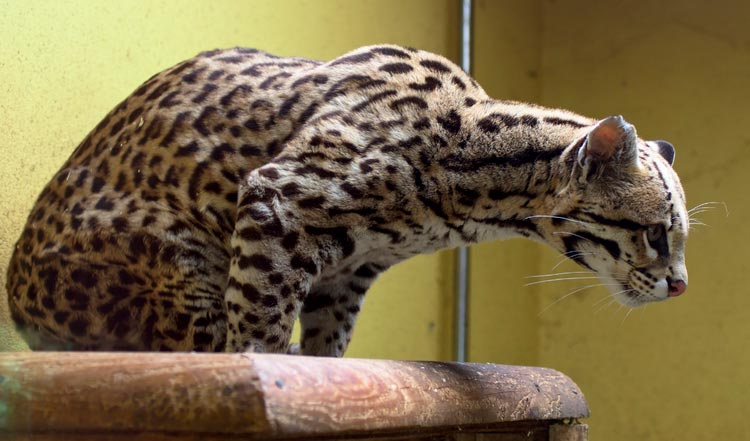
Ocelots, even those raised from a pipette, are not well-suited for domestication. Those who love exotic pets should consider keeping this large cat in an enclosure. If this enclosure provides ample human interaction, it will remain attached and remain relatively tame. However, if left to its own devices for extended periods, it quickly becomes feral and aggressive. Living with an ocelot in a home is difficult for several reasons. First, its temperament and wild habits. Although very careful, these cats are constantly breaking and knocking things over with their claws. During play, which is often quite aggressive, they can seriously injure a person, and even trimming their claws doesn't prevent this.
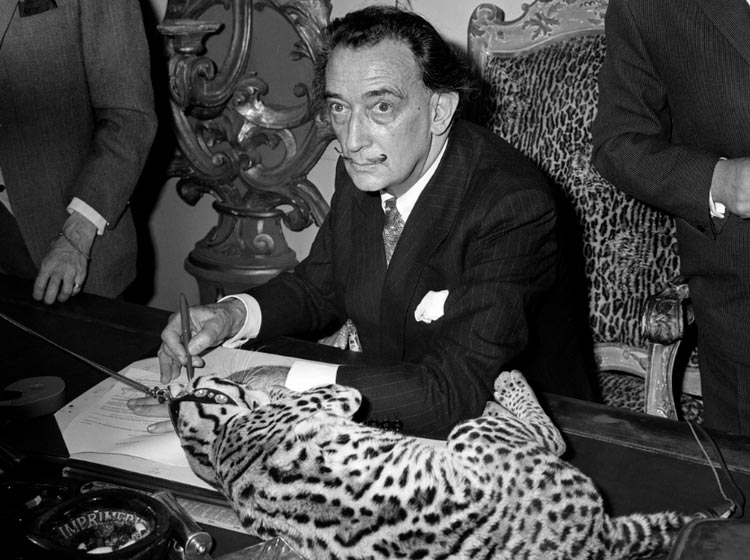
The most famous pet ocelot in the world was Buba, Salvador Dalí's cat. Or rather, not the outrageous genius's, but his confidant, or, in modern parlance, his manager.
Those considering getting an ocelot need to decide in advance why they want one. Will the cat be a pet only or do they plan to breed? In the former case, it's best to neuter the animal beforehand, as both male and female cats begin to mark their territory upon reaching puberty.
Another very famous pet ocelot was Montezuma, known as Monty at home. The cat lived with the Meryls in their Manhattan apartment and was acquired as a kitten in the 1960s, when exotic pets became very popular in America. He ate beef, turkey, and heart, along with small animals, live rodents, and poultry. His owner admits that getting an ocelot was a big mistake. He's untamable, completely selfish, and self-sufficient, but on the other hand, she can't imagine life without him.
The optimal conditions for housing a large cat are a spacious enclosure with shelves at varying heights. Plants are planted on the ground, a house is built for the cat, and a space is allocated for a litter box. The minimum area of the enclosure is 20 square meters. A small pool inside is ideal.
What to feed an ocelot at home
A captive ocelot's diet should be as close as possible to that of its natural habitat. They are fed live rodents, mice, and rats, as well as live poultry. Beef, rabbit, fish, and sometimes raw eggs are also included. The amount of food depends on the animal's weight and physiological condition, but typically amounts to 3-5% of its body weight. Periodic fasting days are given. In the West, some captive ocelots are fed high-quality dry food. However, this is not ideal for the digestive system of a wild cat.
Domestic cat ocelot on video:
Where to buy an ocelot kitten, price
Ocelot kittens are primarily sold by breeding centers. There are two types: captive, where the animals are kept as family members, and captive, where they are kept in enclosures, similar to zoos. Weaning kittens very early, at just one to two weeks of age, increases the chances of getting a tame and affectionate animal. The kittens are bottle-fed and accustomed to human handling from a very early age.
Ocelots can only be considered as pets for people who know how to care for wild cats and are not under the illusion that they will ever become completely tame and cute, like domestic ones.
An ocelot kitten must have a package of documents confirming its origin. This includes a CITES certificate of origin, a sales contract, an acceptance certificate, a veterinary certificate, and a veterinary passport, which must include vaccination records for its age.
The price of an ocelot kitten in a domestic cattery can reach up to $5,000. This depends on the country where the kitten is located and the demand for the kittens. In South American countries, captured kittens typically cost no more than $500.
Photos
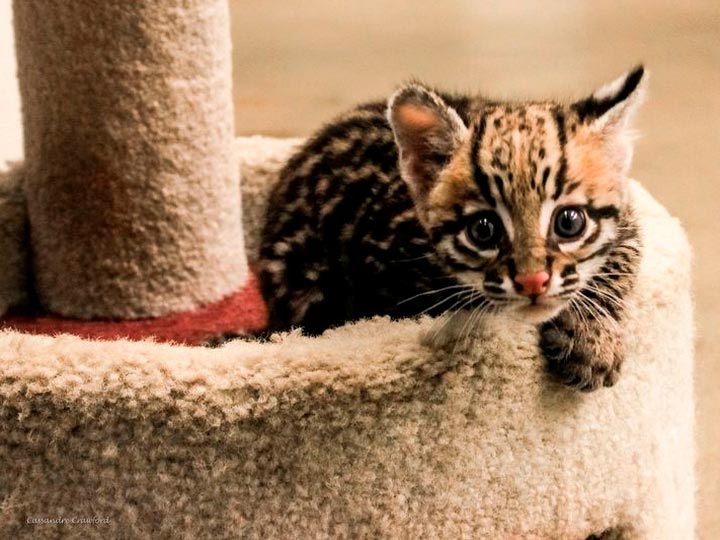
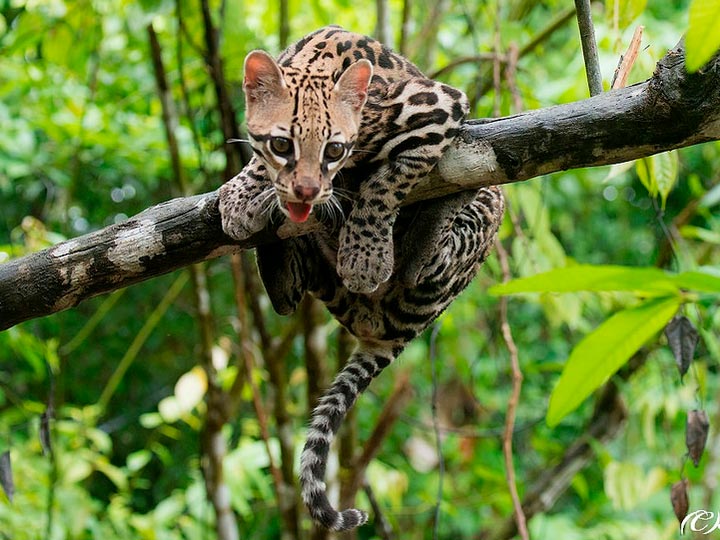
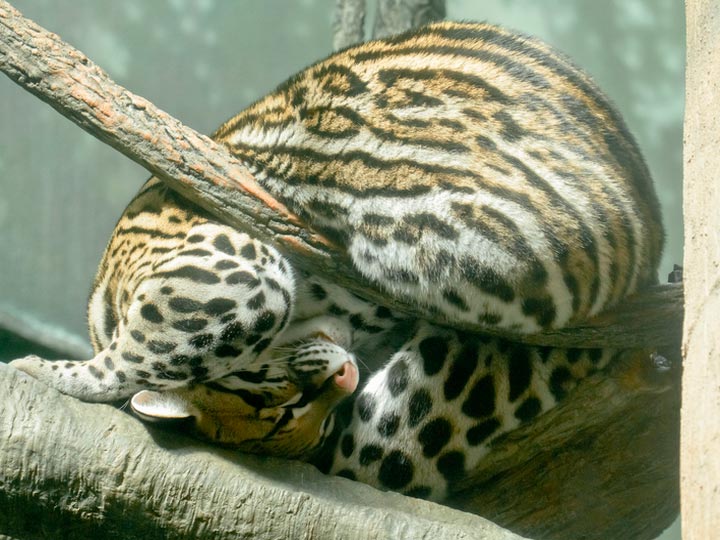
The gallery contains photographs of adult ocelots and small kittens in their natural habitat, in zoos, and at home.
Read also:


-550x418.jpg)
Add a comment