
Dog Poisoning: Signs and Treatment
Poisoning is a disorder of the body caused by the ingestion of a poison or toxin into the gastrointestinal tract or bloodstream. Since all members of the canine family are very picky eaters and are capable of tasting anything that seems edible, cases of food poisoning are much more common among them.
Acute toxicosis develops quickly, is severe, and poses a serious threat to the animal's life. Therefore, every dog owner must have a first aid kit with essential medications, know the main signs of poisoning, and be able to provide emergency care.

Content
Symptoms
There are several common signs of poisoning that dog owners should be aware of. As intoxication progresses, the animal may experience:
- shortness of breath, tachycardia (increased heart rate);
- impaired coordination of movements;
- poor spatial orientation;
- muscle twitching, convulsions;
- vomit;
- indigestion;
- lethargy, apathy, drowsiness;
- excessive salivation;
- loss of appetite up to complete refusal to eat.

If you notice several of the symptoms described above in your pet, try to quickly determine what poisoning they may have received so you can provide appropriate first aid immediately. Each type of poison, in addition to the general ones, causes specific symptoms that both your veterinarian and you can identify.
Inhalation of toxic fumes
Animals' nervous systems are highly sensitive to toxic organics. Exposure to gasoline, turpentine, acetone, chlorine, and other household liquids can cause vomiting, tremors, and limb convulsions within minutes.
Poisonous plants
Many plants found in flower beds or growing in gardens are poisonous to animals. For example, aloe and hyacinth can cause vomiting, tremors, and depression; heart problems and stomach upset can be caused by narcissus and lily of the valley. Stomach pain and bloody vomiting can also occur if a dog has tasted iris, belladonna, or henbane.
Medicines
Many medications intended for humans act as toxins in animals. For example, diphenhydramine can cause tachycardia and seizures in dogs; aspirin, analgin, or paracetamol can cause respiratory distress and uncontrolled muscle contractions. Cardiac medications (glycosides) can cause a slow pulse, arrhythmia, vomiting, and stomach upset. Sulfonamides (sulfazole or sulfadimezine) can cause renal colic and urinary dysfunction.
Food products
Some foods that are safe and even beneficial for humans can also be toxic to animals. Dogs should absolutely not be given the following:
- Chocolate - contains the purine alkaloid theobromine, which can cause toxicosis, so even a small piece of this delicacy can lead to an upset stomach, cramps, or a heart attack;
- natural sweetener xylitol (wood sugar) - it can cause seizures and a drop in blood sugar levels;
- avocado - this fruit causes vomiting and diarrhea;
- Grapes and raisins - even if grown without pesticides, grapes can cause vomiting, abdominal pain, upset stomach, and kidney problems.

Arsenic
Arsenic compounds are highly potent entero- and neurotoxins. Symptoms of poisoning develop very quickly, within 0.5 hours of ingestion. These include severe weakness, vomiting and bloody diarrhea, thirst, convulsions, constricted pupils, irregular heartbeat, and irritation of the oral mucosa, causing the dog to constantly rub its face with its paws. In cases of acute toxicosis, death occurs from asphyxia (respiratory distress).
Rat poison
The active ingredient in most rat poisons is warfarin (zoocoumarin), a potent poison that disrupts blood clotting. Symptoms of poisoning in dogs with this poison most often include tachycardia (increased heart rate), bloody diarrhea and vomiting, blood in the urine, nosebleeds, a fever up to 40°C (104°F), and pale mucous membranes. If treatment is delayed for 2-3 hours, the animal will die.
Isoniazid (Tubazid)
This anti-tuberculosis drug is nontoxic to most mammals. However, canines lack the enzyme that breaks down isonicotinic acid, making tubazid a serious hazard for them. Isoniazid poisoning of pets is often intentional: this drug is commonly used by dog exterminators.
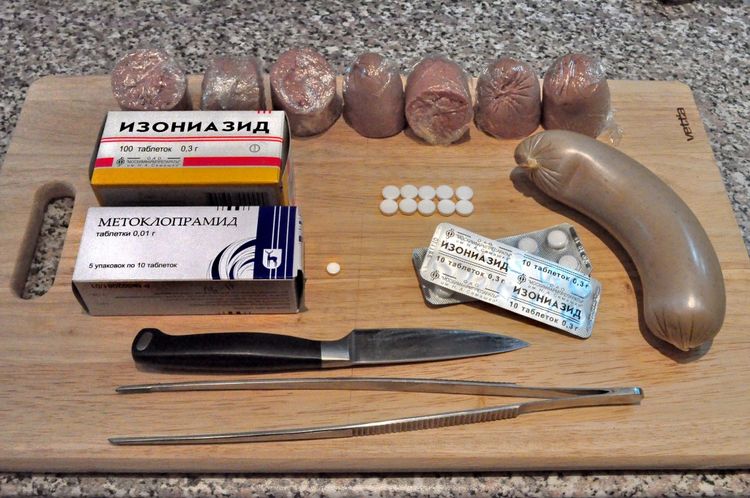
Tubazid poisoning causes confusion, erratic movement, and impaired coordination and orientation. This is followed by bloody vomiting, muscle twitching, respiratory distress, and drowsiness. If the toxicity is not immediately treated, coma occurs and the animal dies.
First aid
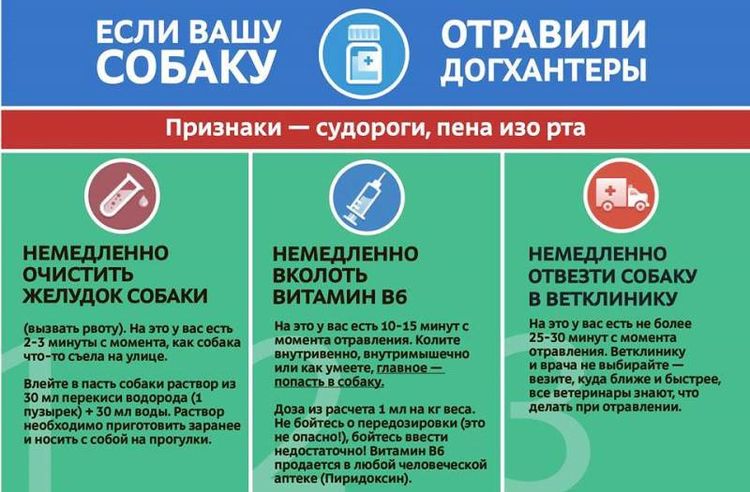
If your dog is poisoned, you should immediately contact a veterinarian. Until the doctor arrives, first aid is essential, primarily aimed at removing the poison:
- If a toxic substance comes into contact with your skin, wash it off immediately and thoroughly with warm water.
- If toxic fumes enter the animal's respiratory tract, provide it with fresh air and give it 30-5 g of sunflower or olive oil.
- If the toxin has been ingested, vomiting should be induced using an isotonic solution (a spoonful of salt in a glass of water) or diluted hydrogen peroxide to flush it from the stomach. The dog should then be given activated charcoal; white clay (kaolin) or raw egg white can also be used as an adsorbent.
Important! If the poisoning is caused by an acid or alkali, do not induce vomiting. In this case, it is recommended to administer a laxative and an antidote, which will be prescribed by the veterinarian who responds to the call.

After providing first aid, it's advisable to give the dog milk or strong tea and create a calm environment. Further treatment will be prescribed by a veterinarian.
Treatment and rehabilitation
Even if first aid is provided in a timely manner, it is often not possible to completely remove the intoxication from the body earlier than after 2 weeks, especially if we are talking about rat poisoning poison, arsenic or isoniazid.
Typically, the veterinarian will perform an additional gastric lavage through a tube, and if several hours have passed since the toxic substance entered the body, a cleansing enema with an isotonic solution (a teaspoon of table salt per glass of water).
The animal is also given an antidote: pyridoxine (vitamin B6) for isoniazid, phylloquinone (vitamin K) for rat poison, and the detoxifying drug dimercaprol (INN) for arsenic. Cardiac medications, diuretics, and intravenous glucose or isotonic saline solutions (Trisol and Ringer-Locke) may also be prescribed.
If symptoms of urinary tract problems occur, your pet may need to be hospitalized, where he or she will be given intravenous or intravenous infusions of medications to relieve renal failure and stimulate urine production.
The dog shouldn't be fed for 24 hours after the poisoning, but it should be given water or tea. On the second day, with your veterinarian's approval, you can give it a small amount of strong, low-fat broth. This diet will eliminate most of the toxins from the body, and the mucous membranes of the digestive system will be able to recover from the damage.
Then you can gradually include the following into your diet:
- liquid porridges;
- lean minced meat, liver;
- cottage cheese;
- boiled vegetables;
- eggs.
If your dog is constipated, you can give it half a glass of carrot juice daily. For at least a month afterward, your pet should eat easily digestible and quickly absorbed food.
Prevention
A dog will be less likely to seek out something "tasty" on the street or in a trash bin if it is provided with proper and high-quality food that contains all the nutrients, vitamins, and minerals necessary for the animal's body.
If you've acquired a puppy, train it from infancy to accept food only from its owner's hand. Walk it on a short leash so you can monitor its behavior. If it still has the habit of foraging for food outside the home, muzzle it during walks.
You can also ask our website's staff veterinarian a question, who will answer them as quickly as possible in the comments box below.
Read also:
- How to induce vomiting in a dog
- Why a dog is shaking: reasons and what to do
- What to do if a dog is bitten by a viper


4 comments
Maxim
Hello! My puppy is vomiting and has diarrhea, is lethargic, and dehydrated. I don't know what poison he was given. What can I give him? Or should I put him on an IV?
Daria is a veterinarian
Hello! In case of dehydration, ONLY IVs will help quickly restore the animal's water and electrolyte balance. If this happens at night and emergency veterinary care is not possible, then at least administer Ringer's solution subcutaneously. And most importantly, it's important to know what the poisoning was so you can understand what else can and should be administered. Sometimes, an emergency antidote is necessary (if the poisoning substance was rat poison, an anti-tuberculosis drug, etc.)! If the animal was poisoned by food, induce vomiting, drink plenty of fluids, and use sorbents (Polysorb, white or black charcoal).
Tatiana
My 5-year-old dog ate a lot of grapes yesterday, but I didn't see it. This morning, I saw he'd vomited everything up—the grapes were whole and in piles, both in and around his kennel. I was late for work and couldn't do anything. That evening, I saw he hadn't touched his food and barely managed to get him out of his kennel. The clinic and veterinarians are far away, but they advised giving him Enterosgel over the phone. I gave him Enterosgel and gave him another dose two hours later. He's depressed, and I could barely open his teeth. Should he be given more water or tea, and should he take diuretics? The vet won't be arriving until Saturday evening. My only hope is for you and your advice. Please help.
Daria is a veterinarian
Hello! Charcoal or Enterosgel should have been given immediately after the dog ate the grapes (preferably within the first hour). Well, give it now too; it might help a little before the doctor arrives (the severity of the intoxication will decrease), but only if intestinal motility is maintained. Antiemetics can be used for persistent vomiting. Diuretics are needed if adequate urination is not occurring! If urination is normal, then there is no need to give anything. Water is needed. Scientists believe a metabolic disorder caused by the high concentration of fructose and glucose in grapes (15%) may be the possible cause of kidney damage. Dogs are sensitive to high glucose concentrations, and ingesting large amounts of monosaccharides can lead to intoxication, accompanied by hypercalcemia. This is what causes kidney damage. However, the EXACT cause of grape intoxication remains unknown...
Add a comment