
Otodectosis in dogs: symptoms and treatment
Otodectosis (ear mites) is a disease of the outer ear that is caused by microscopic scabies mites Otodectos genus. It occurs in dogs, cats, and some other animals. This pathology is highly contagious.
Content
Reasons
Ear mites are microscopic parasites that live in the ears of their hosts. They are invisible to the human eye, making the disease difficult to detect in its early stages. The mites burrow inside the ear, feeding on skin particles, blood, earwax, and lymph. They reproduce quickly and thrive in warm, humid conditions.
Otodectosis is most likely transmitted by contact with an infected animal. Often, even just one contact is enough. The parasite or its eggs can also be brought in from outside by the owner on their shoes or clothing. Humans are only carriers; ticks do not infest humans.
Young animals are at higher risk of developing the disease. Puppies are always infected by their mother if she is a carrier. The disease has a detrimental effect on the mental and psychological development of the puppies.
Symptoms
There are a number of external signs that can alert owners to the possibility of ear mites in their pets. The parasite's saliva is toxic and allergenic to dogs. When it comes into contact with the skin of the ears, the animal begins to itch, causing small scratches and sores. Dirty brown crusts form due to the ear discharge mixing with lymph.
The dog's appetite also decreases or it refuses to eat altogether. Its behavior becomes restless.
Symptoms of advanced otodectosis:
- increased body temperature;
- discharge of exudate from the ear canal;
- unpleasant odor from the ear;
- the presence of scabs in the auricle;
- hearing loss.

Diagnostics
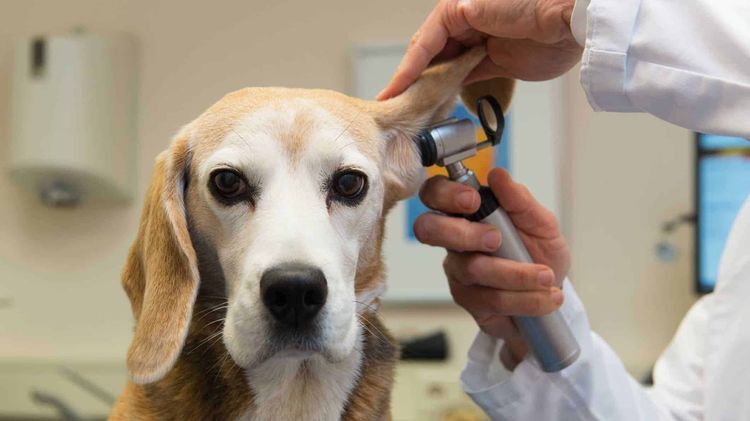
Diagnosis of the disease cannot be performed at home. It is necessary to seek help from a specialist at a clinic. First, a veterinarian examines the dog's ears and takes a swab. The swab is then examined under a microscope. This is almost always sufficient to confirm the diagnosis.
In advanced cases of otodectosis, additional tests may be necessary. These include:
- bacterial culture;
- X-ray;
- computed tomography.
Treatment
You shouldn't treat otodectosis in your pet on your own. A doctor will prescribe a treatment plan based on the severity of the condition, the dog's breed, and its individual characteristics.
The first step is to remove the parasite's waste products from the ear canals. This is done with cotton swabs and cleaning solutions. Next, the crusts are soaked and carefully removed. Veterinary pharmacies sell crust removal lotions. They are beneficial because they have an anti-itching effect and eliminate unpleasant odor.
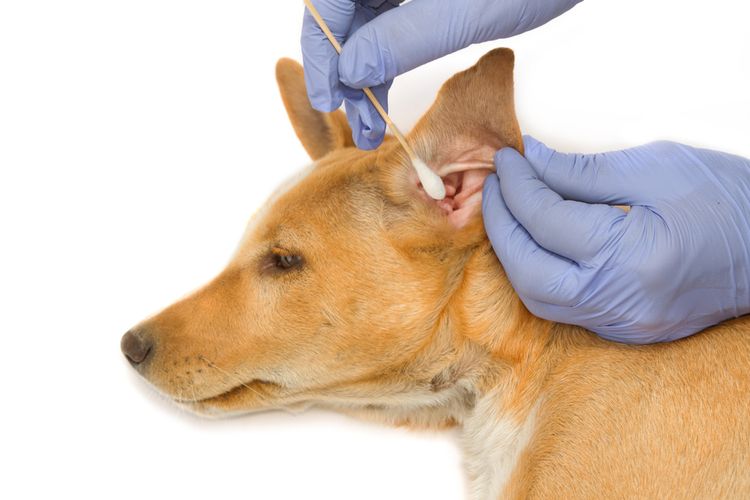
Once the ear canals are completely cleaned, medications are administered to kill the mites. These are usually special ear drops. They are always applied to both ears, even if only one is affected.
List of ear drops:
- Leopard;
- Dana;
- Amit;
- Epacid-alpha;
- Eurikan;
- Demos;
- Otibiovin;
- Decta;
- Surolan;
- Amitrisan plus;
- Ectodes;
- Otovedin.

There are also ointments, gels and injection preparations.
List of medicinal ointments:
- sulfur-tar ointment;
- Oridermil;
- Aversectin;
- Vishnevsky liniment.
Immediately before application, warm the ointment to room temperature. Massage it in with gentle movements to ensure the medication penetrates deep into the epidermis.
Injections of Otodectin and Ivermectin 1% are very effective. If there are no contraindications, this treatment method is optimal.

The above medications help kill adult parasites. After the first course, a repeat treatment should be administered 1-2 weeks later.
All insecticides contain potent substances. They are dangerous, so it's important to strictly follow the instructions for use and the recommended dosage. To do this, follow the instructions and consider the animal's weight.
Physiotherapy and ear massage therapy can be effective. If ear itching recurred after completing the full course of treatment, the cause may be a weakened immune system.
Review of individual drugs
Let's take a closer look at a number of medications for treating otodectosis in dogs.
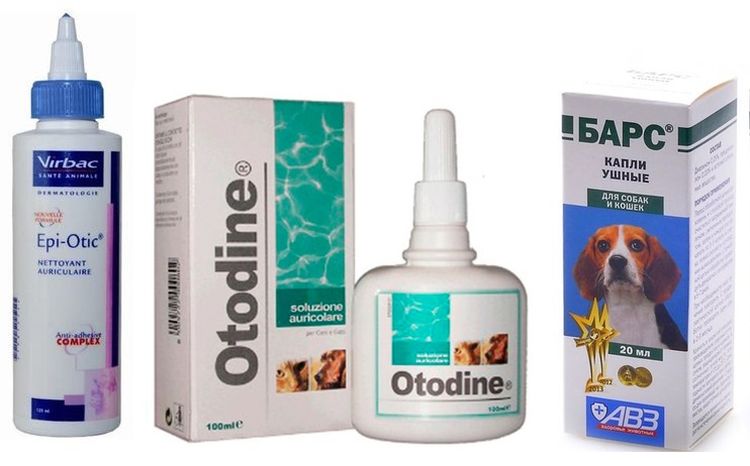
- Epi-otic. This ear cleaning lotion effectively removes any dirt, even dried crusts. It effectively relieves itching and has a pronounced soothing effect on the skin. It can be used two to three times a day. Duration of use: until symptoms completely disappear.
- Otodin. This cleansing lotion contains lactic acid and chlorhexidine bigluconate. A couple of drops are placed in each ear canal 20 minutes before using the main medication.
- Bars. Drops with antimicrobial, anti-inflammatory, and acaricidal action. The main active ingredient is diazinon. The recommended dosage is three to five drops in each ear. Eliminates unpleasant symptoms in the shortest possible time.
Contraindications include hypersensitivity to the components of the drug.
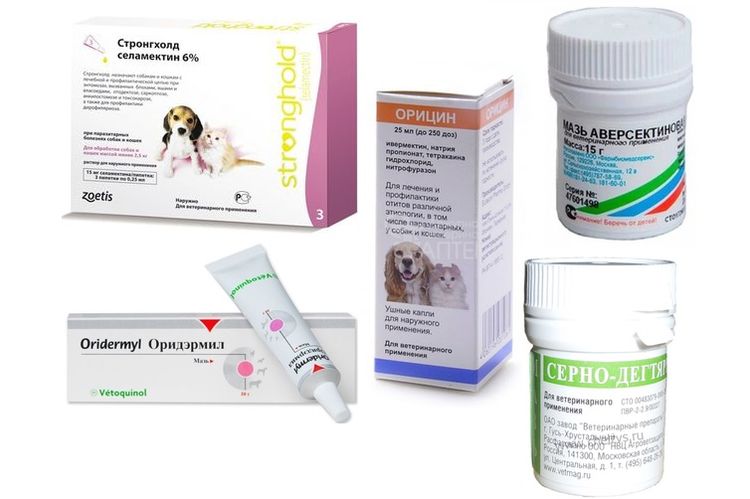
- StrongholdThese drops are for external use and are applied only to the withers. The main active ingredient is selamectin. This medication can treat even advanced cases of ear mites.
Not recommended for use in young puppies (under six weeks of age).
- Oridermil. This ointment contains nystatin, neomycin sulfate, lidocaine, and permethrin. It quickly relieves pain and inflammation and kills bacteria. Apply to the ear once daily. The treatment course lasts one week.
- Oricin. Drops with vasoconstrictive, anti-inflammatory, anesthetic, and insecticidal acaricidal effects. Main ingredients: nitrofurazone and ivermectin.
- Sulfur-tar ointment. An effective remedy with disinfectant and antimicrobial properties. Rub a thin layer of the liniment into the ears. Apply twice daily. Duration of use: 7 to 10 days.
- Aversectin ointment. It has an insecticidal and acaricidal effect. It is classified as a low-toxicity medication. The main component is avermectin C. This substance has a detrimental effect on parasites regardless of their developmental stage. The liniment is applied to the ears twice, two weeks apart.
- Otodectin (injection). The drug has a broad spectrum of action. against ectoparasites and low toxicity. It is administered subcutaneously. The procedure is performed wearing rubber gloves.
Contraindications: poor health, individual intolerance, early age (up to two months).
Consequences
Otodectosis not only causes severe discomfort to pets, but also poses a danger to the animal due to its consequences. Dogs constantly scratch their ears, which leads to skin trauma and secondary infection. Parasites can also easily trigger the development of otitis and hearing loss. If the condition is advanced, there is even a risk of inflammation of the meninges of the spinal cord and brain.
Long-term observations have proven that if therapy is not carried out in a timely manner, complications develop in every tenth dog.
Prevention
To minimize the risk of otodectosis in your pet, it's important to take preventative measures. Experts recommend:
- Regularly check your dog's ears;
- periodic cleaning of the ears;
- use of preventative insecticides (tick collars, shampoos) from early spring to late autumn;
- restriction of contact with yard and stray dogs;
- periodic check-ups with a veterinarian.
Otodectosis is easily treated if detected early. Otherwise, treatment can take a long time.
Read also:
- Otodectin for dogs
- Scabies in dogs: symptoms and treatment
- Allergic otitis in dogs: symptoms and treatment


Add a comment