
Otodectosis in cats: symptoms and treatment
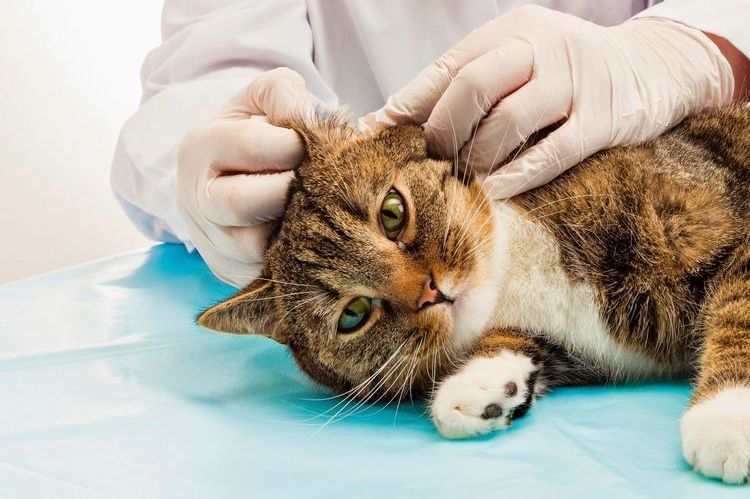
Otodectosis is a disease caused by mites that infest the ear canal. This type of acariasis is caused by Otodectos cynotis, a member of the suborder Psoroptidia. In cats, otodectosis is more common in young animals. If left untreated, the animal may develop otitis externa or otitis media, and in advanced cases, rupture of the eardrum, partial or complete hearing loss, and inflammation of the meninges.
Content
What are ear mites and how can you get them?
The Otodectos cynotis mite measures 0.2 to 0.5 mm, making it impossible to detect with the naked eye. The mite's appearance under a microscope can be seen in the photo. The ear mite burrows under the skin of the ear canal, where the temperature and humidity are ideal for its survival.
The ectoparasite feeds on epidermal scales, blood, tissue fluid (lymph), and earwax. Female ticks lay eggs (usually several dozen) in burrows dug under the skin. After a few days, the eggs hatch into larvae, which develop into nymphs within a week, and then, after 2-3 days, into adults capable of reproduction.
The mite's waste products irritate the skin, causing inflammation. Otodectosis affects many animals, including cats, dogs, raccoons, arctic foxes, and ferrets. Cats can become infected through direct contact with an infected animal or through its grooming items. Insects, particularly fleas, can also transmit otodectosis.
Symptoms
Due to their microscopic size, Otodectos cynotis mites are difficult to visually detect. However, their waste products can be seen, forming moist, brown, foul-smelling crusts inside the ear canal. If a cat has a large number of mites, movement may sometimes be observed in the areas where they congregate.
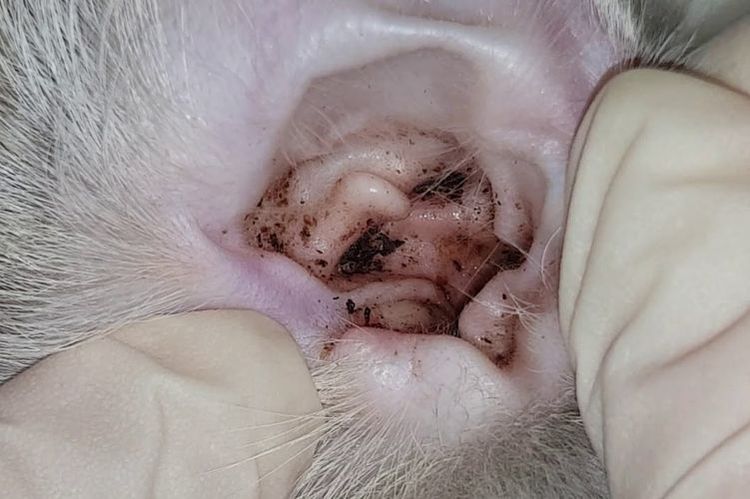
Signs that indicate the presence of a tick infestation include:
- An uncontrollable itch that occurs as a result of an allergic reaction to the parasite's saliva and feces.
- Redness and swelling of the auricle.
- Scabs with copious serous or purulent exudate. In advanced cases, they can completely block the ear canal.
- The animal constantly keeps its head tilted to one side.
- Constant scratching can cause tangles to form on a cat's head.
- Increased sensitivity to pain in the ears and head.
- The cat becomes restless, may refuse food, and may have a fever.
- In some cases, otodectosis may result in alopecia (local baldness).
Diagnostics
A diagnosis of otodectosis is made based on the owner's medical history, a visual examination of the cat, and laboratory testing of a scraping taken from the inner surface of the ear. The scraping is examined under a microscope; the mite, Otodectos cynotis, is visible even with low-power optical systems.
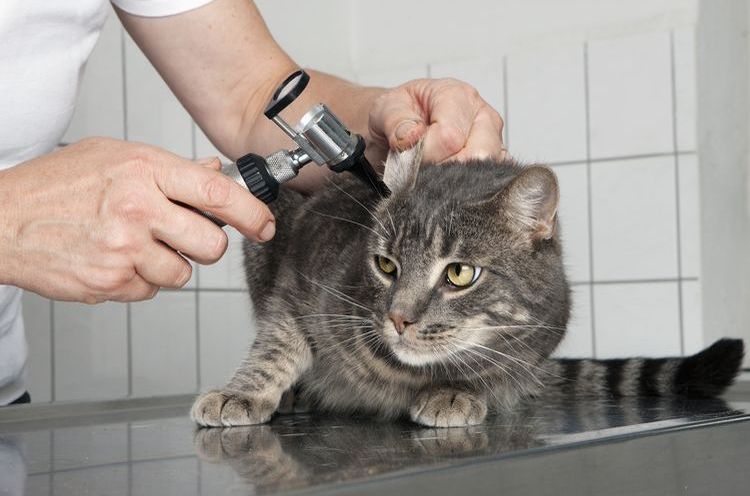
Before visiting a veterinary clinic, you should not wash or clean your cat's ears, as this may distort the examination results.
Treatment
To treat ear mite in cats, topical medications are used to kill ear mites. These medications have antiparasitic, antifungal, antimicrobial, and anti-inflammatory properties.
Before applying these products, thoroughly clean the ears: remove any scabs, exudate, wax buildup, and parasite waste. A 3% hydrogen peroxide solution, Bars or Otomin lotions, or Auricap spray can be used for this purpose. It's best to wipe the auricle and ear canal with a cosmetic pad; a cotton swab can puncture the eardrum if used carelessly.
There are various forms of insecticidal and acaricidal medications available for treating ear mites in cats.
Drops
- Amitrazine. Active ingredients: cypermethrin and amitraz. Manufacturer: Tsamaks, Russia.
- Surolan. Active ingredients: miconazole, polymyxin sulfate, prednisolone. Manufacturer: Janssen Pharmaceutica, Belgium.
- Aurikan. Ingredients: diazinon, prednisolone, hexamidine, tetracaine hydrochloride. Manufacturer: Agrovetzashchita, Russia.
- Decta-Forte. Active ingredients: amitraz, chloramphenicol. Manufacturer: Apicenna, Russia.
- Leopard. The active ingredient is diazinon, manufacturer - AVZ S-P, Russia.
These liquid preparations are instilled into the cleaned ear canal using a pipette, then the ear is gently massaged to better distribute the product over the skin surface.
Treatment of otodectosis in cats: video
Ointments or gels
- Aversectin ointment (Pharmbiomedservice, Russia). The active ingredient is avermectin.
- Novertin ointment (Ukrzoovetprompostach, Ukraine). Active ingredient: avermectin.
- Oridermil (“Vetoquinol”, France). Ingredients: neomycin, nystatin, lindane, triamcinolone acetonide, lidocaine.
Ointments and gels are applied in a thin layer to the inner surface of the ear, previously cleaned of scabs and crusts.
Aerosols
The most popular product in this category is Ivermectin Spray, produced by the Russian company Vitapharm. It contains dexpanthenol, chlorhexidine bigluconate, and lidocaine hydrochloride. The product is sprayed onto the pre-cleaned ear surfaces until the affected areas are completely covered.
Drops on the withers
- BlokhNet max. Contains the insecticidal and acaricidal substances fipronil, diethyltoluamide, benzyl benzoate, and juvemon. Manufacturer: Astrapharm, Russia.
- Bayer Advocate. Active ingredients: moxidectin and imidacloprid, manufactured by Bayer Animal Health, Germany.
- Stronghold. Manufactured by the American company Pfizer based on the parasiticide selamectin.
- Fiprist Combo. The active ingredients are S-methoprene and fipronil, manufactured by Krka, Slovenia.
- Frontline. The active ingredient is fipronil, a product of the French company Merial.
- Neostomazan. The main ingredient is tetramethrin, transmix. Manufacturer: Ceva, France.
Directions for use: Apply the product to the animal's withers using a pipette. To prevent licking, it is recommended to place a protective collar on the cat for several hours.
The effectiveness of treatment depends largely on strict adherence to the doctor's instructions. The prescribed course of treatment should not be stopped prematurely, even if the external manifestations of otodectosis have disappeared. If a few mites remain alive, they can quickly reproduce, causing the disease to recur.
In case of development of inflammatory diseases in a cat caused by secondary infection (otitis, abscessIn addition to the standard treatments for otodectosis, your veterinarian may prescribe antimicrobial and anti-inflammatory medications. To strengthen your pet's immune system, it's recommended to include vitamin and mineral supplements in their diet.
Preventive measures
To reduce the risk of your cat developing acariasis, follow these guidelines:
- Protect your pet from contact with stray and sick animals;
- Regularly, once every 2 months, treat the cat with universal insectoacaricidal preparations;
- Maintain high immunity of the animal with the help of a balanced diet, including taking vitamins;
- Follow the rules for caring for your cat, including cleaning its ears if necessary;
- Have your animal examined by a veterinarian regularly.
Read also:


Add a comment