
Pulmonary edema in dogs
Pulmonary edema in dogs is a dangerous pathological condition in which fluid accumulates in the lung tissue, alveoli, and interstitial spaces. Pulmonary edema in dogs often occurs suddenly, so it's important for owners to understand the main causes and characteristic symptoms of this condition in advance. This condition is life-threatening, and without prompt treatment, the animal's condition can rapidly deteriorate and lead to death.
Content
Reasons
The causes of pulmonary edema in dogs are varied. The most common causes of this condition are:
- increased vascular permeability;
- high blood pressure (with heart defects, cardiopathy, endocarditis);
- significant difference in interstitial fluid and blood pressure readings.

Pulmonary edema in dogs can develop as a result of:
- trauma (not only to the lungs, but also to any other organ);
- poisoning (poisons, including snake poison, some medications, inhalation of smoke or toxic gases);
- the entry of acidic contents from the stomach into the lungs (aspiration);
- sepsis;
- uremia;
- pancreatitis.
The lungs are responsible for gas exchange in the body, so each alveolus is densely covered with a network of tiny capillaries. If the vessel walls become permeable, blood and interstitial fluid leak into the alveoli, disrupting gas exchange.
Factors that contribute to the development of edema include:
- thromboembolism;
- brain injuries (especially those resulting in nervous disorders, convulsions);
- inflammatory processes in the lungs (infectious and non-infectious nature);
- neoplasms (tumors);
- dehydration due to starvation, liver and kidney diseases (in particular glomerulopathy), losses through the gastrointestinal tract (diarrhea);
- heart failure.
Animals with chronic renal failure or those that have recently undergone medical intervention are also at risk. Cases of pulmonary edema in dogs have been reported as a result of a blood transfusion reaction.

Domestic injuries can also trigger the development of the pathological process:
- sunstroke or heatstroke;
- allergic reaction;
- shock from severe fright;
- insect bite;
- electric shock.
Stages of disease development
The development of pulmonary edema in dogs typically occurs in two successive phases: interstitial and alveolar.
During the first stage, the interstitium becomes saturated with fluid. The interstitium is the connective tissue of the lungs that fills the space between the working tissue of the organ and its lining, providing support. As the pathological process progresses, pulmonary edema in dogs progresses to the alveolar stage. This form is characterized by the accumulation of fluid directly within the alveoli—the cavities of the lung tissue responsible for gas exchange.
The transition from one stage to the next is accompanied by a noticeable deterioration in the animal's condition. Dogs develop foamy discharge from the nose and mouth, and a forced posture develops. Most often, at this stage, the animal sits with its front legs wide apart and its muzzle raised high, attempting to breathe more easily.
Symptoms of pulmonary edema
The symptoms associated with pulmonary edema in dogs vary widely and depend on the underlying cause of the condition, as well as the degree to which the alveoli are filled with fluid.
Among the main signs, veterinarians highlight:
- depressed state;
- refusal to eat;
- low temperature;
- shortness of breath;
- rapid breathing (the animal tries to take short, abrupt breaths);
- the dog takes a characteristic pose (with front legs spread apart and neck extended);
- dry cough;
- pale or bluish gums;
- pale pink discharge from the nostrils and mouth (sometimes in the form of bloody foam);
- convulsions;
- loss of creation.
Symptoms may gradually increase over time, or may appear suddenly against the background of a dog’s seemingly good condition.
Important! If symptoms appear suddenly or the dog's condition rapidly worsens, it is essential to take the animal to a clinic immediately, as respiratory arrest can lead to immediate death.
Oxygen deficiency is caused by a significant reduction in the working surface area of the lungs. The body is unable to obtain the required amount of oxygen, resulting in severe oxygen deficiency in cells and tissues. Prolonged hypoxia leads to cell death, leading to the animal's death. Nerve cells are the first to react to oxygen deficiency, resulting in seizures, loss of consciousness, impaired coordination, and other nervous system symptoms.
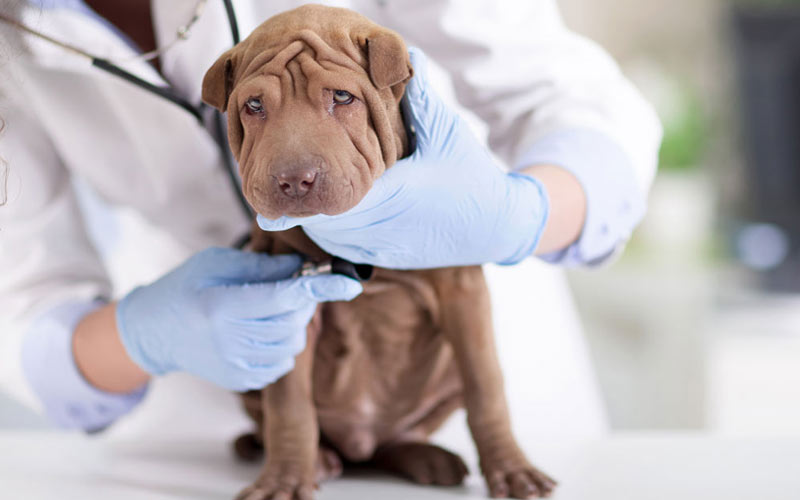
When examining the dog, the doctor also notes:
- weakening of vesicular breathing (when listening with a stethoscope);
- wheezing;
- arrhythmia;
- heart murmurs;
- a dull sound when tapping on the chest.
In the initial stages, wheezing is absent. It develops as the alveoli fill with fluid. Over time, barely audible wheezing can be detected during the transition from exhalation to inspiration. If pulmonary edema in dogs is already severe, wheezing will be audible during both inhalation and exhalation. If pulmonary edema in dogs develops due to heart failure, auscultation reveals arrhythmia, heart murmurs, and barely audible wheezing within the lungs.
The symptoms of each type of pulmonary edema in dogs vary, and it's rare for all signs to appear simultaneously. But the most severe form is shock, which can occur soon after the first symptoms if emergency treatment isn't provided.
Characteristic symptoms of shock in dogs suffering from pulmonary edema include:
- immobility and lack of reflexes;
- weak, shallow breathing;
- weak pulse (almost imperceptible);
- constricted pupils;
- cyanosis of the mucous membranes.
Important! These symptoms indicate the animal's condition is extremely serious and require immediate medical attention.
Diagnosis of pulmonary edema in dogs
To diagnose pulmonary edema before symptoms become obvious and the condition becomes life-threatening, your veterinarian will conduct a detailed analysis of each symptom and perform an examination that includes:
- auscultation (listening);
- blood test for liver enzyme activity, hyperazotemia, leukocytosis;
- chest x-ray;
- ECG (to rule out or confirm the presence of heart problems).
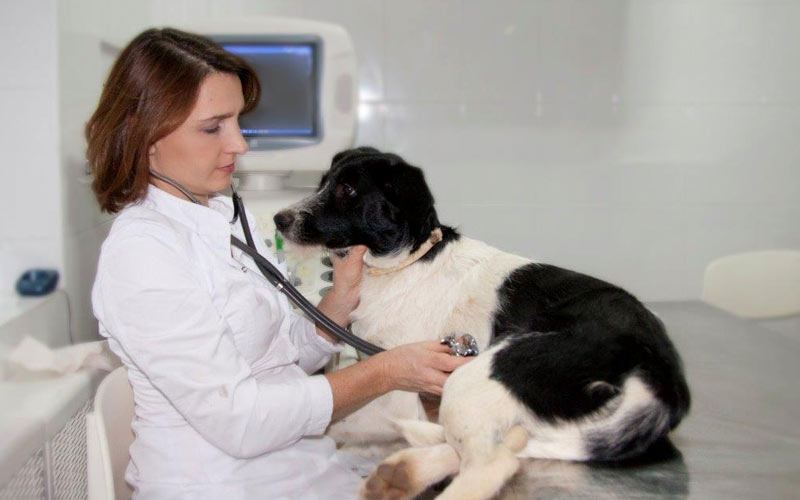
The most effective diagnostic test is an X-ray. It can not only detect pulmonary edema in dogs but also determine its nature. It's crucial that your veterinarian correctly diagnoses your pet's condition, as edema can be confused with bronchopneumonia, pulmonary tumors, thromboembolism, or even contusion.
If pulmonary edema is suspected, a chest X-ray is performed in two perpendicular planes. The condition is diagnosed if the lung tissue is visually impaired, there are irregularities, and there is enlargement in the hilar region. Most often, the pathology affects all lung tissue, but focal lesions are also possible.
Treatment
Pulmonary edema is a serious condition with a high mortality rate. Only an experienced veterinarian with a timely diagnosis can help a dog that is beginning or rapidly progressing with this condition.
The first thing a doctor can do to alleviate a dog's condition is administer oxygen therapy (oxygen inhalation). Depending on the animal's condition, the following may also be used:
- sedatives;
- nitroglycerine;
- bronchodilators;
- glucocorticoids;
- diuretics.
Intensive therapy continues until the condition stabilizes, but in most cases, the fight for the pet's life and health does not end there, as pulmonary edema can recur after drug withdrawal unless the underlying cause is addressed. Further treatment will likely require additional testing and adherence to the veterinarian's recommendations, taking into account the identified issues.
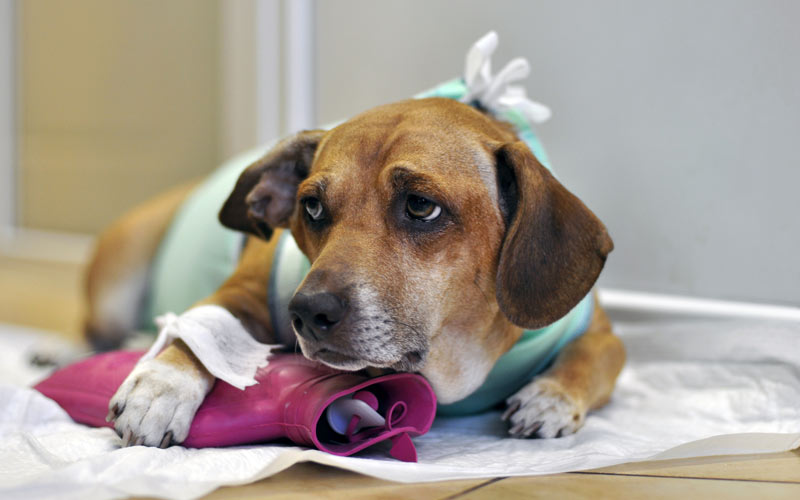
General recommendations for dogs during the recovery phase after pulmonary edema include:
- minimizing physical activity;
- minimizing stressful situations;
- balanced nutrition and strict adherence to the regime.
Prevention
The best prevention for your pet will be:
- good living conditions;
- proper nutrition;
- regular moderate physical activity;
- mandatory rest periods;
- stress minimization;
- regular preventive examinations by a veterinarian;
- timely detection and treatment of various diseases.
Every breeder who cares about their pet's health should also know the basic emergency procedures for dogs. Being prepared for unforeseen situations will prevent you from panicking and wasting precious minutes, but will allow you to quickly and efficiently perform all necessary actions to save a life.
Is a full recovery possible?
Of course, it can, if the pathology is detected early and the underlying cause is eliminated. However, if the cause is a chronic heart condition, the disease may recur without supportive therapy. For more information on caring for a dog with various cardiac problems, read other articles on our website.
If you have any questions about pulmonary edema in dogs, please ask them in the comments and we'll do our best to answer them!
Read also:
- Ataxia in dogs: what it is and how to treat it
- Elevated ALT and AST in dogs: what does it mean?
- Periodontal disease in dogs: signs and treatment


4 comments
Karina
Hello, my puppy has been having very heavy breathing every night. It's gotten progressively worse, his breathing is irregular, and he sleeps under the window. A month ago, he had pneumonia due to distemper. We treated him in two stages: the first was an immunostimulant and an antibiotic for three days. Then, after a week-long break, his purulent runny nose returned, and the doctor prescribed ceftriaxone and demidrol for another four days. The same symptoms—labored breathing at night and a rapid, irregular pulse—were present from the very beginning and remain. He makes a slight groaning sound when exhaling. After the antibiotics, the doctor auscultated his lungs and said everything was clear. Now he's prescribed Euffelin, a quarter of a bottle at night. I read the instructions and realized that if there are complications with his heart, it could get worse. Should I go to the clinic for an examination?
Daria is a veterinarian
Hello! Yes, it's absolutely necessary. An X-ray is needed to assess the condition of the lungs. Untreated pneumonia may still be present, causing breathing problems. Pulmonary edema may indeed be developing, requiring emergency care. Why are antibiotics being prescribed for so few days? The antibiotic should be discontinued 2-3 days after the clinical signs of the disease have completely disappeared. The underlying cause should also be investigated. Other symptomatic medications may be needed. Forced diuresis may be necessary to relieve swelling, while monitoring blood potassium levels to avoid triggering heart problems.
Natasha
My dog was hit by a car. At first, everything was more or less normal. A day later, she started breathing strangely, heavily, and couldn't lie down. She immediately got up. All the symptoms matched pulmonary edema. How can I start treating her? What medications can I give her or inject her with? I just can't take her to a veterinary clinic, and I'm afraid it will get even worse.
Dasha is a veterinarian
You can't treat your pet at home on your own! Only after a full veterinary examination. There are no clinics with X-rays or ultrasounds in my hometown, so in situations like this, we send them to a neighboring clinic (which is much smaller than ours, but has a fully staffed clinic) for examination. There are no veterinarians in your city—why not go to the neighboring city? If your pet has pulmonary edema, veterinary care is essential within 24 hours. Otherwise, the pet will die.
In addition to pulmonary edema, the dog could have received hidden injuries: bruises and concussions of internal organs, internal bleeding could have occurred, bone fractures (including ribs).
Add a comment