
Where did cats come from and how did they appear?
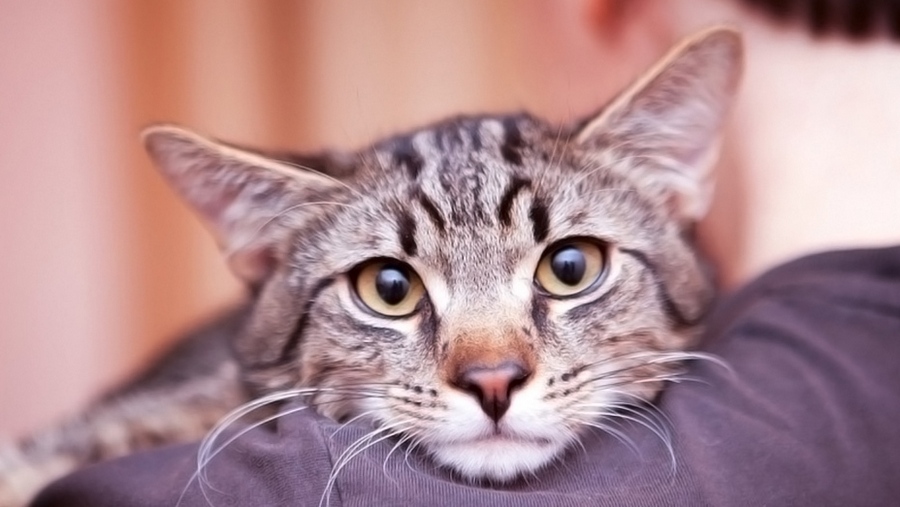
Mousers have coexisted with humans for thousands of years. Statistics show that even dogs are second to them in popularity. This inevitably raises the question of where domestic cats originated and how they came to be. Today, there are many theories. Paleontologists, archaeologists, and zoologists have their own, while mystics and esotericists have their own. Each person must decide for themselves which of them to believe.
Content
The scientific point of view
Scientists have always been interested in the origins of cats. It is known that their most ancient ancestors were insectivores. Over the course of evolution, they diverged into several groups. One of these was the miacids, from which all modern predators descended. Miacids possessed a number of biological characteristics common to modern mammals. They differed from insectivores in their larger heads and (presumably) a more complex brain structure.
About 35 million years ago, two lineages of felids—neophelids and paleofelids—diverged from miacids. The latter included nimravids and ancient saber-toothed species. This lineage lasted for 30 million years. Scientists attribute their extinction to climate change.
As for the neophelids, they survived and continued to evolve. Twenty million years ago, pseudoelursians appeared on the planet, sharing features with modern representatives. They were the size of a lynx and obtained food by hunting smaller animals.
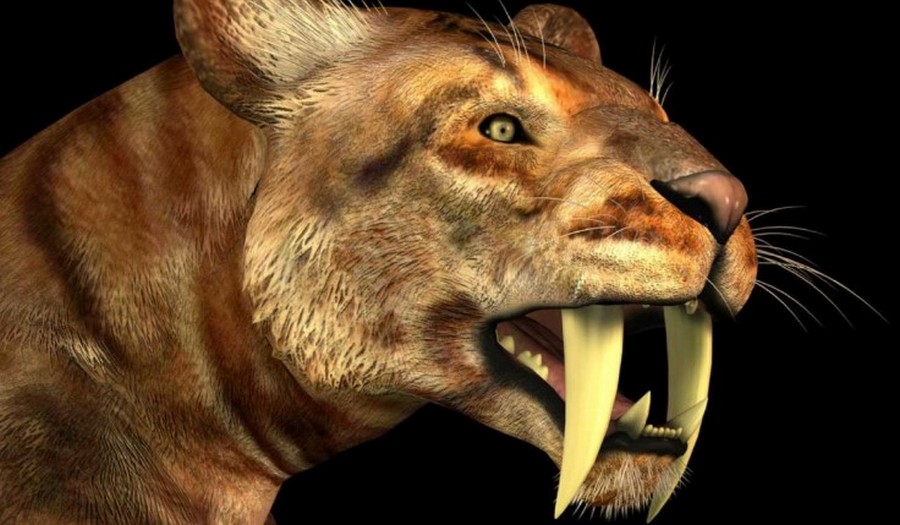
Two groups of mammals emerged from the Pseudelurs. The first consisted of large, clumsy individuals that fed primarily on herbivores (such as mammoths). The most famous example is the Ice Age saber-toothed tiger, whose canines exceeded 20 cm in length.
The second group of Pseudelursian descendants included the ancestors of modern wild and domesticated individuals. They could survive in virtually any environment and already possessed agility, flexibility, strong jaws, sharp teeth, and strong claws that could easily cut through meat.
Around 10,000 years ago, saber-toothed species became extinct, along with the giant herbivores. The remaining representatives began to evolve in three distinct directions. The first evolved to large sizes (tigers, lions, leopards, and jaguars), while the second evolved to relatively small sizes (including the domesticated species). Cheetahs became representatives of the third distinct lineage.
Many species have become extinct in modern times. The main reasons for this are the negative impact on their natural habitat and poaching.
Mystical theories
Throughout human history, entire legends have emerged to explain the origins of cats on Earth. Today, these animals are considered the most mysterious of all that have ever existed.
Biblical version
After several months of sailing, rodents began to proliferate on Noah's Ark. To prevent the passengers from starving, God commanded Noah to stroke the lion's nostrils. Cats leaped out and immediately began hunting.
A similar theory was common among the inhabitants of the territories occupied by modern-day Iran and Turkey. They believed that mouse hunters were the result of the sneeze of the king of beasts. The Bible also mentions Siamese cats, claiming they were the offspring of a monkey and a lion.
Egyptian legends
The ancient Egyptians believed that a hairless predator once arrived on our planet from parallel worlds and alien planets. There, she fell in love with a wild steppe cat and decided not to return. Their offspring subsequently gave rise to new breeds. Pharaoh Akhenaten considered himself the heir of the god Ra, and his furry companions his closest relatives. The eminent scientist Pythagoras supported this theory and even planned to prove it, but was unable to do so.
Guests from the Moon
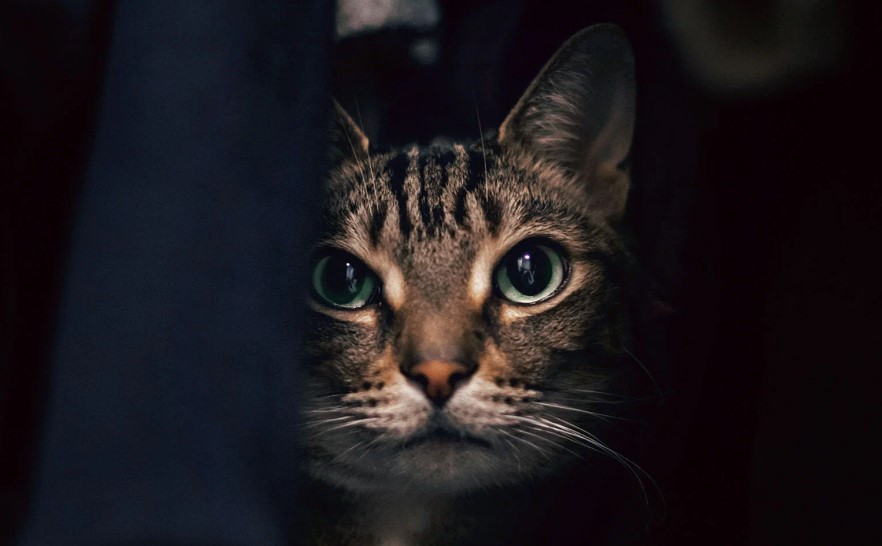
The philosopher Plotinus (a student of Plato) believed that the ancestors of our familiar pets arrived on Earth from the Moon. He cited evidence to support his theory: their nocturnal lifestyle and ability to see perfectly in low light.
Aliens from distant stars
Theologian Augustine of Hippo has his own theory about how cats came to be. He believed that God specifically sent them to earth to escort the souls of the departed to a parallel world. Echoes of this theory can still be heard today. Many believe in the ability of pets to travel to parallel universes, see the unknown, and communicate with humans.
The process of taming
Most experts believe that domestication took place Along with the development of gardening, humans no longer needed to constantly search for food. Moreover, the first food surpluses began to appear. At the same time, the question of how to preserve them arose. Warehouses became the main breeding ground for rodents, which not only caused financial losses but also spread dangerous diseases.
In this case, predators hunting small pests became a lifesaver. Humanity then faced the challenge of taming the furry hunter and ensuring its permanent residence. Given its freedom-loving nature, this was no easy task. According to one theory, people tracked down wild animals and took their offspring, which they then raised.
The Egyptians deserve a great deal of credit for domesticating them. They not only treated animals kindly, but also deified them, granting them a status almost identical to that of the pharaohs. No one had the right to kill a hunter, let alone even think of harming one. Such behavior was punishable by death. The furry animals lived in temples and the homes of the elite. After death, they were buried with honors. Owners removed their eyebrows as a sign of grief. The mourning period itself lasted the same as for a human – 70 days.
In China, rodent hunters coexisted with humans over 5,000 years ago. This is confirmed by radiocarbon dating of animal remains discovered during archaeological excavations in the village of Kuahukun. The Chinese revered predators no less than the Egyptians. They valued the animals not only for their hunting prowess but also for their loyalty.
As for Europe, attitudes toward these small predators were more lukewarm. In ancient Greece and Rome, they were loved, but not deified. In Western Europe, cats were less fortunate. They were initially quite valuable. In the 10th century, a kitten was worth more than a lamb, and violating the rules for keeping one was punishable by death. The ancient Scandinavians considered cats to be subjects of Freya, the goddess of love.
However, beginning in the Middle Ages, attitudes toward predators changed dramatically. While initially they were simply endowed with mystical powers, the church now declared them to be the devil's accomplices. Black animals suffered the most. They were considered the embodiment of evil and believed to be witches.
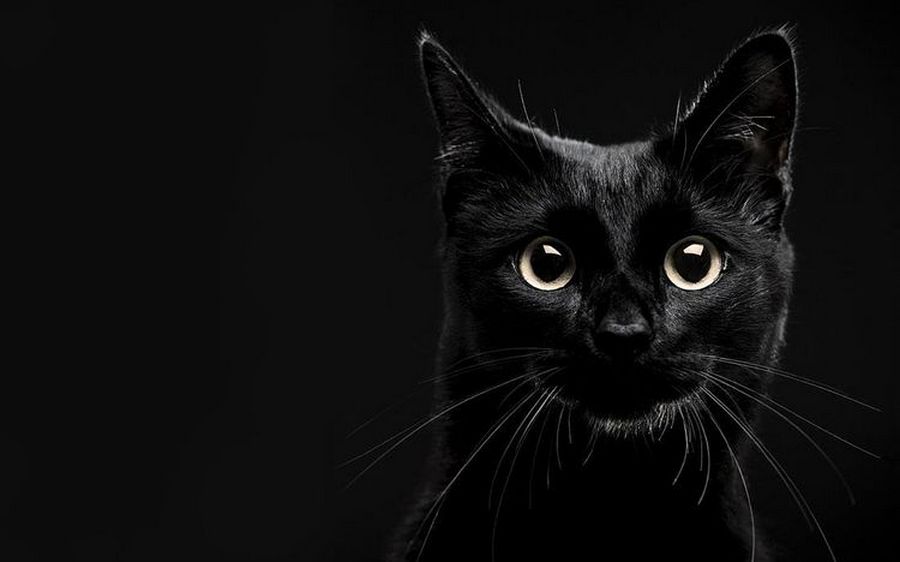
Animals were exterminated in huge numbers, using the most sophisticated methods. People who, despite everything, continued to love their pets were tortured and burned at the stake.
The actions of the Inquisition led to the extermination of 90% of the population. This eventually led to retribution. The incredible proliferation of rodents and the fleas that infested them contributed to an outbreak of bubonic plague, which, according to various estimates, killed between 25% and 50% of Europe's population in the 19th century.
Despite this, superstitions did not fade into the background. Respect and love for animals returned only in the 19th century. They were no longer disdained to be kept at royal courts. Wealthy individuals pampered them, and in some cases even bequeathed fortunes to them.
Appearance in Rus'
Today, it's well known how domestic cats came to Rus'. In the 18th century, foreign sailors brought them and sold them for large sums. The local elite took a liking to the new animal. No wonder: its eyes sparkle in the dark, and it can fall from any height onto all four paws simultaneously, purring. These predators quickly multiplied to such an extent that they began appearing in peasant huts.
In Rus', small predators were never mistreated, as they were in Europe. The Slavs believed they brought happiness and prosperity. It's no wonder that the furry predator was always the first to enter a new home. Of all animals, it was the only one allowed into a church. In fact, in old churches, they even had special passages created just for it.
Origin of different breeds
Today, there are 250 breeds. Some arose naturally, while others were created by breeders.
|
Breed |
Story |
|
Anatolian |
An ancient breed of Turkish origin. Its genotype is similar to that of its wild relatives. |
|
Scottish Fold |
History describes in detail how folded-eared cats appeared on Earth. The first female with this mutation was discovered in Scotland in 1961. She gave birth to two kittens, both of whom also had folded ears. One of the kittens was acquired by farmer William Ross. He registered the new breed and, together with geneticist Pat Turner, began breeding it. Over the course of three years, they produced 76 kittens, 42 of which had folded ears. |
|
Persian |
Its ancestors are longhaired individuals from Turkey, Armenia, and Persia. Over time, the breed has changed significantly. Modern individuals have a flat muzzle, a wide skull, small ears, very long hair, and a short, strong body. |
|
Sphinx |
How did they appear? hairless cats Scientists know for sure (Sphynxes). In 1966, in Canada, an ordinary domestic cat gave birth to a hairless kitten. This was a natural mutation. Several more hairless individuals were subsequently discovered around the world. They formed the basis for the development of the new breed. |
|
Abyssinian |
It was officially registered in England in 1861. There are two theories about its origin. One holds that the breed was developed by British specialists, while the other holds that it arose naturally on the African continent. |
|
Siamese |
Originates from Thailand. Its ancestor is believed to be the Bengal. |
|
It was bred using street Egyptian representatives that arrived in the United States in 1956. It was registered in 1977. |
|
|
Korat |
One of the ancient varieties of Siamese. This species was brought to Europe in the 1980s. They arrived in the United States in 1959, where they were registered six years later. |
|
British |
The origins of British cats are shrouded in mystery. Their origins are believed to be in Rome. Legend has it that they are descendants of the Cheshire Cat. |
|
Norwegian Forest Cat |
Descended from Turkish individuals that were brought to what is now Norway and became feral there. Registered in 1973. |
The question of where cats came from remains unresolved. Similarly, experts cannot explain whether we have fully domesticated these furry creatures. Unlike dogs, they survive without humans and are capable of secondary feralization. They remain flawless, independent predators. Their unique personalities prevent them from shedding their mystical air.
Read also:


Add a comment