
Osteochondrodysplasia in Scottish Fold cats
The distinctive features of the Scottish Fold breed include short, dense, plush fur, a rounded head and eyes, and small, folded ears. These traits were selectively developed from a spontaneous mutation of a semi-wild cat native to Scotland, which is where the breed's name comes from. Scottish Folds are very friendly and have a gentle, affectionate nature. Unfortunately, they are much more prone than other breeds to a bone disorder called osteochondrodysplasia (OCD).
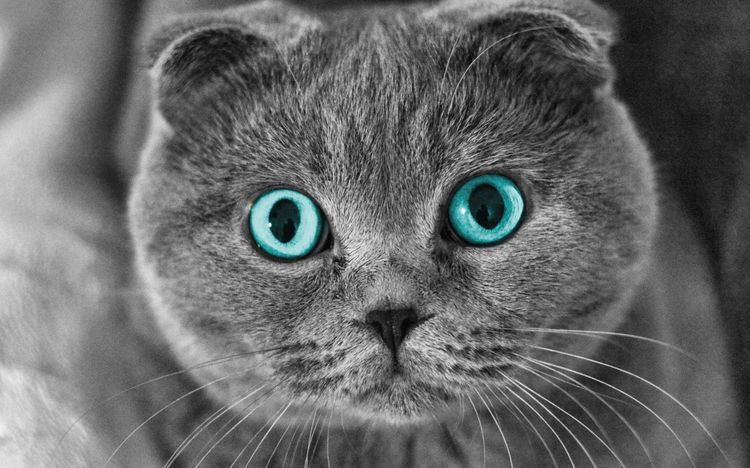
What is OHD?
Translated from Greek, "osteo" means bone, and "dysplasia" means developmental disorder. OCD is a genetic defect in the development of cartilage and bone tissue, leading to growth retardation. This pathology results in underdevelopment of the osteochondral system, including the ear cartilage (which is why cats of this breed have drooping ears). Systemic skeletal lesions most often manifest as limb deformities. This disease often does not pose a direct threat to the animal's life, but it can significantly reduce its quality and duration.
Important! Purebred breeds are at risk for this disease. Scottish Folds And Highland FoldsBoth of them have a "defective" gene in their pedigree. If one of the cat's parents was a Scottish Straight (Scottish Straight or Highland Straight), he will inherit one mutated gene, and the animal’s chances of developing osteochondrodysplasia will be halved.
Clinical signs
The condition typically manifests in cats at 1.5 to 2 months of age. By this age, it is already quite pronounced, as osteoarthritis (a degenerative process of bone tissue) has already developed in the bones. The most typical symptom of OCD is limb deformity. A cat with osteochondrodysplasia has shortened hind legs, forcing it to walk with its front legs bent. Due to the inflammatory process in the bones, the animal experiences constant pain, which leads to reduced mobility. Pain can cause lameness, stiffness in gait, and difficulty jumping up or down.
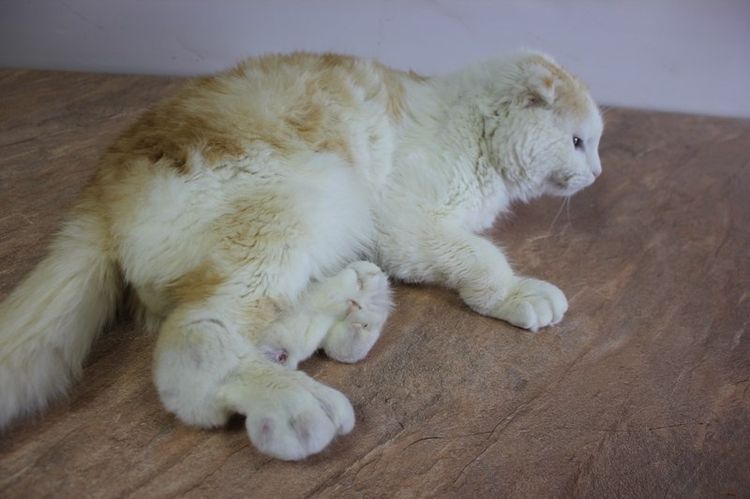
External signs of osteochondrodysplasia also include:
- enlarged head;
- crooked teeth, protruding jaw;
- flattened, disproportionately short nose;
- a short, sedentary tail with a tapering base.
Helpful information! If you're getting a Scottish Fold kitten, pay special attention to the tail's movement (easy to feel) and its gait, which should be relaxed in a healthy cat.
Diagnostics
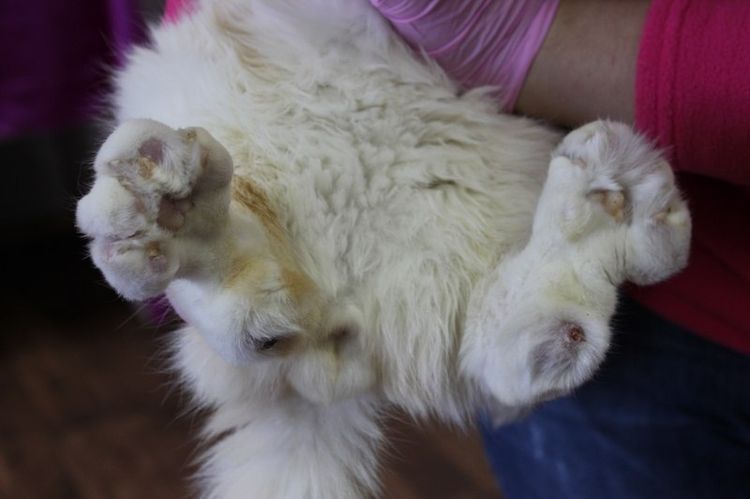
The clinical signs of osteochondrodysplasia in cats are quite typical, so a preliminary diagnosis is made based on a visual examination of the animal. In cats with OCD, in addition to the characteristic external signs described above (shortened, deformed legs, stiff gait, and a stiff tail), palpation of the limbs reveals bony growths (exostoses) located in the heel bone area. If these growths are large, the skin over them becomes bald and ulcers may develop.
To confirm the diagnosis, an X-ray examination (CT scan or MRI) is performed. Depending on the extent of damage to the cartilage and bone tissue, the following may be visible on the X-ray:
- abnormalities in the shape of the bones of the hand, metatarsus and calcaneal segment;
- irregular shape of the tail vertebrae;
- narrowing of joint spaces;
- the formation of bone growths around the joints of the limbs.
Treatment
The success of feline skeletal dysplasia treatment depends on the extent of skeletal damage. The earlier the disease is detected, the better the chances of a good prognosis. Changes that have already developed skeleton persist for the rest of life, but adequate therapy can slow down or even stop their further development.
In any case, treatment is primarily aimed at eliminating the main symptoms of osteochondrodysplasia: pain, inflammation, and joint stiffness. If your pet does not suffer from kidney disease, they may be prescribed nonsteroidal anti-inflammatory drugs (NSAIDs), such as Meloxivet, Ketoline, or Ainil.

To stimulate the proper development of cartilage tissue, Pentosan, which has a chondroprotective and anti-inflammatory effect, as well as glycosaminoglycans involved in the construction of the cartilage matrix, can be prescribed:
- Chondroitin-4-sulfate;
- Chondroitin-6-sulfate;
- Furinaid;
- Interpan.
These drugs slow down the degeneration of bone and cartilage tissue and maintain the proper amount of synovial fluid in the joint capsule.
Manual therapy or massage can help alleviate your pet's condition, but these physical treatments should be performed by a professional. In severe cases of osteochondrodysplasia, your pet may require surgery to remove the bony growths (exostoses) that have formed on the joints. After this surgery, the cat's lameness is usually reduced and pain is partially or completely relieved. In some countries, radiation therapy is used to treat osteochondrodysplasia.
Important! To improve the quality of life of a cat with osteochondrodysplasia and extend its lifespan, in addition to drug therapy, it is necessary to provide a balanced diet and prevent obesity, as excess weight puts unnecessary strain on the skeletal system weakened by the disease.
If your cat shows signs of osteochondrodysplasia, its diet should be specialized. It must include specialized supplements that help strengthen bone and cartilage tissue: calcium, phosphorus, iron, iodine, and B vitamins. This will prevent fractures and slow down degenerative processes.
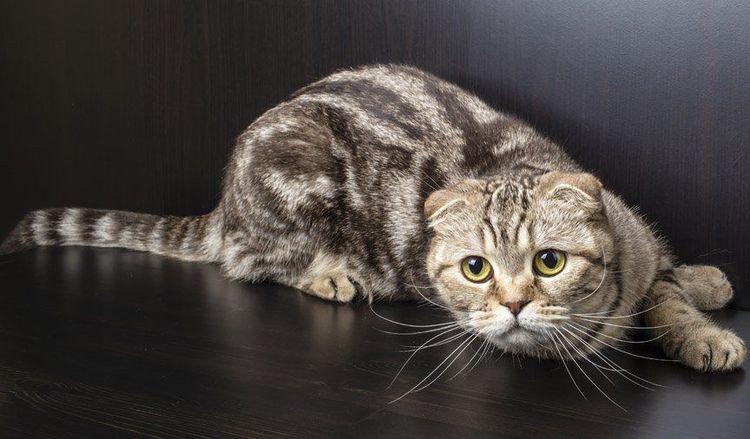
Veterinarians recommend natural, home-cooked food as the best option for feeding cats with musculoskeletal disorders. If commercial food is used, specialized formulas designed for animals with musculoskeletal disorders should be chosen. These formulas contain all the necessary nutrients. vitamins, macro- and microelements.
Osteochondrodysplasia in Scottish Fold cats is not a death sentence. With timely detection, proper treatment, and competent, caring care, your pet can thrive and live a long life.
Read also:


Add a comment