
Peculiarities of the first mating of a male and female cat
The first mating of a cat or cat is always accompanied by excitement and anxiety for owners. The experience gained during the first mating is crucial for both pets and their owners. Knowing the key points to consider when mating a cat for the first time can help support the animals and properly manage the situation, as the successful outcome of a pet's first "marriage" largely depends on the preparedness of their owners.
Content
The optimal period for the first mating
A cat's first heat cycle occurs between 7 and 9 months of age, though it can sometimes occur a little earlier or later. Subsequently, it may recur every 14 to 25 days.
This is influenced by the animal's breed, as well as its living conditions and adequate nutrition. However, at such an early age, the cat's body is not yet fully formed, and its growth period is not yet complete. Psychologically, the animal is also not ready to reproduce, so the first mating should not take place during the cat's first heat. In some cases, this can lead to a difficult birth, the death of the offspring, or subsequent infertility.
Cats reach full sexual maturity between 1 and 1.5 years of age. This age is considered the most suitable for their first mating. If you're determined to breed kittens, the best time to mate your cat for the first time is during this period.
Heat, main signs
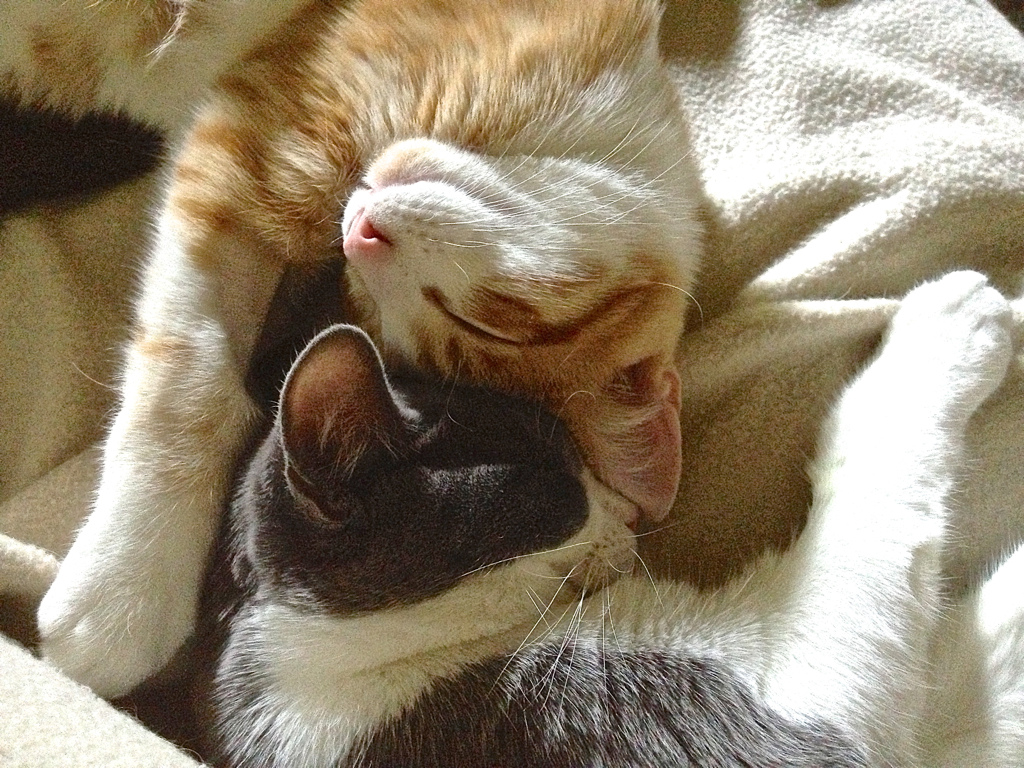
The entire estrus period can last from 5 to 10 days. On the first and second days, the cat's behavior changes; she may become agitated, more affectionate, or aggressive. She often begins rubbing against legs, furniture, and other objects. Her gait may noticeably change: her hind legs are slightly bent, her tail is raised, and her lower back is slightly arched. At this stage, the cat will not allow a suitor to approach her.
Over the next 3 to 6 days, the cat will begin to meow loudly, calling for a male cat. When stroked in the sacrum area, she will adopt a certain posture. Her tail will be tucked to the side, her rump will be raised, and she will limp forward on her front paws. During this period of heat, her appetite may also decrease significantly, and the amount of urination may increase.
As a rule, to avoid exhaustion of the cat's body, felinologists recommend mating cats no more than three times in two years.
Puberty of a cat
The first signs of sexual maturity in cats appear between 8 and 10 months of age. These include behavioral changes:
- the kitten's cheerfulness and playfulness may be replaced by more aggressive actions;
- in the evening and at night the cat meows annoyingly or even screams heart-rendingly, thus calling for females;
- begins to mark the territory with a strong-smelling secretion, thereby indicating that this is his domain;
- tries to use various soft things to satisfy his sexual needs.
The first mating of a cat should only take place after he has fully reached sexual maturity.
The onset of this period can vary slightly among breeds, but on average, it's between 1.5 and 1.5 years old. Unlike female cats, male cats are ready to mate year-round, but with the arrival of spring, the desire to reproduce becomes stronger.
To ensure a successful first mating, it's best to choose an experienced partner. However, even unmated pairs often successfully complete the mating process. It's important to remember that the reproductive instinct is very strong and is one of nature's most basic needs.
How does mating happen?
On the 2nd or 3rd day of her heat, the cat is brought to her partner, because in his own territory the male cat feels more confident and is ready to steadfastly endure all the whims of the bride.
You shouldn't take the female out of the carrier right away; she needs time to get used to the new place, smells, and the presence of the male.
This can take anywhere from a couple of hours to half a day. Once she's calm and ready, she'll come out and introduce herself to the cat.
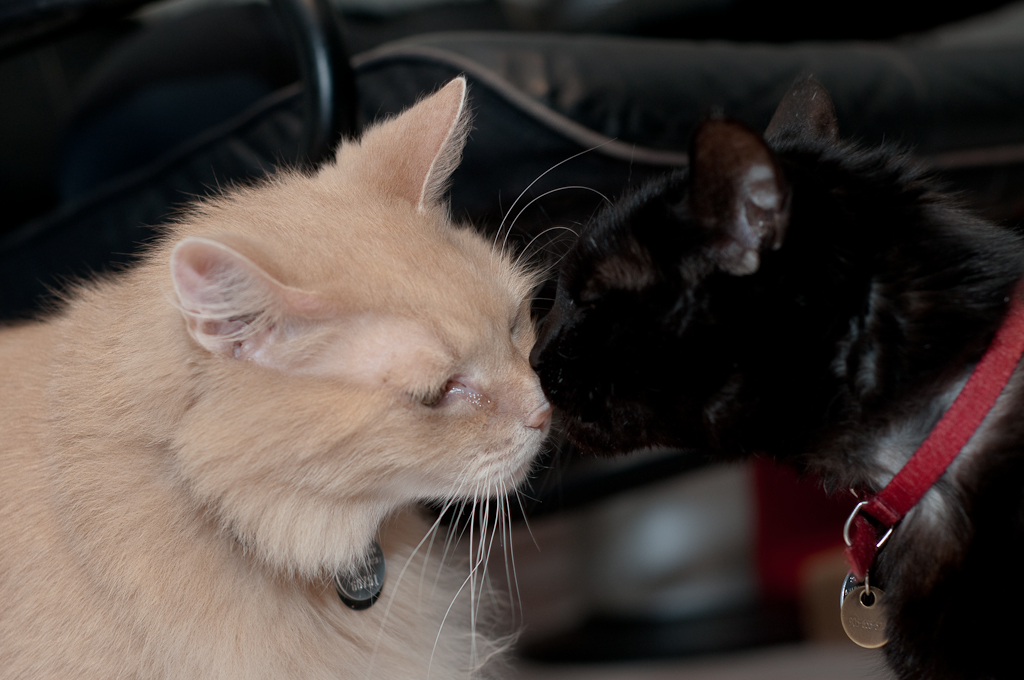
At this point, the partner cautiously approaches her, sniffs her, and makes meowing, purring sounds. The animals should be kept in a separate room to avoid being disturbed by outside noises.
The first mating of a female cat and a male cat requires mandatory supervision by the owner of the male. During courtship, the female cat will allow her partner to approach closer and closer, but may then hiss or strike her paw and drive the suitor away again.
The male retreats to a safe distance and begins his courtship anew, approaching the bride from one side and then the other. The female periodically accompanies the mating ritual with inviting meows and adopts characteristic poses.
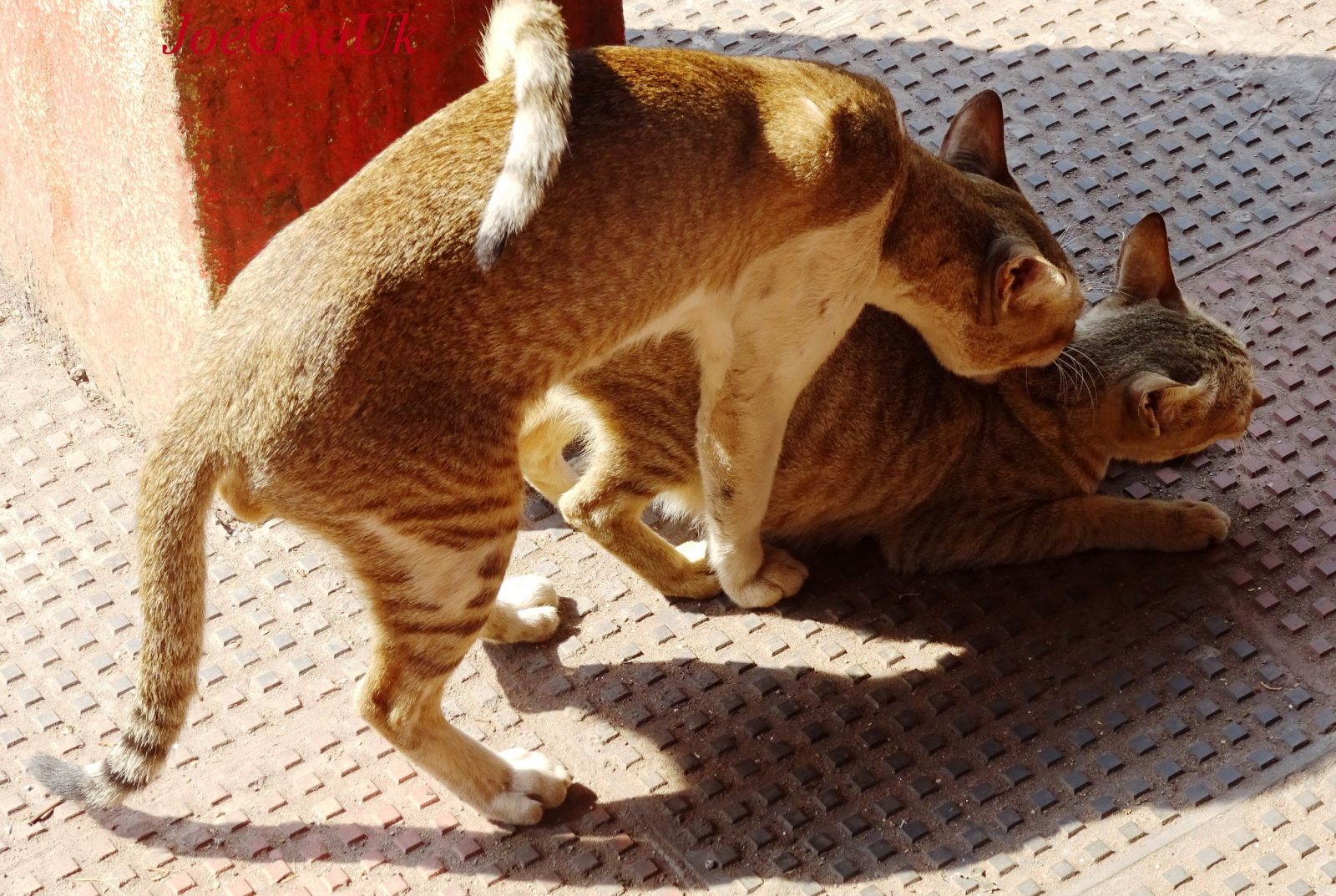
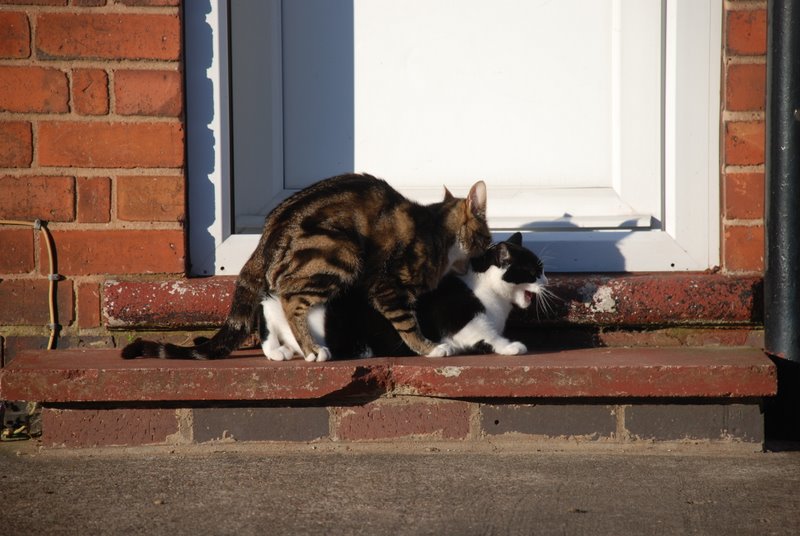
When a male cat has successfully courted a female, he quickly approaches her and mounts her. He grabs her by the scruff with his teeth and grips her sides with his front paws. The female presses herself to the floor and tucks her tail to the side. Intercourse lasts approximately 10-20 seconds, ejaculation occurs, and the female emits a loud cry.
The cat immediately tries to retreat, as the bride slaps him with her paw. After this, the female rolls around on the floor, while the groom vigorously licks her genitals. Fertilization of the egg occurs within 24 hours. The cat can perform these licks 8-10 times an hour, after which the couple tires of it and the animals rest.
One mating cycle may not be enough, so the cat stays with the male for 2-3 days to ensure that the mating is successful.
This is how cats mate for the first time. The process is not much different from the first time, except that an experienced cat feels more confident and calm.
What should you pay special attention to?
Owners of purebred animals should take care to find a suitable mate for their pet in advance. To do this, they can contact a club or attend a cat show, where many worthy candidates are often present.
- Discuss the mating conditions in advance to avoid any misunderstandings in the future.
- Both animals must have all vaccinations and deworming no later than two weeks before mating;
- Make sure there are no various diseases (fungal, infectious, etc.), as well as skin parasites;
- Before mating, be sure to trim the claws to prevent the animals from injuring each other;
- Before mating, you should not bathe your pets, as this may mask their natural scent;
- The owner of the cat must prepare a carrier and all the necessary things for the duration of the bride’s stay with the cat;
- The cat's owner must provide a separate room for the pair and constant supervision. They must also observe the mating process and assist if necessary.
- Under no circumstances should you give a cat that you plan to breed in the future hormonal contraceptives, as they can cause problems with the animal's reproductive system.

Sometimes, even after a long mating period, a cat doesn't become pregnant, and this can be due to a variety of reasons (the owners misjudged her heat cycle or the cat was simply overexcited). In this case, it's best to wait until the next heat cycle and mate her again. If the mating was successful, the first signs of pregnancy will be noticeable within two weeks.
Read also:



Add a comment