
Flea and tick collars for dogs
Owners who love and care for their pets regularly not only deworm them but also treat them for fleas and ticks. Furthermore, these insects carry numerous infectious and parasitic diseases (typhus, cucumber tapeworm, piroplasmosis/babesiosis, and others). These unwanted "residents" can also cause a great deal of discomfort and worry: itching, rashes, hair loss, and loss of appetite.
Some owners buy sprays, others drops on the withers, while others use collars for their pets. All of these methods are good, but each has its own benefits. But now we'll talk specifically about collars: how they work, what they contain, how often they need to be changed, and, most importantly, how to choose the right one.
Content
What types of collars are there and how do they work?
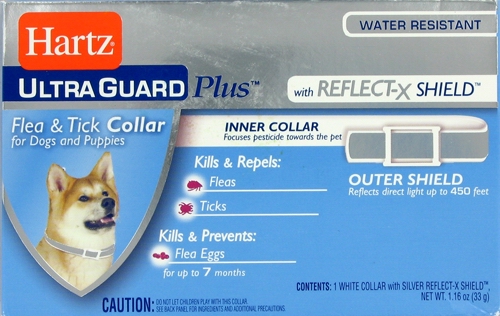
A collar can kill a parasite only in one case—if the insect bites the dog and drinks its blood. However, in this case, the risk of contracting serious diseases significantly increases. Toxins rarely enter the bloodstream, but this is possible if the manufacturer produces a low-quality product for profit. The main active ingredient accumulates in the epidermis. In other situations, collars merely repel fleas and ticks, keeping them away from the animal. For complete insect control, another method is required.
Chemicals
These collars contain chemical compounds that are sometimes highly toxic to insects. The active ingredients are distributed throughout the pet's fur and skin while the collar is in place and active. Each collar has a limited lifespan, so it should be replaced regularly. It's important to remember that chemical collars are only suitable for adult dogs and are not intended for pregnant or nursing dogs. For your pet's safety, it's better to be safe than sorry.
Biological
The main components are natural insecticides (herbs, essential oils). These flea and tick collars are ideal for babies (puppies, kittens), pregnant and nursing pets, and weakened pets. They work on the same principle as chemical ones. The advantage is that biological ones are harmless, but not as effective as chemical ones.
Ultrasonic
The most expensive. You've probably seen ultrasonic rodent and insect repellents for sale. This collar works on the same principle. It doesn't contain any chemical or biologically active ingredients. However, many say the effectiveness of this ultrasonic innovation is highly questionable. Insects "escape" the dog because they are so disturbed by ultrasonic waves of a special frequency that only fleas and ticks can detect (dogs and cats can't sense them).
How to choose the right collar?

- First of all, decide which one you will take: chemical, biological or ultrasonic.
- Explore the ratings of flea and tick collars for dogs. The internet is full of reviews from pet owners who share all the pros and cons.
- Consider how much you're willing to spend for your four-legged friend. Choose a collar based on that. But don't skimp. You don't want your pet to get poisoned. And some cheap ones are completely useless, a waste of money.
- Be sure to buy from veterinary pharmacies or pet stores. They ensure that the product is stored properly. If the conditions aren't met, the collar's deterrent properties will be significantly reduced or even completely lost.
- Read the ingredients and check the expiration date (the fresher the collar, the better it will work).
- Remember that collars are like clothing; they are chosen by size. It's bad when a collar is both too small and too big.
Read the instructions! Responsible manufacturers indicate not only the concentration and name of the active ingredient, but also its hazard level. Some point out that the collar is dangerous for children and for the animals themselves, who try to lick or chew it. It's worth considering whether such a toxic product is really necessary for preventative measures. Furthermore, a reputable manufacturer will definitely indicate the antidote to administer to an animal or person in case of poisoning.
Reviews and ratings of flea and tick collars by manufacturer
Now you'll learn about the best flea and tick collars for dogs. These products have received the most positive reviews from owners. However, it's important to understand that even the most effective collar may cause an allergic reaction in your pet. Therefore, you'll need to choose these protective products very carefully.
Beaphar

Beaphar's effectiveness is short-lived (compared to other brands): two to five months. It is not recommended for puppies, adolescents (under 6 months), pregnant or lactating dogs, or sick dogs. The collar only becomes active five days after being placed on the animal.
Foresto
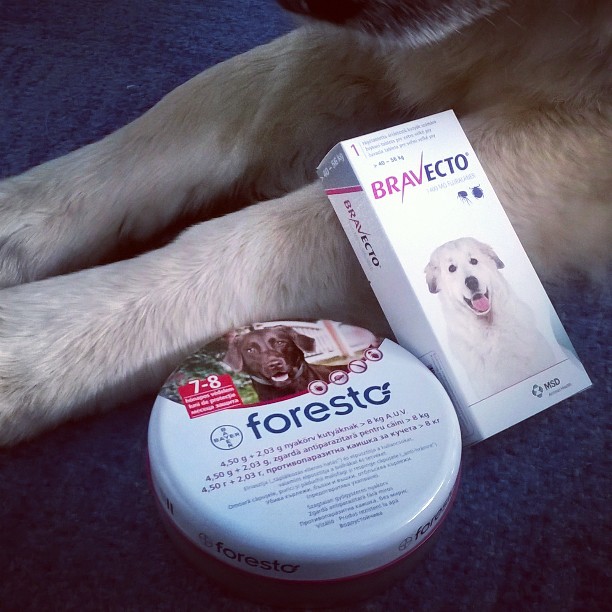
The Foresto collar is available in two sizes: for dogs up to 8 kg (a 38-centimeter collar strap) and for dogs over 8 kg (a 70-centimeter strap). Reflective clips are included, making your pet more visible in the dark. Furthermore, these collars combat not only fleas but also ticks, lice, and biting lice at any stage of development (not just adult lice).
It is not recommended for puppies under seven weeks of age. Pregnant and nursing dogs should only be given the collar after consulting with a veterinarian.
Kiltix
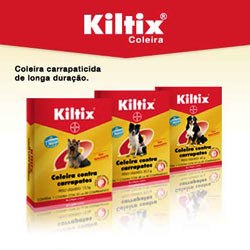
Chemical collars Kiltix, meaning they are recommended only for adult and healthy dogs. Pregnant, nursing, young, or sick/weakened dogs should not use them. They only start working the following day, but can be replaced after eight months. Imagine how concentrated they are that they can repel insects for such a long time.
Hartz UltraGuard Flea & Tick Collar
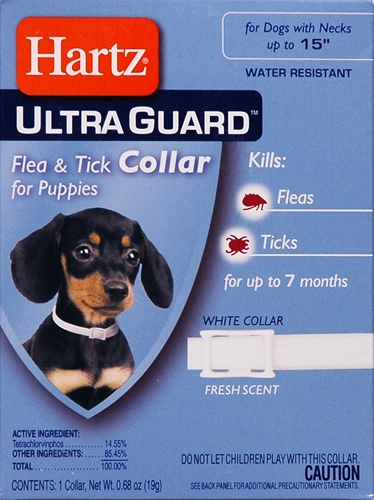
This collar not only repels parasites but also functions as a reflective element. A great find for those who take walks late on dark evenings. Another plus is that the collar is waterproof. So if your dog swims in a river or gets caught in the rain, the collar will still work. It will continue to repel ticks and fleas. It also begins working the following day and continues to repel parasites for the same amount of time. Our only recommendation: do not use it on puppies under six weeks old. Furthermore, there's no offensive chemical smell; it's very pleasant and fresh.
Leopard
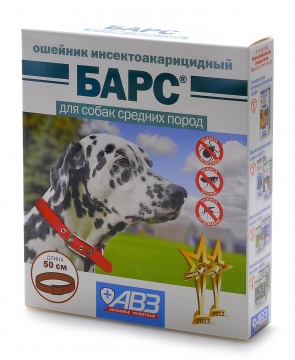
Bars collars are available for small, medium, and large breeds. They are not intended for prophylactic use on puppies (or kittens) under two months of age. Sick, recovering, pregnant, or nursing dogs should also not be protected with this collar. A safer option is recommended for these dogs. Protection lasts for 4-5 months, but it only activates after 24 hours. These collars protect against both fleas and ticks.
Scalibor
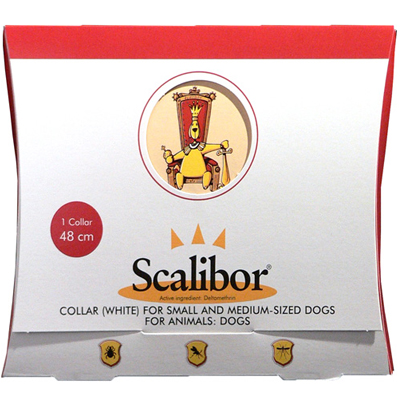
Your pet will be protected from all crawling and flying insects for six months. It's suitable for pregnant and nursing dogs, but it's best not to use this collar on puppies under seven weeks old. There's a downside: all parasites will disappear from the "protected" animal only after a week. The collar "gains momentum" slowly.
How to use a collar to make it “work”?
- First, wash your pet with a special flea shampoo, and only then put on the purchased collar. If you don't do this, the parasites will "run" to the tailbone and tail. The collar's effect there isn't as strong. Fleas and ticks may survive, albeit only for a short time (after all, competition among parasites is fierce).
- Be sure to read the instructions for proper installation and when to replace the collar. After putting the collar on your dog, wash your hands thoroughly with soap and water. And try to keep children away from the flea and tick collar.
- Avoid walking your dog in the woods or park during the first week. Let the collar "activate." Instead, take walks in open areas and check your pet to make sure no new ones are "moving in."
- Don't forget to change collars. Note in your pet's passport when and what you put on. This will make it easier to keep track of when to change the flea collar.
Be sure to closely monitor your pet for the first 24 hours, as allergic reactions may develop, including itching, rash, swelling, watery eyes, a runny nose, or other signs. If you notice these symptoms, remove the collar immediately and take your dog to the vet or have one come to your home.
- And remember, a collar isn't a panacea. It won't completely get rid of insects. First, wash your pet with flea shampoo, and if necessary, use drops or spray to ensure complete protection.
Read also:
Read also:


Add a comment