
Flea and tick collar for cats
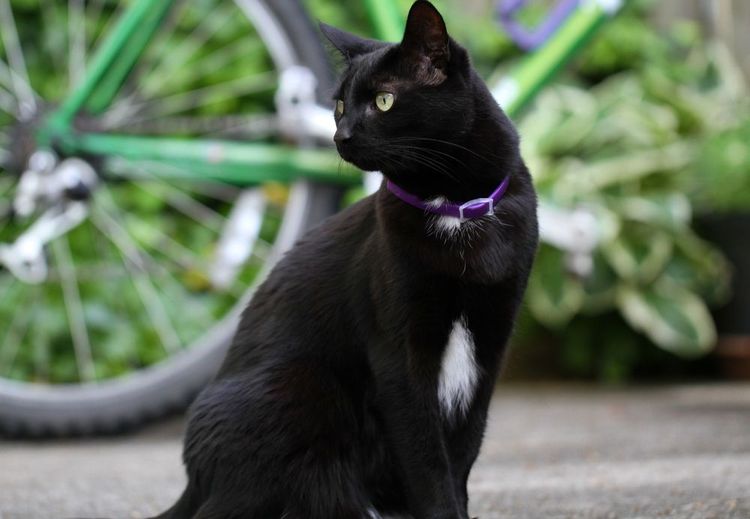
Indoor cats are often given special flea and tick collars. These accessories provide excellent protection during outdoor walks and interactions with other animals. The key is to choose a high-quality, non-toxic, and effective collar.
Content
How do flea and tick collars work?
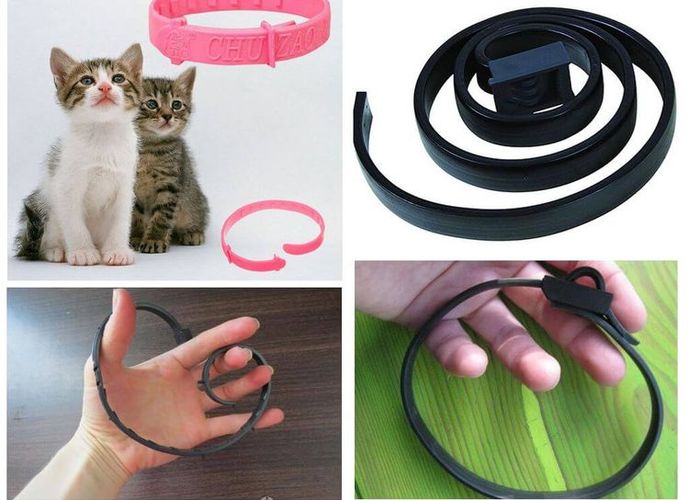
The accessory works similarly to flea sprays, drops, and shampoos. It's completely impregnated with repellents or insecticides that kill lice. ticks and fleas that have settled on the pet's fur, and also repel new parasitesUpon contact with a special insecticide, insects are paralyzed and quickly die. The impregnations used are low-toxic and, if safety precautions are followed, will not cause animal poisoning:
- Essential oils (citrus, lavender, bergamot, mint) repel insects, but don't always help get rid of existing pests.
- Imidacloprid. A modern insecticide that blocks the nerve cells of ticks and fleas. A cat collar soaked in this concentrate is effective for several months.
- Permethrin. According to many veterinarians, this is a fairly toxic compound. Long-term use of this flea collar can cause liver, coordination, and nervous system problems in cats.
- Sevin is a fairly effective, broad-spectrum insecticide with moderate toxicity. It does not accumulate in animal skin but can cause irritation.
- Propoxur. Has a repellent effect. It causes rapid death of insects within the first 24 hours after the collar is applied. It has a moderate toxicity. It is distributed throughout the fur and skin, but is practically not absorbed into the bloodstream.
- Metropen. A highly toxic concentrate. Contraindicated for frequently ill pets, lactating and pregnant cats, and small kittens.
- Phenothrin. Quickly neutralizes adult insects and their larvae. It is used to eliminate fleas not only in animals but also in humans.
- Fipronil is an insecticide with a nerve-paralytic effect. It can cause severe poisoning if ingested. When applied to a pet's skin or fur, it is not absorbed into the bloodstream.
- Diazinon. It distributes through the fat layer and does not enter the bloodstream. It is used not only as a poison for pathogens but also as a repellent. It paralyzes insects, causing their rapid death. It is important to monitor cats' reactions when wearing tick and flea collars impregnated with this insecticide. An allergic reaction may occur during the first few days.
- Tetrachlorvinphos (TCVP) is a non-toxic impregnation that spreads only on the cat's skin. It kills parasites before they bite, thus preventing allergies and severe itching.
According to experienced breeders, many flea collars need to be placed on cats several days before the planned outdoor walk, as the insecticide needs to spread throughout the fur and be absorbed into the skin. It's important to prevent chewing or licking of the antiparasitic collar. To achieve this, it needs to be properly fitted and any excess ends trimmed.
Types of antiparasitic collars
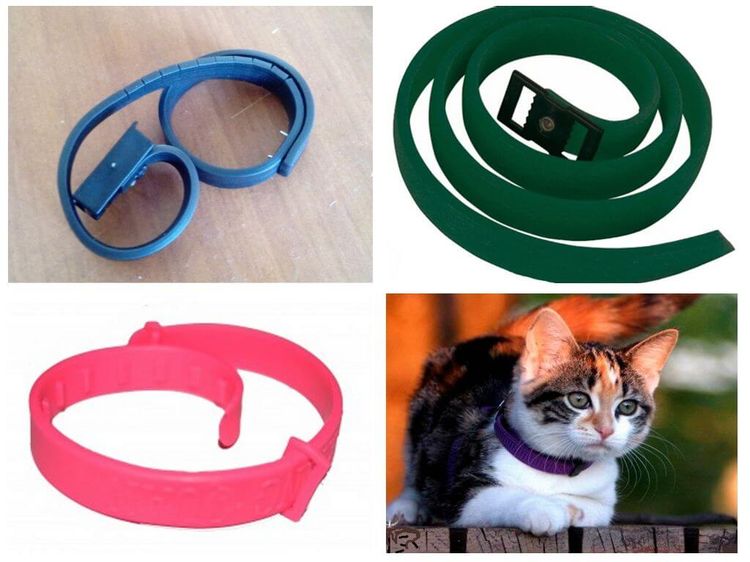
These accessories come in several types:
- Bio- or herbal models. These are rubber flea collars for cats of all ages, impregnated with essential oils. Due to their distinctive aroma, they often cause allergic reactions. They are suitable for pregnant cats and kittens, as well as for preventing infestations during outdoor walks.
- Ultrasonic models are made of fabric with an attached emitter. This emits infrasound, which is inaudible to nearby people but repels microscopic insects.
- Emitting collars emit electromagnetic waves for several meters around them. They are non-toxic, quickly kill fleas and ticks, and don't emit an unpleasant odor, but they don't affect eggs or larvae.
- Insecticidal (gas) flea collars for cats are impregnated with a special liquid. This liquid remains effective for several months. Before placing the collar around the animal's neck, it is slightly stretched to release the toxic microcrystals.
All types of cat collars are suitable for both long-haired and short-haired breeds. They are purchased for British Shorthairs, Maine Coons, Neva Masquerade, Norwegian Forest Cat, Persians, and also Egyptian Mau and Cornish Rexes.
Advantages and disadvantages
These are relatively simple and inexpensive cat care products. They not only remove pathogenic bacteria but also serve as an excellent preventative measure against infection, and offer other benefits:
- they are inexpensive and last up to six months;
- Some models are suitable for pregnant and lactating cats;
- protect against bites of dangerous ticks and infectious diseases;
- create an invisible protective barrier against all types of blood-sucking insects;
- guarantee safety on the street during the capture of stray animals.
No one will mistake a cat with a beautiful collar for a sick stray. Unlike shampoos and liquid concentrates, wearing a collar doesn't require any additional care, such as bathing and drying the fur.
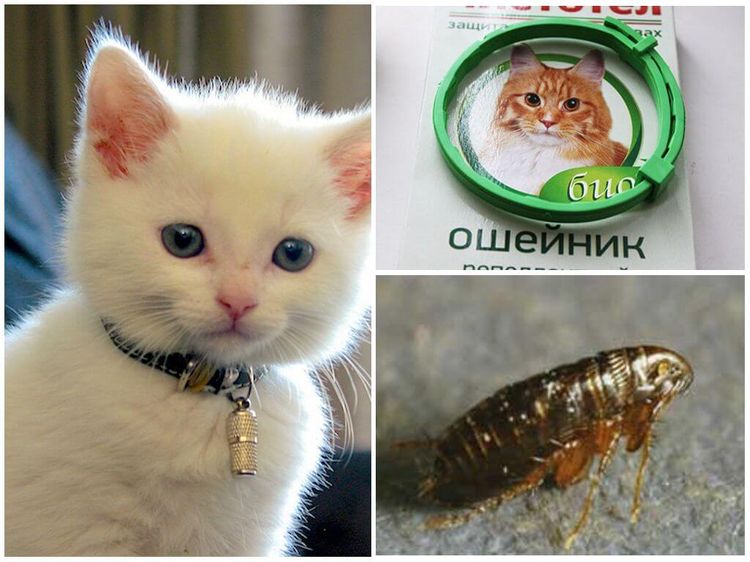
Disadvantages of antiparasitic collars include the specific odor they emit. During the first few days of wearing them, your pet may develop a severe allergic reaction, including a rash, itching, and watery eyes. Hair loss can sometimes occur in the neck area, leading to deep wounds. At the first sign of an allergic reaction, the collar should be removed. Frequent wetting can quickly degrade the collar's effectiveness. Its effectiveness also depends on the individual immune system of your cat. Purchasing a low-quality product from an untrustworthy seller carries a high risk of poisoning.
Wearing rules
To protect your pet's health, you need to know how a flea collar works, how to store it properly, and how to use it. Trusted flea collar manufacturers sell their products with detailed instructions for use. After opening the package, place the collar around your pet's neck and tighten it so it doesn't dangle but doesn't cause discomfort. During the first few days, wear the collar for only a few hours to monitor your pet's reaction. Then store it in a tightly sealed plastic bag or wrap it in plastic wrap.
The maximum shelf life of a cat collar is 6-7 months. Inexpensive models are only effective for 1-2 months. It is not recommended to use them with insect repellent shampoos and sprays. This combination will inevitably cause acute intoxication. The cat's fur should first be treated with a liquid insecticide, and only after 7-10 days should the collar be applied.

Popular brands of flea collars
Veterinarians and experienced breeders recommend using effective accessories from the following domestic and foreign companies:
- Bolfo is an inexpensive German collar that helps remove fleas from the fur of cats of all breeds. It's available in several versions, with weaker and stronger repellent strengths, and costs 450-500 rubles. It lasts for 2-3 months and effectively removes all types of insects (lice, fleas, and ticks).
- Beaphar – an affordable Dutch bio-collar infused with essential oils. Its short-lasting effect (1-2 months) is most often used to prevent infestations. It does not kill adult parasites already present on the animal's body, but only repels new arrivals. Its price ranges from 300-400 rubles.
- Dr. Zoo is manufactured by a Russian company and is impregnated with diazinon. It works for several months. It is low in toxicity and rarely causes allergic reactions or discomfort in pets. It is inexpensive – 50-70 rubles.
- Bars is a waterproof collar from a domestic brand with fipronil, a moderately toxic active ingredient. It effectively repels mosquitoes, lice, ticks, and fleas for 2-3 months. According to owner reviews, it offers the same benefits as more expensive foreign models, but costs significantly less (150-200 rubles). It can be used on kittens as young as 2 months old.
- Hartz is an excellent American-made collar for cats, rarely causing adverse reactions. It quickly kills all types of parasites and is a powerful preventative against reinfestation. It is waterproof and suitable for cats aged three months and older. One downside is the relatively high price. At a pet store, you'll expect to pay 700-900 rubles for this collar.
Counterfeit and cheap products contain insecticides that are hazardous to pets and humans. For cats that frequently spend long periods outdoors, it's best to order high-quality flea collars rather than worry about the cost. Trusted pet supply brands are a guarantee that dangerous insects won't appear in your home.
Veterinarian Reviews
Veterinarian, Makarov V.S.:
"I recommend using inexpensive Russian flea collars, such as Bars or Doctor Zoo. First, treat your pet's fur with a spray from the same brand. Then attach the collar to their neck. This provides reliable, long-term protection."
Veterinarian, Yulianova T. E.:
"Many domestic cats suffer from wearing low-quality, toxic collars. They come home with a runny nose, discharge from the eyes, and bald spots on the neck. This isn't a disease, but a severe allergy to a poor-quality collar. I recommend removing the collar immediately, prescribe anti-allergy therapy, and only after complete recovery can you try flea control products again, but this time with high-quality ones, such as American or German brands."
Reviews from domestic cat owners
Oksakova O. V.:
"My cat literally lives outside. We have a private house with a large garden. He only comes in to eat and relax on the couch. To keep lice and fleas out of the house, I put a new Bars collar on him every two to three months. This is enough to repel all parasites. I check his fur regularly, and it's always clean."
Ivanishina V.S.:
"We've had two cats living in our apartment for several years. They do everything together, including going for walks. They also sneak in through the window. To prevent them from bringing in any pests from outside, I order high-quality Beaphar flea collars for them several times a year. I like their high European quality, reliability, and minimal toxicity. I used to buy budget brands, but they'd periodically get fleas and ticks on their withers."
Read also:
- Delix drops for cats
- Flea allergy dermatitis in cats: symptoms and treatment
- Tar soap for fleas in cats




Add a comment