
Mammary tumor in a cat
A mammary gland tumor (MGT) is a neoplasm associated with abnormal tissue growth that increases in size over time. It is one of the most common neoplasms found in cats. Modern medicine offers a number of effective treatment options, but a successful outcome and the pet's future survival depend primarily on prompt medical attention.
Content
Types and diagnostics of tumors
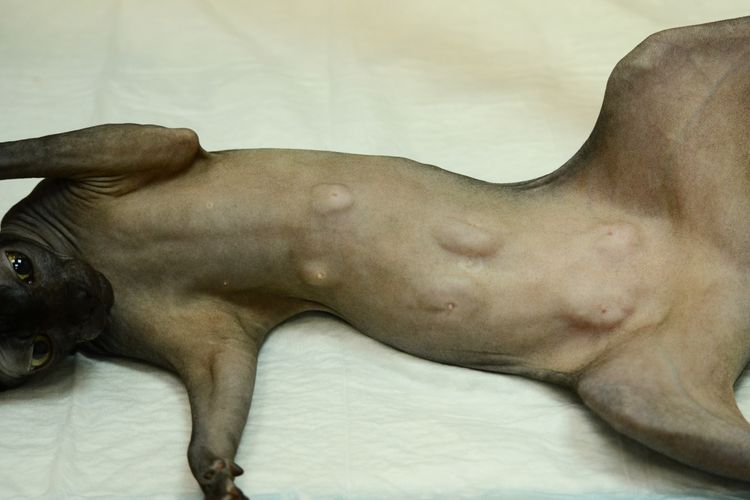
The tumor is a lump, ranging in size from a small nodule to the size of a tennis ball. It can be of two types:
- Benign (cyst, adenoma) – not life-threatening, but can cause significant discomfort to the pet if it grows large. It is usually regular in shape, separated from surrounding tissue by a capsule, located only on one gland, and grows slowly, not penetrating surrounding tissue but merely displacing it. However, such masses require constant monitoring, as they can develop into malignant tumors.
- Malignant tumors (carcinomas, sarcomas) are life-threatening neoplasms that cause metastases and invade adjacent tissues and organs. They typically have an irregular shape and a lumpy, nodular surface.
Mammary tumors most often occur in older, unspayed female dogs (over 7 years old), as well as in those who have suffered mammary trauma or hormonal imbalances. Benign tumors account for 10-15% of cases, while the remainder are classified as malignant. The condition is uncommon in animals spayed before their first heat cycle, while all other dogs are at risk. The condition can also be detected in young animals (up to 2 years of age).
A neoplasm can be diagnosed by palpation, X-ray, or ultrasound. However, its type and nature can only be determined through cytological or histological examination of material removed from the tumor using a syringe. Additionally, a complete blood count and other tests are performed to assess the animal's health and determine appropriate further action in a specific case.
Treatment
The primary treatment for breast cancer is surgery, which involves complete removal of the overgrown tissue. After surgery, the removed tissue is sent for histological examination, and the results inform further treatment and prognosis.
In parallel with the operation, doctors recommend performing a hysteroectomy (removal of the ovaries) to reduce estrogen levels in the animal's body.
In some cases, a course of chemotherapy is prescribed postoperatively to destroy any remaining tumor cells. This involves intravenous administration of medications (Cytoxan, Mitoxantrone, etc.) at 21-day intervals and is generally well tolerated by cats without causing hair loss.
As additional treatment, you can give your pet decoctions of milkweed, calendula, arnica, wild rosemary, and knotweed. These contain substances that inhibit tumor cell growth. However, this should only be done with your veterinarian's approval.
How does the operation proceed?
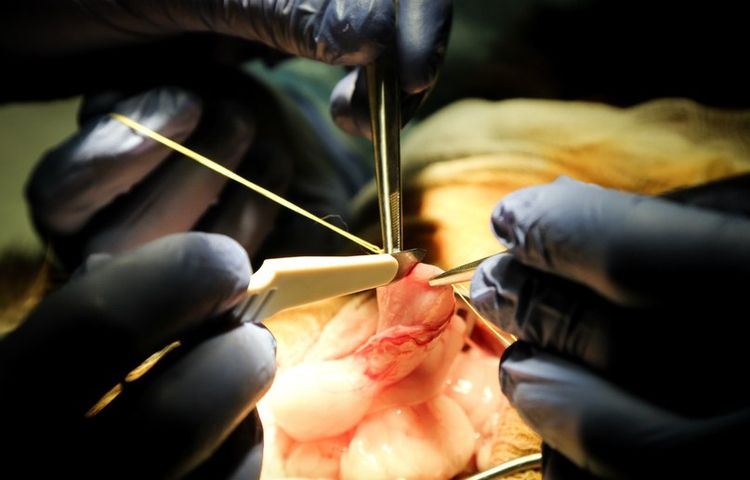
The course of the operation to remove the tumor:
- preparation of the surgical field (shaving hair, treatment with antiseptics);
- providing access to the tumor (cutting the skin);
- ligation and cutting off of the vessels feeding the seal;
- removal of the neoplasm with the capture of 2-3 cm of healthy tissue, as well as nearby lymph nodes;
- suturing a wound.
Depending on the severity of the lesion, the lump itself, one breast, or the entire breast line is removed. In particularly severe cases, bilateral mastectomy—removal of both breast lines, performed in two stages—is performed as part of the treatment.
Breast tumor removal is a complex surgical procedure. Due to the relatively high recurrence rate, doctors cannot promise a quick recovery or favorable outcome. One of the factors determining recovery is the extent of the lesion:
- in the early stages, removing the tumor can save the cat's life;
- In later stages, the doctor will likely not perform surgery, as it would be unjustified. In such cases, palliative treatment is prescribed, aimed at improving the pet's quality of life. This includes antibiotics. painkillers and anti-inflammatory drugs.
Carrying out surgery is not always possible due to the animal's age: the older it is, the more difficult it is to tolerate general anesthesia and the postoperative period.
What to do when a tumor is opened
If the tumor isn't detected promptly and no treatment is administered, it may rupture. This also indicates progression of the pathological process and an advanced stage of the disease. A wound appears, oozing a strong, unpleasant odor, sometimes with pus and blood. In this case, the pet should be immediately seen by a veterinarian for recommendations on further action. The optimal treatment in this situation is surgical removal of the mammary tumor and excision of the diseased tissue. All other methods fail to address the underlying problem, and metastases can spread to other organs, jeopardizing the pet's chances of recovery. However, if a cat's mammary tumor has ruptured, and surgery is not possible due to health or other reasons, the following is recommended:
- Treatment of the wound with antiseptics (chlorhexidine, miramistin, levomekol, etc.).
- Taking antibiotics (Tsiproveta, Fosprenil).
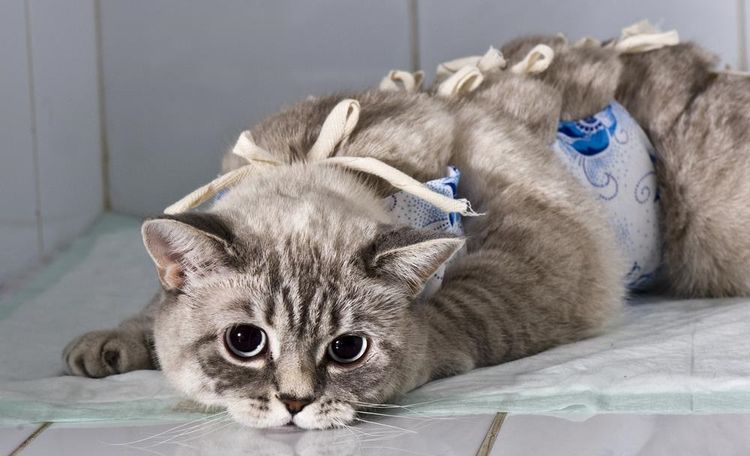
- Wearing a blanket or bandage that covers the wound but allows free access of air to prevent infection.
How long will a cat live?
If any lump is detected in a cat's mammary glands, it should be taken to a veterinarian immediately for diagnosis. The survival time of a cat diagnosed with a mammary tumor depends on the timeliness of the consultation, as well as the cat's age, overall health, and the type of tumor. One of the main factors affecting survival is the size of the tumor at the time of presentation (measured along its longest dimension):
- up to 2 cm – approximately 3 years;
- more than 3 cm – about 6 months.
If diagnosed early, removal of the mammary tumor significantly increases the pet's chances of survival. Late diagnosis of large tumors and the development of metastatic processes gives a prognosis of survival of 6-12 months.
This is why it is important for cat owners to regularly monitor the condition of their cat's mammary glands, and if any suspicious lumps appear, to not delay a visit to the veterinarian.
You can also ask our website's staff veterinarian a question, who will answer them as quickly as possible in the comments box below.
https://www.youtube.com/watch?v=j4MAiiTpTgk
Read also:
- Breast cancer in cats
- Why did my cat start peeing everywhere?
- Third eyelid in cats: causes and treatment


87 comments
fox
Hello, my cat has been developing inflammation/uterine inflammation for four years now (if not more). She has a large, heavy, fluid-filled bladder in the area of her mammary glands, the very bottom ones, so to speak.
I'm 15 years old, and for years now I've been telling my parents to take her to the vet, but they never have time. I'm starting to worry about my cat because this bladder is getting so big, it's basically the size of her head. Plus, she's already an old lady, 13 years old. Can you give me any advice?
Daria is a veterinarian
Hello!
It's a shame that at such a young age you ask your parents for help, but they can't give it to you.
Unfortunately, issues such as growths on an animal's body can only be resolved by an in-person consultation with a doctor.
Perhaps by the time you receive this answer, your old lady will no longer be around, but know that you are a good person for looking for help for her everywhere.
Rina
Hello, the cat is 13 years old.
The mammary gland has ruptured, she's losing muscle mass, and is very weak. We took her to the vet, where they prescribed tests, X-rays, ultrasounds, tumor removal, spaying, and a bunch of other things. There's no guarantee she'll survive the surgery. She's in pain, eating little, and barely moving. Should she have surgery? Or should she be euthanized?
Tatyana Shmonina - veterinarian
Hello! It's worth a try, but be mentally prepared to say goodbye to her. There are no guarantees here; it all depends on her.
Max
Dear pet owners, chemotherapy isn't actually expensive. It's usually administered with doxurubicin, vichristin, endoxan, or cyclophosphamide. Before administering chemotherapy, be sure to research the medication and find out the real price online. You'll be surprised by how cheap it is, and the veterinarians will be shocked by how greedy they are.
As for whether or not to have surgery, the answer is definitely "DO IT!" Otherwise, the cat will rot alive, and no amount of pills like Metastop, Cytostat, or other nonsense will help. My specific case was last summer: my 11-year-old cat got breast cancer. While I was running around to doctors, the tumor kept growing. They didn't perform surgery because it had grown into a muscle and had spread to a lymph node under her front paw. What did the doctors do?
They shrugged, took money for the examination, filled out paperwork, and prescribed all sorts of crap in the form of ointments. Meanwhile, the lump grew the size of a plum, the cat licked it, and small balls appeared on her paw, her neck, and she licked her paw too, causing a terrible smell. But we didn't give up. I found another vet. A woman in her 50s examined her and also said it was inoperable, but we'd fight it. She prescribed me cyclophosphamide and endoxan, which are similar to each other, along with vincristine and doxurubicin.
She told me to find something from this list. All the medications are sanctioned and require a prescription. I found some scammers in Turkey who find any medication and ship it to buyers. There are plenty of them on Avito, and I was lucky. Two weeks later, I had vincristine and endoxan in my hands. The price for everything was 6,700 rubles, including 4,500 rubles for delivery, and 2,700 rubles for the medication for a couple of bottles.
The treatment itself kills the tumor and small metastases under the skin. An injection costs 200 rubles and is administered into, around, and underneath the tumor. Injections are also given into the paw and under these small growths. One bottle of Endoxan is enough for four treatments. A little less than a month after all the procedures, the paw is almost healed; these growths simply dry up and fall off, and the large tumor has shrunk in both length and height.
The doctor told me to order a couple more bottles of Endoxan just in case, since the reaction was positive. The main goal is to remove the tumor, but we need to get it to detach from the abdominal muscle. Incidentally, the tumor itself has become dry and cracking.
What about the cat herself? She squeals when she gets these injections, but she tolerates them well. She eats, runs, sleeps, and her condition has improved significantly. She's lost 500 grams this whole time. So for now, we're just trying to cope and hoping for the best, and then we'll see what happens.
By the way, the doctor also recommended applying ASD3 to the tumor, diluted 1:1 with olive oil. Overall, all together, it produces positive results. Good luck to you and your pets, and remember: the nicer the vet clinic, the higher the price, the dumber the doctors there.
Faith
Hello Max. My cat is sick like yours. Can you tell me where to find this medication and who can supply it from Turkey? Is it sold in pharmacies?
Tatiana
My cat has a recurring mammary tumor. The first one was removed, but for some reason not the entire ridge. After 5 months, the tumor came out again and it burst open. I prescribed treatment, changed the dressings, and the cat eats well, goes to the toilet, everything seems to be fine. However, in the last 2 days, one paw has started to swell. Please tell me what to do to help her.
Daria is a veterinarian
Hello! If the tumor has ruptured, you should see a doctor immediately. First, they'll rule out a recurrence of the tumor. Second, they'll prescribe antibiotic therapy, since after cancer, the immune system is unable to effectively fight bacteria and viruses that inevitably enter the body through the infection site (the wound).
A paw can swell due to either a growing tumor or the spread of inflammation due to infection. Without an in-person examination, it's impossible to determine the exact cause.
Maria
Hello, my cat was diagnosed with a mammary tumor. She's 6 years old. She had her left breast removed and was spayed. They told me the other half needs to be removed in a month. There were some 2cm-sized bumps on one nipple and a little to the side. I brought her home and she's been lying there for three days. She's unsteady when she gets up. I'm worried about her. Can anyone tell me how long she'll live, if she even survives?
Daria is a veterinarian
Hello! Why didn't you remove both mammary ridges at once? Why leave something that would have to be removed again later, and a month later, at that? The animal will only recover from one surgery, then another anesthesia, another incision, and another recovery. I'm very sorry, but I can't say for sure whether the animal will survive, as I'm not a clairvoyant. Only the treating physicians can make such a prognosis; they see the animal in person, conduct tests, and know the animal's medical history.
Olga
Hello. I'm really looking forward to your reply!!!!
The cat was 14 years and 11 months old. She was diagnosed with chronic renal failure a year ago and was undergoing treatment.
The tumor was 3 cm in size. On October 1st, we consulted a doctor about the tumor. On September 30th, the cat suddenly went blind and lost coordination. The doctor, after examining and palpating only the tumor, scheduled surgery for Friday, October 7th. After anesthetizing the cat, the doctor examined her more closely and said there were metastases in both the lymph node and the lungs (a scattering of small tumors on the chest).
There was no point in surgery; he suggested euthanizing her, as the cat was already in pain and there was no point in delaying it any longer. We were shocked (we were on our way to the surgery), but we agreed.
And that's it... my life is over!!! I cry every day, the guilt is simply devouring me. And for almost two months I've been gnawing at myself, wondering if I was too hasty with the euthanasia???
Could you please tell me, would it have made sense to bring the cat out of anesthesia without surgery and let her live on palliative care? After all, anesthesia would have certainly damaged her kidneys, plus metastases, plus damage to the central nervous system (blindness and impaired coordination due to chronic renal failure or tumor lysis). Would that have meant life for the cat, or suffering?
Daria is a veterinarian
Hello! The animal had metastases, a large tumor, blindness, central nervous system damage (since she lost coordination), and kidney problems. There was no way she could have lived a full and happy life. Even if she had recovered from anesthesia without any complications, the therapy wouldn't have resulted in complete remission. She might have lived for a month, two, three...
Would this have been life for her? I doubt it. She would have suffered. With kidney damage, her appetite is already reduced due to constant nausea. And after the chemotherapy, this feeling would only have intensified. It would have been far more humane to euthanize such an animal to end its suffering. She was probably happy with you and passed away peacefully and painlessly, in her sleep. Please don't blame yourself.
Olga
Daria, thank you so much for your reply!!! Your opinion and assessment of the situation are very important to me.
Daria is a veterinarian
I can't even say "please" here. I share your pain at the loss of a pet, a member of your family. For me, the passing of any whiskered one is painful. They came into this world to make it a better place for us. For us, they are part of life, but for them, we are their whole life. But sometimes we have to make serious decisions to ease their passing. Soft clouds
Svetlana
Hello. My cat is 17 years old and has mammary cancer that has spread to her axillary lymph node. The tumor is very large in both areas. Ultrasound and X-rays show her internal organs are clean and healthy. Should she have surgery, and what's the prognosis?
Daria is a veterinarian
Hello! My cat is elderly. Geriatric patients respond less well to therapy. There's no guarantee that a mastectomy (removal of the mammary glands) and removal of the affected lymph node will prevent metastases. If there are oncologists in your area and the ability to perform a histological examination, a biopsy can be performed to determine whether the tumor is malignant or benign.
But if the lymph nodes are already responsive, the chances of complete remission are extremely slim. Chemotherapy, for example, is very expensive and requires strict adherence to the prescribed medications (dose, frequency, and course). Not all owners have the strength or the money. Moreover, the animal may be too weak to tolerate the treatment. If the pet is already suffering or erosive surfaces have developed, it is more humane to euthanize it.
Alexandra
Hello! Our cat was diagnosed with cancer, more than four lumps in her mammary glands. We performed surgery, removed all the tumors, spayed her, and spent several weeks cleaning the incisions after the surgery. However, now she's stopped eating completely, has heavy, intermittent breathing, and a hoarse cough at night. Could you tell me if this is just her post-surgery adjustment or something more serious and life-threatening?
Daria is a veterinarian
Hello! Was a histology scan of the removed tumors performed to determine whether they were malignant or benign? Were X-rays taken before or after surgery? Were metastases ruled out? Was any postoperative symptomatic or supportive therapy prescribed? Did you have any follow-up appointments after the surgery?
There's too little information about the pet, its life, and its health to say for sure. But a few weeks after surgery are no longer an adjustment period.
Hope
Hello. A year ago, our cat was diagnosed with a pea-sized lump near her breast, about the size of a match head or even slightly smaller. Over the course of a year, it grew in size to about 0.7 mm in diameter. We visited two vets. Neither ordered any tests or X-rays. Both recommended a spay, but one said the entire mammary gland chain, the other specifically a segmental one.
There's no rush; if it grows, I'll have to remove it. My cat is seven years old, hasn't had a lump, and isn't spayed. The lump has gotten bigger, but I don't know if it's the right thing to do, whether to remove it or not. How much pain does the surgery cause? What if it gets worse? Why didn't any of the doctors order any tests and tell me not to rush?
Daria is a veterinarian
Hello! In this case, you need a consultation with a specialist – a veterinary oncologist. This will make things easier. They will be able to differentiate the tumor.
Victoria
Hello! Is it possible that the tumor is larger than 3 cm and there are smaller ones, but the cat doesn't feel any pain? She has a very good appetite, behaves quite normally, and goes to the bathroom normally.
She was constipated, but now her stool is normal, but she's started having light-colored, practically odorless discharge. I understand that she needs to see a specialist and have it removed, but unfortunately, that's not an option. I'd like to somehow prepare for what's to come.
Could the tumor burst? Should I take antibiotics orally? Painkillers? Is there any way I can help her now without a doctor (with medication)? Can I reduce the tumor's growth? Painkillers are definitely not needed yet. Sorry for the confusion. I'm so worried. I'm so helpless I don't know what to do.
Daria is a veterinarian
Hello! It's impossible to determine the nature of this growth at home. Only an examination and biopsy are possible. Then a decision can be made: surgical removal of the growth, chemotherapy, or perhaps even more humanely, euthanizing the animal and leaving the lump alone. Do not self-medicate.
If cancer is suspected, antibiotics are useless. Simple painkillers are practically useless against cancer. Cytostatics (drugs that inhibit cancer cell growth) are also unavailable without a prescription and a doctor's recommendation. No incision is allowed! If it's truly a tumor, and God forbid, malignant, such intervention will provoke aggressive cancer cell growth and metastasis.
Victoria
Hello. No, you misunderstood me. I'm not planning to open anything myself. I'm just looking for some advice on what to do if the tumor ruptures. What's the best way to treat the wound? I don't have the opportunity to show it to a specialist. Otherwise, I wouldn't be writing here.
Daria is a veterinarian
Hello! Chlorhexidine or miramistin for wound treatment. Many write because they can't or don't want to take their animals. And only when it's too late do they decide to bring them. Believe me, this happens every day during shifts. They bring them when the only option is euthanasia. They self-medicate, wasting precious months, weeks, days... no offense, but often the animal suffers without the help of a doctor.
Ilona
Hello. When my cat was 13, we discovered a lump on her chest and took her to the clinic. We ran all the necessary tests and discovered a mammary gland tumor. She underwent surgery and was spayed. However, the doctors only removed three mammary glands, citing the risk of traumatic surgery if they removed more.
After the operation, we took samples of fluid from the tumor, and the doctor said that a relapse was possible.
They didn't tell us anything about chemotherapy, they didn't give us any advice on further prevention, although we always asked questions about what we could do for prevention and recovery.
Less than a year and a half later, a tumor was discovered again, tests were done, and a second operation was performed. Again, they didn't remove all the mammary glands, leaving three. And after the second operation, less than a month later, right at the site of the last surgery, a lump appeared again. By that time, the cat hadn't even grown any fur yet and the stitches had only just healed. The lump grew instantly.
The cat is now 15 years old. We went to the same doctor, had tests done, and a CT scan. It turned out that the metastases had already spread to the lungs, making surgery pointless.
After the CT scan, the cat became ill—she was weak and depressed for a week. We took her to another clinic, where we learned that the entire ridge needed to be removed at once, followed by a second one on a planned basis. If all the glands weren't removed, the tumors would recur, but if they were removed, the risk was significantly reduced.
From this, I conclude that when the cat was 13, all the glands should have been removed, in one or two stages, without fail, rather than waiting for them to continue growing and spread to internal organs, and for the cat to become weakened by age and illness. Then, preventative treatments should have been performed.
As for the pain of the procedure, I believe that it is better to go through anesthesia once or twice, remove all the mammary glands after the tumor has appeared, and recover at a younger age than to “cut off little by little,” wait for a relapse, accelerated cell growth, and hit the kidneys with anesthesia in an already adult cat.
Could you please tell me if my conclusions are correct? I'm trying to understand where we went wrong, and perhaps my experience will help someone else.
Thank you!
Daria is a veterinarian
Hello! It's unethical to judge a colleague's actions, even if they were wrong. It's unclear what the doctor was guided by when making this decision. However, I would also insist on a bilateral mastectomy with mandatory ovariohysterectomy (sterilization). It's strange, however, that the clinic has a CT scan and histology results, but no clear oncology protocol.
Xenia
Hello, two months ago I discovered a lump in my cat's chest area. It was small and barely noticeable from the outside. I immediately went to the clinic, but the doctor said surgery wasn't necessary because my cat was already 13 years old. He told me to observe her closely and take Metastop three times a day. After completing the 16-day course, I took her back to the vet.
After examining her, he told her to take Metastop for another month, but this time, one tablet a day. The lump has grown during this time, but it's barely noticeable, only a slight inflammation. The month ends in a week, and I need to go back to the doctor. I doubt his competence and ask him if his recommendations are correct. And how long will my daughter live with these symptoms? Is it dangerous to sterilize and operate on her? How dangerous is it? How long will it take for the lump to burst?
Daria is a veterinarian
Hello! Lancing the lump isn't the best option either, as it's not an abscess. I can't comment on the specialist's competence, as there are few oncologists who specialize in this field.
I'm not an oncologist, and if I suspect any type of tumor, I refer you to a specialist. Thirteen isn't such a scary age; you'll need to have your overall health assessed (complete blood count and biochemistry, an ultrasound of your heart, liver, and kidneys, and an ECG) to see if you can survive anesthesia. Chemotherapy may be prescribed. Surgery is also possible. But this will only be determined after an in-person examination, and further testing will determine the outcome.
Paul
I have a female cat, a common tabby, about 20 years old. She has a lump on her mammary gland, close to her genitals, about 3-4 cm in diameter. She's not spayed and has had many litters. Is there really no chance? There are veterinarians in our city, but I'm afraid none of them are qualified. My cat is suffering terribly. Is there any way to ease her suffering and prolong her life? Please help, she's the only person I have in my life.
Daria is a veterinarian
Hello! My deepest sympathies and empathy for your pain, but alas. If there are no qualified oncologists in your city, there's nothing you can do. And at this age, few veterinarians would undertake surgery or chemotherapy, as the cat is already elderly and simply won't tolerate either anesthesia or aggressive therapy. If the animal isn't bothered by this condition, isn't in pain or suffering, and hasn't lost its appetite, then let it live. If it's suffering, it's more humane to let it go.
Alexander
Hello! My cat is 14 years old. After discovering a tumor and visiting a veterinarian, we decided not to perform surgery and let her live in peace. Two months later, the tumor has ruptured and is bleeding. Is it worth caring for the wound, or is euthanasia more humane?
Daria is a veterinarian
Good day! If a tumor has been confirmed, chemotherapy and surgery have not been performed, and the tumor has already ruptured, it's more humane to end the animal's suffering. Since the pain is excruciating, and the door to infection has been opened, the immune system is no longer able to adequately respond to even the most "safe" microbes.
Moreover, there is a huge risk of metastases to internal organs. Please accept my sincere condolences. Losing loved ones is always painful, and it is extremely difficult to let them go.
Lyudmila
Good afternoon, we found a lump in my cat and took her to the vet. They diagnosed breast cancer and ordered two chest X-rays. After the images, they said surgery was a possibility. My cat is 7 years old. What are the chances of a successful outcome and how long can she survive after the surgeries?
Daria is a veterinarian
Hello! The cat is quite young, so her chances are good. However, she should also be spayed to reduce the risk of recurrence. I can't predict how long the cat will live—I'm not God. If there are no contraindications to the surgery, then by all means, go ahead.
Julia
Hello, our 16-year-old cat was diagnosed with a mammary tumor, and the vet recommended observation. Over the past three months, the tumor has grown and become red. One clinic recommended surgery and spaying. Another recommended only surgery on the entire right mammary gland. Since the cat is elderly, no one can give any prognosis. Could you please tell me if spaying is absolutely necessary in this case, since the cat is 16 years old?
Daria is a veterinarian
Hello! You need to have your cat examined on-site and assess all the risks. They'll need to check her heart health (whether she can withstand anesthesia) and whether she's metastasized to other organs. The doctor may have suspected that the underlying cause of the tumor was a reproductive issue (possibly because she was given heat-suppressing medications, or because she's been "tolerating" all her heat cycles, perhaps even giving birth a couple of times "for her health") and is worried about a recurrence (hence the suggestion to perform two surgeries simultaneously). The cat is elderly, so her recovery will be more difficult. But performing one surgery first will be preferable. A second surgery will clearly be worse.
Victoria
Hello, my cat is 8 years old, diagnosed with mammary gland cancer. We had surgery to remove it, and as a result, a month later the tumor formed again (it became inflamed and was bleeding), and on top of that, she began to breathe strangely. The doctor said that she may have metastases in the lungs, so she will not operate, because the tumor is too aggressive and has penetrated deeply into the tissue.
In the end, they put him to sleep, and now I really regret my quick decision. Maybe I just needed to change the doctor and conduct a more thorough examination?
Daria is a veterinarian
Hello! My condolences on the loss of your pet, but it's too late to decide or do anything. Let go of the situation and don't blame yourself. You've ended your pet's suffering and painful existence. This is a very serious decision, and a humane one for our beloved pet. It's not a given that another doctor wouldn't have offered you the same solution. It's possible that some doctor would have charged for chemotherapy or constant surgeries (unfortunately, anything can happen). My advice: let it go.
Max
Could you tell me what the prognosis is after mastectomy? I stumbled upon your website by chance, and my story is this: in July of this summer, my seven-year-old cat was diagnosed with a tumor. I took her to the hospital, where they immediately said it was cancer, with no guarantees, and the surgery, including chemotherapy and other procedures, would cost 50,000 rubles.
So, I spent two weeks pondering the situation, reading a lot of reviews, and the prognosis wasn't encouraging. One evening, while searching for a clinic and reading reviews about doctors, I came across a small veterinary clinic. I took her there. The doctor quickly examined my cat and said surgery was necessary, and the sooner the better. When I asked what about tests, X-rays, etc., he told me I didn't need them, as he had experience removing these types of tumors.
I categorically refused chemotherapy and lymph node removal, saying I'd only remove the affected area, sparing healthy tissue. After a week of deliberation, I brought my cat to this doctor. The lump had grown slightly and was trailing down her back thigh like a bunch of grapes. The surgery took about 30 minutes, and the doctor said metastases had developed. He showed me what he'd removed. The surgery was a success, and the stitches were removed two weeks later. My cat was in great pain for the first three days, but she ate regularly (which she really enjoys).
The doctor didn't spay her, saying it would be too much stress on her body and I wouldn't want to torment her, so I'd bring her in October. She asked for a cat in September, less than a month after the surgery, and then, like she was possessed, she asked for a week off for two weeks.
So, in January of this year, she was spayed, and a day later she was already running and jumping. The doctor told her to monitor her, but the threads would dissolve on their own, and that's exactly what happened. So, could it all come back, or did she just get away with it? Or is it not a malignant tumor?
Daria is a veterinarian
Hello! Well, if there were metastases, then the tumor is most likely malignant. But it won't immediately jump. There might be something like a "trigger" that could cause it to grow again. There is a predisposition, in any case. And if you were also given drugs to suppress your sex drive, there's a 90% chance of a relapse.
In general, keep an eye on it, but don't panic or worry every day. However, if you notice any suspicious lumps or bumps, don't delay or hesitate to treat them, to avoid complications. Seek immediate surgery before the tumor has time to grow.
Natalia
Hello. My cat has a ruptured mammary tumor. It's about 4 centimeters in size and bleeding. He's eating, drinking, and acting normally. He's 17 years old and sleeps a lot. I'm bandaging him as prescribed and giving him antibiotics. Surgery is probably not recommended, as there's more than one tumor. But I don't want him to suffer. Should I euthanize him or let him live out his life as is? Perhaps he needs pain medication?
Daria is a veterinarian
Hello! In this case, only narcotic painkillers will help (regular nonsteroidal anti-inflammatory drugs with analgesic effects, unfortunately, will no longer be effective).
This will only delay the inevitable death. Unfortunately, it's far more humane to euthanize the animal in this case. The tumor will metastasize (if it hasn't already), internal organs will begin to fail, and bacteria will enter through the wounds, which will worsen the situation (the immune system won't be able to cope). It's a terrible loss to lose a pet. And such a decision is extremely difficult.
Irina
Hello, my cat had two mammary tumor removal surgeries two years apart. About a month after the second surgery, after the stitches were removed, a hole appeared on her belly and a clear, odorless fluid was leaking. What is this and what should I do?
Daria is a veterinarian
Hello! It's best to consult the vet who performed your pet's treatment for an examination. It could be a complication from the surgery, whether the sutures have come loose, or if inflammation has developed. It's extremely difficult to guess what's going on without seeing the doctor, as it's difficult to assess the animal's overall condition.
Maria
Hello. My cat has developed a tumor that stinks of pus. We went to the vet, and he prescribed injections and bandages. He was afraid to operate, saying we needed tests. They did an X-ray and found fluid in her lungs, which made the vet even more nervous before the operation. Two weeks of injections. They said they could operate in a week, but the cat is even worse after the injections. She's stopped eating (we're trying to syringe feed her), she's very thin, her ears are yellow, and they said she's got a yolk, so we can't remove her again...
The animal is huddled under the sofa, suffering from stress and pain. What should I do? Is there still a chance to save it?
Daria is a veterinarian
Hello! Well, the animal has too many contraindications for anesthesia. Not only is there jaundice, which indicates liver damage, but there's also fluid in the lungs. It's possible that these are metastases (if tumors have indeed been confirmed, and not just purulent mastitis or mammary cellulitis). They simply either didn't see them on the x-ray or didn't want to scare you too much. The tumor should have been removed as soon as it appeared, not left to rupture.
Now there's an added risk of developing sepsis due to the pus. Unfortunately, chemotherapy is no longer possible due to internal organ problems; the animal simply won't survive. Most likely, broad-spectrum antibiotics were prescribed systemically to calm the purulent inflammation, along with similar ointments for topical treatment. Painkillers may also be prescribed. But this will only provide some relief, and, unfortunately, will not help cure the condition.
Catherine
Hello, please help me with some advice. How can I prolong my cat's life as much as possible? My cat had breast surgery on March 1, 2020. The doctor didn't warn us about the possibility of metastases or ask us to take any tests. She simply scheduled the surgery. We were terrified and rushed to the surgery because our neighbors' cat had died of cancer.
At the time of the surgery, she had three lumps, each about 1-1.5 cm in size. The doctor removed only two of them and found the third one after the surgery. We calmed down after the surgery, as we didn't know anything about it at the time. At the end of July, we found many new lumps near the stitches. One was the size of a bean, and many smaller ones were found on her other nipples.
We went to another city because ours is small. We had all the tests done. The doctors said there were no lung metastases, but there was kidney failure. They told me to come back in a month for an ultrasound and X-ray to see how things were progressing.
We arrived, did everything, and were told that the cat had a lump on her liver. We took Canephron for her kidneys, and then Ursosan for her liver. We were told to come back in a month, so we did. We did an ultrasound and blood tests based on the negative results. Regarding the lump, they said it hadn't changed in size, but the blood tests showed that her liver and kidneys had gotten worse.
Two doctors told us there were no guarantees. It was up to us to decide. But they said it was dangerous because she's 15 years old and has liver and kidney problems. They said the chemotherapy would kill her. It's better to leave her as is. But it's really hard to watch her fade away. Also, for some reason, her eye started getting cloudy in the evenings or anytime, and then it's back to normal. There are specks in her eye where her pupil is like semolina.
What is this??? Our doctor advises us not to take our kitty to the hospital because of stress. WHAT SHOULD WE DO? WE WANT TO EXTEND OUR KITTY'S LIFE AS LONG AS POSSIBLE!!! But we don't know if we're doing the right thing by not doing the surgery.
Daria is a veterinarian
Hello! You were lucky that the second time you were seen by more qualified specialists who not only examined your pet but also monitored its condition over time. Unfortunately, since kidney and liver problems were discovered, there's a high risk that your pet won't survive the anesthesia. Therefore, the surgery could truly be fatal.
The only thing that can be done is a biopsy of the tumors. Will the clinic there be able to perform a histological examination? The results will then determine whether the tumors are benign or malignant.
Diana
Hello! My cat (Scottish Fold) is just over 8 years old. A biopsy revealed elements of glandular carcinoma. An ultrasound showed no metastases yet, and surgery is recommended, including excision of the breast area and other female organs. However, it's unclear whether her heart will withstand the surgery, and everyone is giving her different opinions.
We don't know what to do. The doctors can't guarantee she won't suffer even more after the surgery. Friends who have cats don't recommend it, saying their own cats lived longer with cancer without surgery than with it. Basically, we just don't know what to do! I'd be very grateful if you could give me some advice.
Diana
I also forgot to mention that there's blood coming out of her breast. She's wearing a bandage, and we're constantly applying compresses. She seems to be eating normally and going to the bathroom, too.
Daria is a veterinarian
Hello! Whether the heart will withstand the surgery or not can only be determined through examination (at least an ultrasound). As for the animal's quality of life after surgery, no one can give you 100% guaranteed information! Every living creature is unique: some die quickly due to a relapse, while others live long lives without relapse at all.
But if you value the opinions of friends over doctors, then what advice can you give? Everyone has those same "friends" who advise against spaying and instead let your dog have a litter "for health reasons," pumping you full of "anti-sex" hormones, and then making no connection with cancer. Only an oncologist who sees your pet and the results of your tests in person can give you a prognosis!
Anastasia
Hello, my cat is about 15 years old and has a chronic runny nose. Is it possible to treat it at this age or control it with any medications? I took her to the vet, but nothing helped. Antibiotics don't help either.
Daria is a veterinarian
Hello! Firstly, this question is in the wrong thread. Secondly, no information about the animal was provided other than its age. How long has this been going on (how chronic is it)?
Is it constant or seasonal? What are you feeding him? What are you treating him with? Is the nasal discharge clear or white/yellow/green? What is its consistency (watery, thick, stringy)? How have you been treating it? Are there any other clinical signs (conjunctivitis, watery eyes, sneezing, itching, poor appetite, lethargy, fever)? We need to find the cause of the runny nose. Finding the cause will cure the runny nose.
Name
Good afternoon. My 21-year-old cat was diagnosed with a mammary tumor for about six months. We decided against surgery because we were afraid she wouldn't survive. The tumor has grown. It's burst and is oozing pus and bleeding. She eats and goes to the bathroom, but rarely goes anywhere in the litter box anymore. She's lost coordination and is clinging to every corner and wall. What should I do? Should I continue to torment her?
Daria is a veterinarian
Hello! I can't make decisions for you or force you to accept anything. But judging by your description, I wouldn't torture your pet any further. They're suffering, they're in pain. You need to let them go, stop their suffering, no matter how much pain and grief you feel. Unfortunately, at this stage, there's no cure. Your pet has lived a long, and I believe, happy, life with you. In this particular case, the most humane option is euthanasia.
Svetlana
Good evening! We have such a problem! Kitty had three mammary glands removed, but they didn't test her for malignancy. Everything was fine for five months. Now the tumors have metastasized, and Kitty is limping. There's swelling in her paws! The surgeon refused to do a repeat operation. I don't know what to do!! I want to help Kitty!!! Help, what should I do?
Daria is a veterinarian
Hello! It's possible that during the tumor removal, the veterinarian noticed changes characteristic of a malignant tumor. Since metastases have occurred, it's definitely cancer.
The doctor may refuse a repeat operation for two reasons: there are too many metastases and prolonging life after surgery is not possible, or because the animal has contraindications to anesthesia (heart, liver, kidney problems, etc.). This is especially true if the cat is elderly. Chemotherapy will likely no longer be effective. Only a veterinary oncologist can provide more precise information.
Gulya
It's terrifying to read... My cat is 13 years old, not spayed, and was given antisex pills. I felt a soft lump near her mammary gland, massaged it, and it seemed to go away. When I touch it, it doesn't hurt, and she lets me touch her without any problem. I see it's come back. Should I touch it or operate? I figured I'd go to the vet first.
Daria is a veterinarian
Hello! That's right, this requires an in-person appointment! Touching tumors and other growths is prohibited, especially massaging them. This can trigger further cell growth, leading to a more rapid deterioration. Whether surgery or chemotherapy is necessary is determined during your doctor's appointment.
Natalia
Hello! My cat is 12 years old. Last year, her nipple became inflamed. There was no lump. At first, I thought she was injured, but the inflammation persisted. The nipple enlarged and seemed to have burst, releasing fluid and blood. The vet said it was cancer. In August 2019, one ridge was removed. Histology confirmed the diagnosis.
They didn't do any chemotherapy. Since the surgery, the cat has been doing well. She loves to eat, so she's a bit plump. But the nipple inflammation has returned, on the other ridge. There's no lump. Is it possible to have cancer without a lump?
Daria is a veterinarian
Hello! There will be a lump in any case, but it can be very small. So small that you might not even be able to feel it. But if the animal is leaking pus, how can the tissue not be dense?
Pus is, in any case, an inflammatory process. One of the signs of inflammation is tissue swelling (edema) and increased temperature. If your pet has a history of tumors, then if similar symptoms occur, it's necessary to return to the clinic immediately. Surgery will most likely be required.
Tatiana
Good afternoon! I really need your advice... My cat is now 10 months old, spayed at 9 months – this happened during her first heat. Now she has lumps on all her breasts, the largest ones are on the lower ones, and smaller ones closer to the head. Could this be something other than a malignant tumor? She hasn't had any tests done yet.
Daria is a veterinarian
Hello! Why malignant right away? They rarely develop in such young animals – that's one. Secondly, I've never seen multiple malignant tumors develop so quickly.
The question is: how long ago did they appear? How long after spaying did these lumps appear? Was the cat's tubes tied or did she have her ovaries completely removed? What do these "lumps" feel like (are they hot, hard or soft, under the skin or inside, has the cat been sick recently?) Rule out simple inflammation or a hormonal imbalance due to body changes. A doctor who spays during heat is a strange one, to be honest.
Catherine
Hello, my cat has late-stage mammary cancer, it's already advanced and festering. She's 20 years old and eats everything. How long does she have left, approximately?
Daria is a veterinarian
Hello! Forgive me, but I'm not God to tell you the days/weeks/months of her remaining life. But she has a couple of months left, no more (if she has heart problems or metastases, then even less). Don't torture her, let her go. Take her to the clinic for euthanasia. She's suffering, she's in pain.
She'll be in excruciating pain every minute of her remaining life, and unless you use narcotic painkillers, you can't save her. Show some humanity, no matter how horrific it may sound, and no matter how painful it is to say goodbye.
Svetlana
Hello! Our cat is 12 years old and was diagnosed with Pyomerta.
A lump about 0.5 mm in size was discovered on my mammary glands, and it had metastasized. They performed surgery to remove my uterus and ovaries, and then a unilateral masectomy was performed to remove several breasts. Four days have passed since the surgery, and I'm feeling well. I've been receiving injections for four days now, along with antibiotics like Amoxigard and Flexoprofen. But the doctor said there are also two lumps on my right side that need to be removed in a month. I'm afraid my liver and heart won't withstand the anesthesia. They said that after recovery from this surgery, they'll do an X-ray and ultrasound. It's important to understand the condition of my organs and the overall condition. But there's another problem.
The first day she didn't eat anything, then her appetite returned, she ate and drank some water, went to the toilet but couldn't go to the bathroom. We asked the doctor why this was and whether she would be able to go to the toilet. He said that if she couldn't go tomorrow, she should take a laxative. I understand that it's hard for the cat to go, it's painful, she had two surgeries, but he examined her, listened to her, said that the pristata was working, her tummy was soft, but I'm worried for the third day now, we haven't been able to go.
And the most important question is whether she should have a third operation. It turns out he said it was a malignant tumor in the glands. We removed a whole row on the right, now we need to remove the left one. I'm worried that my heart might not be able to handle it. What should I do?
Kate
Hello, we noticed a small lump on our cat's belly. We went to the vet, who said it was a mammary tumor, but he said surgery wasn't necessary because the tumor was made up of small parts, and if it bursts, the only option is to remove it. Could you tell me what to do? Should I remove it now? The internet says it's best to remove it in the early stages.
Daria is a veterinarian
Hello! There's a lot written about it online. But the choice is always yours after visiting a veterinarian. They'll know better on the spot whether or not to touch it.
Yes, in most cases, it's easier and safer to remove it immediately. But often, surgery makes things worse—tumors grow like crazy, metastasizing to internal organs. Even I'm scared of the words "let it burst forth." It'll be at an advanced stage, and surgery won't make sense. Isn't chemotherapy really possible? What's the animal's age? Is it spayed or neutered?
Elena
Good afternoon. In August, I discovered a lump near my daughter's nipple (she is 11 years old, not spayed, has never given birth) (I thought she had a cold). At first, I felt it was small. A week later, it got bigger... In September, I went to see a doctor.
She felt it and said it was cancer. She took blood tests. She said to do an ultrasound.. X-ray (of the lumps) and cut them out.
I have a friend who is a veterinarian and she told me not to get upset ahead of time.. In the end, they did an ultrasound and an x-ray in two projections.. (Only in the lungs can you tell if a cat has metastases or not). They did it, thank God, nothing happened.. In the end, we went to another doctor.. He said it was not cancer.. In general, we decided to go to a friend's veterinarian, they removed her lump on September 29 and her uterus at the same time.. They sent her for histology and the diagnosis was breast cancer.. I cried!!!!
10 days later, the blanket was removed, another lump appeared on the same side, only lower, and it was decided to remove the nipple and lymph node on the leg... October 21, another operation... but, knock on wood, no more lumps.
On October 29, we decided to do chemotherapy. Thank God, she's tolerating it well. The test results are good. Today we returned from the third chemotherapy session. Before deciding on the operation, I read a ton of information, nothing good, and everywhere it was said that the animal was rotting. No one wrote about chemotherapy at all, and yet the decision was made to fight. And I don't regret at all that I had the operations and chemotherapy... 20 thousand have been spent in these 3 months. I don't regret it, I see that my girl is eating, running, greeting me, I see that she is better, and most importantly, the BUMS have stopped growing, chemotherapy destroys them and does not allow cancer to develop! Under no circumstances should you wait until it opens up, it is better to remove them right away!!!!!!!!!!! And not watch your girl rot alive! Good luck to you
Vetch
Hello! Our male cat is 1 year and 4 months old. We recently discovered a lump in his mammary gland. The vet recommended a biochemistry test, and if the results are good, surgery can be performed. The removed tissue will be sent to determine the type of tumor (benign or malignant). It all happened within about 5 days. We agreed to the prescribed treatment. Did we do the right thing? Or was there something else that the vet didn't mention?
Daria is a veterinarian
Hello! The tissue was taken for histological examination after the biopsy. This is normal. The results will be known in 14 days. Only the histological results will determine the next steps. Have faith in the best. Your doctor did everything correctly. Don't worry.
Anna
Good afternoon. Although the last few days haven't been so kind for us. My cat is 10 years old. A lump has appeared on her mammary gland. Near her nipple, slightly to the side. It's now the size of a large grape. It's smooth, and the edges are easy to feel. It's as if it's not attached to anything. The vet told me it's a breast cancer, and whether to operate or not is up to me.
I asked if it was possible to take a biopsy of the tumor without surgery, but they said no, only a histology report after removal. Right now, we can only see if there are metastases. And even then, if the metastases are very small, they won't be visible. The tumor has been there for a month. What should I do? What's the right thing to do? I'm afraid surgery will only speed up the process; if I don't operate, it will be just as bad. Please advise, what's best? We can't live without her. What should we do to prolong her life as much as possible?
Daria is a veterinarian
Hello! You were told correctly. Histology is performed after tumor removal. And the decision is yours alone. No one will take responsibility for your choice, because no matter the outcome, you'll blame the person who advised you. Sometimes, yes, you touch the mammary gland, and tumors begin to grow at lightning speed, metastasize, and within a couple of months, the animal is consumed.
And sometimes, on the contrary, you remove the tumor, complete a course of chemotherapy, and the animal lives for a long time. It's all individual. Get an X-ray to check for metastases and the tumor's shape. Get a complete blood count to check the white blood cell and platelet counts. Chemotherapy is another option, but only after an in-person consultation with an oncologist.
Anna
Hello. We've had all the tests done. There are no metastases. They said the cat is healthy and ready for surgery. The surgery took place on March 5th. She tolerated the surgery well. We went yesterday, and the surgeon examined the incision. He said everything is fine too. Mom, I can see that everything looks quite decent. But the cat seems to be constantly cold. She shivered a lot. She sleeps under a blanket. I wrap her in a blanket.
I hold her in my arms, and it feels like she's warming up and stopping shaking. My daughter and I take turns carrying her like that. If I leave her wrapped in a blanket, she'll crawl out and run away. She eats like an elephant, constantly hungry. I've never seen such an appetite before.
But she's still very skinny. I told the doctor about it. They took her temperature when she was really shaking, and it was normal. They told me it was normal. She's nervous... but what does she have to be nervous about at home? We have very good doctors, I can't complain. But they're very busy. Is there anything I can do for her? Should I get her something?
Daria is a veterinarian
Hello again! Well, such an appetite is very good. Understand, your pet is recovering. It needs strength and energy. But where does it get all this? That's right, from food. So pay close attention to what you feed your pet. The diet should be balanced (providing plenty of energy and sufficient vitamins).
Tremors are also a possible reaction to recovery. It can be scary (after all, there was surgery, and the pain afterwards is severe, as such surgeries affect many nerve endings). Don't forget about phantom pain (a psychological state where you feel pain in something that no longer exists). Were NSAIDs or painkillers prescribed? If not, you could try meloxicam for 3 days. Add a sedative (KotBayun, Stop-Stress, Fospasim, and other similar medications).
Love
Should my 19-year-old cat have a mammary tumor removed? Will she survive the procedure?
Daria is a veterinarian
Hello! Everything is individual and depends on the animal itself, the extent of the mammary gland damage (how many milk sacs are affected, how extensive the tumor is, how deep it has grown). A cardiac ultrasound and blood tests are necessary. If there are metastases, it's best to leave it alone, as it will definitely not withstand chemotherapy.
Sometimes, if a tumor is touched, it can relapse so quickly that the animal dies sooner. If the animal isn't in severe pain, it's best to avoid further trauma and let it live. (If it gets worse, euthanasia, as harsh as it may sound, is recommended.)
Love
Thank you!
Daria is a veterinarian
Hello again! You're welcome. May your pet live a few more years without suffering.
Sergey
Hello again, Doctor! I'd like to add to my question. Sergey, my cat had a small, soft lump, about a centimeter long, on her mammary gland. It later turned out to be purulent. We took her to the vet, where they immediately did an X-ray, ultrasound, and blood test. They said the tests were good; the X-ray and ultrasound were clear. The blood tests were also normal. Then they performed surgery to remove one row of mammary glands, the ovaries, and the uterus. We were already hopeful, and then they sent us the histology results:
Species: Cat Breed: Crossbreed
Gender: Female Number and/or B:
Age: 12 years
Histological picture
The breast tissue contains a highly cellular, invasive lesion composed of papillary structures, solid nests, and layers of variable epithelial cells with sparse fibrous stroma infiltrated by a moderate amount of mixed inflammatory cells.
The cell shape ranges from round to columnar or irregular, the cytoplasm is of variable volume, with unclear borders, the central nucleus is round, with 1-2 clearly defined nucleoli. The cells are characterized by moderate anisocytosis and anisokaryosis, with 2-3 mitoses per 10 fields of view. Metastasis is present in the lymph node.
Diagnosis
Adenocarcinoma of the breast, moderately differentiated (from papillary to solid)
And they said she has stage 4! But I don't understand how this is possible. The x-ray, ultrasound, and blood tests didn't show any signs. And she's cheerful and eats every 20 minutes. And now it's stage 4!!!??? What is this? And can it be cured?
Daria is a veterinarian
Hello! I'm not going to lie, I'm not an oncologist. So, with questions like these, I usually refer people to a specialist—a veterinary oncologist. But stage 4 is an extremely guarded prognosis.
But how did they diagnose it as stage 4, considering the X-ray, you say it's all clear? At stage 4, metastases are usually already detected, and not just isolated ones in regional lymph nodes, but more extensive ones. And the blood work should have indicated cancer. I'd like to have another blood test (perhaps at a different clinic).
If it's possible to find an oncologist (or another one), perhaps in a neighboring city, to get a second opinion. Of course, I'd like to believe that chemotherapy will help. But as a clinic client, I would consider seeing another doctor in this situation to be sure of my next course of action and avoid tormenting myself with doubts.
Sergey
Hello! It's been seven months since she had one mammary ridge removed, was spayed, and was diagnosed with mammary adenocarcinoma. The clinic told us that without further surgery or chemotherapy, she would live a maximum of six months. I'm happy to report that, thank God, she's doing well. She's alive and well, has gained a little weight, and has a very good appetite.
And there's no talk of cancer here. How can we trust people after such horrific diagnoses? Thank you so much for your advice to seek a second opinion at another clinic.
Daria is a veterinarian
Hello! I'm so glad your pet was helped and is now alive. Please don't be upset, as a prognosis is just a guess. We're not fortune tellers, and we can't say EXACTLY how long an animal will live. Some don't even survive a week, despite a favorable prognosis. Others live happily for a year or two, despite a dire situation.
As the saying goes: if the patient wants to live, medicine is powerless. It's the same with animals. If a mustachioed animal wants to live, it will cling to life with claws and teeth.
May you have many more years of life together. May your pet be healthy.
Sergey
Hello! We discovered a growth on our cat's mammary gland with purulent discharge from the nipple. We immediately contacted the veterinarian, who then removed the mammary ridge, uterus, and ovaries. Two weeks later, the tumor's histology report came back. The diagnosis was mammary adenocarcinoma, moderately differentiated from papillary to solid.
There is a metastasis in the lymph node. We agreed to chemotherapy and removal of the other mammary gland. Is there a chance of a full recovery? The cat is 12 years old.
Daria is a veterinarian
Hello! As I understand it, the metastases are still in the nearby lymph nodes and have not yet spread to the internal organs? If so, the chances are good. They will also remove the remaining glands. With the right chemotherapy, the chances are good. There is always a risk of relapse. If there was no chance, you would be offered euthanasia to spare the animal from suffering.
Alena
We found some lumps on our cat, just under 5 rubles in size! We took her to the vet! They ordered blood and urine tests. Is this correct?
Dasha is a veterinarian
Hello! Of course, all examinations begin with blood tests. The decision will be made from there. They'll review the results and send you for further testing: ultrasound, X-ray, biopsy, and histology (if necessary). And even without a blood test, it's difficult to determine how serious the condition is.
If it is a tumor, then chemotherapy won't be prescribed if your white blood cell and platelet counts are low—it's dangerous. So get tested first, and then go for the rest of your examinations.
Add a comment