
Are cat fleas dangerous to humans?
The cat flea is a wingless insect with thrusting hind legs. Its powerful legs allow it to jump up to 30 cm. Its elongated and laterally compressed body is designed by nature to move quickly through the fur of cats, dogs, and rats. Do fleas jump from cats to people? How dangerous is such a presence for humans?
Content
Do fleas pass from cats to humans?
Jumping and mobile insects easily land on the human body, but they don't live there. This is due to the lack of fur, like that of pets. An insect on the skin is immediately visible—it can't hide in hair.
Fleas don't live permanently in cats' fur; they emerge periodically in search of food. Hungry parasites may bite humans because they seek out any warm-blooded creature within reach, using their excellent sense of smell and vision.
If a person is nearby, the pest jumps on them and bites them several times. Once satiated, it jumps off, finds a secluded spot, and hides until it's hungry again.

Bites
When the parasite touches the skin, it pierces it—a sensation similar to a needle prick. The wound doesn't bleed, but a small hematoma and redness form in its place. The affected area itches, and a rash and blisters often develop nearby.
Flea bites are localized on all exposed areas of the body, including:
- on the stomach;
- back;
- buttocks;
- legs;
- feet.
This is important! Parasites most often bite the legs, while other locations are affected at night, when the victim is fast asleep, not resisting, and poses no threat.
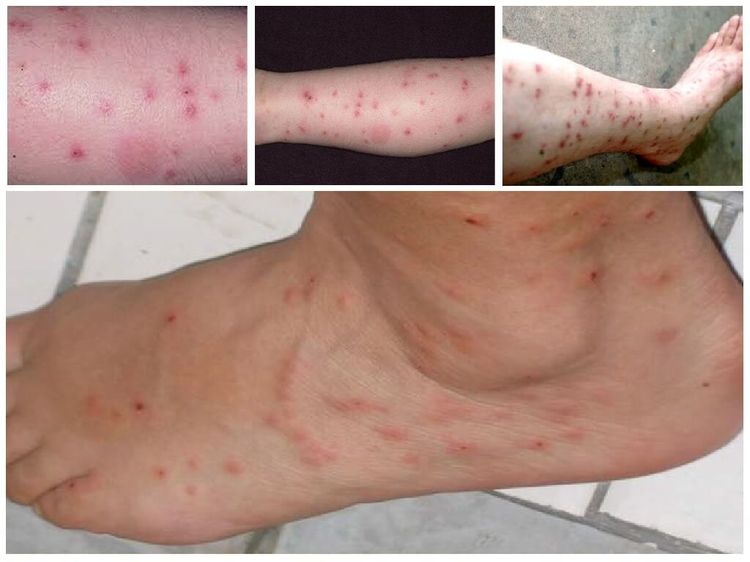
Danger
Cat fleas are dangerous to humans not only because of their bites – they also carry serious diseases, including:
- Mass dermatitis. A symptom of the inflammatory process is multiple skin rashes, itching, dryness, and flaking. This is the body's reaction to insect bites.
- Intoxication. This often occurs when a flea enters the body through food.
- Brucellosis. This infection is insidious because it attacks internal organs and systems, sometimes resulting in death.
- Erythema creepingis manifests as skin ulcers that resemble hardened nodules. Contact with these nodules causes pain. This bacterial infection is called creeping because it gradually spreads to new areas of skin.
- Allergies. Reactions can range from redness and rashes to high fever, fever, and anaphylactic shock.
- Anthrax is a severe disease that affects internal organs, causing severe intoxication and death of the patient.
The consequences listed above clearly illustrate how dangerous cat fleas are for humans. To avoid irreversible consequences, bites must be properly treated.
Potential risks and consequences of bites
A flea bite feels like a prick: it leaves a small red spot and is often intensely itchy. Sensitive individuals may experience:
-
Local allergic reactions: severe itching, redness, blisters.
-
A common rash on the arms, legs, and stomach.
-
Rarely - enlarged lymph nodes, hives, even difficulty breathing with anaphylaxis.
These symptoms are caused by toxins in the insect's saliva.
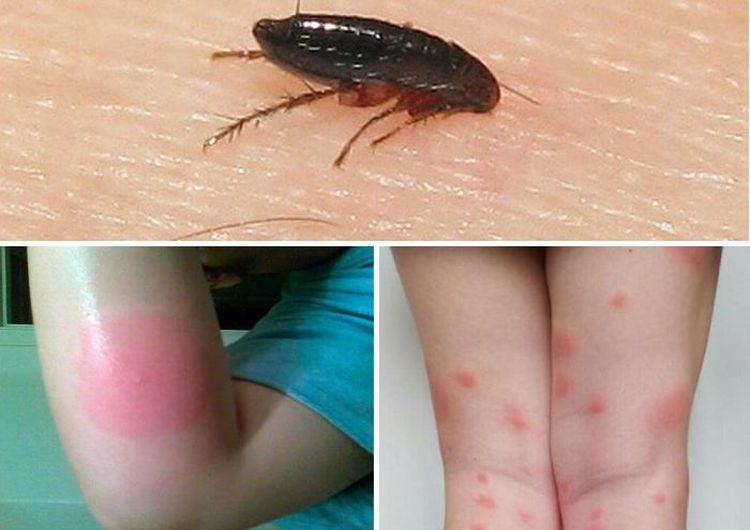
Transmission of infections and parasites
Cat fleas can potentially transmit a variety of diseases, including:
-
Dipylidiasis is a dangerous tapeworm infection. Humans can become infected by ingesting a flea.
-
Bartonellosis (cat scratch disease) - bacteria can be transmitted through flea saliva.
-
Rickettsiosis, typhus, plague—infection is theoretically possible, but such cases are extremely rare in our country.
-
Transmission of Lyme disease pathogens has been documented in Europe, but the risk is low.
The mechanics of infection and when it is possible
-
Fleas jump from an animal to a person, most often to the extremities - shins, feet, less often to the stomach or back.
-
Human skin is smooth enough that fleas cannot attach for long, but they can still bite.
-
A single flea can jump on a person, bite, and then leave. With a massive flea infestation, there's a risk of repeated bites.
Processing
Treatment of the affected area is carried out in several stages:
- The wound is washed with warm soapy water.
- The bite site is treated with hydrogen peroxide or another antiseptic solution.
- Apply ice (to prevent bruising) or use a cold compress. Change it every 20-25 minutes.
The most discomfort is the itching at the bite site. A weak soda solution or sulfur ointment can help relieve it. You can also treat the wound with iodine or brilliant green.
This is important! Avoid scratching flea bites, as the majority of bacteria reside on your hands and under your nails. If they get into the wound, they can lead to infection and other complications.
If the rash and itching persist, or symptoms characteristic of dermatitis, anthrax, or other conditions listed above appear, you should immediately call an ambulance or go to the nearest hospital. The sooner treatment is started, the better the chances of recovery.
Fighting the root cause
Having established that fleas are transmitted to humans from cats, it is necessary to eliminate the underlying cause, getting rid of parasites on the animal and in the apartment.
The presence of fleas can be detected by changes in pet behavior. Initially, behavior remains relatively unchanged, but as the flea infestation increases, cats become nervous, tear out clumps of fur, meow more frequently than usual, and sleep restlessly. Bite and scratch wounds appear on the body.

A cat's behavior changes as the disease progresses: from an active and cheerful animal, it becomes lethargic and irritable. Some individuals develop bald spots, lose their appetite, and lose weight. The condition is critical and can be fatal.
For prevention and treatment, it is necessary to regularly treat your pet with special drops, sprays, and use collars and shampoos against parasites.
Special concentrates are used to kill insects indoors. These products are diluted with water in the required proportions and sprayed throughout the apartment from a spray bottle.
What should a cat owner do?
Reducing the risk of bites in people starts with your pet and the environment:
-
Treat your cat regularly with drops, tablets, or collars.
-
Wipe down surfaces where your cat sleeps.
-
Vacuum floors, carpets, and furniture frequently.
-
Wash cat beds at a temperature of at least 60°C.
-
Keep your home clean all year round, not just in summer.
Although cat fleas don't live on humans for long periods of time, they can still bite, cause itching, allergies, and potentially transmit infections. The key is to begin combating the parasite promptly: treat your cat, thoroughly clean your home, and, if necessary, consult a veterinarian.
Read also:
- Flea and tick collar for cats
- Flea allergy dermatitis in cats: symptoms and treatment
- Where can a domestic cat get fleas?


Add a comment