
Oncology in dogs: symptoms and treatment
Oncology (cancer) is the branch of medicine that deals with the treatment of tumors. Dogs, like humans, can develop neoplasms, which are groups of atypical cells characterized by uncontrolled proliferation. Depending on the location, tumors can include connective tissue, epithelial, muscle, vascular, bone, and nerve tumors. These tumors can be either malignant or benign.

Types of tumors
Benign tumors are characterized by slow growth, and their negative impact on the body is primarily due to the compression of surrounding tissue. They do not metastasize and do not recur after removal. Some types of benign tumors are capable of malignant transformation.
Benign tumors include:
- Adenoma.
- Lipoma.
- Neurinoma.
- Osteoma.
- Rhabdomyoma.
- Fibroma.
- Chondroma.
- Epithelioma.
Malignant tumors, if left untreated, are almost always fatal: they cause severe toxicity to the body, growing into and destroying nearby organs, nerves, and blood vessels. Most cancers are prone to recurrence and metastasis, with "daughter" tumors being able to develop in any area, even distant from the primary tumor.

The main types of malignant tumors:
Reasons for development
It is believed that the causes of tumor development may be:
- reduced immunity;
- species mutations;
- endocrine changes associated with age (according to statistics, neoplasms are more often observed in older dogs);
- chronic inflammation;
- long-term exposure to physical or biological factors, including radiation, environmental conditions, mycotoxins, viruses.
There is also a genetic predisposition to cancer in some dog breeds. At risk are Shar Peis, Rottweilers, Golden Retrievers, German Shepherds, Bulldogs, and Scottish Terriers. boxers.

Symptoms
Benign tumors are usually painless and have clear boundaries. The photo shows that they can look like dense nodes (bumps)Cysts filled with keratinized epithelium or keratin, or soft, easily palpated, capsule-enclosed growths. As the tumor grows, it can cause discomfort to the dog, blocking airflow if located in the throat, or forcing the animal to walk with its paw outstretched if located in the groin or armpit.
Signs of malignant tumors are divided into general, affecting the entire body, and specific, specific to a particular type of cancer. In addition to a lump, nodule, or non-healing ulcer found on a dog's body, general symptoms include those that arise without obvious cause:
- general weakness, apathy;
- weight loss;
- persistent diarrhea or constipation;
- vomit;
- increase in abdominal size;
- bad breath;
- blood in urine;
- jaundice;
- dyspnea;
- cough;
- convulsive seizures.
These symptoms are a reason to immediately contact a veterinary oncologist. Cancerous tumors metastasize very quickly, so the sooner your pet receives qualified care, the better their chances of a successful outcome.

The most common malignant tumors in dogs are:
- skin cancer - a neoplasm that resembles a raised mole or a crusted ulcer.
- Breast cancer - a lump that is easily detected by palpation; nodular lumps on the nipples and mammary gland are clearly visible in the photo.
- Uterine cancer - a tumor that is often detected in the last stage, since at the beginning of the disease it does not produce clinical symptoms.
- Stomach or intestinal cancer - in the initial stage it may manifest itself only as diarrhea or constipation, and later as bloody vomiting.
- Lung cancer. Its first symptoms in dogs are coughing, shortness of breath, and subsequently the appearance of purulent sputum with traces of blood.
- Liver cancer. One of the distinctive signs of the disease is jaundice.
- Osteosarcoma. Most often it affects the bones of the dog's paws, and in the initial stage it manifests itself as intermittent lameness.
Diagnostics
Even if a growth (lump, tumor, strange wart, cyst, or non-healing ulcer) can be easily detected visually, the veterinarian will not limit themselves to a medical history, examination, and palpation. To make an accurate diagnosis, it is necessary to determine:
- what type of tumor has developed, what is its structure, what tissues it is formed from;
- the neoplasm is benign or malignant;
- Are there any secondary foci (metastases)?
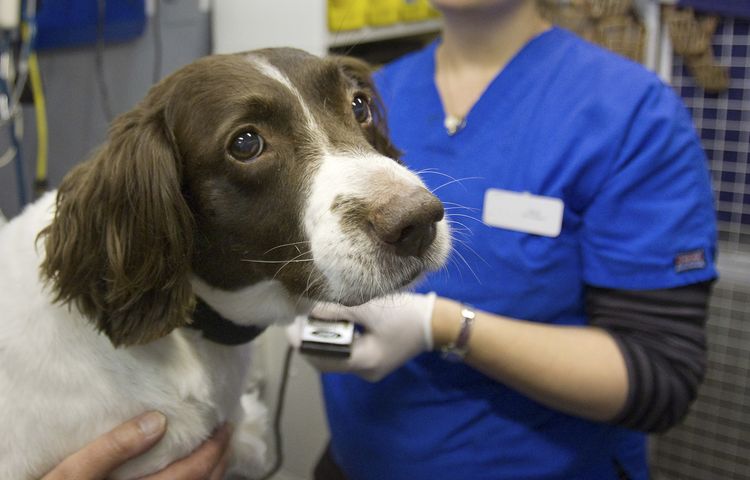
For this purpose, the dog will be prescribed laboratory tests of blood, urine and feces, a cytological examination of the tumor biomaterial, as well as an examination using hardware methods.
Laboratory tests can detect such disorders as:
- increased ESR and neutrophils, which are observed in general intoxication;
- a decrease in the number of lymphocytes, indicating anemia characteristic of malignant diseases;
- increased bilirubin levels, which are observed when the liver is damaged;
- detection of specific tumor marker proteins in the blood allows for the detection of cancer at an early stage;
- Blood in the urine or stool may be a symptom of urinary tract or bowel cancer.
Cytological diagnostics are highly reliable. They allow us to determine the tumor's source, structure, and grade, as well as differentiate primary tumors from metastases. This test utilizes smears from the skin or mucous membranes, sputum, urine, or a biopsy sample.
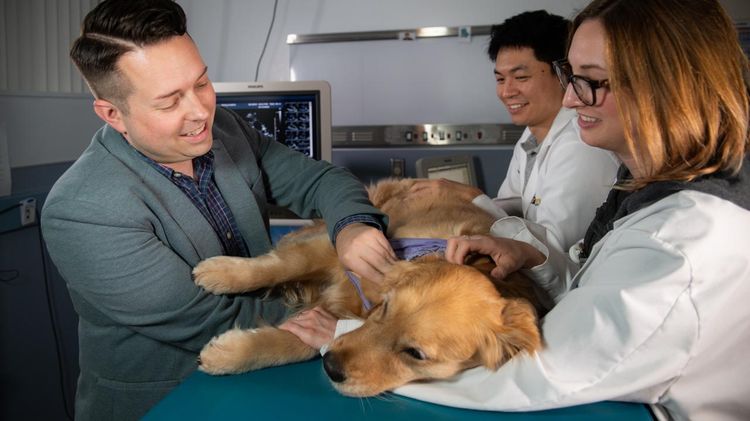
Diagnostic imaging techniques such as X-ray, sonography (ultrasound), computed tomography (CT), and magnetic resonance imaging (MRI) can help determine the structure and location of a tumor. These may be necessary to detect tumors and their metastases in the abdominal organs, lungs, breasts, bone tissue, and brain.
Treatment
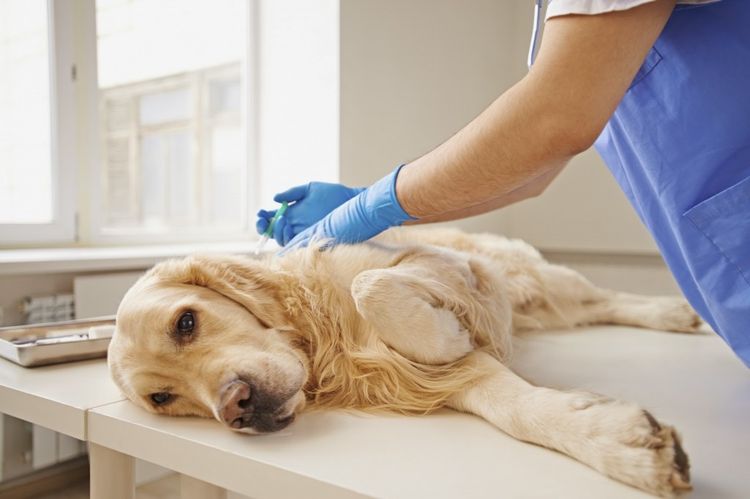
Cancer treatment in dogs depends primarily on the tumor type. Benign tumors are treated simply by removal. Malignant tumors require complex therapy, which typically includes resection of the tumor and surrounding tissue, as well as radiation or chemotherapy.
Chemotherapy involves administering drugs that kill cancer cells. However, because these chemicals are toxic, they also destroy some healthy cells, making this treatment difficult to tolerate. Radiation therapy is a method that targets tumors and metastases with ionizing radiation. However, this type of treatment is also harmful to the animal's health, and some types of cancer are resistant to ionizing radiation.
In the late stages of malignant diseases, radical treatments are no longer effective, and these dogs undergo palliative care. The animal is given painkillers and anti-inflammatory medications to alleviate its suffering and prolong its life. If symptomatic therapy is ineffective and pain is not relieved, euthanasia is considered.
For benign tumors, the prognosis is almost always positive. The survival rate of dogs with cancer depends on the stage of the disease. If detected early, a complete cure is quite possible.
Prevention
A cure for malignant cancers has yet to be found. However, dogs remain healthy and live longer if they eat a proper diet, get adequate exercise, breathe fresh air, and are not exposed to carcinogens. Spaying before the age of 2.5 years significantly reduces the risk of mammary cancer in female dogs and testicular cancer in male dogs. Regular veterinary checkups and necessary tests are also important: changes in these indicators can detect cancer in dogs at an early stage.
Read also:
- Duodenitis in dogs: symptoms and treatment
- Complications after piroplasmosis in dogs
- Viral papillomatosis in dogs: symptoms and treatment


Add a comment