
Obedience for dogs: what it is, where to start, and training rules
Dog obedience is a competitive sport held by canine societies around the world. These competitions are held according to established rules and are considered the most challenging, requiring specialized training. In Russia, such championships began around 25 years ago. To participate, it's important to consider where to begin training and what skills to develop in your pet first.
Content
What is obedience in simple terms?
It's a sport specifically created for four-legged dogs, with competitions held at the national and international levels. The word "obidience" translates from English as "obedience." The term fully conveys the essence of this sport.
As in any other competition, the animal must demonstrate agility. However, a strong rapport with the owner is more valuable. There are no requirements for the handler—their job is to train the pet, guide them through the exercises, and adhere to the rules accepted by canine communities. These competitions are considered the most challenging of all dog competitions.
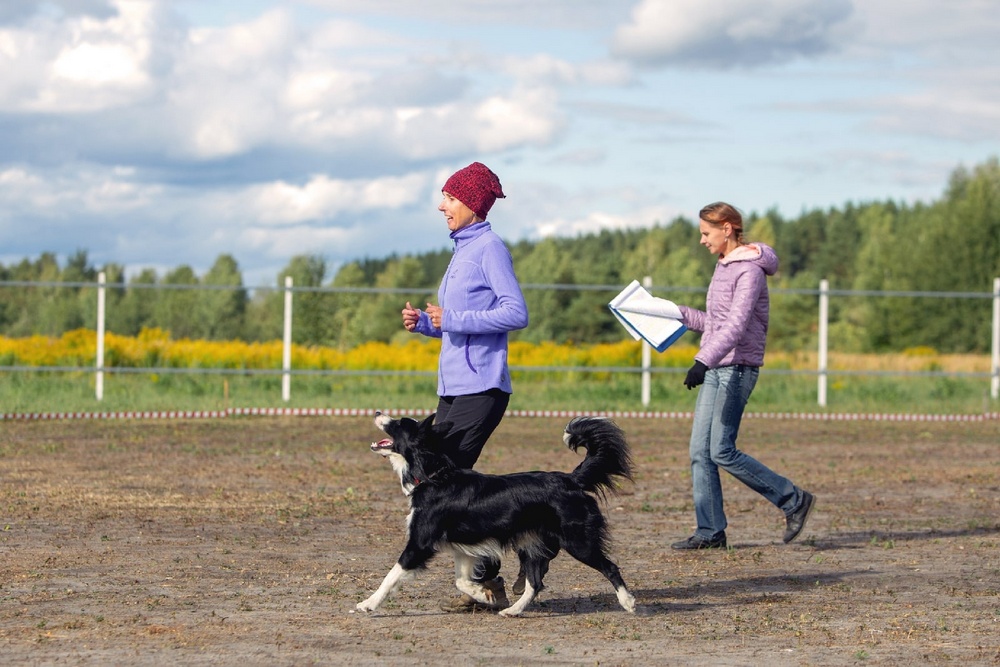
Obedience training is often held in a rally format. Organizers set up a special course that the handler and dog must navigate together, demonstrating coordinated work.
At each stop, the animal performs a specific exercise. Which ones must be demonstrated to the judges and the audience are indicated by special signs attached to cones placed around the ring. There is also a classic version, in which the competition takes place on the ring.
Despite the sport's complexity, a small championship can be organized even in a backyard, attracting owners of all breeds. Simply place signs around the area indicating the exercises and form a panel of judges from the building's residents. This approach will make training more interesting, allow for more time outdoors, and help develop a truly obedient dog.
Who can participate?
Obedience is a democratic sport that any dog can participate in. Pedigree and excellent pedigree are required only for official international championships. But even with regular training at home, the system helps establish the highest level of trust between owner and pet.
The only limitation is a medical contraindication. Therefore, a veterinarian consultation is required before beginning training. Basic commands are taught to dogs from 2-3 months of age, but jumping over obstacles requires a strong musculoskeletal system. Disruptions in muscle and skeletal development can lead to complications that will impact the dog's future health.
The sport is best suited for breeds bred for service and flock guarding—Dobermans, collies, retrievers, and shepherds. For them, constant training is the norm, and obedience is ingrained in their genes. Hunting and sled dog breeds are more difficult to train, so owners will need to exercise considerable patience to prepare their dog for its first competitions.
Classification
All competitions are divided into 3 classes according to difficulty level and age category:
- first class – participants over 10 months old, for Russia – from 8 months old without medical contraindications;
- second class – more difficult level, animals over 12 months old;
- third grade – world level, age over 15 months.
To advance to the next level of difficulty, a dog must achieve an "excellent" score in the previous level. International and national championships are held once a year. Only dogs with an FCI-compliant pedigree are eligible to participate in the World Championship. Judges pay close attention to breed, as it influences the external perception of perfect command performance.
Only adult dogs can receive the World Champion title, as it takes at least 3 years to complete all classes.
Basic rules
The first competitions were held in England, but since the 1920s, the system has gained popularity in other countries. Today, championships are held at both the international and national levels. Russian cynologists have been participating in competitions since 1998, and an international championship was held in Moscow in 2016. The rules for international competitions are established by the FCI, the International Cynological Federation. In Russia, the standards adopted by the RKF, the Russian Cynological Federation, apply.
Points are awarded for the quality of performance, the animal's emotional state, rapport with the handler, and the impression left by the pair's performance. Judges deduct points for certain violations. Performance errors include:
- disobedience, refusal or incorrect execution of an order;
- touching the animal by the handler;
- holding a partner by the collar during breaks between performances;
- hints with gestures, movements;
- giving an order too loudly;
- barking, howling, whining that disturb competitors;
- dog anxiety.
Participants are disqualified for displays of aggression, for the handler punishing the animal, or for leaving the ring. In the first class, it is permitted to call the four-legged competitor twice to complete the course without disqualification, but with the accrual of penalty points.
Animals participating in official competitions must be microchipped, vaccinated against rabies, branded, and have a passport. Any encouragement for following commands is prohibited. Verbal encouragement at the end of the performance is permitted. The use of inhumane equipment and rough handling are prohibited.
Preparation and training
If you want to participate in competitions, you should find a professional dog trainer who can create a personalized training program. Self-training is encouraged at the initial stage to practice basic commands and build bonds between pet and owner. Initial introduction to commands begins at 2.5-3 months – you can take a general obedience course, OKD, or a simplified training program. However, for effective training, daily sessions are essential. Once positive results are achieved, the intensity can be reduced, with training every other day.
The program includes 10 exercises that vary significantly in difficulty:
- Group Seating. Pets placed in the same group must remain still for 2 minutes and behave calmly when their owners are not present.
- Group sit with distraction. After the owners leave the visible field, the handlers distract the dogs for 4 minutes. At the end of the session, the handlers call their dogs back one by one.
- Heeling without a leash. The handler walks, periodically changing direction and stopping. The dog's job is to stay on the handler's heel, not overtaking, not lagging behind, and to sit next to him in the basic position when stopped.
- "Sit", "lie"," "stand" with the transition from "near"When walking, the animal immediately follows the command. This position must be maintained as the handler walks around the pet, moving forward until the command "heel" is given.
- Recall with periodic stops and downs. The trainer calls the animal from a distance of 25 meters, giving the commands "stand" and "lie down."
- Send, lay, and recall. On command, the dog runs 10 meters, enters a designated square, and stops. The handler moves in the desired direction at the steward's signal, calling the dog back without stopping. The handler's task is to run up to the handler and follow him.
- Retrieving in a specific direction. The dog is sent to a cone. The handler commands the dog to stop and pick up one of the dumbbells arranged in a row.
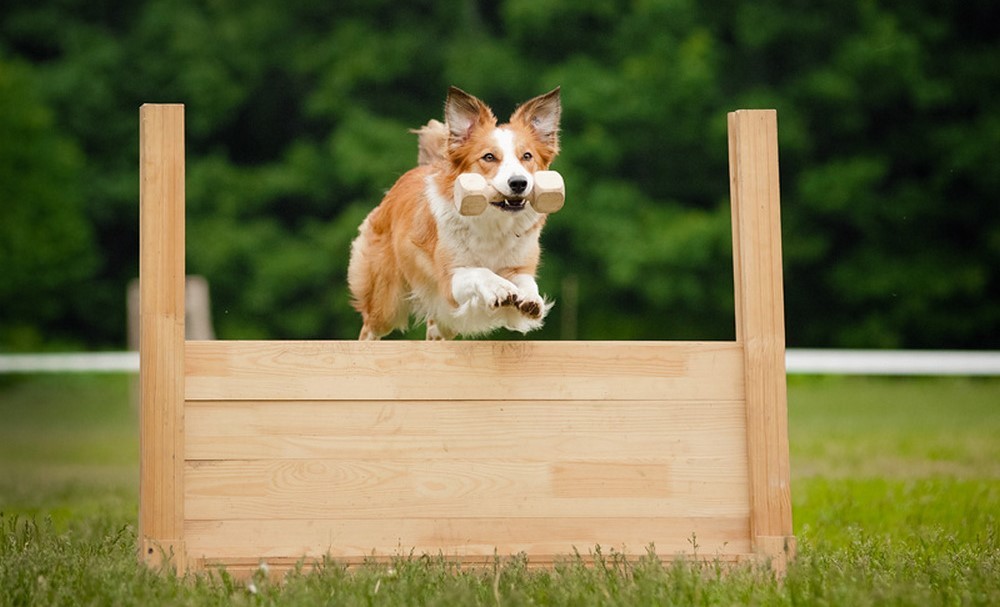
- Retrieving a metal object over a high obstacle. The object is thrown over a barrier and the dog is asked to return it by jumping over a fence no higher than 1 m.
- Selection. Search for a wooden object that smells like the handler, from among several identical ones, arranged in a circle or row.
- Stand, sit, and lie down at a distance. Six position changes are performed from a distance of 15 meters on the handler's command and with the steward's permission.
Obedience training begins at 8-10 months of age, using a gradual approach. Until commands are firmly established, it's not recommended to overload the dog with scent-based training at the initial stage. Training should be fun and low-pressure. Progress to more complex training only after simple skills are fully mastered.
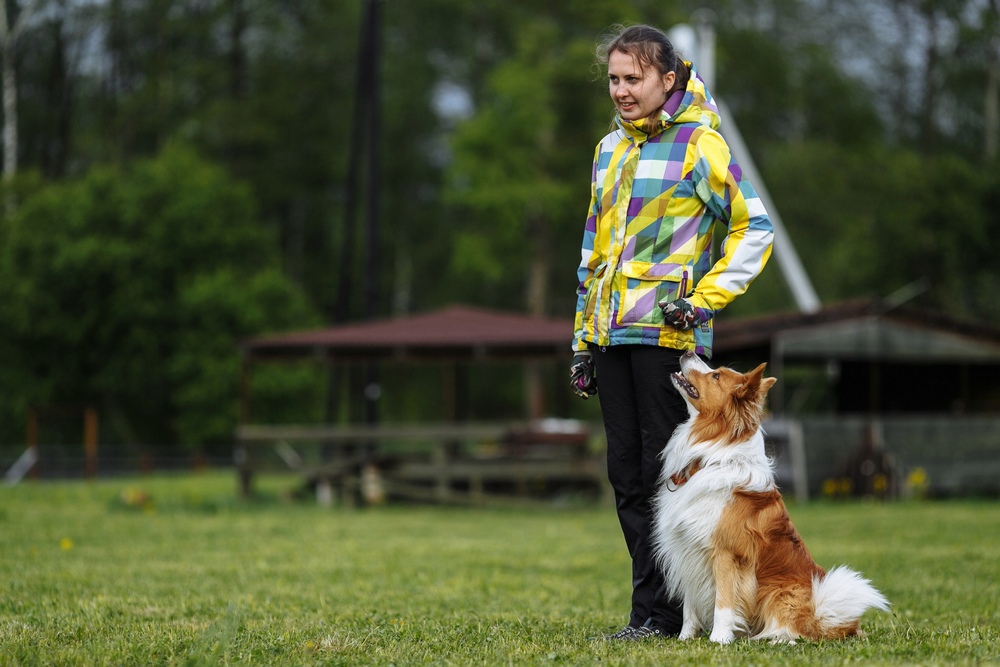
Before conducting obedience training, it's a good idea to read specialized articles and watch videos on websites and Facebook. Studying the rules of international rally races and watching championship broadcasts will help dog owners gain an understanding of proper command execution.
Difference from OKD
Both systems are aimed at developing proper obedience. However, there are a number of differences:
- The general course is practiced only in the post-Soviet countries. Obedience is an international sport, with official competitions and world championships.
- Refereeing in the international system is much stricter, the rules and requirements are more complex.
- In world competitions, special attention is paid to the emotional state of the four-legged participant and the degree of trust in the handler.
Obedience is a training system aimed at developing obedience and coercive coordination with the owner. This international sport includes competitions of varying difficulty, open to representatives of any breed after three years of training.
Read also:
- Coursing for dogs: what it is and its features
- When can I start walking my puppy?
- Bearded dog: what is it called?


Add a comment