
Newfoundland (Water Dog) is a dog breed
It's hard to find someone who hasn't heard of the Great Diver, the popular name for the Newfoundland, for obvious reasons: it loves water, can work as a lifeguard, and can even dive. The Diver Dog is a loyal friend and companion, a kind soul: it protects cats, dogs, and children, and is completely non-aggressive.
Content
History of origin
The breed's origin is believed to be Canada, specifically the island of Newfoundland. Even before Europeans arrived with their dogs, the locals already had these shaggy, loyal companions, without whom survival in the harsh conditions would have been much more difficult. The question of how an island off the coast of North America became the birthplace of dogs completely unlike the native Laikas remains unresolved.
According to one version, the closest relative of the Newfoundland is mastiff, which may have arrived on the island from England. Another theory holds that the dogs were a cross between black Scottish sheepdogs and French butcher dogs. The Newfoundland's ancestors may also have been Norwegian Viking dogs. Labradors, Portuguese water sprites and Irish dogs. Canadians actively used Newfoundlands to collect fish and nets. A distinctive innate quality of these dogs is their ability to dive to depths of up to 4 meters. It's no surprise that another unofficial name for the breed is "diver."
The breed of water dogs has been documented since the 18th century. Rumors of the exceptional working qualities of these gentle giants quickly spread throughout the Old World, and animals began to be exported from the island. Detailed descriptions of Newfies can be found in English dog breeding books from the mid-19th century. Some English pedigrees can be traced back to 1850. In 1886, the English Newfoundland Club was founded, and a standard was developed that has remained virtually unchanged.
From England in the early 20th century, Newfoundlands quickly spread throughout Western Europe and eventually to America. In Russia, the breed became popular after the collapse of the Soviet Union.
Interesting! Often, when people hear the words Newfoundland and Labrador combined, they think they're referring to a dog breed. In fact, this is completely wrong. After all, the combination of Newfoundland and Labrador is the name of the Canadian province with its capital, St. John's, which includes the island of Newfoundland, the birthplace of the dog breed of the same name.
Video review of the Newfoundland dog breed (water dog):
Appearance and standards
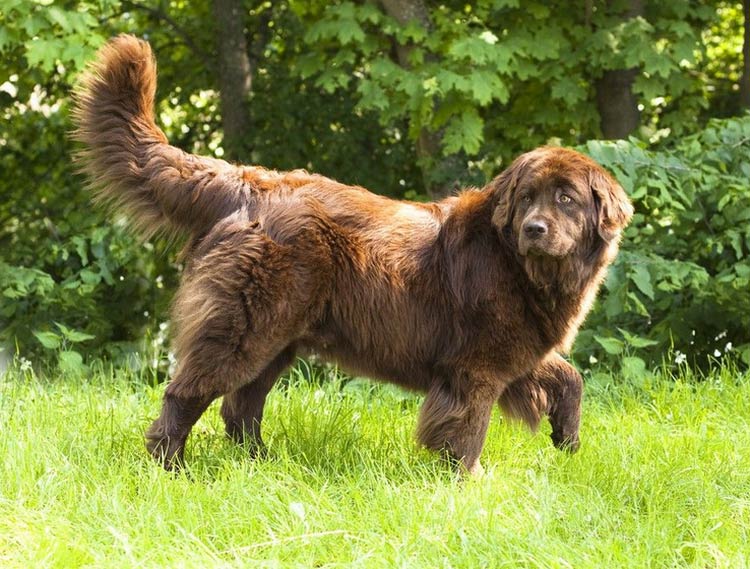
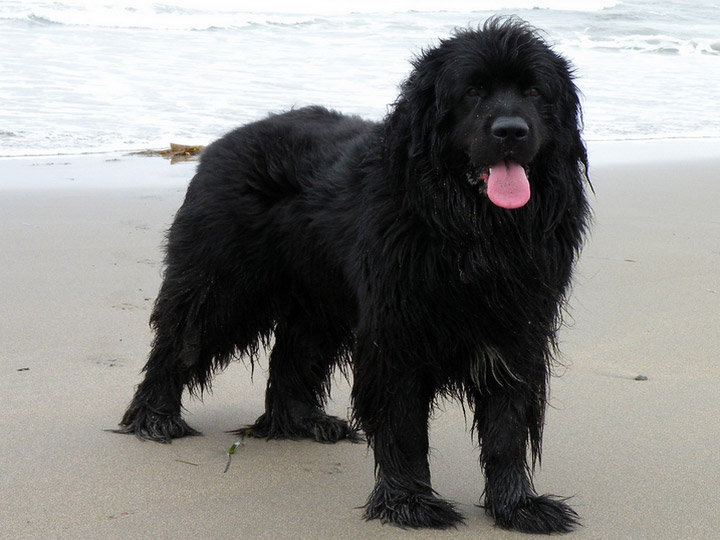
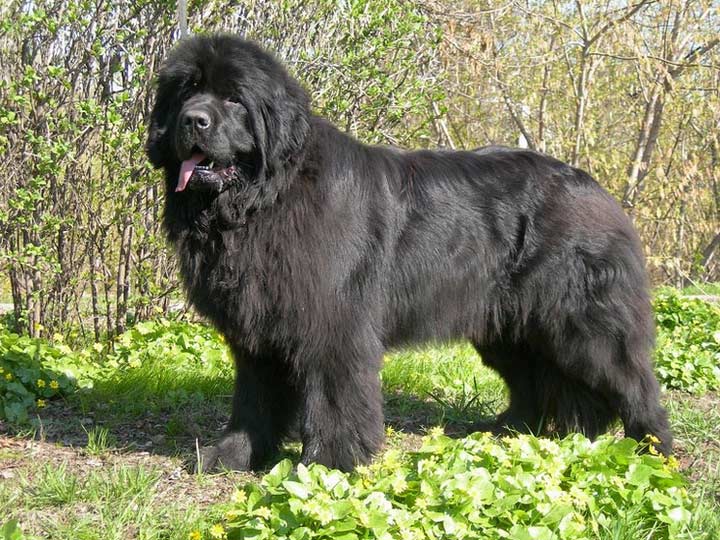
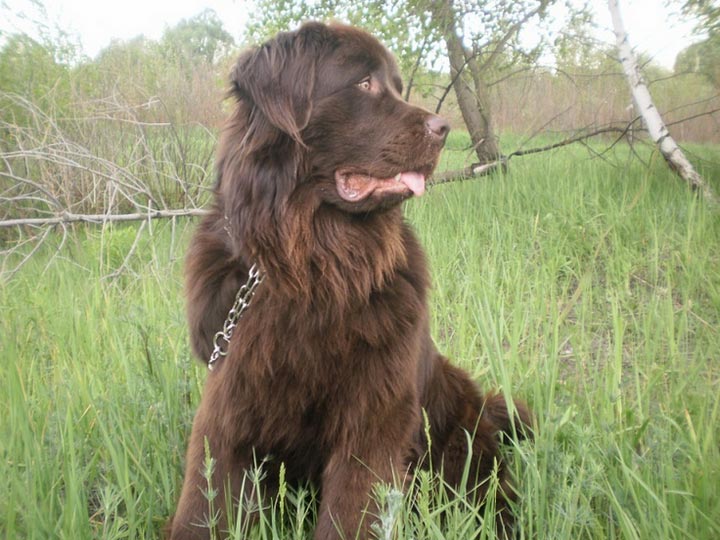
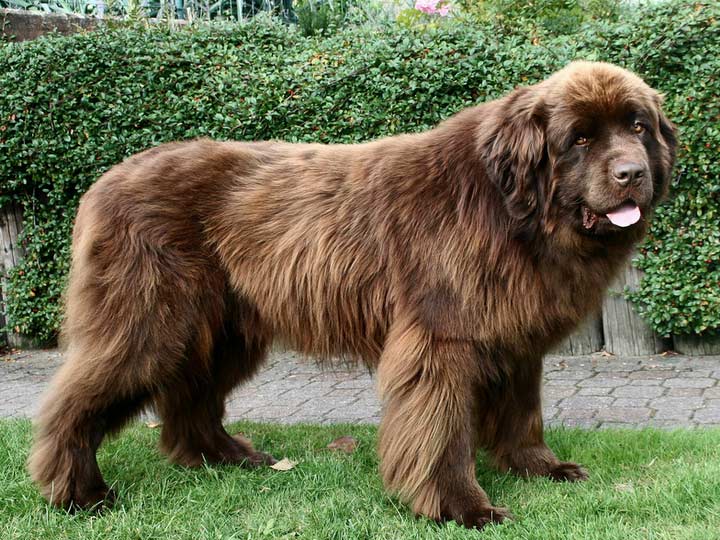
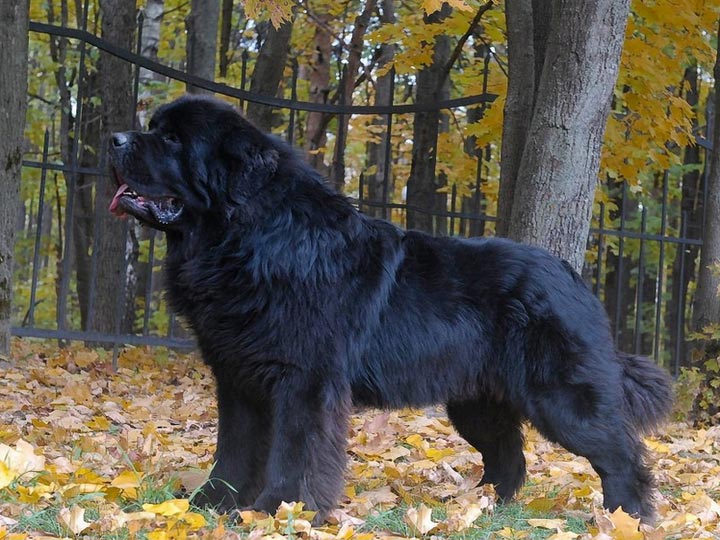
Newfoundlands are large, massive dogs. Their build is somewhat coarse and not graceful, but their movements are light and firm. Males reach a height of 72-74 centimeters at the withers, while females reach 68-70 centimeters. Their body weight ranges from 55-70 kg. You can see the appearance of representatives of the Newfoundland breed in the photos in the article and gallery.
Head and muzzle
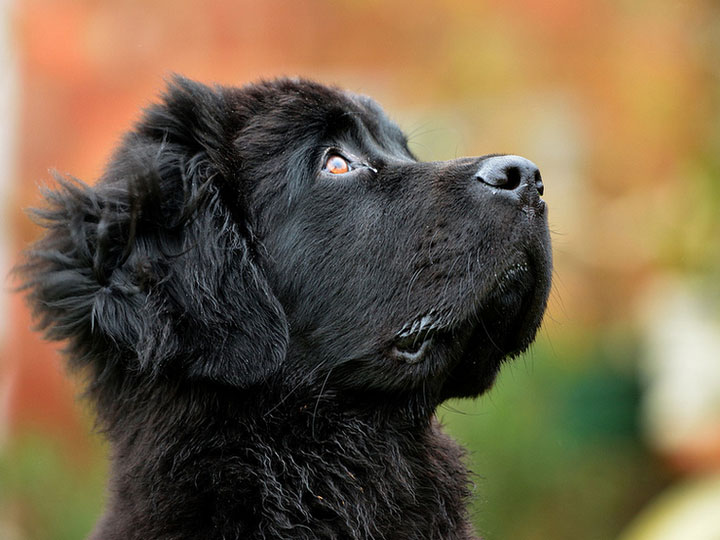
The head has a broad skull and a well-developed occipital protuberance. The forehead and muzzle are smooth, free of wrinkles. The stop is distinct but not abrupt. The muzzle is moderately short and deep, well-defined, and square. The nostrils are well opened, and the nose leather is large and black; in dogs of the corresponding color, it may be brown. A level or scissor bite is acceptable. The eyes are relatively small, set deep and wide apart. The eyelids should not droop excessively. The eye color is brown (light or dark depending on the color). The ears are small, triangular in shape, set at the sides, and lie close to the cheekbones.
Physique
The body is compact, its length from the withers to the root of the tail equals the height at the withers. Females may be more elongated and less massive. The neck is strong and sufficiently long, which ensures a noble head carriage. There should be no excessive dewlap. The skeleton is massive. The topline is straight and strong. The back is broad. The croup has a 30° angle. The chest is full, deep, and wide. The line of the chest and belly is straight. The fore and hind legs are straight, parallel, very strong and muscular. The tail is strong, wide at the base. When relaxed, it is lowered and slightly curved at the tip; when excited, it is carried high, but not curled over the back.
Coat and colors
The coat is double. The outer coat is long and straight (a slight wave is allowed). The undercoat is thick and soft. The muzzle and ears are covered with short, soft hair. The limbs and tail are feathered.
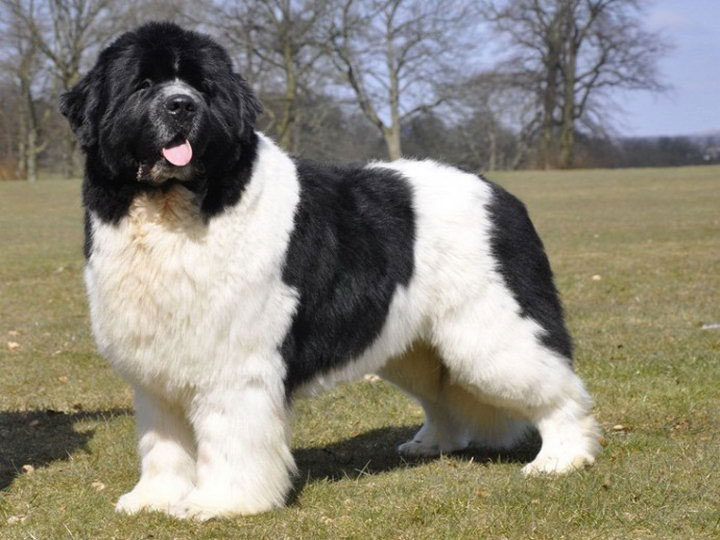
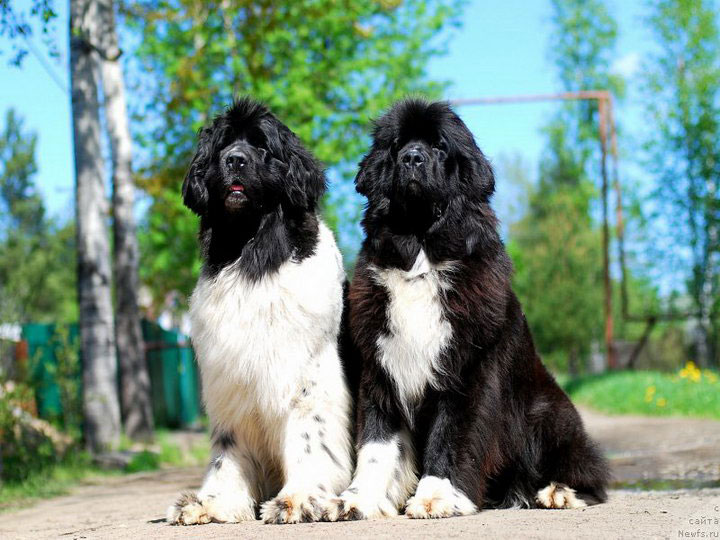
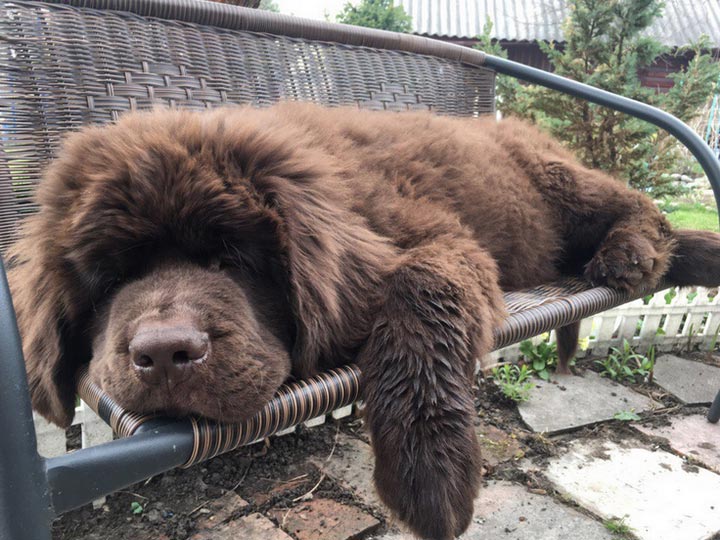
According to the breed standard, Newfoundlands can only be black, brown, or black and white (they must have a white blaze on the black head, a black "saddle" on the back, and a black patch on the croup that extends to the base of the tail). The rest of the body is white with light speckling. White markings on the chest, tip of the tail, and toes are permitted in solid black or brown dogs. The black color must be as deep as possible. In warmer weather, it may fade to a light brown tint.
By selecting black and white Newfoundlands for certain characteristics, a breed called LandseerThey were not crossbred with any other bloodlines. Most kennel clubs consider these black-and-white dogs a variety of Newfoundland, but the FCI classifies the breed separately. The Water Dog breed, as seen in the photo, is practically indistinguishable from the Landseer.
Character and psychological portrait
Behind their formidable exterior lies a delicate and vulnerable nature. Newfoundlands are very good-natured and sensitive. They don't take criticism well. They often display stubbornness and independence. Inside this seemingly formidable and angry dog lies a small, restless puppy, who is known for his affectionate and kind nature.
Newfies quickly and strongly bond with all family members, so they don't handle long separations or changes of owners well. They get along well with other pets in the house and are not aggressive towards them. They can even make friends with small breed dogs. Moreover, once they've adapted to the home, they become so peaceful that cats no longer fear them and can sleep on the backs of their warm, fluffy dogs.
Newfoundlands are capable of a loud, intimidating bark, but they rarely vocalize, and people are often wary of approaching them due to their impressive size. Divers, on the other hand, are quite friendly toward strangers.
These animals become so attached to their families that they patiently protect mischievous children. Newfoundlands love to participate in the games of older children and happily accompany them on various hikes, ensuring the safety of their "charges."
The Newfoundland Water Dog, massive and menacing in appearance, is completely unsuited to guarding a property or serving as a hunting dog. When the first representatives of the breed began to settle on the island, there was no game to hunt, and the local population relied primarily on fishing. Consequently, people had no need for dogs with hunting skills. Friendliness and loyalty, coupled with a docile nature, were much more valuable.
The inhabitants of Newfoundland deserve special credit for developing dogs with such qualities as decision-making and exceptional intelligence. Fishermen needed a complete companion capable of providing assistance such as:
- cargo delivery;
- childcare;
- guide in darkness and fog.
Only those animals that met the above requirements were selected for natural selection. As a result, we see a Newfoundland diver who, although not entirely obedient, is capable of reacting quickly and making the right decision in an emergency.
Maintenance and care
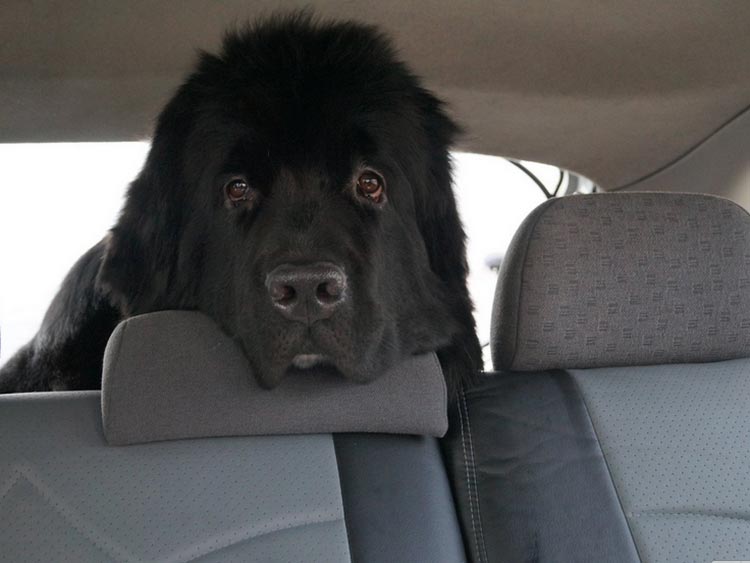
Newfoundlands are large dogs, so keeping them in a city apartment is challenging, but not impossible. They are large and can be messy, so they need their own space at home, which will take up a significant amount of space. Their fur can be a real hassle, especially if they aren't brushed regularly. Excessive salivation is another drawback. A Newfoundland can easily live in a kennel in a private home, but it's important to remember that they are not guard dogs; they are primarily companions who need constant human contact.
Living in a city apartment isn't ideal for a Newfoundland. Unlike a country house or a private home with a large yard, where the dog can go for walks whenever it wants.
Care
Dogs have a thick undercoat, are very prone to matting, and require regular grooming. Brushing is recommended several times a week. During the shedding season, the coat requires more attention and daily grooming. Frequent bathing is not necessary; it's best to wash the dog when it gets dirty and when preparing for shows. Eyes and ears should be carefully monitored for cleanliness.
Diet
Newfoundlands require a well-balanced diet. They can be fed either natural or commercial food. The choice of food depends on the owner. It's important to remember that this breed is prone to obesity, so it's important to maintain proper portion control and avoid overfeeding, even if your pet asks for more. Due to the risk of gastric torsion, Newfoundlands should not be fed immediately after or before exercise.
Training and purpose
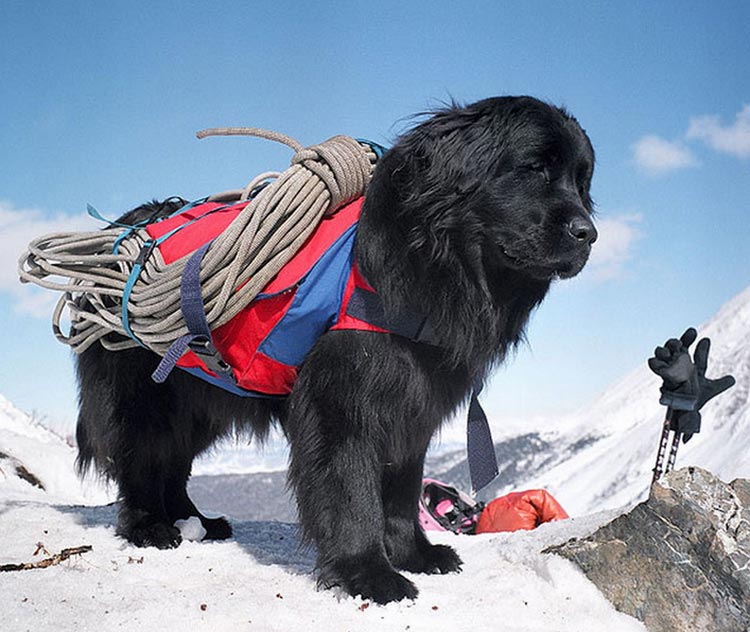
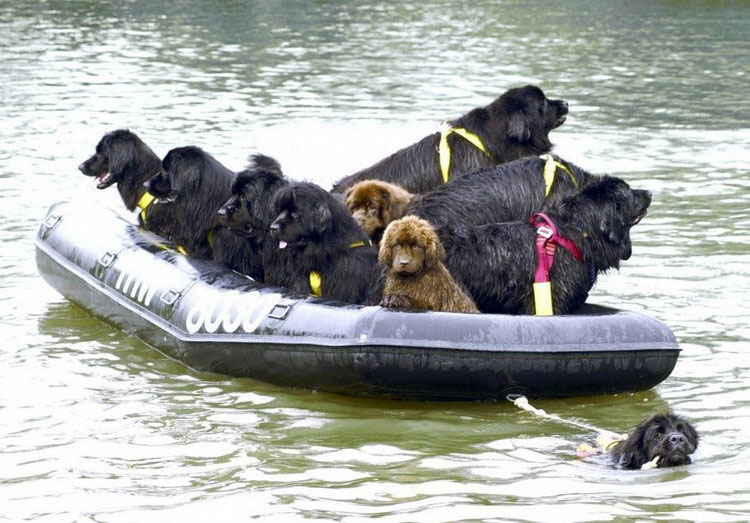
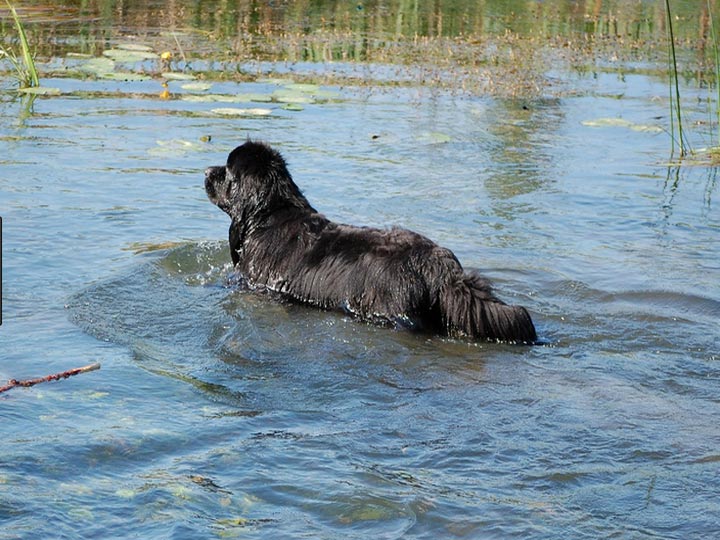
Newfoundlands are natural rescuers, and they are excellent swimmers, allowing them to pull drowning people to shore. They can nimbly dive from a boat and swim to the victim with a life preserver. Their remarkable strength and intelligence enable them to quickly tow a boat, and in northern regions, harnessed to a sled, they become heavy load carriers. None of this detracts from their most important characteristic—their character. No one is more kind-hearted, friendly, and loyal than a Newfoundland.
Newfoundlands' high intelligence and strong memory allow them to quickly learn commands. They are always eager to perform exercises suggested by their owners. With proper upbringing and training, they make excellent service dogs and good companions. When interacting with a Newfoundland, always be understanding, show only positive emotions, and reward your pet.
A respectful attitude from the owner will motivate the Newf to train to its full potential.
When training sensitive dogs, avoid harsh methods and physical punishment. Furthermore, persistence and creativity are essential, as Newfies are quite stubborn and do not tolerate monotonous training.
Physical activity
To maintain good physical condition, they need daily walks with moderate exercise, which can help prevent the development of musculoskeletal disorders. A Newf will happily go for a morning jog and join them for an evening walk or hike in the woods. As dogs age, they become less active in children's games, quickly tiring and losing interest. Therefore, games should be varied and short.
Since Newfoundlands are large dogs, it's best to organize slow jogs or brisk walks in a cool breeze for them. Newfoundlands love to swim and are always ready for a dip. If you don't want your pet to accidentally get wet, be careful when encountering any bodies of water on walks. Dogs of this breed love
Diseases and life expectancy
Newfoundlands are known for their good health and endurance, adapting well to various weather conditions. Heatstroke is a common problem in hot, sunny weather due to their thick, black coat. With proper care and good nutrition, these dogs, free of hereditary diseases, live an average of 10-11 years.
Unfortunately, the breed can't boast ideal genetics. There's a long list of diseases to which Newfoundlands are particularly predisposed:
- Cardiovascular diseases. The most common are aortic stenosis (a restriction of natural blood flow that manifests with age), congenital cardiac septal defects, and cardiomyopathy.
- Hip dysplasia: can be unilateral or bilateral and can range from mild to complete dislocation of the femoral head.
- Eye diseases: inversion and eversion of the eyelids, inflammation of the third eyelid. There is a genetic predisposition to these diseases, but they most often occur as a result of common inflammatory processes.
- Panostitis is an inflammation of the long tubular bones that is detected during the growth period.
- Acute gastric and intestinal dilatation with subsequent torsion is a severe acute condition that can lead to death without emergency care.
- Hypothyroidism.
- Ectopic ureters manifest at birth as constant urine leakage and are more common in female dogs.
Choosing a Newfoundland Puppy and Prices
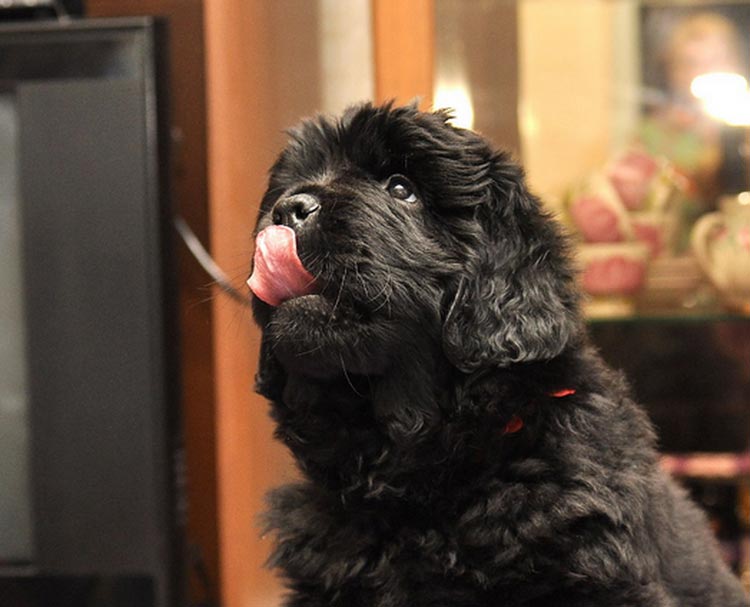
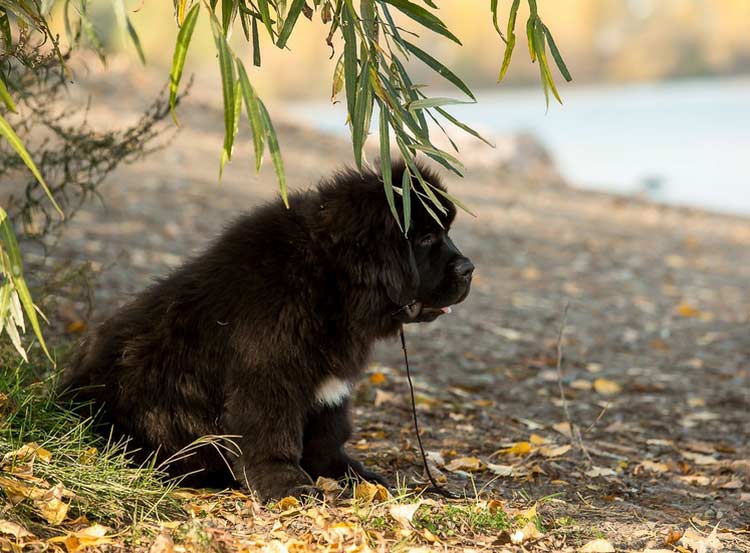
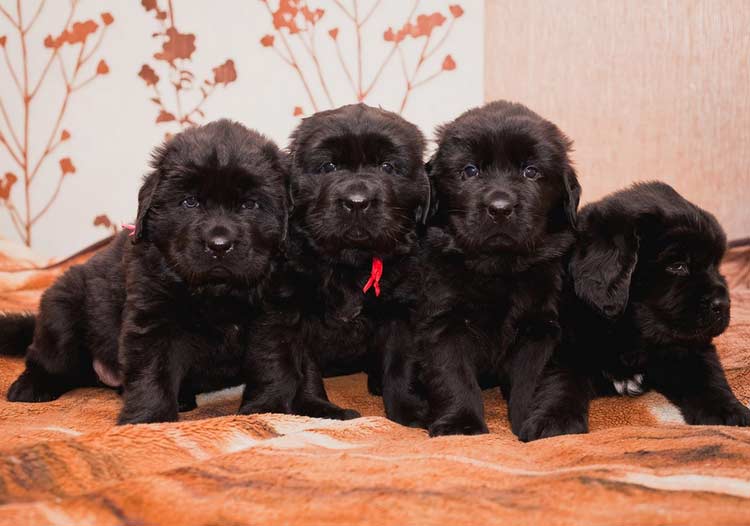
A cute, furry ball, just begging to be picked up and brightening your mood just by looking at it—that's what Newfoundland puppies are. Don't forget, this little ball will soon grow into a big, strong beast. Whether it becomes a thorn or a joy depends entirely on you.
If you're interested in a Newfoundland puppy's show career, the price will depend on its passport—its pedigree. It's a plus if the puppy already has champions in its pedigree.
Signs of marriage include:
- smooth wool;
- malocclusion;
- non-standard color (any spots other than white).
The puppy's behavior is very important. Signs of aggression indicate poor health or, worse, a temperament that's atypical for the breed. There's one unspoken rule when choosing a puppy: you should buy a Newfoundland puppy if it comes to you and, even better, climbs into your arms. A physical examination is equally important.
A good puppy should be active, eager to socialize, and have a good appetite. The skin should be clean, the coat shiny, the belly soft to the touch, the nose moist, and there should be no signs of discharge from the ears or eyes. Pay special attention to the paws—a good puppy will have thick paws. A Newfoundland's tail should be wide at the base, as it serves as a rudder when swimming. Signs of breed faults:
- frequent manifestations of aggression;
- smooth coat;
- non-standard color (non-white spots);
- malocclusion.
It's not advisable to buy a water dog based solely on photos, even if the price seems very attractive. It's always important to see the puppies and their parents in person, as well as to speak with the breeder, especially since this can now be done via video call.
Price of a puppy
Another important question: how much does a Newfoundland cost? A purebred puppy from a breeder costs an average of 40,000-50,000 rubles. The price depends on the breeder's location, the quality of their sires, the puppies' prospects, and many other factors. If you only want a Newfoundland as a pet, you can consider purchasing a puppy without papers. Mixed-breed puppies are cheaper, but no one can guarantee that the puppy will grow up to be a Newfoundland like the one pictured.
Generally, buying a dog is easy. This is a common breed, and Newfoundlands are sold throughout Russia. The situation is similar in Ukraine and Belarus. For example, you can buy a Newfoundland in Minsk, Belarus. Simply visit a local classifieds site. Ukraine also has platforms for buying and selling puppies. If you're unsure about the reliability of private breeders, visit one of the many kennels specializing in the breed.
Among other things, you can buy a Newfoundland dog through social networks, for example, VKontakte.
Reviews
Let's look at Newfoundland dog reviews. We'll find out what dog owners have to say about the breed. Each Newfoundland review is written by someone who has raised one, so you can be sure of the veracity of the facts below.
Kirill. Stavropol.
Hello. My review of the Newfoundland is for those who love dogs and want a loyal companion. I have a Newfoundland named Alya at home. She's a smart dog. She won't bite either a child or an adult. Alya loves water; they're even said to be good lifeguards. If you put a sausage in front of her and don't tell her, she won't take it until you say yes. We go swimming with her, she dives, and the kids especially enjoy watching her dive. Alya is affectionate and, of course, has a strong character. If you scold her, she goes away and hides and won't come out until you call her. If you decide to get one, get one. A Newfoundland is a diving dog; it's a good breed.
Squirrel. Saint Petersburg.
The first time I saw a Newfoundland in person—a healthy black and white dog—I was terrified. Imagine a healthy animal running toward me like a tank. But it turned out to be a very affectionate dog, just playing. Newfoundlands are a rare breed of kindness.
I can't help but mention an interesting fact: our entire team searched for negative reviews of Newfoundlands and found none. Yes, people do have some minor gripes about their fur and drool, but overall, the reviews are positive, which speaks only of the breed's positive qualities.
Photos
Photos of puppies and adult Newfoundland rescue dogs in all their glory:
Read also:


Add a comment