
Nova Scotia Duck Tolling Retriever (Toller)
The smallest of all retrievers were bred in Canada. Interestingly, in addition to their retrieving abilities, these dogs have a unique ability to call ducks. The breed's official name is the Nova Scotia Duck Tolling Retriever, or simply the Nova Scotia Duck Tolling Retriever, or simply the Toller. These dogs have proven themselves to be excellent companions for active lifestyles and sports.
Content
History of origin
The Nova Scotia Duck Tolling Retriever developed as a breed in the early 19th century in the Little River Harbor Community in Yarmouth, Nova Scotia, Canada. It was originally known locally as the Little River Duck Dog or Yarmouth Toller.
Nicholas Denis, author of 18th-century works on the history of Canadian dogs, doesn't deny that small red retrievers could have been brought from the Old World to Canada's Eastern Province. But it's also likely that the breed developed here in Nova Scotia from several other European breeds. The Toller's ancestors could have been the Breton. golden retrievers, spaniels, Irish Setters and shepherd dogs in type border collie.
From the 17th to the 19th centuries, Red Duck Dogs were common on Canada's East Coast. The breed was officially recognized by the Canadian Kennel Club in 1945. The Fédération Cynologique Internationale (FCI) recognized the breed in 1987.
Hunting with a Nova Scotia Duck Tolling Retriever
From their name alone, it becomes clear that these dogs can not only retrieve a wounded animal from the ground or water, but are also capable of luring ducks, which is undoubtedly a unique talent.
The Nova Scotia Duck Tolling Retriever operates on the same principle as the red fox. It runs along the shore, flicking its tail vigorously. Ducks flock to these movements, mesmerized. On paper, this hunting style seems absurd, but in real life, it really works.
The hunter hides near the shore and tosses a stick or ball to the dog. The dog runs along the pond, searching for the toy and creating a commotion. Attracted by the noise and the flutter of the dog's fluffy red tail, the ducks swim hypnotically toward the shore. After a series of successful shots from the hidden hunter, the Toller, like a true retriever, retrieves the bird from the water. It's worth noting that these dogs love water, are excellent swimmers, can dive, and are ready to work day and night, at any time of year, as long as the water doesn't freeze. Webbed feet facilitate rapid movement in the water, and a dense undercoat protects against hypothermia.
In most countries of the world, Tollers are used exclusively as retrievers, but there are true connoisseurs of the breed among hunters who use the dog to lure birds.
Video about the Nova Scotia Duck Tolling Retriever (Toller) breed:
Appearance
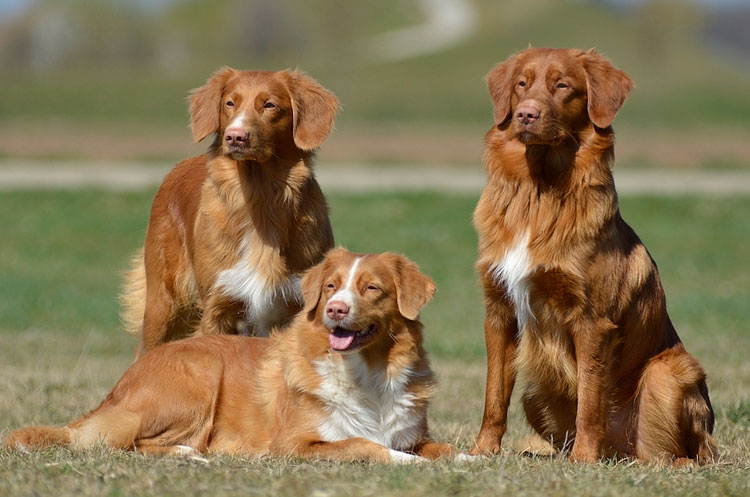
The Nova Scotia Duck Tolling Retriever is an athletic, compact dog with a strong, balanced build, medium bone structure, and well-developed muscles. The Toller is the smallest of all retrievers. Height at the withers is 43-53 cm, weight 14-23 kg.
The head is proportional and wedge-shaped. The skull is broad and slightly rounded. The occipital protuberance and cheeks are flat. The distance from the occiput to the stop is approximately equal to the distance from the stop to the tip of the nose. The stop is moderately pronounced. The muzzle tapers to the nasal leather, which can be black or brown to match the coat. The lips fit tightly to the jaws. The bite is tight and scissor-shaped. The jaws are strong, but a gentle grip is important. The eyes are almond-shaped, set wide apart, and medium in size. The iris color ranges from amber to brown. The eyelids are the same shade as the nose and lips. The ears are triangular in shape, rounded at the tips, medium in size, set high, and curling at the base, falling onto the muzzle.
The neck is set firmly, arched, and free of dewlap. The back is short and straight. The ribs are well sprung, but not barrel-shaped or flat. The tail is set low, carried low when at rest, and carried high above the back without touching it when in motion or excited. The legs are straight, parallel, and strong, with well-developed muscles, giving the dog a springy, confident gait.
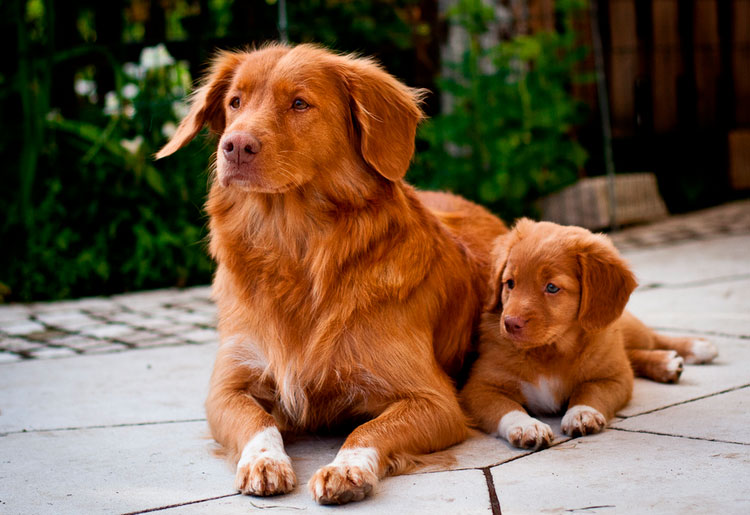
The coat is double, consisting of a straight, medium-length outer coat and a soft, dense undercoat. On the back, the outer coat may be slightly wavy. In winter, it often forms a loosely curled ruff around the neck. The feathering is soft and moderately long. The hair on the muzzle is fine and short. It is crucial that the coat be water-repellent, so the dog can safely retrieve birds from icy water. The characteristic color is any shade of red. The color should be deeply saturated. White markings are permitted on the tip of the tail, feet, chest, and muzzle; their absence is not a fault.
Character and behavior
The Nova Scotia Duck Tolling Retriever is a remarkably versatile individual. They are talented retrievers, agile, fast, and obedient enough for agility, frisbee, and other sports, patient and easily trained for obedience competitions. They are goal-oriented, energetic, and cheerful. They love being the center of attention and are willing to do anything to please their owner. The standard states that the Toller's eyes sparkle when working, and this is true. They also have another characteristic: Nova Scotia Duck Tolling Retrievers sometimes "scream" when excited or happy. This sound is difficult to describe in words; it's somewhere between a squeak, a howl, and a growl. Tollers are friendly with all family members. They get along well with children of all ages, strive to be gentle and caring with small children, and are patient and sensitive. Tollers usually single out one person over another; they strive to be a one-person dog.
Thalers are often confused with Golden Retrievers, but these breeds are physically and psychologically different.
The territorial instinct is weak. The dog will not protect its owner, much less their property, but will bark at passersby and extraneous noises. It is wary of strangers and friendly with its owner's friends and acquaintances, but not as welcoming as a Labrador or Golden Retriever.
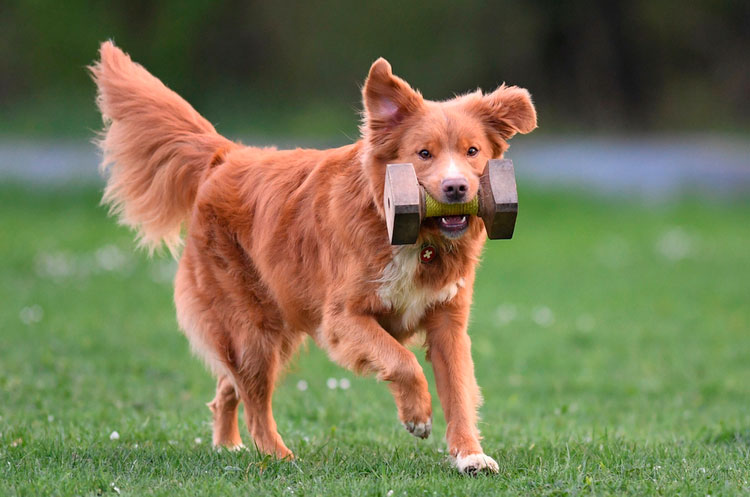
The Nova Scotia Duck Tolling Retriever is suitable for a variety of sports. Obedience and agility are the most common sports for these dogs. Tolling retrievers are particularly good at retrieving tasks, which are an excellent way to develop the retriever's natural talents.
They get along well with other pets, but being a hunter to the core, they can be too persistent in games, which does not always please cats and calmer dogs.
Education and training
It's important to start working with a Toller from an early age, and comprehensive socialization is essential. They're fairly easy to train, and if you add their desire to please their owner, they'll become an ideal working dog in the right hands.
A Toller shouldn't be trained as a service dog. They learn commands quickly, but don't like repeating the same things over and over again, and lack perseverance. Much better results will be achieved if training sessions are as varied as possible. Never put pressure on the dog, as this will cause it to become withdrawn and unwilling to interact.
The Toller thrives on encouragement and praise. This, coupled with close contact with the owner, will ensure success in training and education.
Content Features
The Nova Scotia Duck Tolling Retriever can live outdoors, in a kennel, indoors, or in an apartment. It adapts easily to a variety of environments, as long as it receives adequate attention, physical and mental stimulation, and plenty of walks and work.
Tollers shed heavily. On walks, they love to roll in the mud or swim in puddles if there's no water nearby. This breed isn't the best choice for clean freaks or allergy sufferers.
It's crucial to constantly challenge a Toller, both physically and mentally. This is the key to a happy relationship between dog and owner. However, it can also be a drawback for less active people, who won't be happy with a smart and energetic Scottish Retriever.
Care
Toller grooming includes regular brushing and bathing as needed. Indoor dogs are typically fully bathed with shampoo and conditioner every 1.5 to 2 months. Outdoor dogs are bathed 2 to 3 times a year. It's important to prevent matting and regularly inspect the ears and skin. The ears are cleaned as needed. If nails aren't worn down, they should be trimmed to an appropriate length approximately every 3 to 4 weeks.
Show grooming includes washing, drying, and combing. Light trimming of the coat on the paws, behind the ears, chest, tail, and legs is permitted. This creates a neater appearance, but should not be excessive. The Nova Scotia Duck Tolling Retriever is shown in as natural a state as possible.
Nutrition
Nova Scotia Duck Tolling Retrievers are generally not picky eaters. Allergy sufferers are rare among this breed. They are also not prone to overeating. If they lead an active lifestyle, they remain in good shape well into old age. Owners can provide a complete diet with natural foods or prepared dry food. A small retriever is suited to a diet suitable for medium-sized dogs with a normal or active lifestyle. During colder months and periods of intense physical activity, it is recommended to increase the portion by 1-1.5 times, if necessary.
Health and life expectancy
The Nova Scotia Duck Tolling Retriever is a robust, healthy dog, strong, resilient, and adaptable. It rarely suffers from allergies or digestive issues, and adapts easily to various climates and lifestyles. However, the breed is susceptible to hereditary health issues that current and potential owners should be aware of.
In Canada, the health of Tollers is taken very seriously. A list of diseases recommended for screening in all animals and mandatory for breeding stock has been compiled. This will allow for the creation of a comprehensive database and the proper selection of breeding pairs. The list of hereditary diseases in Nova Scotia Duck Tolling Retrievers includes:
- Hip dysplasia;
- Progressive retinal atrophy;
- Thyroid problems;
- Diseases of the heart and blood vessels, including congenital defects;
- Developmental defects that include malocclusion, cleft palate, cleft lip, cryptorchidism and others;
- Degenerative myelopathy;
- Degenerative encephalopathy;
- Intervertebral disc disease;
- Liver shunt;
Life expectancy is usually 12-13 years. Retrievers require standard veterinary preventative measures (vaccinations, treatment for external and internal parasites, annual medical examination).
Choosing a Nova Scotia Duck Tolling Retriever Puppy
In Russia and the CIS, the number of Nova Scotia Duck Tolling Retrievers is growing every year. There are now over 300 dogs. An application has been submitted to establish a National Club for the breed in Russia, which will unite owners and regulate breeding activities. Several kennels have sprung up, and individual owners continue to breed dogs, making it increasingly easier to buy a puppy. However, Tollers don't always meet the requirements and possess the necessary working qualities. When choosing a puppy, it's important to ensure the breeder's responsibility and the quality of the parents. Testing for the main diseases common in the breed is a huge plus.
It's best to buy a puppy abroad through a national breed club. Websites of such organizations only list purebred puppies for sale, the result of planned matings. Scammers abound in all countries.
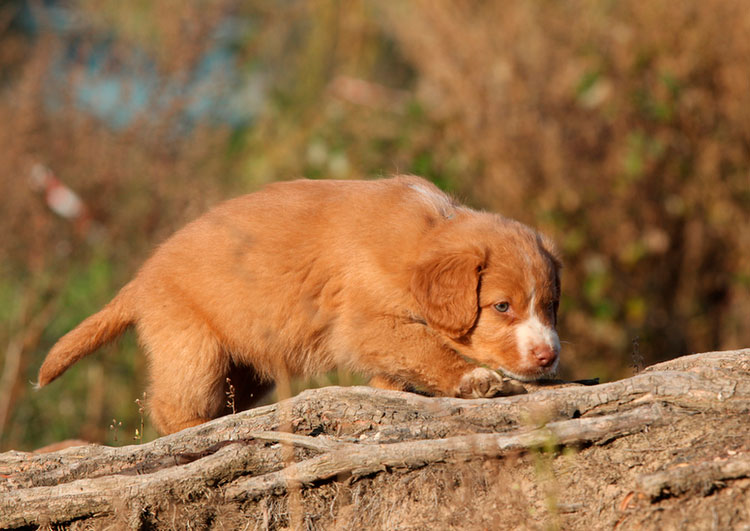
Toller puppies are round and soft in every way. Their ears appear disproportionately large for their heads, their eyes are expressive, and the color of their nose, eyelids, lips, and eyes should match the breed standard. Their paws are strong and straight, and their soft, fluffy fur makes them appear slightly rounder. They should be moderately well-fed, appear perfectly healthy, energetic, and curious, with the attentive, friendly expression characteristic of the breed.
Price
Abroad, the average price of a Nova Scotia Duck Tolling Retriever puppy is $800. The price is influenced by the puppy's age, the working ability of the parents, their titles, the quality of the kennel, and much more. In Russia and the CIS, breeders try to maintain a similar price range, with puppies selling for an average of 40,000-45,000 rubles.
Photos
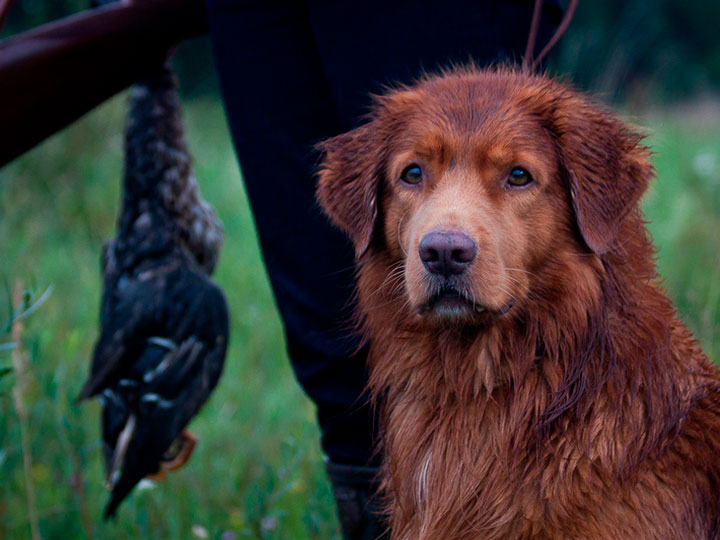
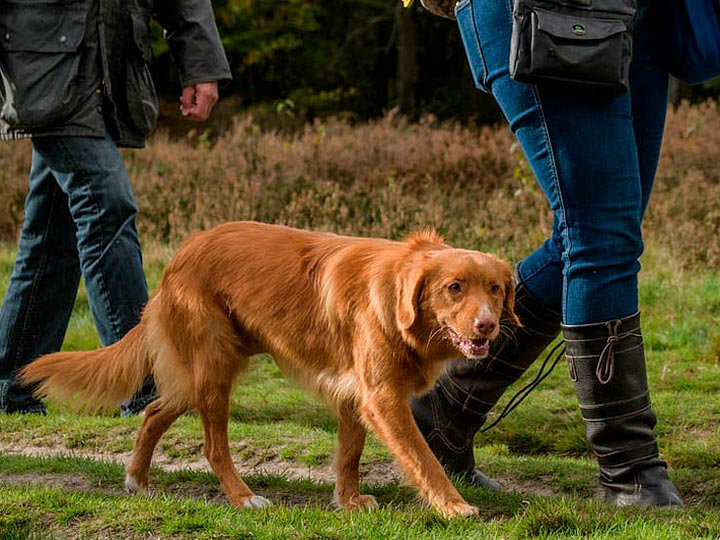
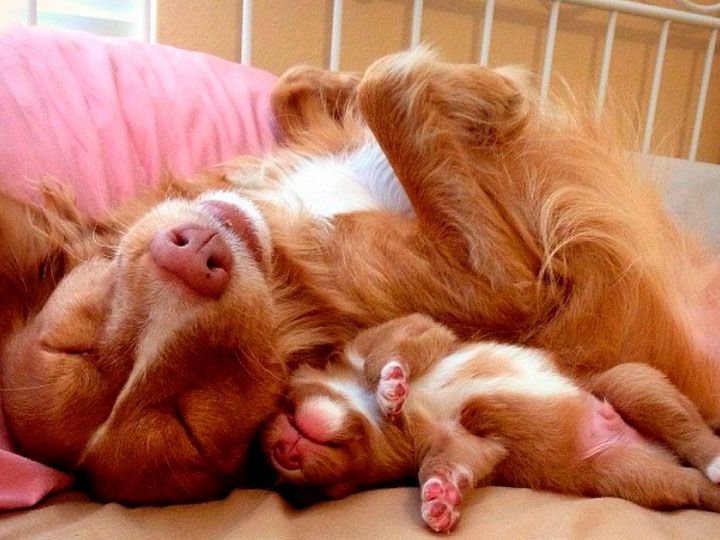
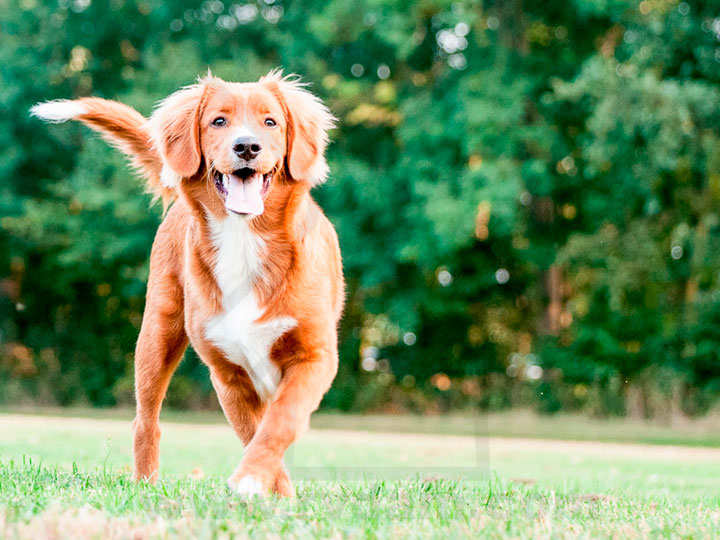
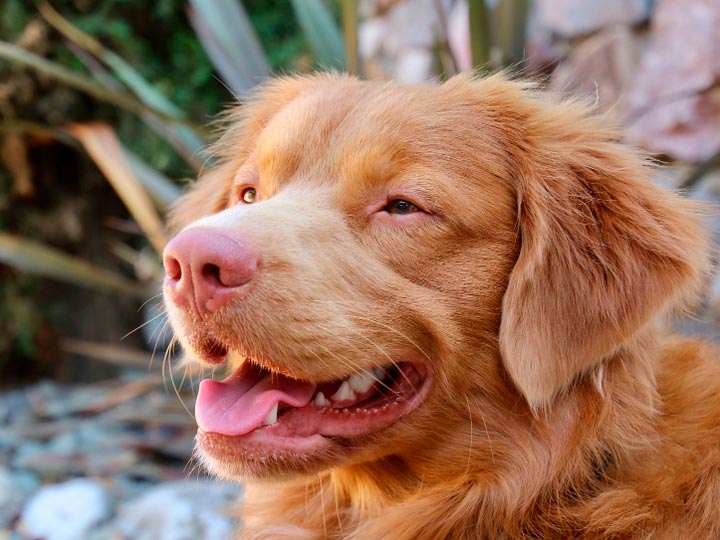
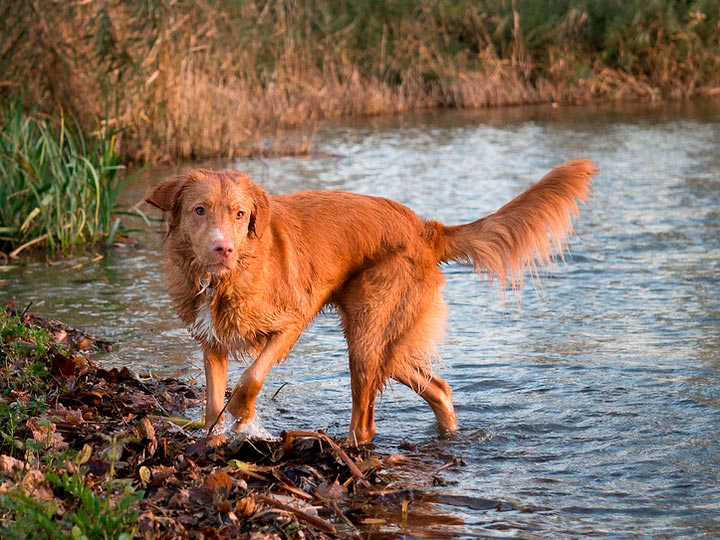
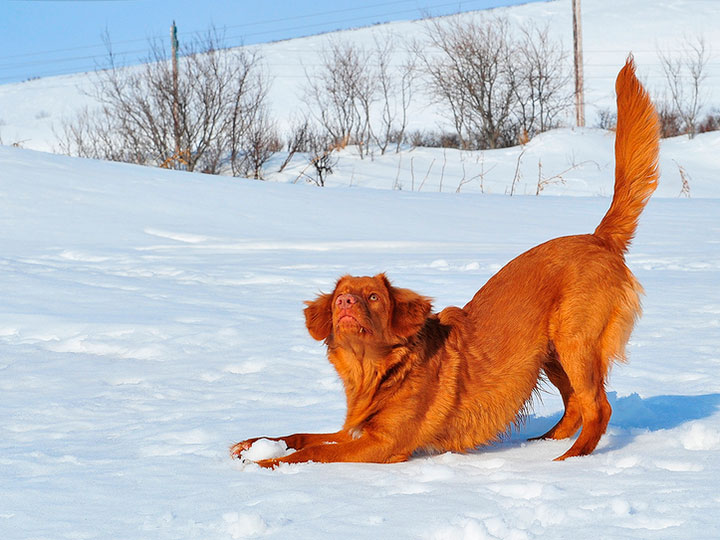
The gallery contains photos of puppies and adult Nova Scotia Duck Tolling Retrievers (Tollers).


Read also:


Add a comment