
New Guinea Singing Dog
The New Guinea Singing Dog was discovered only in the mid-20th century, but was already recognized as one of the oldest breeds. Its population is extremely small and poorly studied, and its classification remains controversial. In addition to its distinctive vocal abilities, it possesses a number of unique anatomical features. It is not well-suited for keeping as a pet.
Content
History of origin
The New Guinea Singing Dog was discovered in the 1950s in remote areas of New Guinea. Preliminary estimates suggest it is at least 6,000 years old. There is no consensus on its origins. Genetic studies confirm that it is one of the most primitive canines in the world, having diverged approximately 30 million years ago. For this reason, it is also called the "Stone Age dog." It is rarely found in the wild. Natives sometimes capture puppies, raise them, and use them as hunting dogs, but they do not breed them.
In 1957, eight wild dogs were brought to Australian zoos. They are the ancestors of virtually all modern "singers."
Appearance
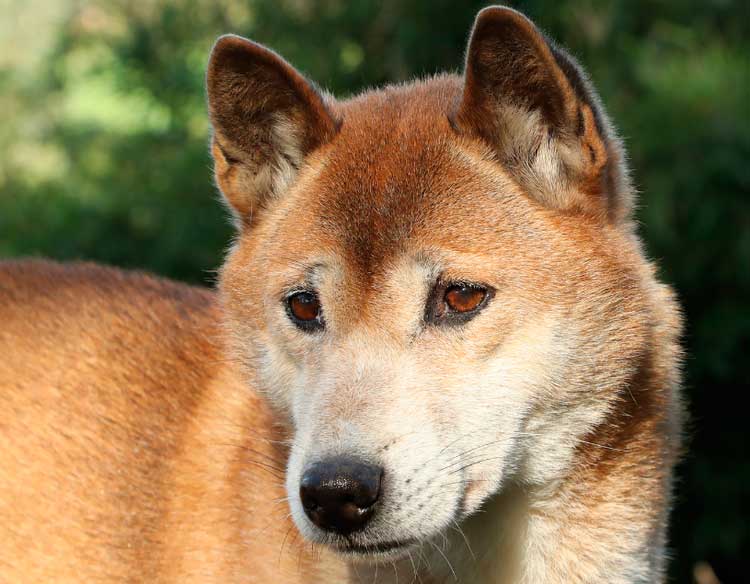
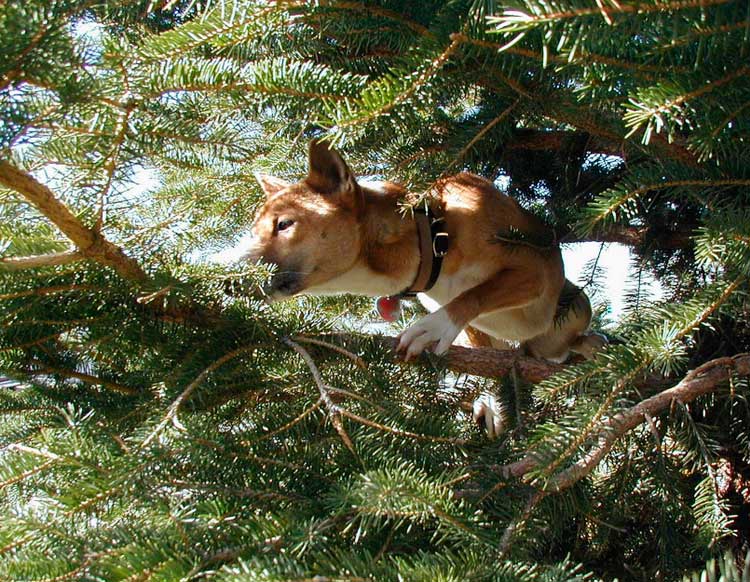
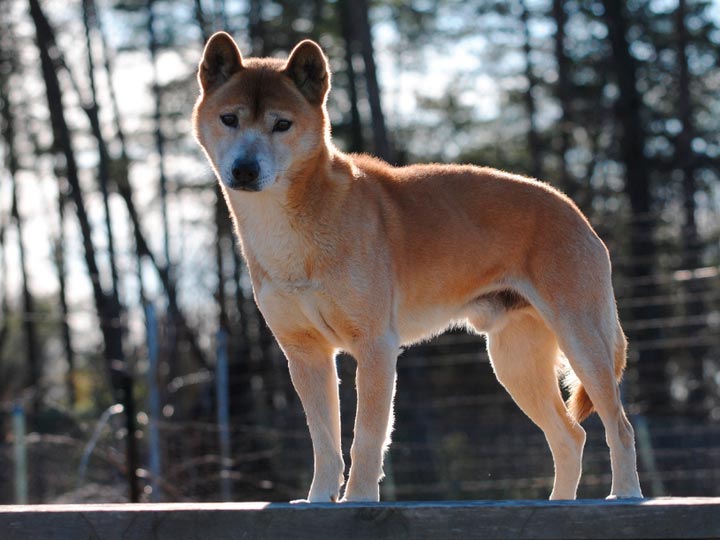
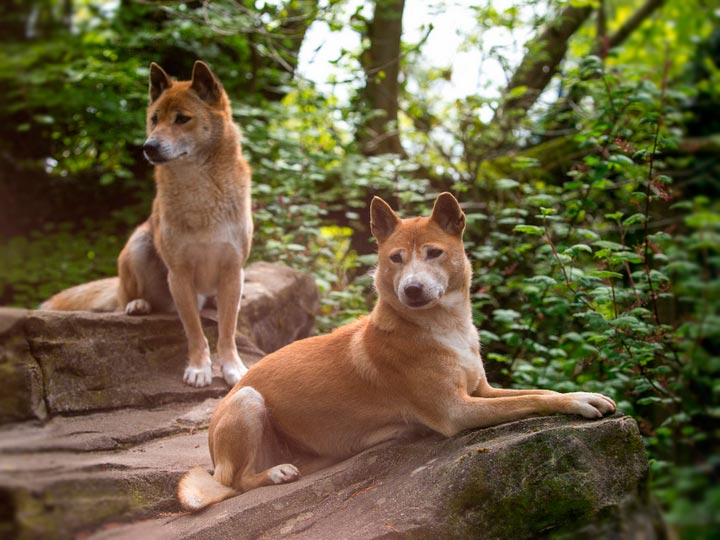
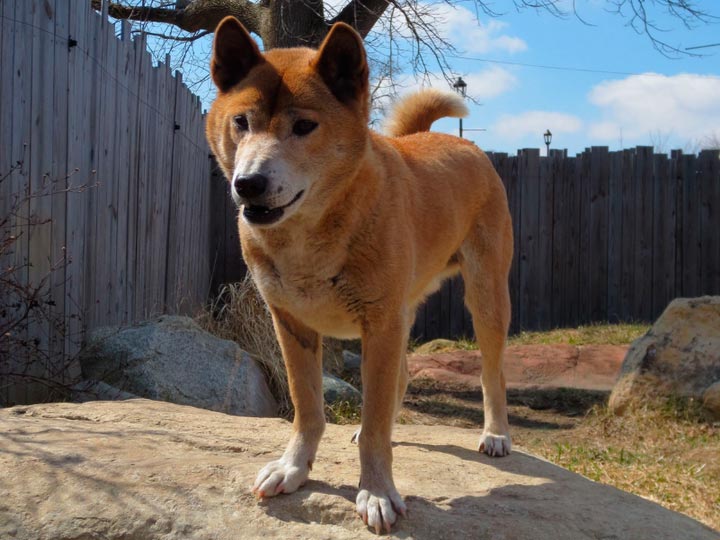
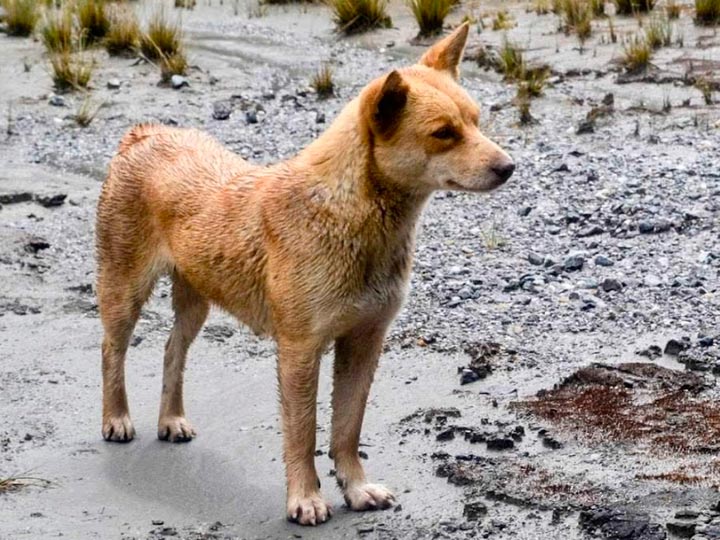
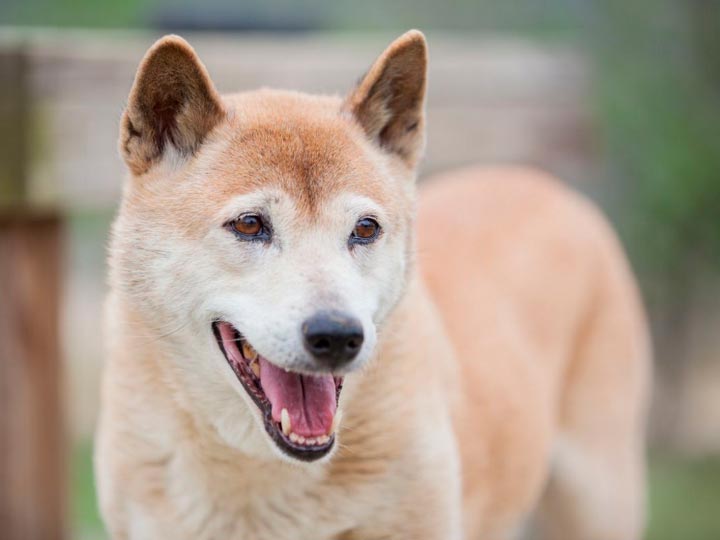
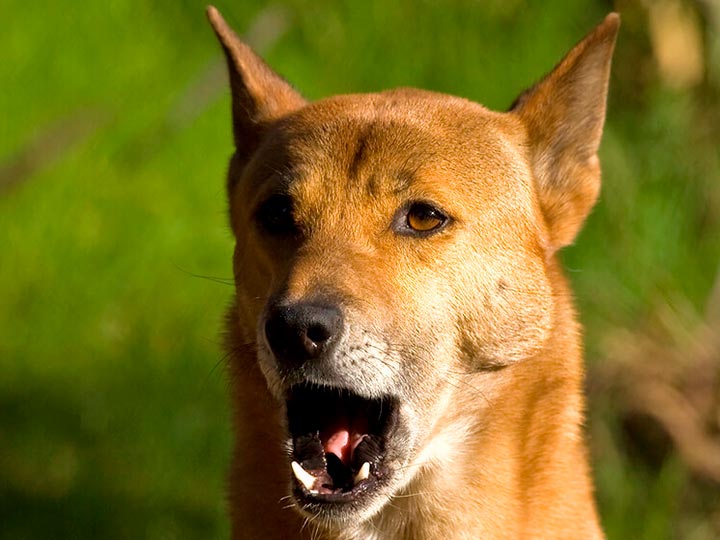
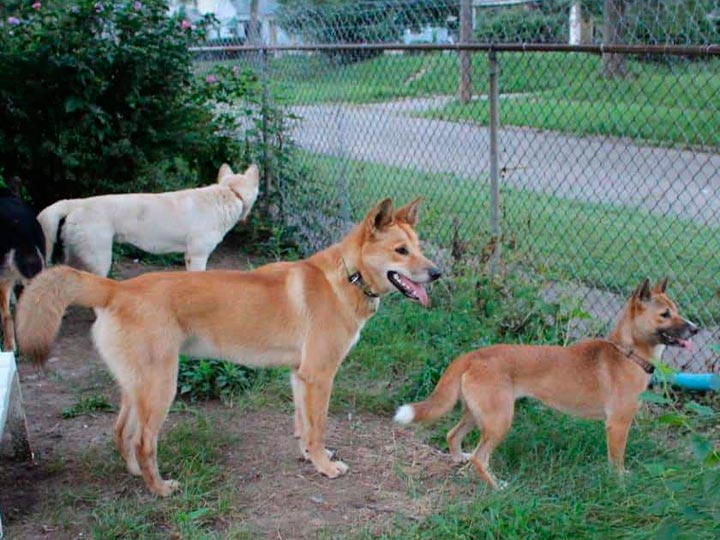
New Guinea Singing Dogs are well adapted to living and hunting in dense mountainous terrain. Their unique anatomical structure allows them to jump high, nimbly navigate rocks and crevices, and even climb trees. They have a fairly broad, wedge-shaped head with erect ears, a narrow body, strong, medium-length limbs, and a thick, double coat of reddish-brown fur.
- Height at withers: 31-46 cm;
- Weight: 9-15 kg.
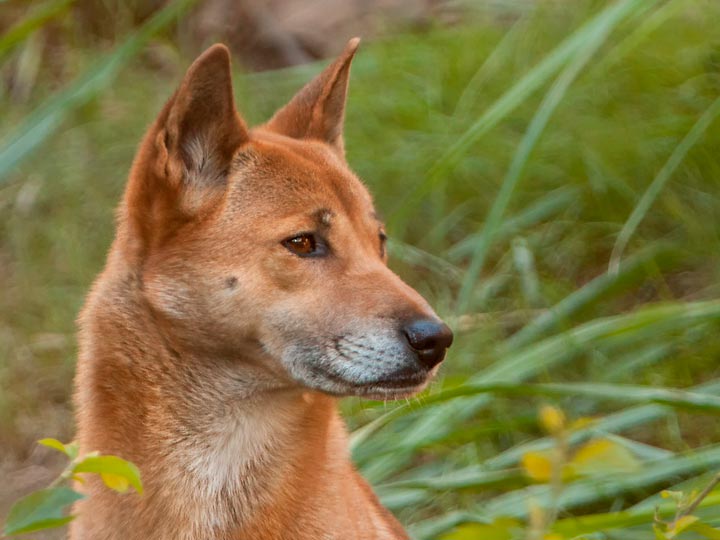
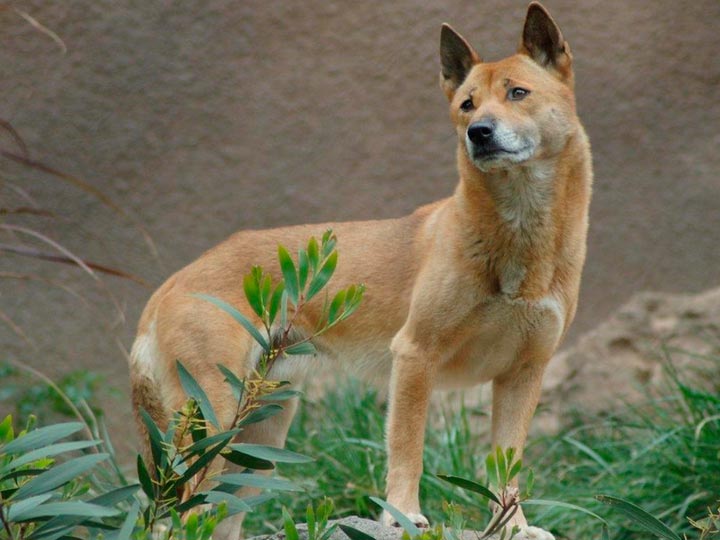
The head is wedge-shaped and broad. The eyes are almond-shaped and set slightly obliquely. Their color ranges from yellow to dark brown. A well-developed tapetum lucidum exhibits a bright green glow and provides excellent adaptation to dim vision. The ears are erect and tilted slightly forward. The powerful jaws are equipped with so-called carnivorous teeth, which are not as sharp and large in domestic dogs. The neck is of medium length and flexible, allowing the head to turn 360 degrees quickly.
The body is relatively narrow, strong, and proportionate. The spine and joints are very flexible. The limbs are straight, with well-developed muscles, and can be raised to the side at 90 degrees, as in Norwegian LundehundThe tail is of medium length or short, densely covered with hair. Dewclaws absent on the hind legs.
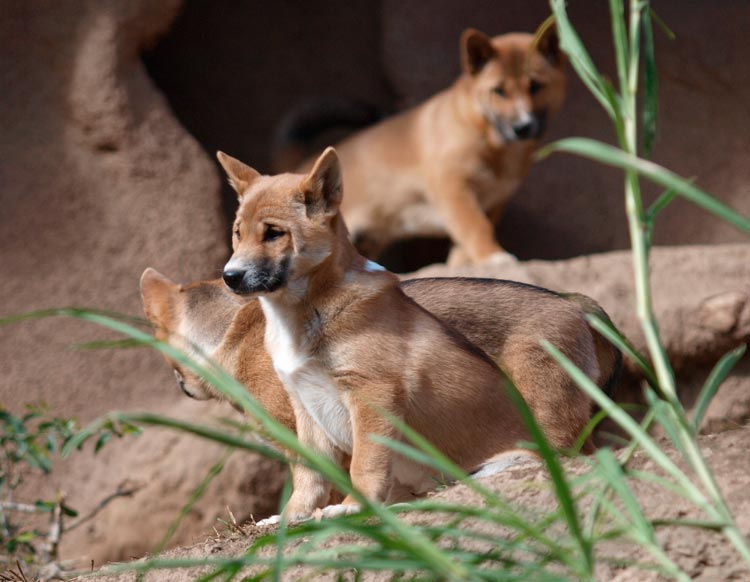
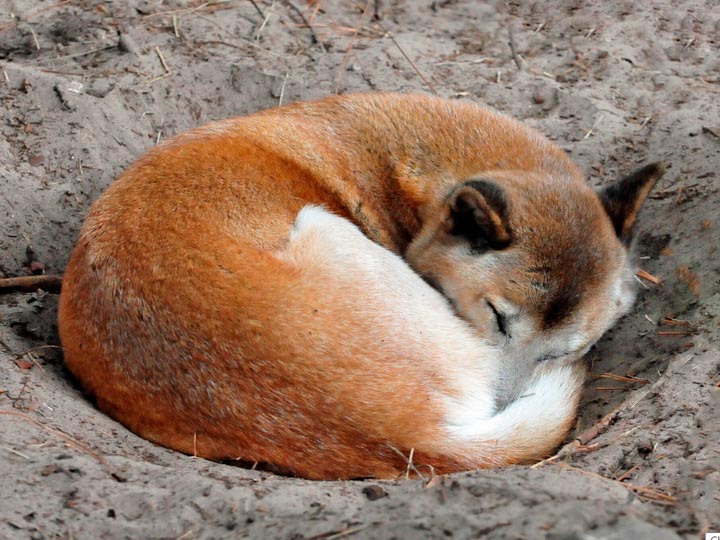
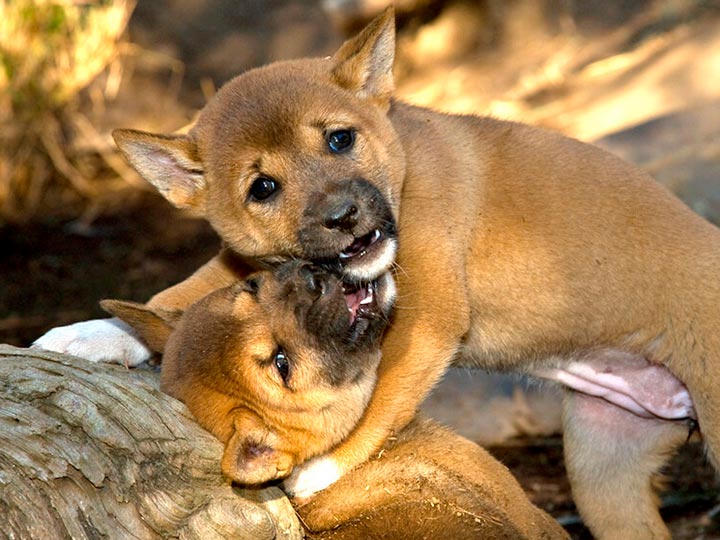
The coat is short, dense, and double. Color ranges from red to brown. Puppies are born dark chocolate and lighten with age. Most dogs have white markings on the muzzle, neck, chest, paws, and tip of the tail.
Character and behavior
New Guinea singing dogs have a strong character. They are dominant, bold, and very stubborn, and will not take no for an answer. They will do anything to achieve what they want. They are friendly towards people. They become attached to their owner or the person who feeds them, but still remain independent and self-sufficient. Their behavior can be unpredictable. They are very curious, and their hunting instinct is highly developed.
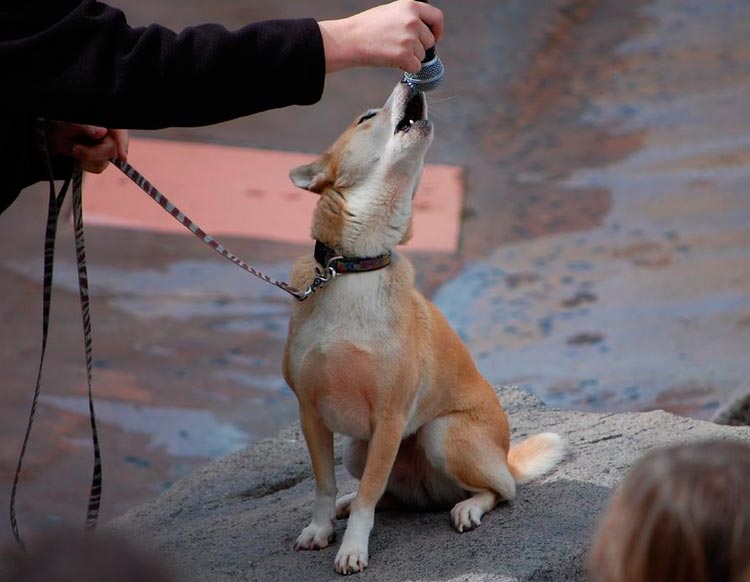
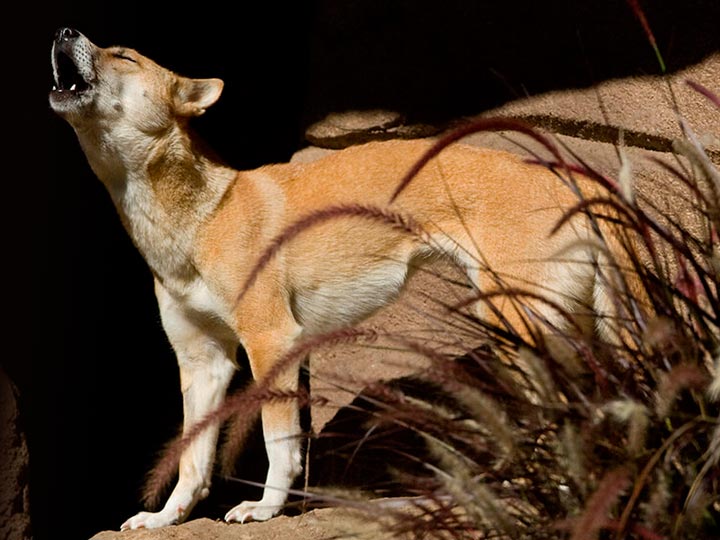
Sonograms show that their singing is similar to that of a humpback whale!
A singing dog's howl sounds like a yodel, with pitches rising and falling. When one dog in a group begins to sing, others join in with different pitches, each with its own unique voice. They may also whine, yelp, or bark.
Observations of these dogs in the wild have revealed that they do not form permanent packs. They only form pairs during the rearing period. Both parents raise the puppies. They use resting and sleeping areas sporadically and are very active. Playful communication is not as developed as in dogs. They are highly territorial and aggressive toward other animals. They likely hunt alone.
Training and raising Guinea Pigs is similar to training a cat. Their independence and stubbornness make them difficult to train using conventional methods. They are quick learners, but I only do what I want.
Maintenance and care
The New Guinea Singing Dog is a wild animal, although quite friendly towards people. It is not recommended for pets. In captivity, it is found mainly in zoos. It must be given ample opportunity to exercise. In private hands, it needs to be walked frequently and kept on a leash. If something interests the NPS and there is a chance to escape, it will do so.
New Guinea Singing Dogs adapt fairly easily to human surroundings, but people will have to adapt significantly to living with them. Their temperament is independent. Their behavior is instinctive. Their obedience level is low. They have a high tendency to escape. Their singing can be a nuisance not only to their owners but also to neighbors.
In captivity, the diet consists primarily of raw poultry, beef, venison, and bison. Little is known about their diet in the wild. Small animals and birds likely comprise the bulk of their diet.
The New Guinea Singing Dog is not recommended for keeping as a pet.
She doesn't require any grooming. She takes care of her personal hygiene on her own. In fact, she often refuses to allow anyone to perform any procedures on her.
Health and life expectancy
The New Guinea Singing Dog is generally healthy and robust, with a strong immune system. However, if the gene pool is not expanded quickly, this situation may change. Standard veterinary preventive care is mandatory. The life expectancy is 15-20 years.
Status of the population and distribution
The number of dogs living in the wild is unknown. All domesticated singing dogs in the world, approximately 100 in total, are descended from eight wild dogs brought from New Guinea to Australia. They are kept in zoos in the United States, Canada, Great Britain, Germany, and the Czech Republic. A few singing dogs are kept as pets.
Purchasing a puppy is problematic. Societies for the preservation and protection of New Guinea Singing Dogs carefully select homes for puppies and sell them only to people with the appropriate experience, education, and ability to care for this dog properly. There are three such organizations: the New Guinea Singing Dog Conservation Society, New Guinea Singing Dog International, and Wizard of Paws Wildlife Education Inc. All are based in the United States.
Photos and videos
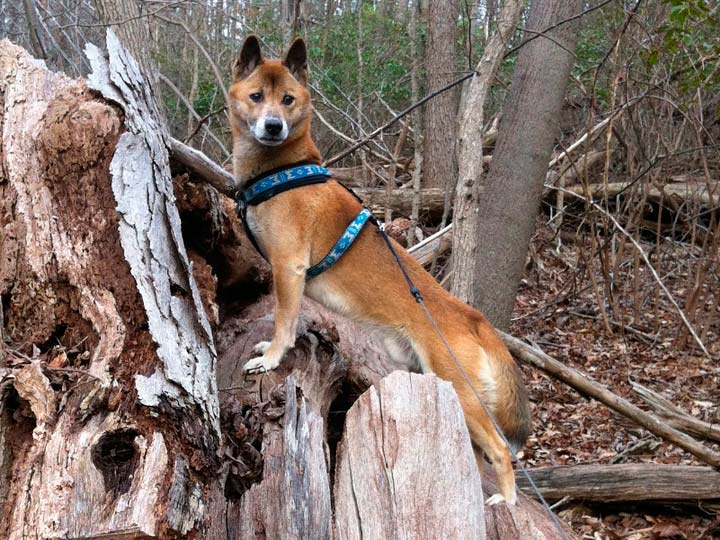
Photos of New Guinea Singing Dogs. The last photo in the gallery shows the NGS standing in the yard next to Australian dingo, which allows us to clearly assess the similarities and differences between subspecies.
Video about the New Guinea Singing Dog breed
Read also:


Add a comment