
Norwegian Lundehund
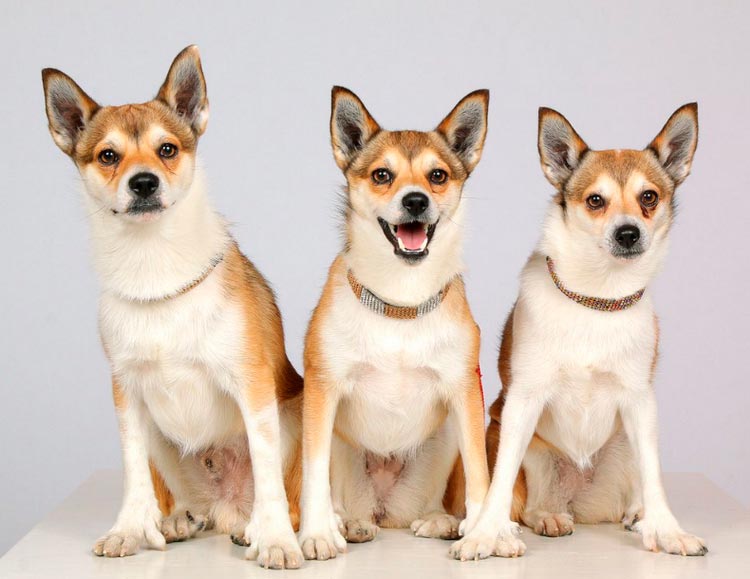
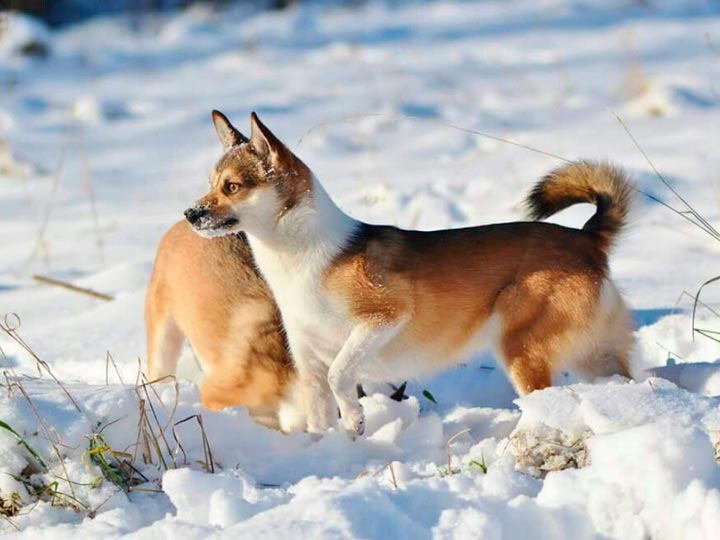
The Norwegian Lundehund is a highly specialized hunting dog with a unique anatomical structure that allows it to nimbly climb rocks and navigate narrow, winding burrows. It has historically been used for hunting seabirds. It is a small, spitz-like dog with a reddish-white coat, a pointed muzzle, and erect ears. Its character is energetic, cheerful, and alert. This breed is quite rare.
Content
History of origin
Lundehunds are considered one of the oldest Scandinavian breeds. It is known that in the 16th century, similar dogs were already used to hunt puffins in the Lofoten Islands.
The breed's name comes from two Norwegian words: lunde, meaning "dead end," and hund, meaning "dog."
Small dogs were used to hunt puffins, which were a valuable source of meat and down. These birds build their nests in hard-to-reach rock crevices and deep burrows. Lundehunds could sneak into nesting sites and carefully bring the prey back to their master. A good Lundehund could hunt around 70 puffins in a night. They were also used to collect eggs. The Lundehund is sometimes called a Norwegian Laika, which is not entirely correct. It does not resemble a Laika in appearance or working style, unlike the Norwegian Laika. Norwegian Elkhound or Buhunda.
Since the mid-19th century, puffins have been caught with nets, eliminating the need for dogs. Furthermore, the population of northern Norway has declined significantly. Lundehunds survived only on the island of Værøy, where locals valued traditions and protected the breed from crossbreeding. These dogs served as the basis for the breed's revival in the 20th century. After many setbacks, the population was successfully replenished. The Scandinavian Kennel Club approved the breed standard in 1943. In 1961, the breed was recognized by the International Cynological Association under the name Norwegian Lundehund. Today, there are approximately 2,000 Norwegian Lundehunds worldwide, approximately a quarter of whom live in Norway.
Today, puffin hunting is prohibited, but the Lundehunds' unique skills have proven useful in another context. At Langnes Airport in Tromsø, three Lundehunds are used to collect the eggs of gulls and other birds. These birds are known to pose a significant hazard to aircraft, and reducing their numbers will improve flight safety.
Appearance
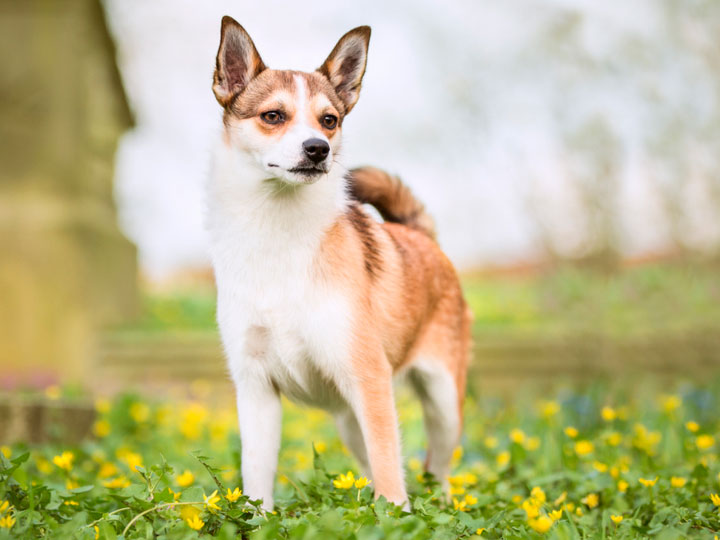
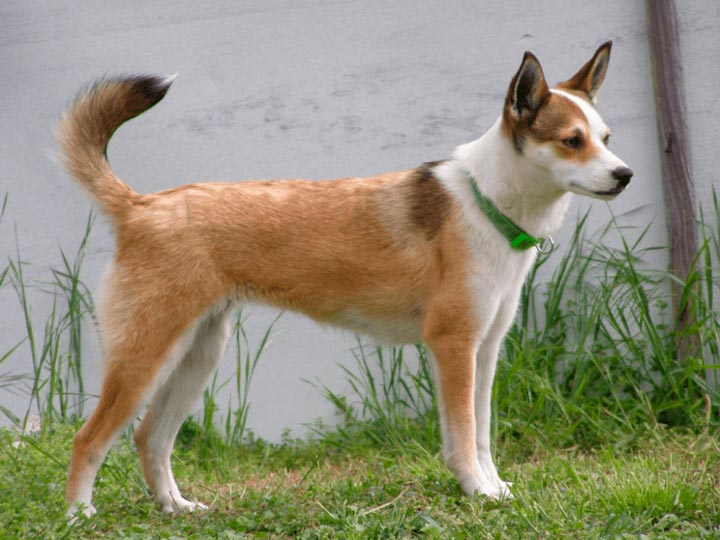
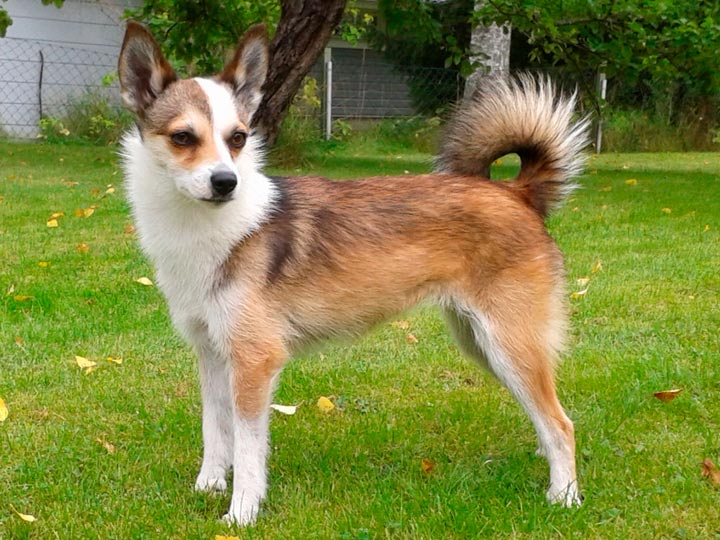
The Norwegian Lundhund is a small, spitz-like dog with a slightly elongated build. Sexual dimorphism is pronounced.
- height at the withers of males is 35-38 cm, weight is about 7 kg;
- The height at the withers of bitches is 32-35 cm, weight is about 6 kg.
Upon closer examination, it becomes apparent that the Norwegian Lundehund has unique anatomical features:
- Thanks to its very mobile neck, the Lundehund can throw its head back so that its nose touches its back;
- all joints of the forelimbs are extremely mobile;
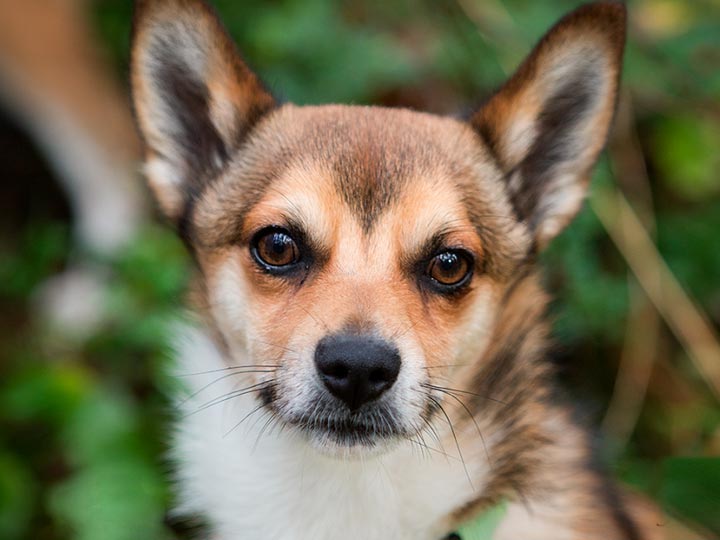
- the pupil of the golden eyes is surrounded by a dark rim;
- The ear cartilage is able to retract and fold, tightly closing the ear canal.
- The front feet are slightly turned outward and have at least 6 toes, 5 of which rest on the ground. The inner toes share a common ligament system and muscles. There are 8 pads instead of 5;
- The hind paw is also equipped with 2 additional toes and 7 pads.
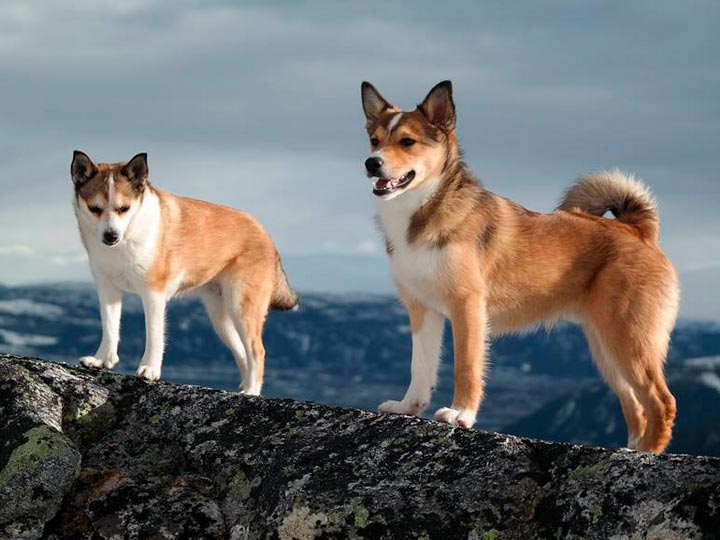
All these characteristics allow Lundehunds to be true climbers, capable of scaling rocks, getting into narrow crevices of caves and winding burrows of dead ends.
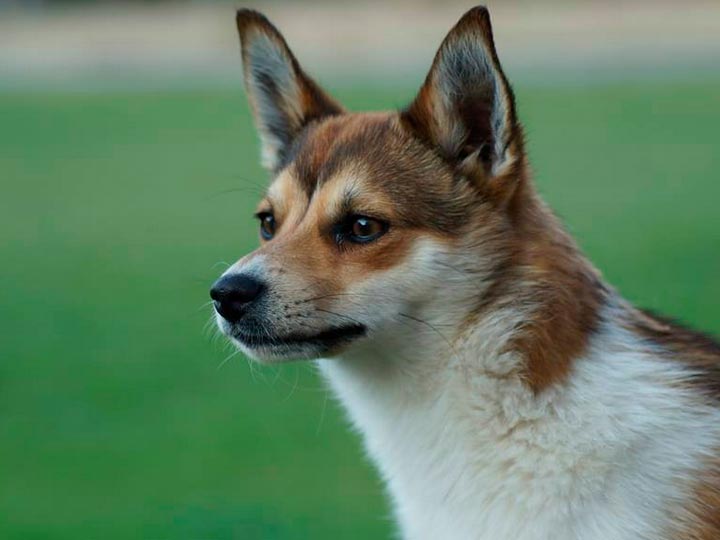
The head is of medium width and clean lines. The skull is slightly rounded. The stop is pronounced. The muzzle is of medium length, wedge-shaped, with a slightly convex bridge of the nose. The bite is scissor-like. The eyes are set slightly obliquely, not protruding, and are yellowish-brown in color. The ears are triangular, wide at the base, erect, and very mobile. The neck is of medium length, strong, with a noticeable ruff.
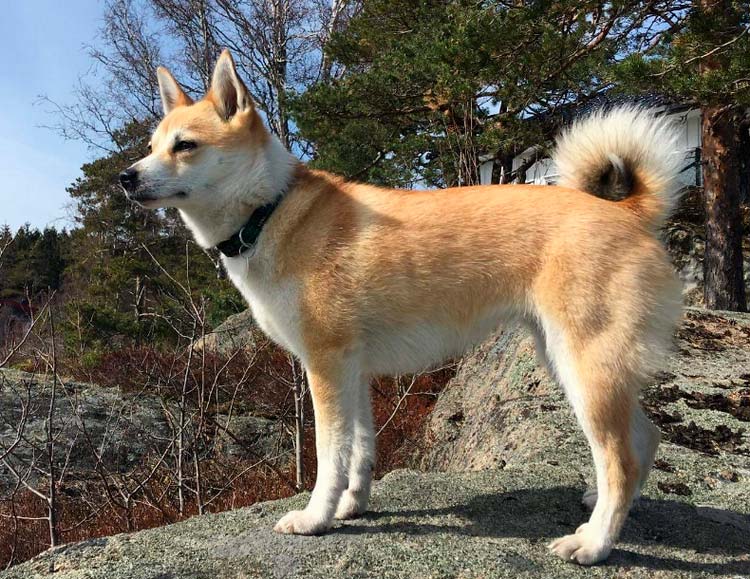
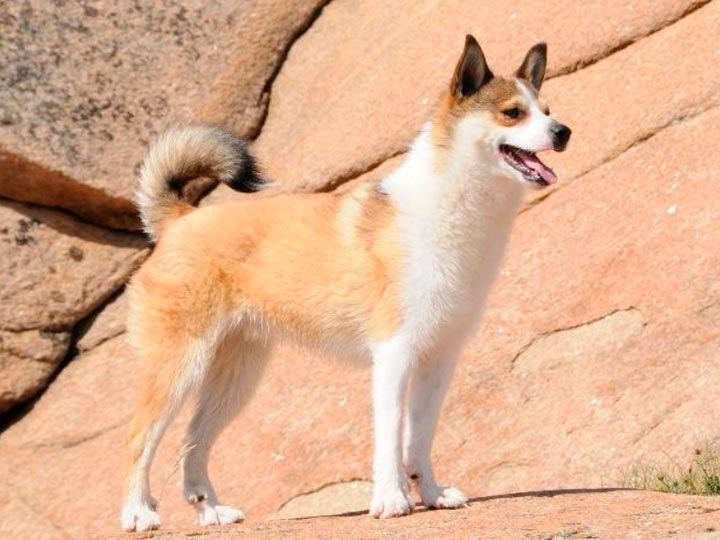
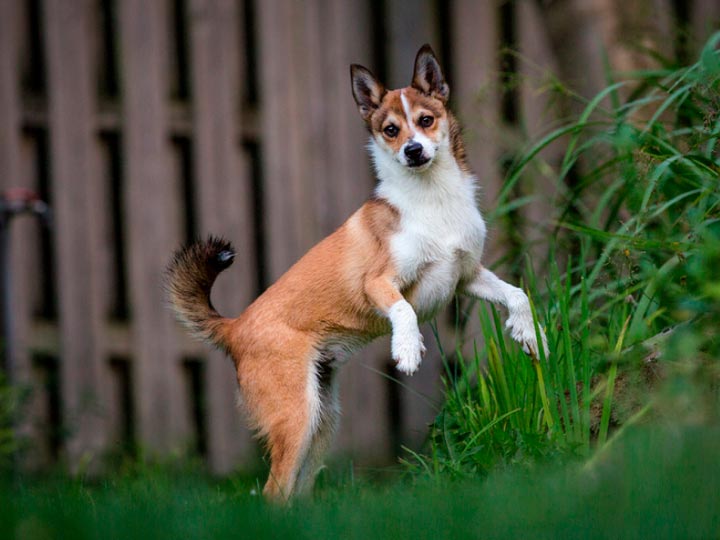
The body is slightly elongated. The topline is level. The croup is slightly sloping. The chest is of medium width, fairly deep, and roomy. The belly is moderately tucked up. The tail is set moderately high, of medium length, well-furred, and carried in a curl or hanging down. The forelimbs are straight and moderately angulated. The hind legs are set fairly close together, strong, and muscular. The paws are oval, turning slightly outward.
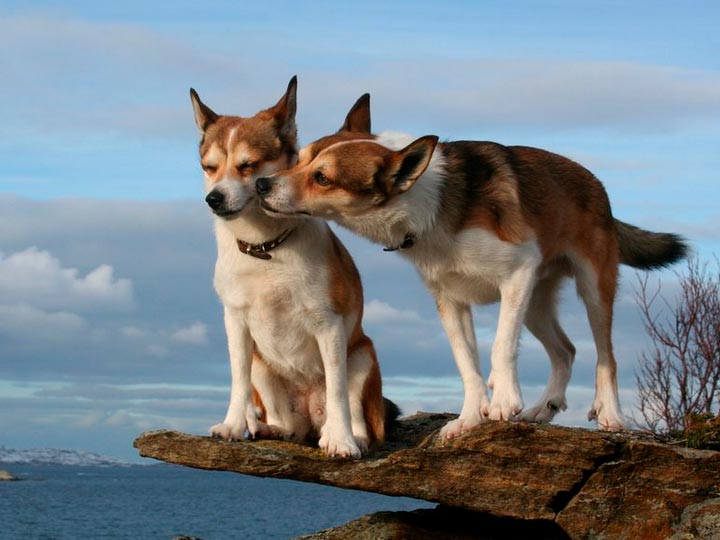
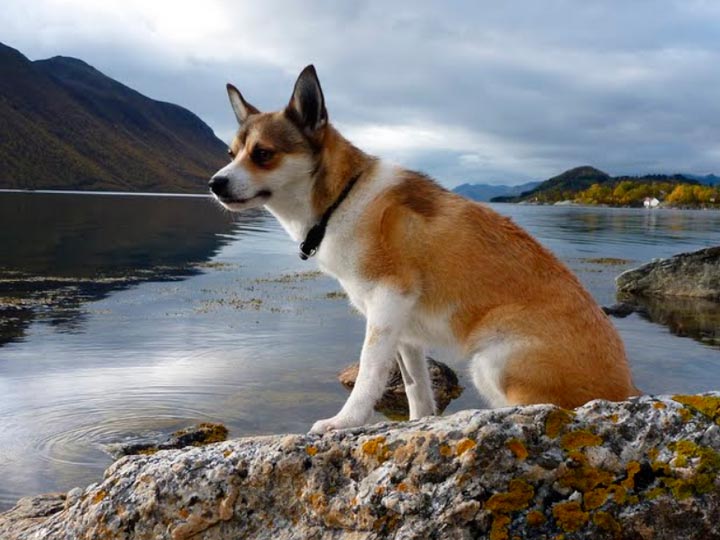
The coat consists of a dense and rather coarse guard hair and a soft undercoat. The hair on the head and front of the legs is short. It is longer on the neck, back of the hind legs, and tail. The coat is always combined with white, ranging from fawn to red with more or less blackened tips.
Character and behavior
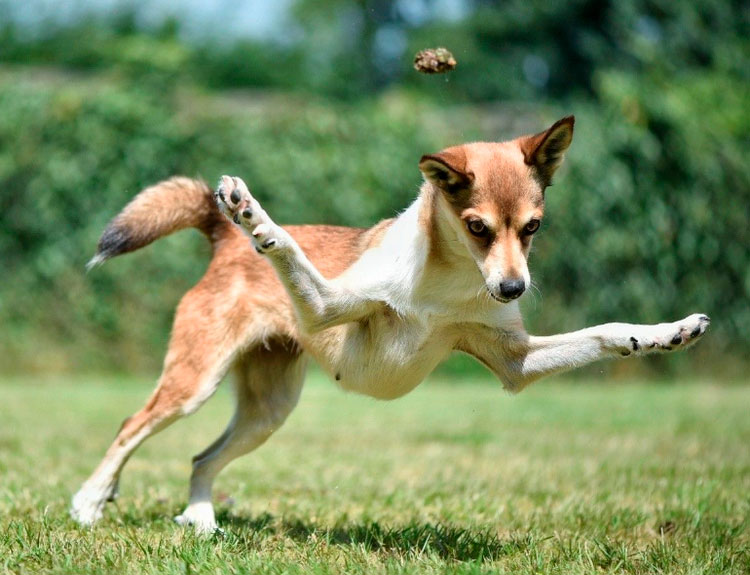
Friendly, intelligent, and curious, the Norwegian Lundehund makes a wonderful family dog and companion. He is hardy, energetic, and cheerful, with a strong hunting instinct and a keen eye for tracking. He gets along well with older children and enjoys active games and retrieving. He is also known for his ability to pick up objects with his paws and play with them, like a cat. He is attached to all family members and is wary of strangers, but not overtly aggressive.
The Norwegian Lundehund is a dominant, self-assured dog. It can be pugnacious with other dogs, especially males. It can show its teeth, even if the opponent is larger. It gets along well with other pets and strictly follows the pecking order.
The Lundehund is sociable and companionable. It can be a companion on long walks, long trips, and any other activities the owner may have in mind. The Lundehund's character is characterized by a touch of stubbornness and independence. He is quick, goal-oriented, and quite independent. When properly trained, he is obedient and owner-oriented. He is relatively easy to train and always enjoys working with others. He is well-suited for a variety of sports, including agility and freestyle. obedience, tracking and others.
Content Features
The Norwegian Lundehund adapts well to a variety of living conditions and climates. It tolerates cold weather well and doesn't tolerate being left alone for long periods. It requires long walks and mental stimulation, opportunities to run, and interaction with its owner or other dogs. It's not a good choice for an apartment.
The ideal environment for a Lundehund is a spacious yard with a pack of other dogs of the same breed. This allows for plenty of time on the move and the opportunity to exercise their innate hunting talents.
Care
Grooming a Lundehund is not difficult. The dog is capable of maintaining its own hygiene. The owner only needs to follow a few standard procedures:
- comb the wool periodically;
- bathe once every 3-4 months;
- keep your eyes and ears clean;
- brush your teeth regularly to prevent tartar buildup and other dental problems;
- Trim your nails regularly if they don't wear down on their own.
Dressing a Lundehund is not necessary. However, some owners wrap their dogs in warm clothing in cold weather, and in rainy weather, they put on overalls and booties to protect them from moisture and dirt.
Health life expectancy
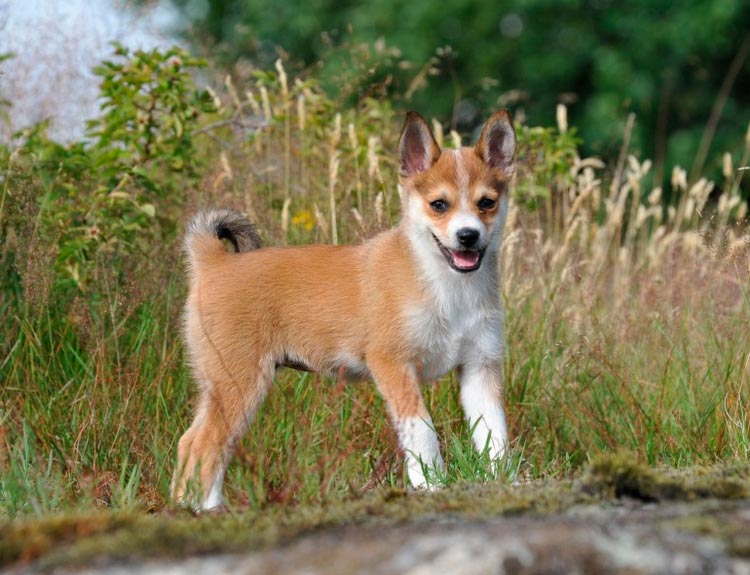
The breed is considered prosperous. Life expectancy is 12-14 years. Some Lundehunds suffer from a hereditary condition called intestinal lymphangiectasia. These dogs are recommended supportive therapy, which includes a low-fat, high-protein, and high-triglyceride diet. Fat-soluble vitamins and calcium are also prescribed.
Additionally, the breed is known to be prone to skin and coat diseases (most commonly demodicosis, folliculitis, and allergies). Some clubs recommend testing breeding dogs for hip dysplasia, ophthalmological diseases, and luxating patellas.
Where to buy a Norwegian Lundehund puppy
Those looking to purchase a good puppy from a reputable breeder are best off starting their search through breed clubs: the Norwegian (Norsk Lundehund Klubb), the Swiss (Svenska Lundehundsällskapet), the Finnish (Suomen Lunnikoirayhdistys ry), the American (Lundehund Association of America), and others. It's very rare to find a Lundehund for sale ad online.
Price
The Norwegian Lundehund Club has set a recommended price for a puppy at 15,000 Norwegian kroner (approximately €1,500). This amount is the average cost of a puppy in Europe. According to the American Kennel Club, a Lundehund puppy in the US costs an average of $500.
Photos and videos
You can see more photos of Norwegian Lundehund dogs in the gallery.
Video about the Norwegian Lundehund breed
Read also:


Add a comment