
Norwegian Buhund (Norwegian Shepherd)
The Norwegian Buhund is believed to have descended from Viking dogs. Over the centuries, it has mastered many professions and is deservedly considered a versatile farm dog. The Buhund is highly intelligent, energetic, and loyal to its owner. It requires rigorous training.
Content
History of origin
Cynologists believe that the Norwegian Buhund is a direct descendant of Viking dogs. These were small spitz dogs used primarily for hunting and protecting wild animals. By the 17th century, the Norwegian Buhund had already become a well-established breed.
The first official show of these dogs took place only in 1920 in Jæren. In the following years, the renowned breed enthusiast John Sealand and his friend Thoralfon Raanaas worked to improve and popularize the Buhund. In 1939, the National Club for the breed was founded in Norway. In 1963, the breed was recognized by the FCI under the name Norwegian Buhund.
Usage
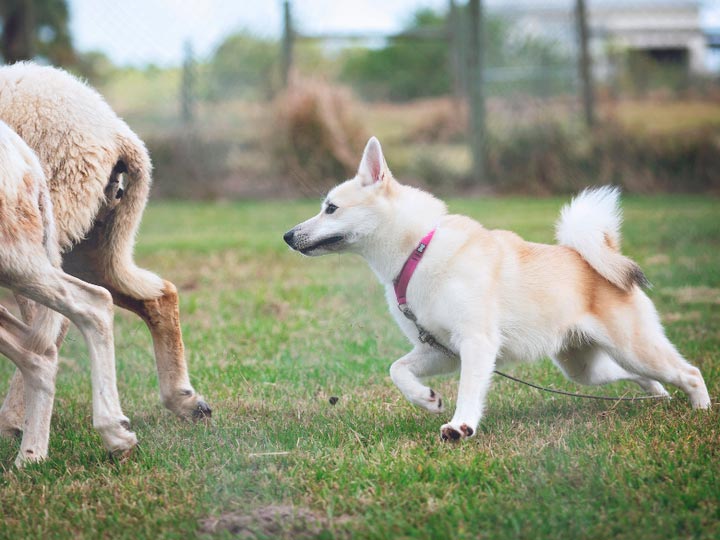
The Norwegian Buhund was a useful farm dog for centuries. It served as a watchful guard and tireless herder. It hunted deer, elk, and birds, and was a reliable friend and companion.
The breed's name comes from two Norwegian words: bu, meaning "farm, estate, mountain hut," and hund, meaning "dog."
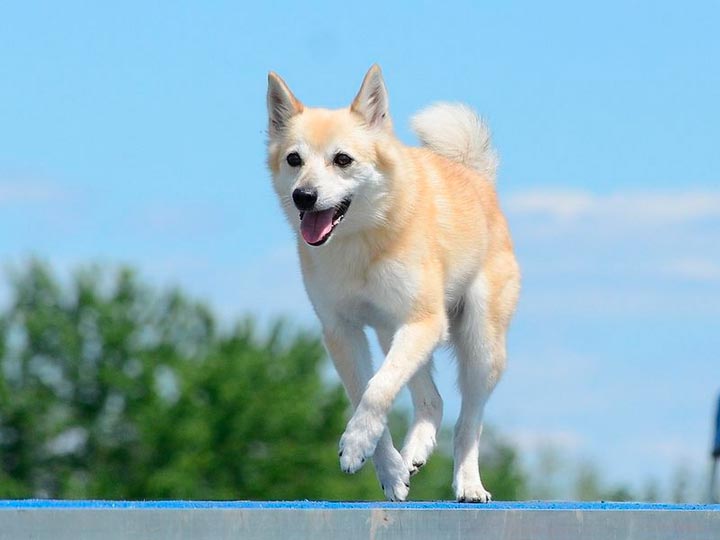
Today the Norwegian Buhund is primarily a family dog and companion with which you can build a show career or participate in various sports.
Appearance
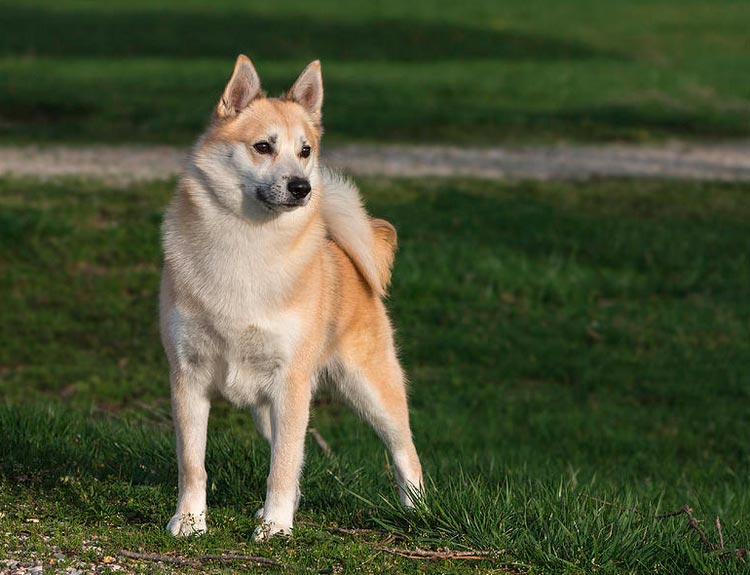
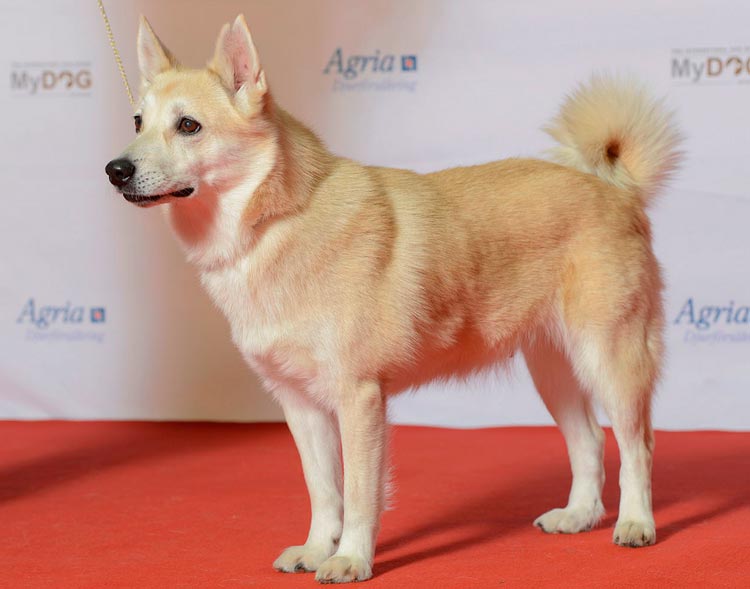
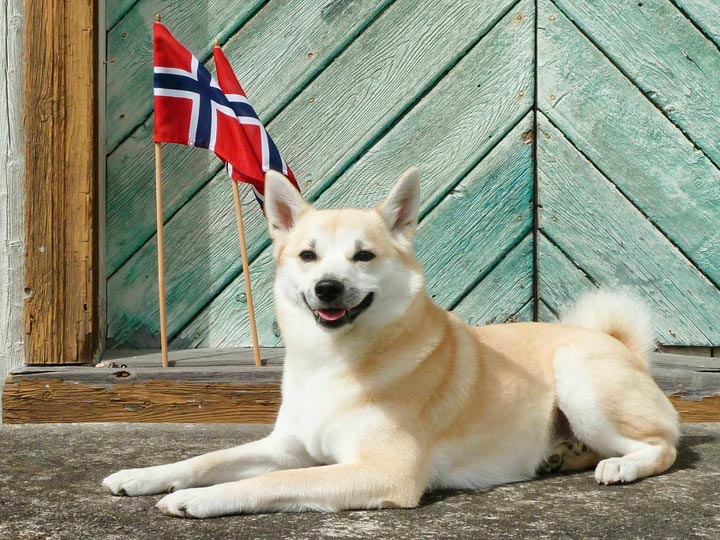
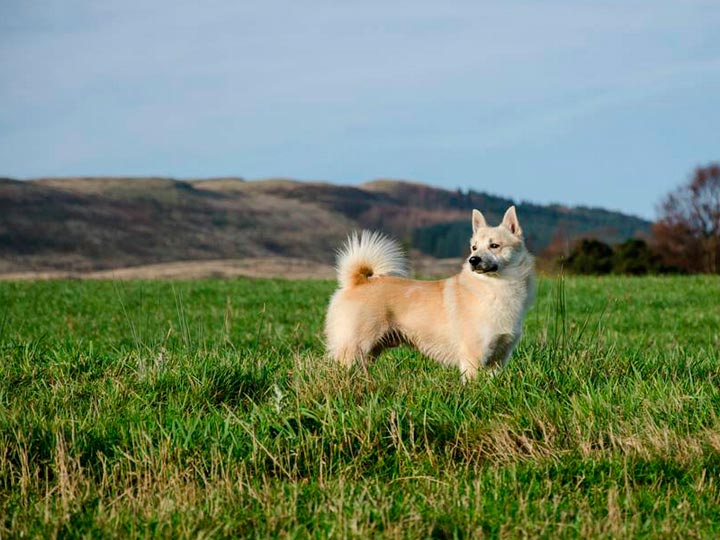
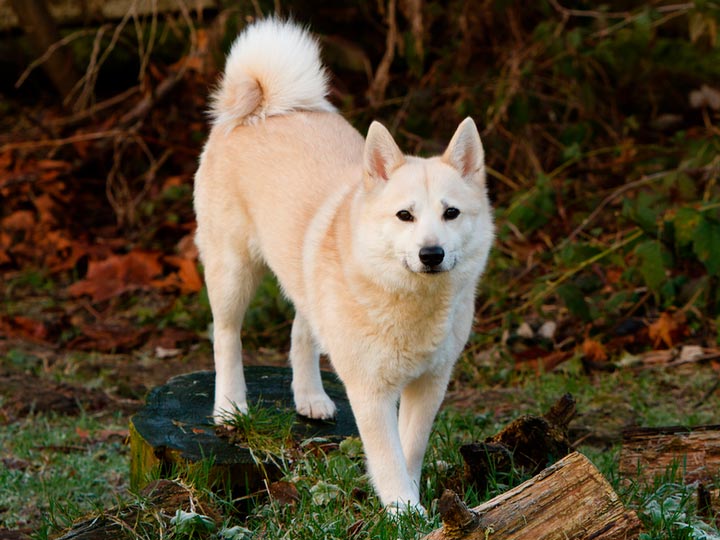
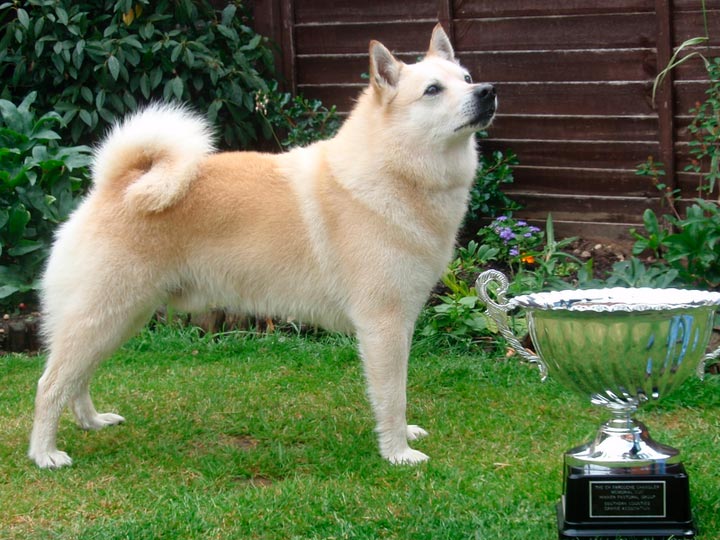
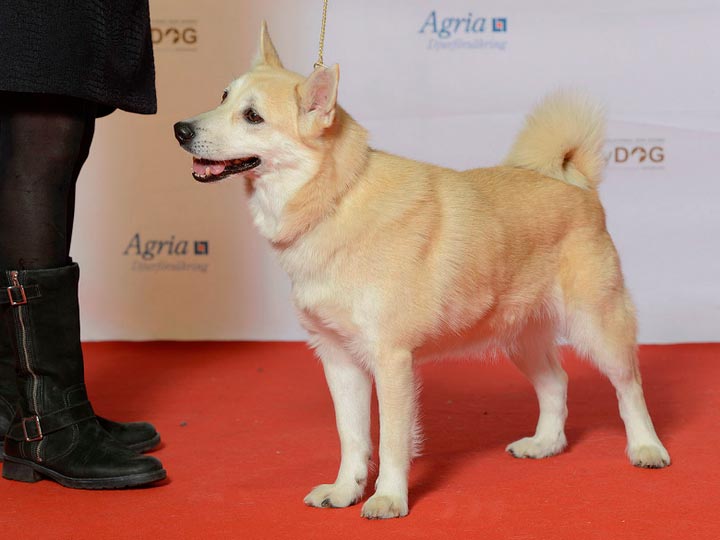
The Norwegian Buhund is a typical representative of the Spitz group, with pointed, erect ears and a curled tail. Slightly smaller than medium in size.
- Height of males: 43-47 cm; weight: 14-18 kg.;
- The height of females is 41-45 cm; weight is 12-16 kg.
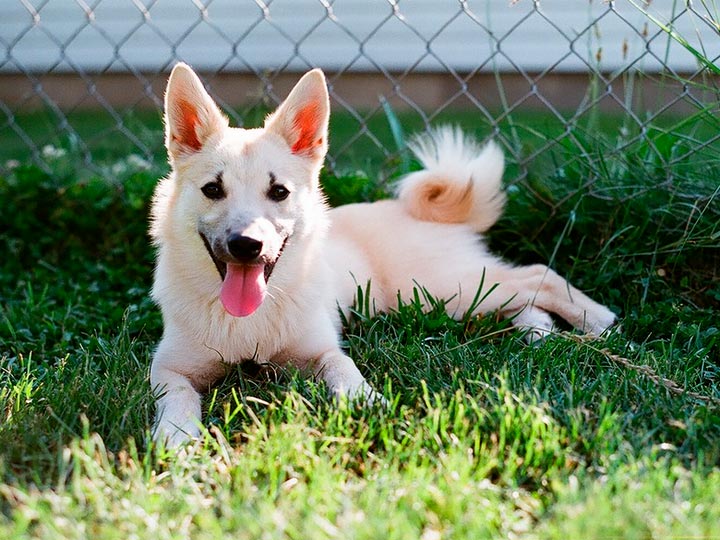
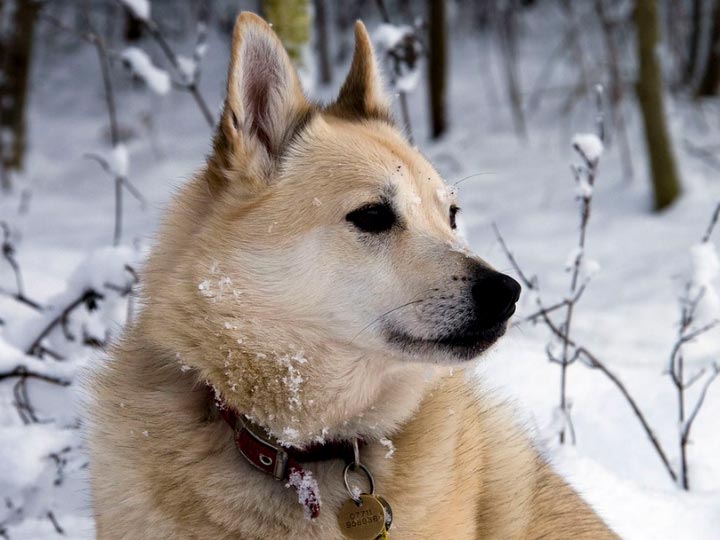
The head is proportionate and wedge-shaped. The muzzle is not too narrow with a straight bridge of the nose. The nose leather is black. The lips are tight and black. The bite is scissor-like. The eyes are oval in shape and as dark as possible in color. The eyelids are black. The ears are pointed, erect, and of medium size. The neck is of medium length and set fairly high.
The body is compact. The back is strong, short, and straight. The croup is slightly sloping. The chest is deep. The tail is set high, curled tightly, and carried over the back. The limbs are straight, with strong bone structure. The paws are oval and compact. The gait is parallel and light, with the topline remaining straight.
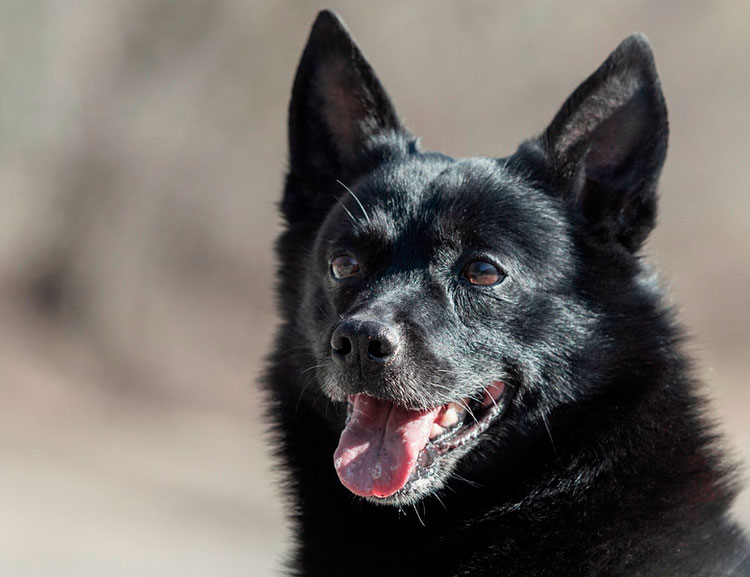
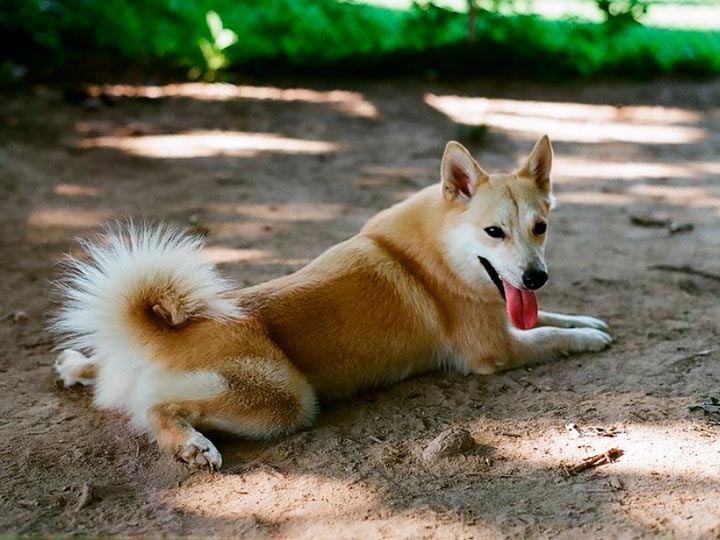
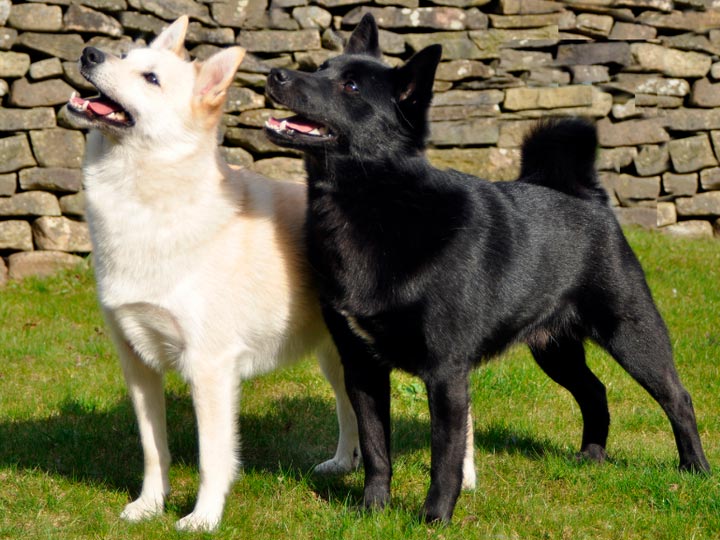
The coat is double. It consists of a coarse, thick outer coat and a soft, dense undercoat. The hair on the head and front of the legs is shorter. It is longer on the neck, chest, back of the thighs, and tail. Colors:
- Wheaten (biscuit) – from golden red to light red. Darkening at the ends and the presence of a mask are possible. A clear color is preferred. Small white markings are allowed.
- Black - preferably uniform and well-colored. White markings are permitted.
Character and behavior
Norwegian Buhunds are intelligent, friendly, and cheerful dogs who love company and active play. They adapt well to any living environment, are sociable, and owner-oriented. They form strong bonds with all family members and get along well with older children. Buhunds aren't known as bullies, but they will always boldly respond to aggression from other dogs. They fiercely guard their territory from strangers and animals. They will bark loudly at the slightest noise, but defending and attacking is not in their nature.
Thanks to their energy, stamina, enthusiasm, and willingness to work, the Buhund can achieve great success in a wide variety of fields. But they can also be a great family pet, loving active play and long walks.
The Norwegian Buhund can be very obedient if given serious training from an early age. They are highly intelligent, quickly identifying their owner's weaknesses and exploiting them to evade commands. Norwegian Buhunds are easy to train. However, it's important to keep in mind that they quickly become bored with monotonous repetition. They are often sensitive to injustice and raised voices.
Content Features
The Norwegian Buhund adapts well to apartment life, provided it gets the necessary exercise. It can live outdoors, but not completely alone. It thrives in the company of other dogs or with regular interaction with its owner. It tolerates cold weather well. In hot weather, it prefers to rest in the shade.
The Buhund is fairly clean and doesn't have a strong dog odor. Its downsides include a tendency to bark and heavy seasonal shedding. The rest of the year, the dog sheds moderately.
Care
Buhund grooming consists of standard procedures. Brush the coat 1-2 times a week, and daily during the shedding season. Bathe as needed, usually every 2-3 months. Keep an eye on the eyes, ears, and teeth, as well as the length of the nails.
Health and life expectancy
Most Buhunds are very healthy and hardy dogs, requiring veterinary visits only for vaccinations. Until 1985, the breed was thought to be free of hereditary diseases. Today, several are known, but reported cases are rare:
Buhunds are prone to eye and ear infections. Other ailments are usually related to poor nutrition or poor living conditions. Preventive measures (vaccinations, treatment for external and internal parasites) are essential for maintaining good health. Life expectancy is 14-15 years.
Where to buy a Norwegian Buhund puppy
As expected, most representatives of the breed live in Norway. There are also breeders in other European countries, the USA, and Canada. It's best to look for a puppy and a breeder through breed clubs, such as the Norwegian Buhund Club (norsk buhundklubb) or national canine associations.
Price
The Norwegian Breed Club has set a recommended price for a puppy of 15,000 Norwegian kroner (approximately $1,700). This applies to puppies that are registered with the club, have been certified, and have papers. Naturally, the price range varies widely. Puppies from titled parents often cost 20,000 Norwegian kroner or more.
Photos and videos
You can see more photos of Norwegian Buhunds in the gallery. The photos feature dogs of different genders, ages, and colors.
Video about the Norwegian Buhund dog breed
Read also:


Add a comment