
Norwegian Elkhound
The Norwegian Elkhound is a northern Spitz-type dog breed used primarily for moose hunting. It is recognized as the national breed of Norway. A wonderful family dog and companion, it forms strong bonds with its family and owner, yet remains independent and self-sufficient. It is hardy and tenacious in its work. It is also suitable for hunting other large and small game. Norwegian Elkhounds come in gray and black colors and are very similar in appearance and character, but are considered separate breeds, each with its own standard.
Content
History of origin
In Scandinavian countries, dogs similar to the modern Norwegian Elkhound have been known since the Viking Age. However, it cannot be claimed that they are the ancestors of the Norwegian Elkhound. The Norwegian Elkhound was developed from hunting dogs existing at the time, which were selected according to a number of criteria. Breeding activities began in the early 19th century. The ancient origins of the Elkhound were also refuted by recent genetic studies conducted by Heidi G. Parker et al. in 2004. According to the study, the Elkhound genetically belongs to the most modern European breeds. The Norwegian Elkhound was first shown at a show in 1877. In the late 19th century, the breed was officially recognized by the Swedish and Norwegian kennel clubs. In 1901, a standard was written for the black-gray variety. In 1955, the Norwegian Elkhound was recognized by the Fédération Cynologique Internationale (FCI).
Use in hunting
In Scandinavia, Elkhounds are indispensable for moose hunting. Even the extent to which these dogs were used in different regions depended on the abundance of these animals.
The Norwegian Elkhound can work on or off a leash, in a group or alone. Off a leash, it operates independently. When it spots a moose, it announces its location with a loud bark. It can hold the animal in place, and sometimes chases it without losing sight of it. On a leash, the dog follows the scent silently, leading the hunter directly to the target. The Elkhound works as a hound. It pursues game slowly, is tenacious, and has great endurance. Recently, it has proven itself an excellent gundog for hunting small game, lynx, wolves, and badgers.
Norwegian Elkhounds are very independent in their work, which is something that not every hunter can adapt to.
Besides hunting, Elkhounds can be used for tracking and rescue work. They can also be involved in various sports. However, given their low obedience, not every Elkhound can become an agility champion.
Appearance
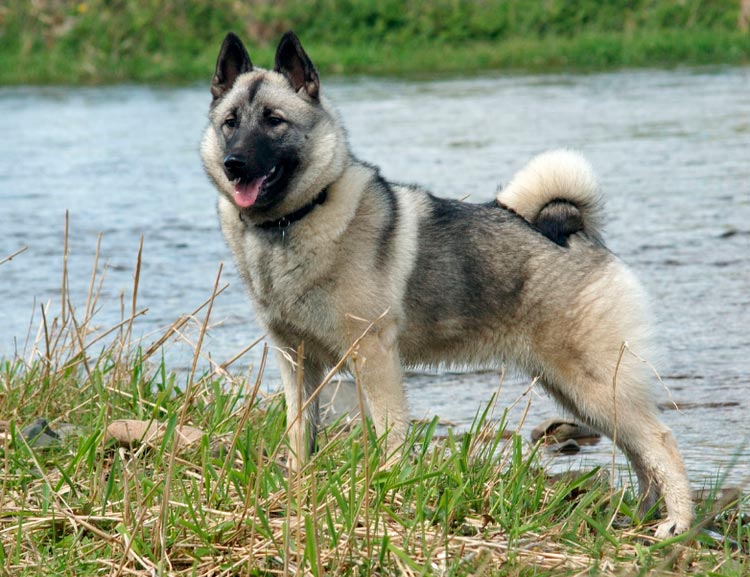
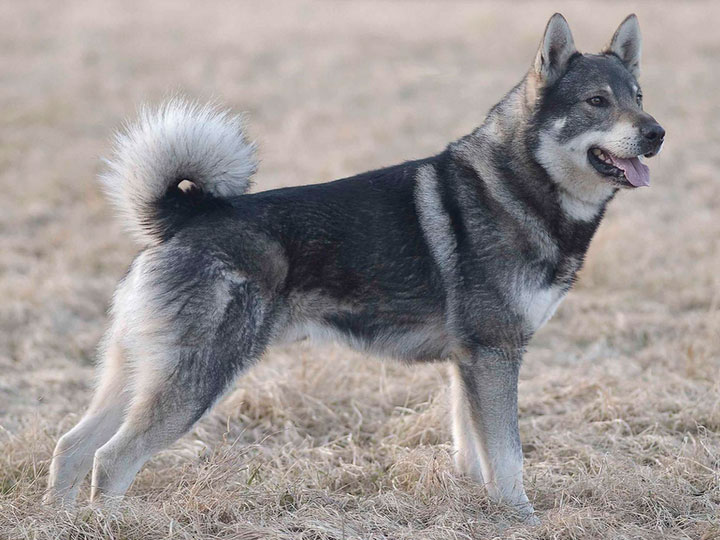
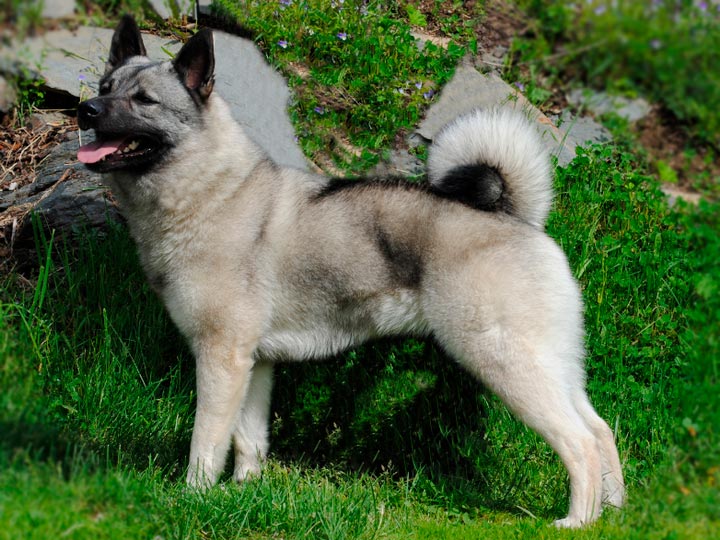
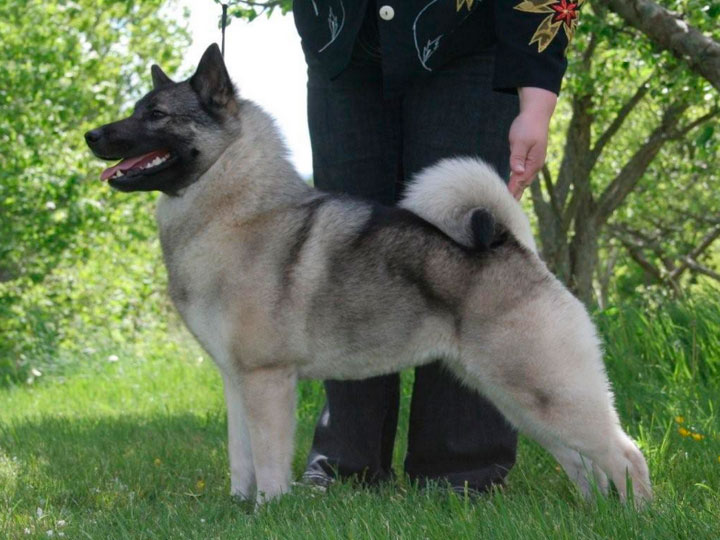
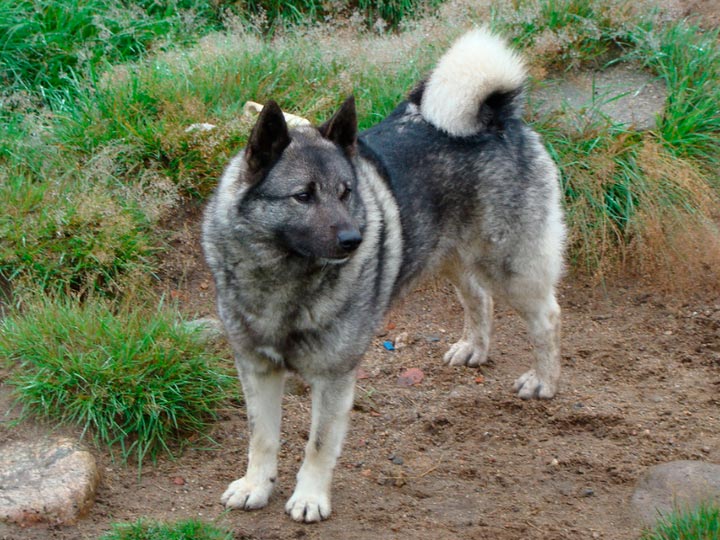
The Norwegian Elkhound is a typical Spitz with a compact, short body, erect ears, thick, abundant coat, and a tail curled over the back. Sexual dimorphism is well-defined. Height at withers:
- Gray elk-haired husky - 49-52 cm;
- Black Elk Husky - 43-49 cm.
The skull is wedge-shaped, relatively flat between the ears. The cheekbones are prominent. The stop is moderately defined. The muzzle tapers gradually to a black nose. The bridge of the nose is straight. The lips fit tightly. The bite is a scissor bite. The eyes are dark brown, not prominent. The ears are set straight and high, small, pointed, and very mobile. The width at the base of the ears is slightly less than the height.
The body is strong and sturdy. The topline is level. The withers are well developed. The back is straight and strong. The croup is broad and strong. The chest is deep and broad, with well-sprung ribs. The underline is almost straight. The tail is set high and relatively short. It curls tightly and is carried on the centerline of the topline, without slanting to either side. The legs are strong, powerful, straight, and dry. The paws are relatively small and compact, with well-knit, forward-facing toes.
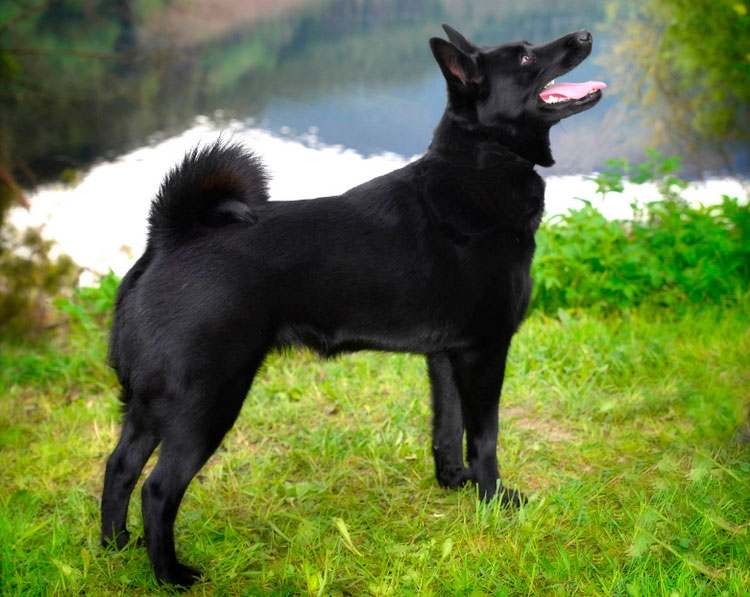
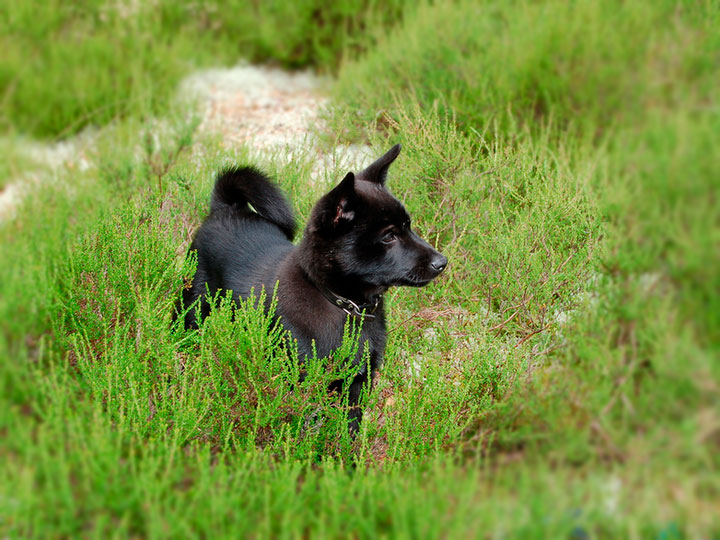
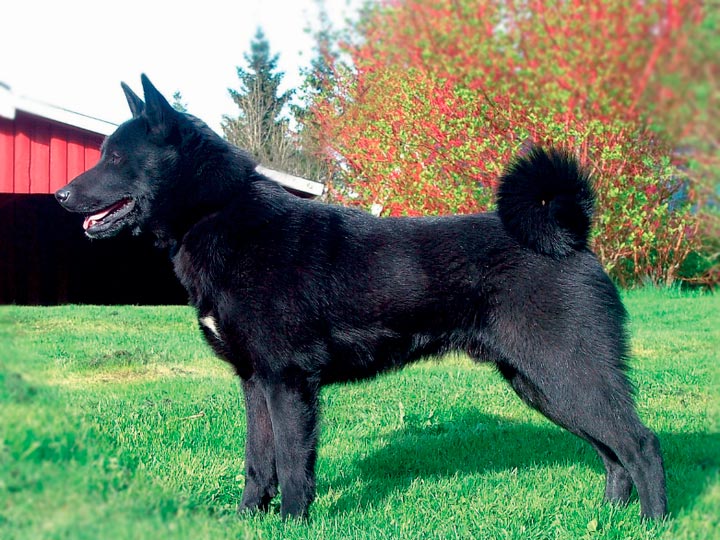
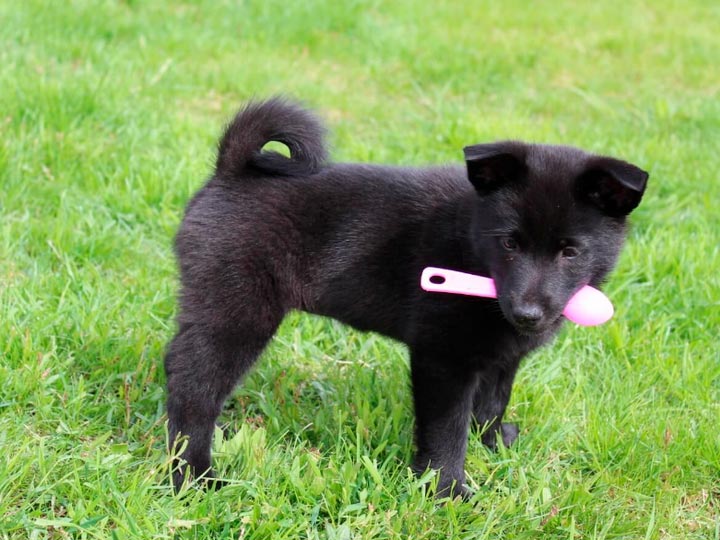
Black and gray Norwegian Elkhounds are very similar in appearance, but they are actually two different breeds. The Black Elkhound has a more assertive temperament, shorter fur, a smaller body, and a lighter, less compact body.
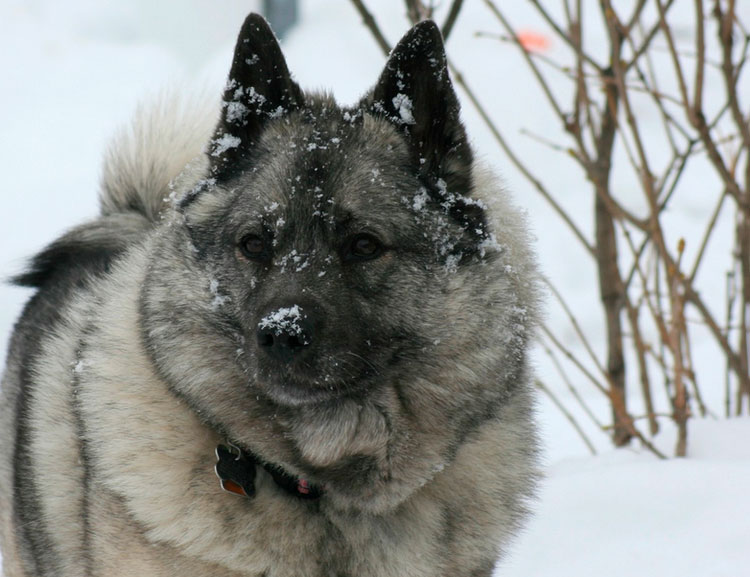
The coat is medium-length, coarse, and thick. The guard hairs are abundant and free of curls. On the front of the legs and head, the hair is smooth and short. On the neck, back of the legs, thighs, and tail, it is long. The undercoat is soft and dense. Color:
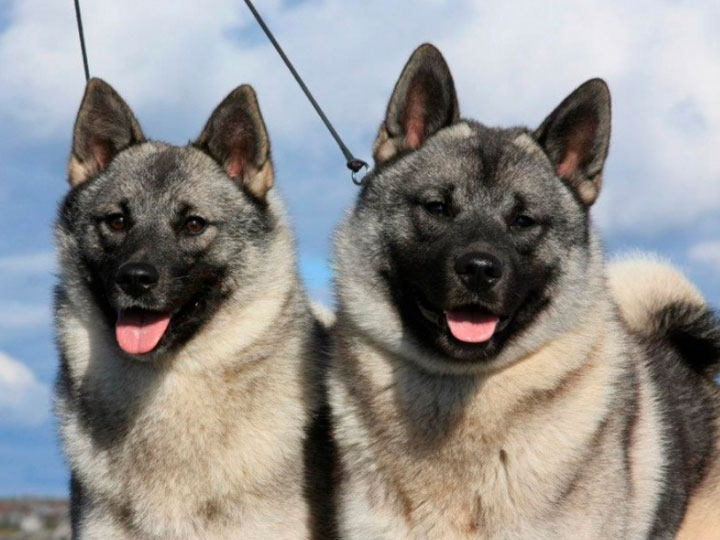
- The Gray Elkhound's coat comes in various shades of gray. The guard hairs have black tips. The chest, belly, legs, lower tail, under the tail, and body are lighter in color, with the coat darkest from the withers to the elbows and on the top of the tail. The ears and front of the head (mask) are also dark. A dark line runs from the eyes to the base of the ears. The undercoat is always light gray.
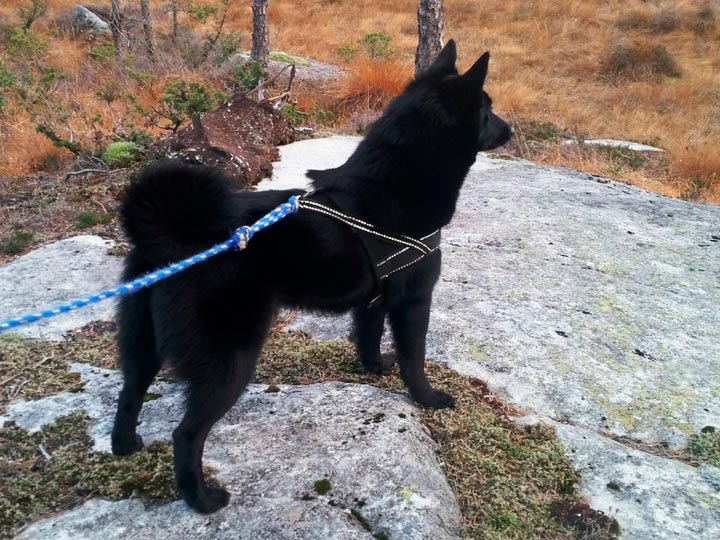
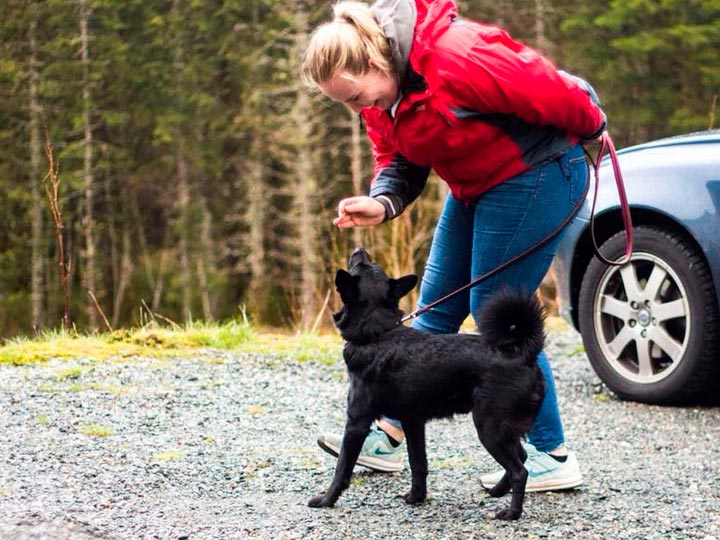
- The black Elkhound's coat is glossy black. Small white markings on the chest and paws are permitted.
Character and behavior
The Norwegian Elkhound is an energetic, affectionate, and even-tempered dog with a strong sense of self-worth. Blind obedience is unusual; it is too independent and self-sufficient for that. It loves its family members very much, and is especially affectionate and friendly with its chosen owner. When threatened, it defends its family with a loud bark, but will not attack. Elkhounds are good with children, trying to protect them, understanding their vulnerability, and tolerating their mischief. They make excellent companions for older children in active play.
When hunting, they can be aggressive toward other dogs. With proper training and socialization, they get along well with other pets. At home, they are generally quiet.
Education and training
The Norwegian Elkhound is very difficult to train. Training requires regular work, a certain amount of sensitivity, and a lot of patience and understanding. Black Elkhounds are considered more obedient and adaptable than gray ones, although many owners may disagree.
The Norwegian Reindeer Dog's level of obedience is one of its main drawbacks. Their response to commands and recall is very weak. They reach the required level only at 1.5 years of age with regular teamwork and close contact. But even then, unquestioning obedience should not be expected.
Content Features
The Norwegian Elkhound is not well suited to apartment life. The ideal environment is a private courtyard, primarily because it allows the dog to stretch its legs and requires ample exercise. A doghouse is sufficient, as a kennel is not necessary. Its thick, dense coat protects it from the elements and provides warmth in the bitter cold. Unlike many other hunting dogs, the Norwegian Elkhound is reluctant to leave the house in search of adventure; it is extremely devoted to its owner and is territorial, requiring protection from, at a minimum, neighboring cats. However, if completely neglected, the dog will become forgetful and prone to wandering. The Elkhound adapts well to a variety of climates. It works without difficulty in harsh winter conditions and survives the summer heat relatively well.
The Norwegian Elkhound requires a lot of exercise, enjoys active games that allow for ingenuity, and often enthusiastically performs search tasks, but its main passion remains hunting.
Care
The Norwegian Elkhound doesn't require a lot of grooming. It sheds heavily seasonally, and during this time, it should be brushed daily to promote coat renewal. During the rest of the year, it sheds moderately, and weekly brushing is sufficient. Bathing is only necessary, usually two to three times a year. Owners should also monitor the condition of its ears, eyes, and coat. claws dogs.
Health and life expectancy
The Norwegian Elkhound is one of those breeds that rarely suffers from hereditary diseases. These include:
- Hip dysplasia;
- Ophthalmological diseases (progressive retinal atrophy, cataracts)
- Epilepsy;
- Kidney disease
- Cysts (more common in adulthood).
Life expectancy is 12-16 years. There are reports of Elkhounds living 18 years or more. Mandatory veterinary preventative measures include annual vaccination, regular parasite treatment. An annual medical examination is recommended.
Where to buy a Norwegian Elkhound puppy
The majority of Norwegian Elkhounds are found in Scandinavia. Elkhounds are very popular in Norway, Sweden, and Finland. Large kennels exist in the CIS countries. In Russia, the gray reindeer husky is primarily bred. Black huskies are significantly less common, even in their home country.
Price
Currently, prices for Norwegian Elkhound puppies vary widely (from 300 to 1,000 euros, rarely higher). Prices are influenced by the value of the sires, the kennel's status, the puppies' performance, their prospects, and their compliance with breeding standards. Private breeders offer Norwegian Elkhounds at significantly lower prices, but not all of them practice responsible breeding practices.
Photos and videos
The gallery features photographs of Norwegian Elkhounds of different sexes, ages, and colors.
Video about the Norwegian Elkhound dog breed
Read also:


Add a comment