
Norwegian Forest Cat (Skogcat, Veggie)
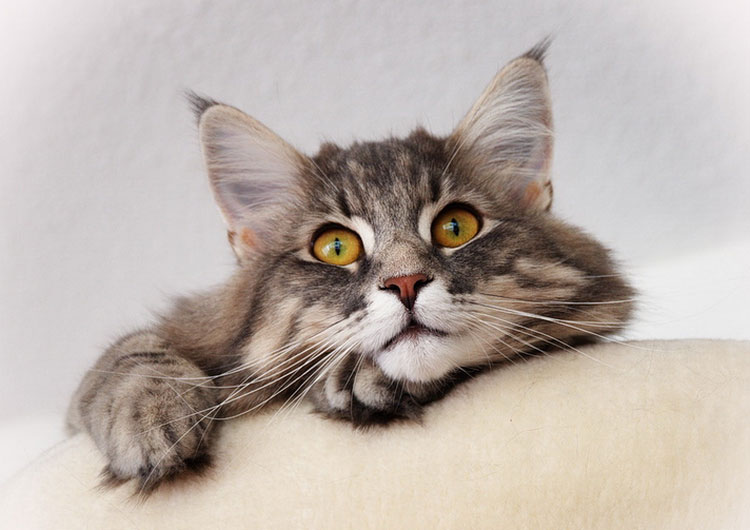
Norwegian Forest Cat The Norwegian cat is a very beautiful semi-longhaired breed, recognized by all philological organizations. It is distinguished from others by its beautiful ruff, very fluffy tail, and ear tufts, which look especially beautiful against the shorter coat of the body. Proud and independent, yet affectionate and sociable, the Norwegian cat is considered a national treasure of the Nordic country.
Content
History of origin
The breed is believed by many experts to be centuries old. However, until 1938, the Norwegian Forest Cat wasn't mentioned in any official source. In the 1970s, a group of enthusiasts made a concerted effort to establish the Norwegian Forest Cat as a separate breed. The Norwegian Forest Cat was recognized as an official breed in Norway. In 1977, it was registered by FIFe, and the first representative of the new breed was the remarkable cat Pans Truls.
The breed's ancestors most likely descended from shorthaired cats brought from Britain by Vikings and longhaired breeds brought to Norway during the Crusades. Although some researchers believe the Norwegian Forest Cat's origins were "manipulated." Siberian cats And Turkish AngorasNatural mutation, combined with the harsh climate, allowed the newcomers to adapt and give us the Norwegian cat breed we know today.
In Norway, the breed is known as Skovkatter or Skogkatter (from the words "skov" and "skog," meaning "forest" in different dialects), as well as Norsk Skogkatt. The breed's abbreviated name, Wegie, is also commonly encountered. This abbreviation is accepted by felinologists in the United States as a derivative of the word "Norwegian."
The first Norwegian cat fanciers' organization was founded in Oslo (1938). However, World War II disrupted the natural course of events. The club ceased to develop, and unsupervised animals began to crossbreed with other breeds, nearly leading to their complete extinction. Only thanks to the club's efforts was it possible to preserve the "pure" representatives of the breed.
Video review of the Norwegian Forest Cat breed:
What does a Norwegian Forest Cat look like?
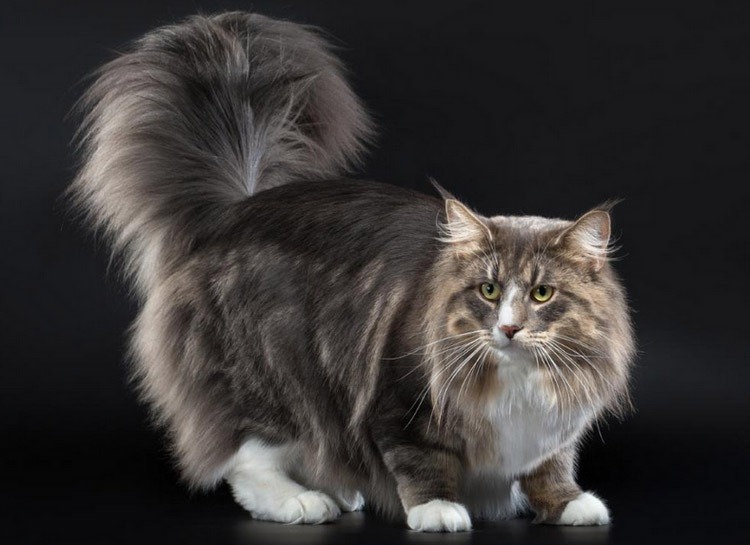
The Norwegian Forest Cat is a fairly large animal, weighing up to 9 kg, with well-developed muscles. It takes a long time to mature, and is considered an adult only at five years of age.
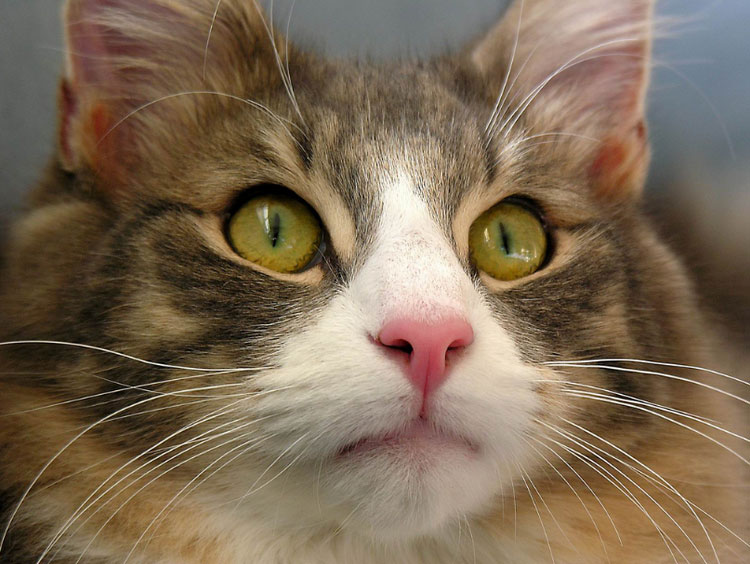
A round head, shaped like a truncated triangle, and a strong jaw are considered ideal. A head that is too round or square is considered a fault and indicates mixed blood. The eyes are golden, golden-green, or green. White cats often have blue eyes.
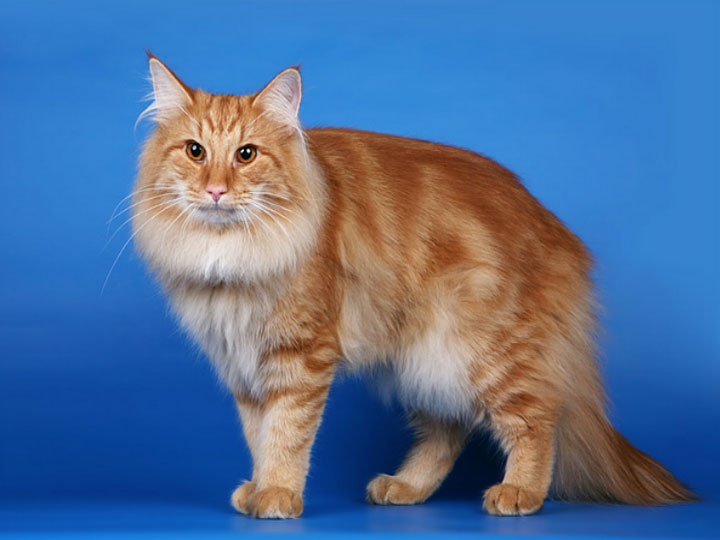
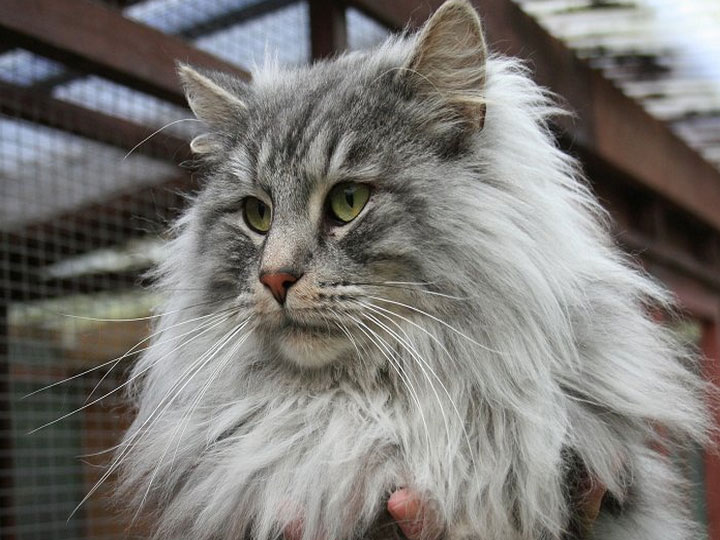
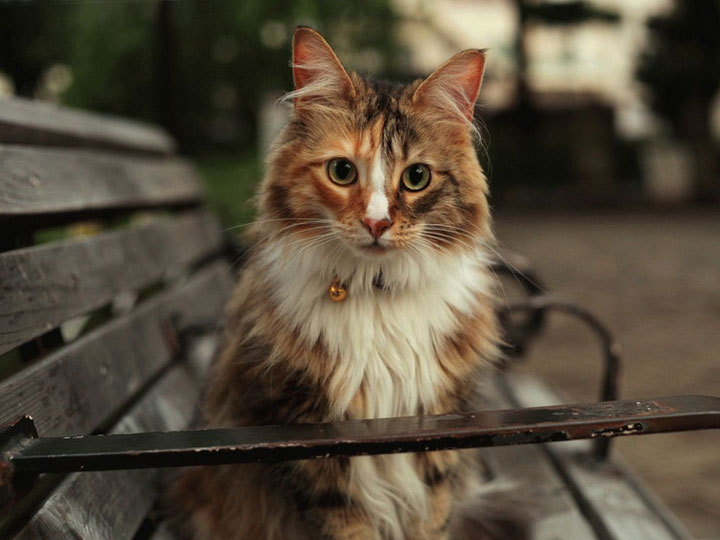
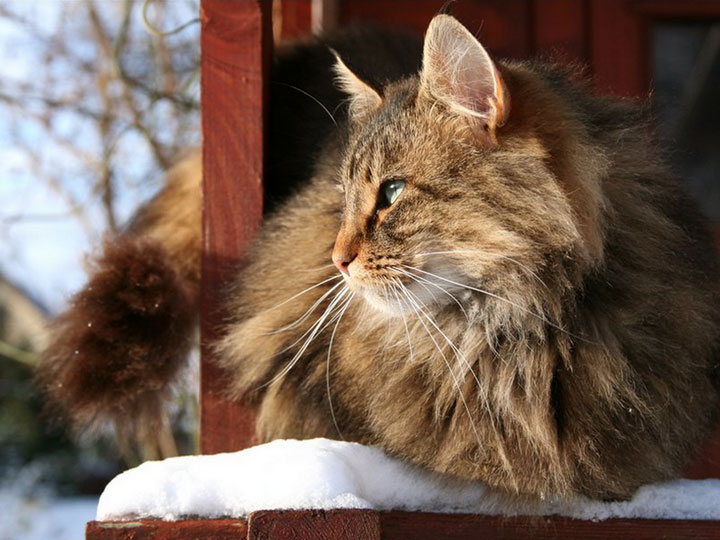
The Norwegian Forest cat has many distinctive features, including long legs and a strong body. But the most striking feature is its coat. The coat is long, with a thick undercoat and is waterproof, with a thick fur "ruff" around the neck and tufts on the ear tips. The tail is very fluffy, long (often reaching the neck), and flares at the base. Coat colors vary widely, with the exception of colorpoint and hybrid colors (chocolate, blue).
Some people claim that Norwegian Forest Cats grow to the size of lynxes. While this does happen, it's the exception rather than the rule. In photos, this beautiful Norwegian Forest Cat looks larger, and its fluffy coat also makes it appear larger. A typical weight doesn't exceed 7-8 kilograms. If you're attracted to this cat because you want a large pet, don't get your hopes up too soon. Your expectations may not be met, as is generally the case with all large cat breeds.
Character
Knowing that the Norwegian Forest Cat is a forest native, one can imagine how unruly and unsociable it can be, like all wild animals. But... Down with the stereotypes!!!
The Norwegian Forest Cat is quite different. It's a very affectionate and loyal cat, bonding with all family members and trying to be as little trouble as possible. It's easily litter-trained and doesn't mind baths. It loves to play and is eager to interact. It's not clingy or conflict-prone. Males of this breed often help their mothers care for their kittens, a rare trait among male cats.
Most pets give love and loyalty to one person in the family. This doesn't mean the Norwegian Forest Cat will be unfriendly to others. Of course not, but the animal's heart will belong to one person, and it will consider everyone else its friends.
The Norwegian Forest Cat doesn't shy away from affection. On the contrary, it will follow any family member around the house, and if you start a game with it, you'll notice how its calm and composure quickly disappears at the sight of its favorite teaser. Much of the Norwegian Forest Cat's mischief stems from its hunting instincts. These animals have highly developed instincts, so their favorite game is pretend hunting.
What remains from the Norwegian Forest cat's forest past is a love of hunting, and if their owners live in a private home, they know the value of their little predator. After all, the Norwegian Forest cat can stalk prey for hours, oblivious to everything else.
These cats aren't the kind of lap-loving animals, but they'll happily sit and sleep near you. They'll let strangers know they don't like hugs and kisses; they prefer petting and scratching. Regardless, the Norwegian Forest Cat is an excellent companion, adaptable to any situation.
Maintenance and care
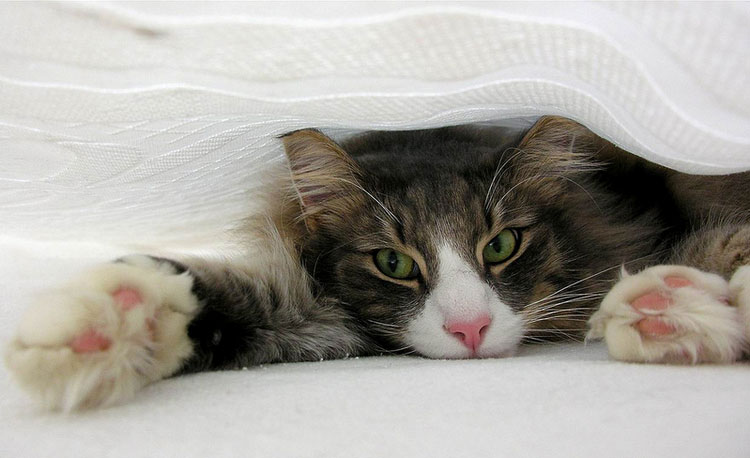
A small kitten in the house is a bundle of energy, tugging at shoelaces, climbing curtains, and conquering mountains. Be prepared for all sorts of mischief. Adult cats are calmer. They don't require much attention and adapt well to any living conditions and people. They often get along well with other pets. Norwegian Forest Edge cats are suitable for both apartment and house living, but their ideal home is a family home with free range.
Since the Norwegian Forest Cat loves to play, It is important to create enough space for her to play; play complexes that you can create with your own hands are perfect for this. At the same time, you will have the opportunity to watch how the Norwegian cat comically climbs up and down, because it does it like a squirrel, i.e. upside down.
Care
When caring for a Norwegian beauty, the greatest attention should be paid to the coat. They don't need to be bathed often, but they should be brushed at least once a week. During shedding season, brushing should be done daily. When it comes to bathing, every Norwegian Forest cat is an individual. The right grooming method for their coat should be determined through trial and error. One Norwegian Forest cat will have dry fur and a standard shampoo will do the job. Another pet will have oily fur, meaning they'll need more than one shampoo.
Health and life expectancy
Norwegian Forest cats are generally healthy and, with proper nutrition and care, live a long lifespan. However, some cats of this breed can inherit a rare genetic disorder called glycogen storage disease type IV. In this case, kittens do not survive past five months of age or are stillborn. Additionally, Norwegian Forest cats can suffer from pyruvate kinase deficiency. In short, the disease causes a loss of red blood cells, resulting in anemia. Researchers in the West are studying the animals' genes and preventing male and female cats carrying the "problematic" genes from breeding. Their lifespan is 12-15 years.
Breeding Features
Wildcats come into heat late, which is normal and typical for all large breeds. If you're considering breeding a Norwegian Forest Cat, don't do it for the first time. Only after 3-4 heat cycles will your pet be physically ready to bear a litter (3-6 kittens). It's easy to spot the onset of heat; the signs are the same as in all other female cats. It's not recommended to breed a female cat with another breed, as this can result in the loss of the breed's distinctive appearance, and the offspring will be weaker due to genetic abnormalities. Incidentally, this is precisely why finding a truly purebred kitten is quite difficult. Therefore, if you're considering buying a Norwegian Forest Cat, be prepared for a long search and/or high prices.
Choosing and buying a kitten
The Norwegian cat population in Russia is small, but interest in the breed is growing. When choosing a kitten, consider whether you want a male or female cat, what color it will be, whether it will be small or large, and what personality traits you desire.Do you need a purebred Norwegian cat? If so, you'll need to spend time reading the standard, attending shows, and finding catteries that breed the breed. If the animal isn't going to be shown or bred, the kitten will cost a little less, but many catteries require spaying or neutering.
Kittens should go to their new homes no earlier than three months of age, after receiving all necessary vaccinations. They should be litter- and scratch-trained, socially adapted, and ready for independent, almost independent, life.
Price
A Norwegian Forest kitten can be purchased from a private seller for 3,000-5,000 rubles. Purebred kittens from catteries start at 20,000 rubles. The price for certain elite breeds or cats with promising prospects can be significantly higher.
Photos
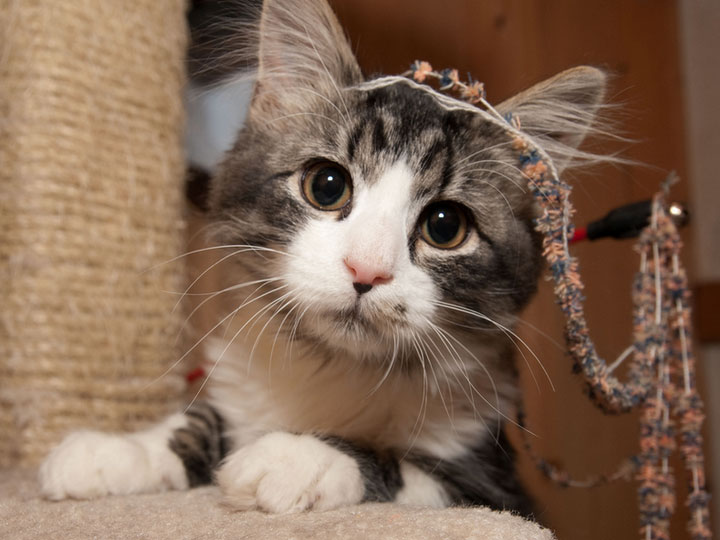
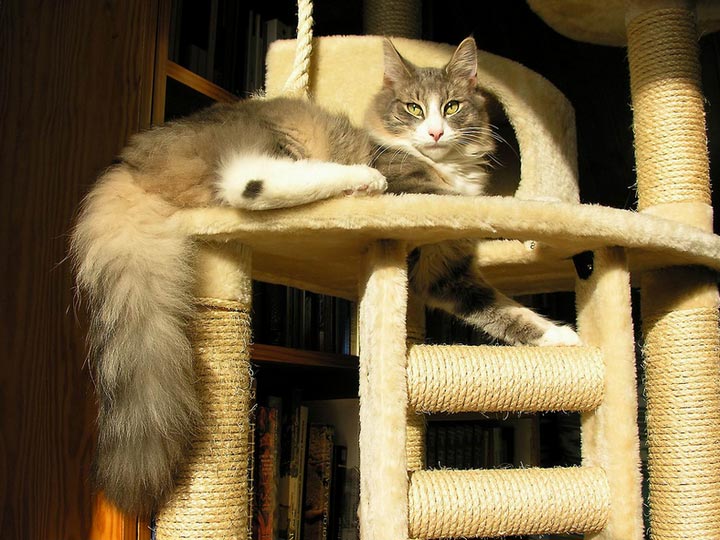
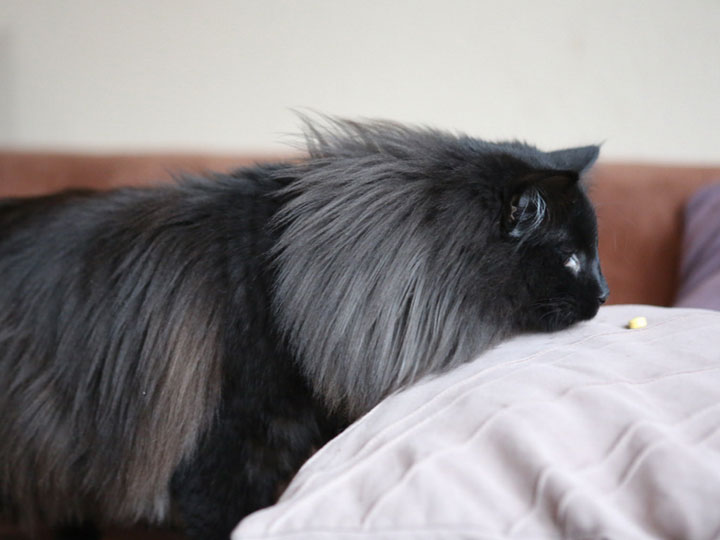
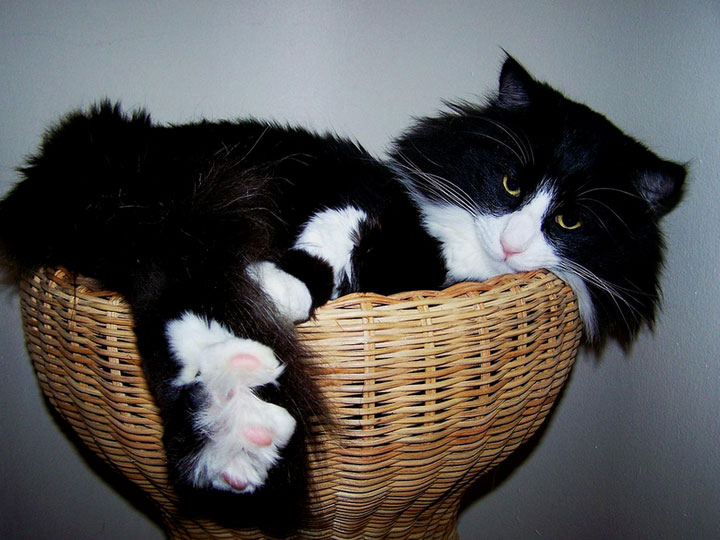
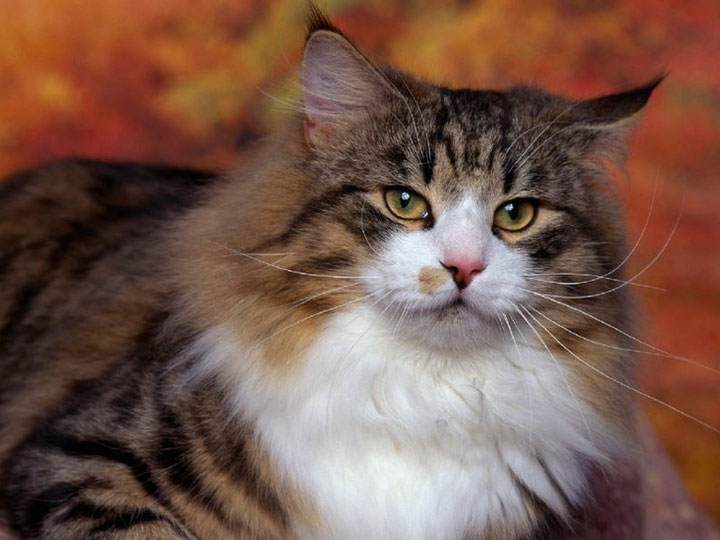
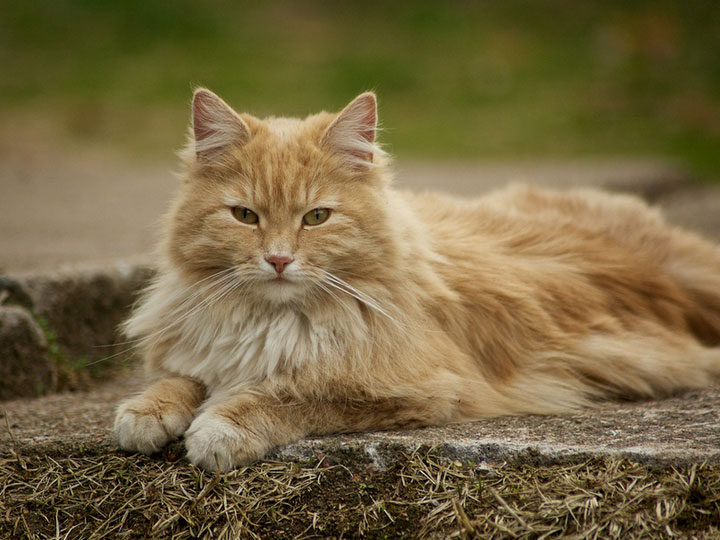
Photos of Norwegian Forest Cat kittens and adult cats of various colors:
Read also:


Add a comment