
Normal heart rate in dogs: normal pulse
People who have only recently become dog owners don't always know how to determine whether their pet has a normal heart rate, what the normal heart rate is for small, medium, and large breeds, and what health problems certain deviations in this parameter may indicate.
Content
What can your heart rate tell you?
The heart is the most important organ responsible for the continuous flow of blood through the vessels to ensure the vital functions of every cell in the body.
When analyzing the functioning of an animal's cardiovascular system, a veterinarian focuses on three main indicators:
- heart rate;
- rhythm of work;
- the pressure created by the heart muscle in the circulatory system.

Due to the complex regulatory and compensatory functions of the circulatory system, it's not always possible to detect health issues or abnormal heartbeats in an animal without a specialized examination. In the early stages of many illnesses, pets appear perfectly healthy, and owners report no significant changes in their dog's behavior, but problems are often identified during a comprehensive examination.
At the same time, congenital or acquired pathologies that cause heart rhythm disturbances are a fairly common cause of death among domestic cats and dogs.
Knowing your pet's normal heart rate and being able to check your dog's pulse at home will help you:
- feel for a heartbeat in a critical situation;
- understand the severity of the animal's condition in case of injury or exacerbation of the disease;
- notice changes in your pet's heart function in a timely manner.
How to measure a dog's pulse
In a veterinary clinic, the condition of the heart and cardiac activity are assessed using hardware methods:
- listening with a stethoscope (used to detect heart murmurs and determine the heart rate in dogs during the initial examination);
- cardiogram (allows you to change your heart rate and rhythm as accurately as possible);
- Ultrasound of the heart (allows you to assess the size of the heart, its structural features, and the presence of pathological changes);
- Doppler study (used to examine blood vessels);
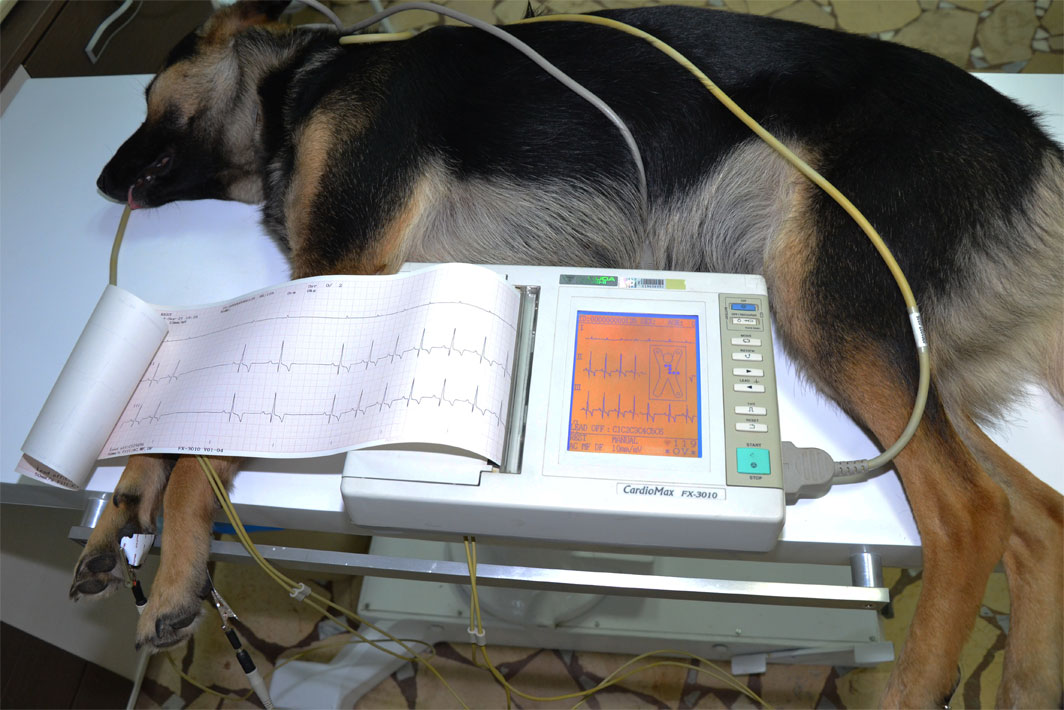
At the same time, every owner should know how to check a dog's pulse at home (where and how to feel the heartbeat) so that they can assess how their pet is feeling before arriving at the clinic.
Checking the pulse at home is easier in smooth-haired breeds. The longer the coat and the thicker the undercoat, the more difficult it is to feel the heartbeat by hand, especially when the animal's heartbeat is slow and weak, rather than rapid and strong.
To clearly feel the heartbeat, it is recommended to feel the pulse in the following places:
- on the left side of the chest (this is the zone of maximum cardiac impulse, so the contractions of the heart muscle are clearly felt);
- on the inner thigh (in the area where the large femoral artery passes).
To clearly feel the pulse, use three fingers or the entire palm. Measuring and counting the heart rate over a period of one minute is quite difficult, so it's common to count the number of beats in 30 seconds and multiply by two, or the number of beats in 20 seconds and multiply by three.
If you need to regularly monitor your pet's heart activity as recommended by your veterinarian, you should purchase a special device – a veterinary pulse oximeter.
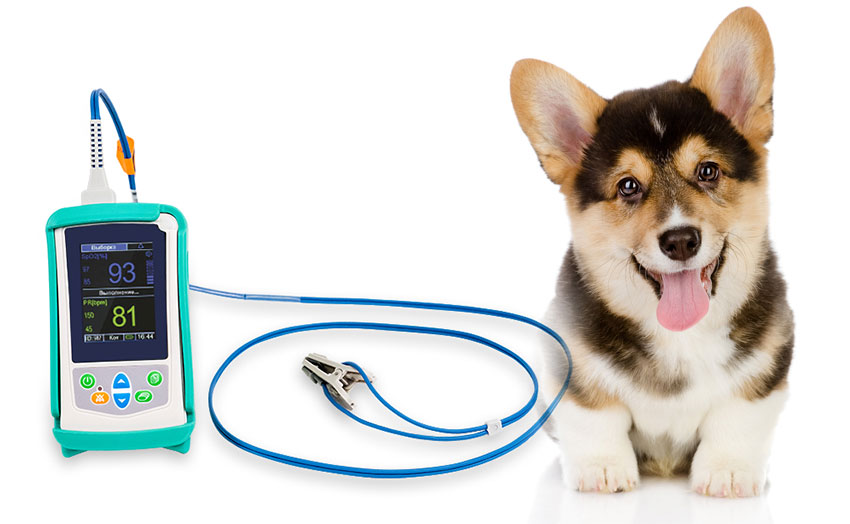
Normal heart rate in dogs
A dog's heart rate can vary depending on its size (breed), age, and health.
The highest heart rate is observed in puppies up to 10-12 weeks of age. It can reach 150-200 beats per minute. This is normal for a rapidly growing body.
Once a puppy reaches puberty and becomes an adult, its heart rate will become closer to the norms outlined in the basic chart compiled by veterinarians for small, medium, and large dogs:
|
Size |
Normal heart rate (per minute) |
Breeds |
|
Small ones |
80 – 120 |
Chihuahua, York, Maltese, Miniature Poodle |
|
Average |
60 – 120 |
Dachshund, Boxer, Australian Shepherd |
|
Large |
60 – 110 |
Labrador, Golden Retriever, German Shepherd |
|
Giant |
50 – 100 |
Great Dane, Malamute, Irish Wolfhound |
Important! The table shows a dog's normal heart rate at rest.
note that the heart rate may be higher than normal in the background:
- high physical activity;
- fear, aggression, stress;
- taking certain medications;
- diseases of the cardiovascular system.
Interesting fact! For dwarf dogs weighing up to 2 kg (for example, a Yorkshire Terrier or Chihuahua), a puppy heart rate of 150-200 bpm can be normal throughout life.
There are also cases in which heart rate may be lower than normal, if the dog:
- refers to sports and trained;
- asleep or under anesthesia;
- dehydrated;
- is in serious condition (needs emergency assistance);
- suffers from cardiovascular diseases.
Interesting fact! A cat's normal heart rate is between 110 and 130 beats per minute, while a human's is between 60 and 80 beats per minute.
Possible disturbances in the functioning of the heart
Symptoms that may indicate that your dog has heart problems include:
- general weakness;
- increased fatigue;
- heart rhythm disturbances (rapid or slow heartbeat, arrhythmia);
- heavy breathing, shortness of breath;
- dry cough that appears after physical exertion or at night;
- pallor of the mucous membranes;
- swelling;
- ascites (fluid accumulation in the abdominal cavity).

The most commonly diagnosed diseases in dogs include:
- congenital heart defects (account for 15% of all heart diseases);
- heart valve disease (about 30% of dogs over 10 years of age have this problem);
- bradycardia (too low heart rate);
- tachycardia (too high heart rate);
- arrhythmia (uneven heartbeat);
- cardiomyopathy (enlargement of the heart and dilation of the internal chambers due to inflammatory processes);
- heart failure (weakening of the heart muscles);
- myocarditis (inflammation of the heart muscle);
- myocardial infarction;
- dirofilariasis (helminthic invasion of the heart).
How to recognize a heart attack
A heart attack is a pathological condition in which the heart muscle contracts irregularly, disrupting blood flow and causing a sharp deterioration in the animal's health. This condition can be caused by myocardial infarction, thrombosis, or occlusion of the heart vessels.

Those at risk include older dogs, animals with congenital defects, those suffering from excess weight, kidney disease, cancer, those who have suffered severe infectious diseases, and pets that are subject to excessive physical activity.
The following symptoms indicate that your dog needs urgent medical attention:
- faint, rapid heartbeat;
- frequent shallow breathing;
- pallor of the mucous membranes;
- weakness, unsteady gait;
- loss of consciousness, convulsions;
- elevated body temperature.
The first thing an owner should do in this situation is call an emergency veterinarian. If a veterinarian is unable to arrive promptly, they will recommend emergency care based on the animal's weight and condition. A heart attack in dogs can be treated by properly administering medications formulated for human use.
Veterinarian's advice
Read also:
- Pericarditis in Dogs: Symptoms and Treatment
- Stroke in Dogs: Symptoms and Treatment
- What is a cat's heart rate: normal heartbeats per minute


Add a comment