
Norrbotten Spitz (Norbottenpets, Norrbotten Husky)
The Norrbotten Spitz is a small dog originally bred as a farm and hunting dog, but today it is more popular as a companion. Suitable for a variety of sporting disciplines, it is used for hunting birds, small fur-bearing animals, and large game. The Norrbotten Spitz is alert, active, cheerful, and intelligent. It is easy to care for and requires little grooming.
Content
History of origin
This small hunting dog originated in northern Scandinavia, in what is now Sweden and Finland. It was an integral part of the local population's lives, used to hunt birds and small game. Modern Norrbottens are descendants of the indigenous dogs of northern hunters who began settling western Scandinavia around the 14th century BC.
Today, there are two distinct populations of Norrbottens: Swedish and Finnish. In Finland, the breed is called the Northern Spitz (Pohjanpystykorva), and in Sweden, the Norrbottenspets. Internationally, the breed is known by its official FCI name, Norrbottenspets.
By the early 20th century, Norrbotten Spitz were virtually extinct. Rare specimens were found only in remote northern villages. In 1912, the Swedish government allocated funds to support and develop northern hunting dogs. However, all attempts to revive the breed were unsuccessful, and in the 1930s, the Norrbotten Spitz was declared extinct. Twenty years later, Swedish forester Stig Ohnerfeld discovered a population of these dogs and began efforts to revive the breed. By 1967, 36 dogs were shown at the Norrbotten Dog Show in Piteå. The Norrbotten Spitz was reinstated in the Swedish Kennel Club registry and recognized by the Fédération Cynologique Internationale in 1968.
Usage
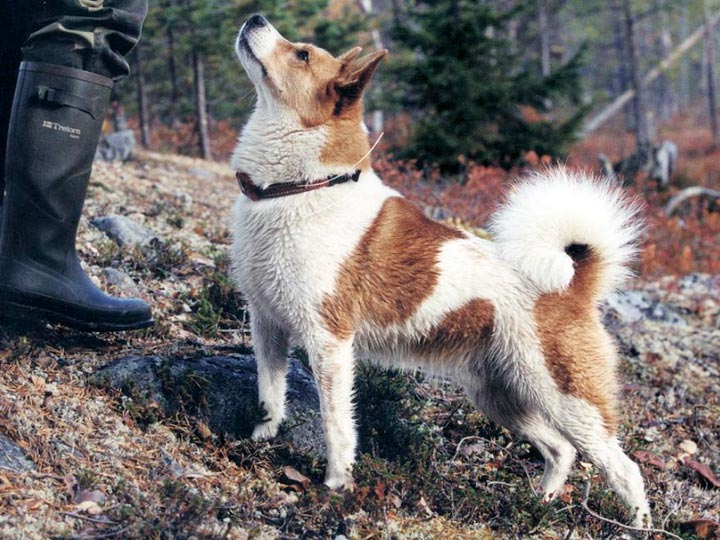
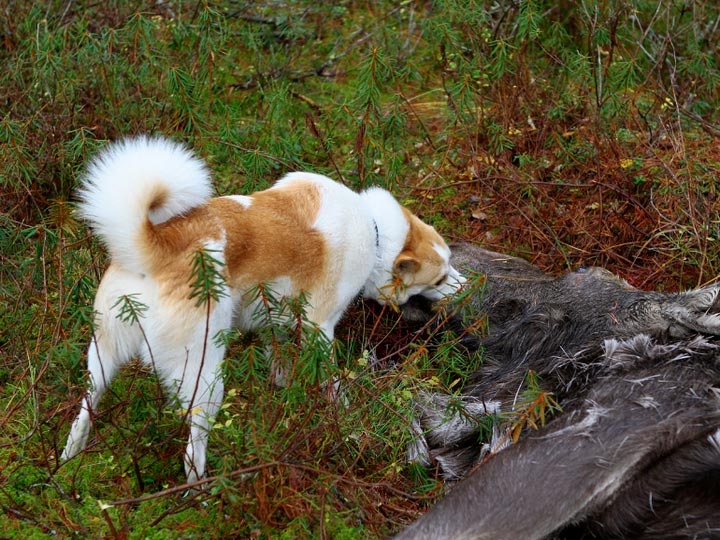
Today, Norrbotten Spitz are bred as triin dogs for hunting black grouse, wood grouse, and hazel grouse. They are also successful at tracking fur-bearing animals and can deter moose and bear with their bark. The Norrbotten Spitz is a very versatile dog, using their sense of smell, sight, and hearing. Once they spot prey, they pursue it until they corner it or force it up a tree. They then bark at it, moving quickly around it. During hunting trials, they must bark at least 100 times per minute. This frightens the prey and drowns out the sounds of the approaching hunter.
When holding prey, the Norrbotten Spitz can bark up to 120 times per minute.
Today, hunting dogs are increasingly becoming pets, and the Norrbotten Spitz is no exception. However, it can't remain completely without work, so owners find alternatives to hunting. Norrbotten Spitz can be seen at agility trials. obedience and other sports. With proper training, it can even be used for herding livestock and participating in search and rescue operations.
Appearance
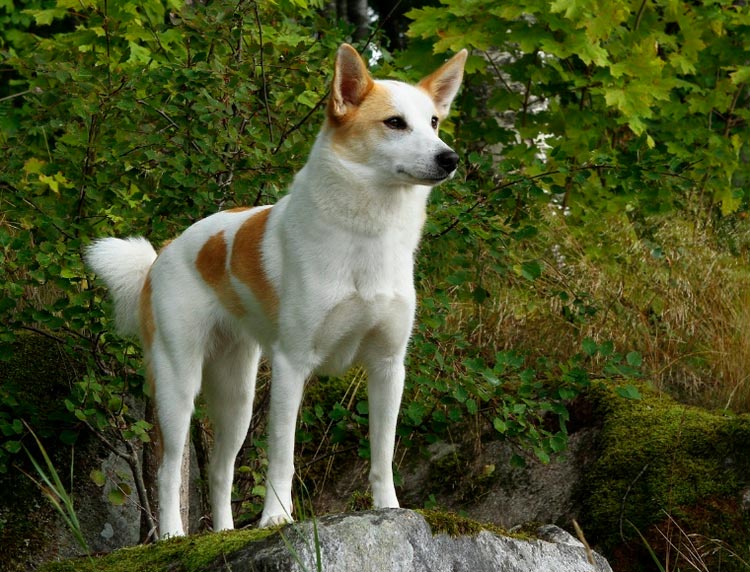
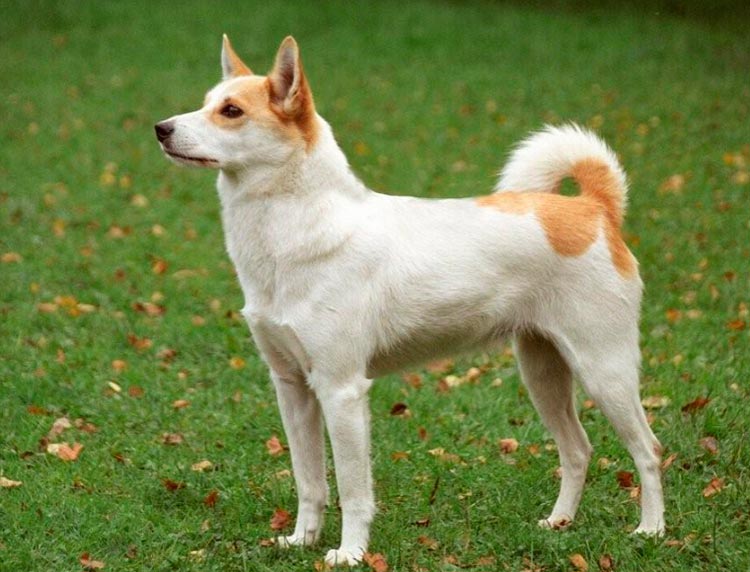
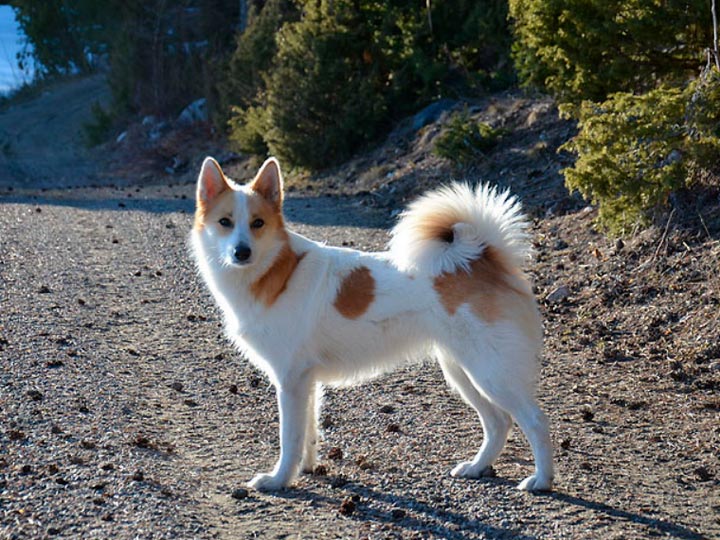
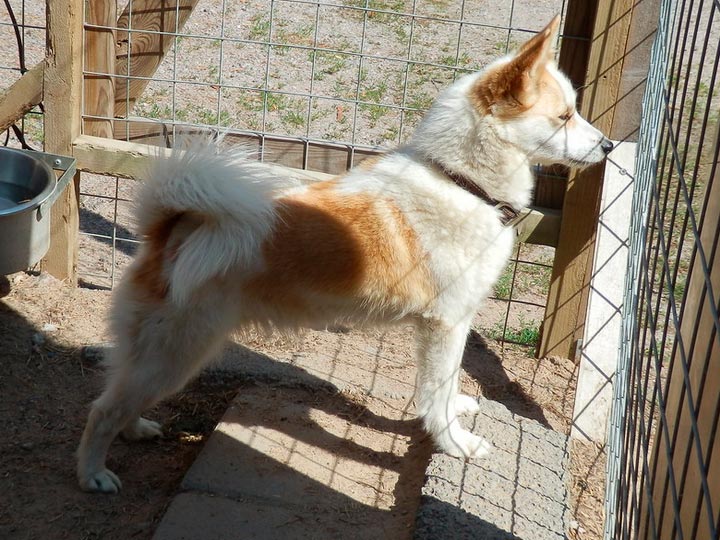
The Norrbotten Spitz is a well-built Spitz-type dog of somewhat elongated format with developed muscles. In appearance, the Norrbotten Spitz resembles Finnish Spitz And Norwegian Lundehund.
- Height of males is 43-47 cm; weight is 13-15 kg.;
- The height of females is 40-44 cm; weight is 12-14 kg.
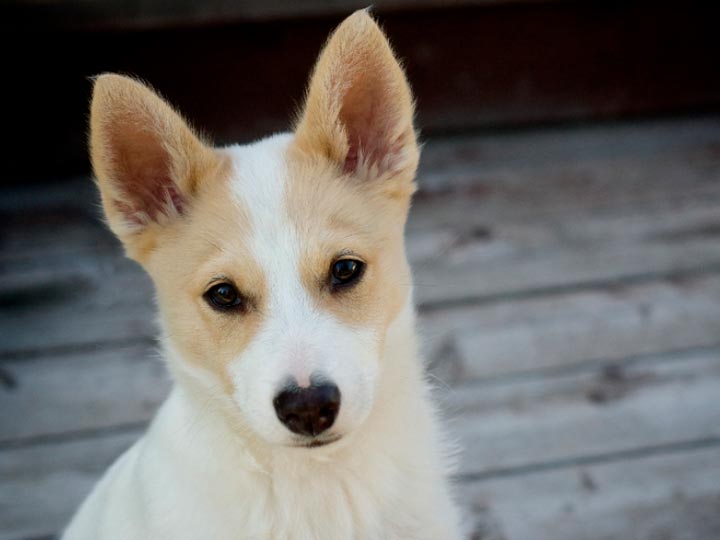
The head is strong, tapering evenly to a small black tip. The skull is relatively broad. The stop is slightly defined. The muzzle tapers gradually, not pointed. The lips are thin and tightly fitting. The cheekbones are prominent. The eyes are medium in size, dark in color, almond-shaped, with a calm and penetrating expression. The ears are set high, erect, and of medium size. The neck is moderately long and lean.
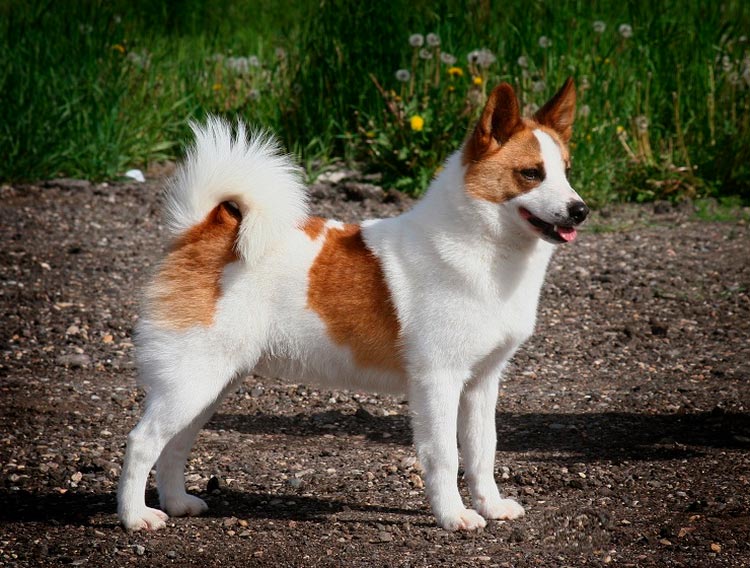
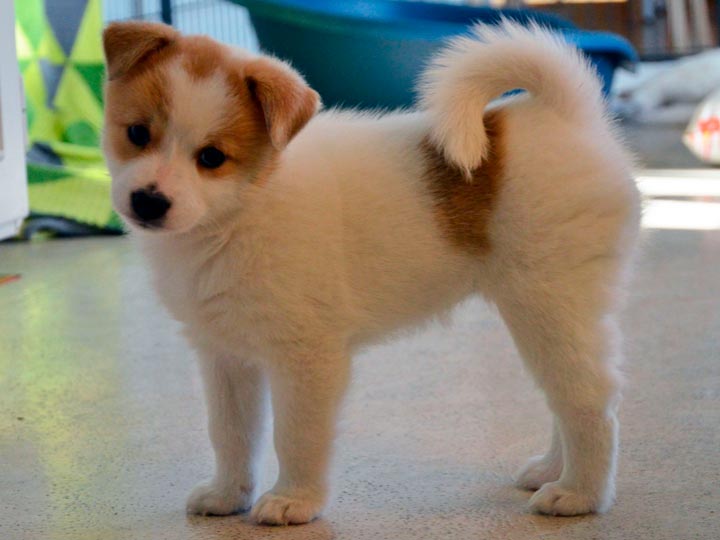
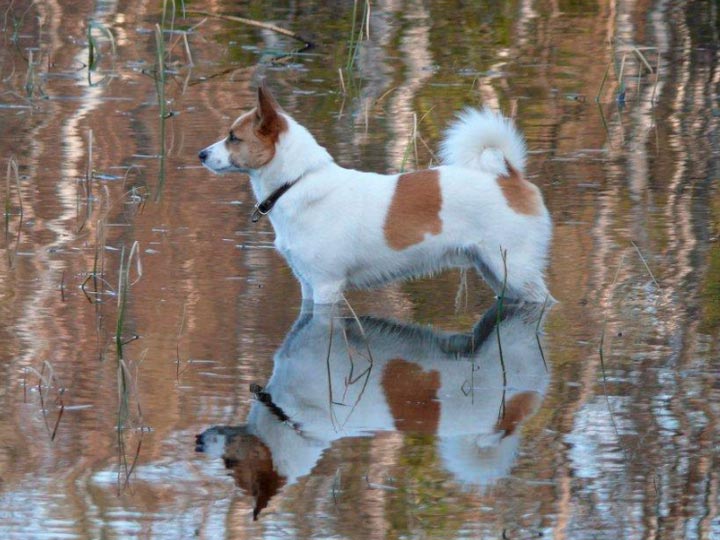
The body is strongly built. The chest is deep and long. The back is short. The loin is wide and short. The croup is long and slightly sloping. The belly is slightly tucked up. The tail is set high, curved over the back, but not curled tightly, and the tip touches the thigh. The legs are straight and parallel. The paws are small, pointing forward, with well-knit toes.
Norrbotten Spitz can be born without a tail. The Swedish standard allows short tails, but the Finnish standard disqualifies them.
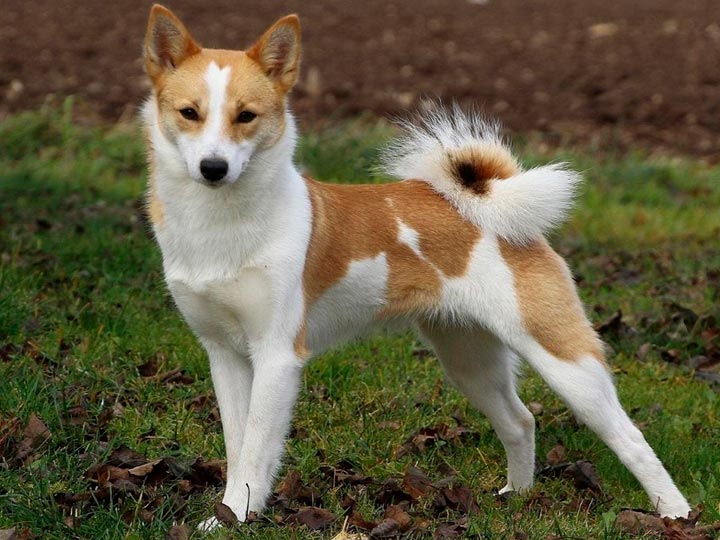
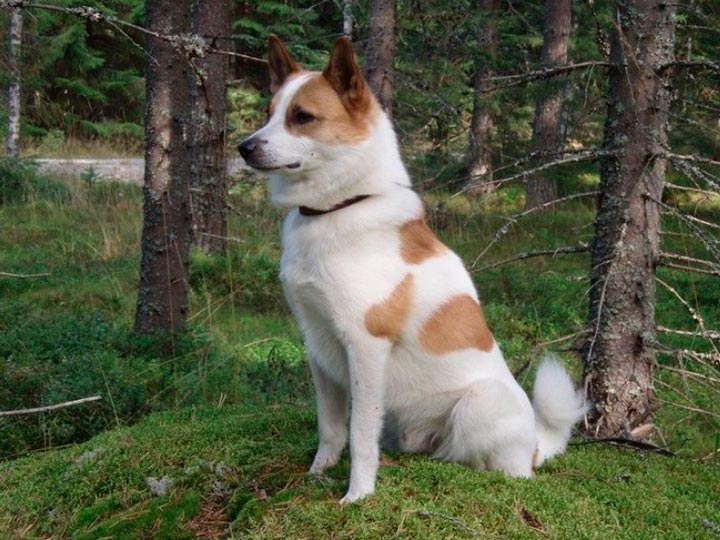
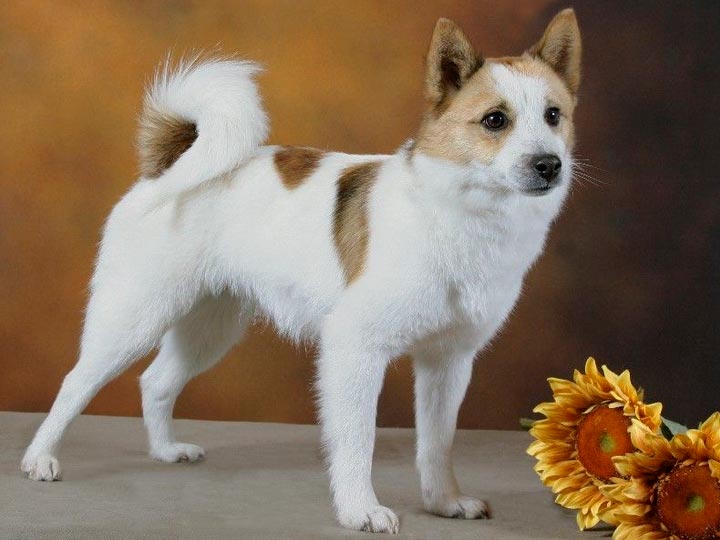
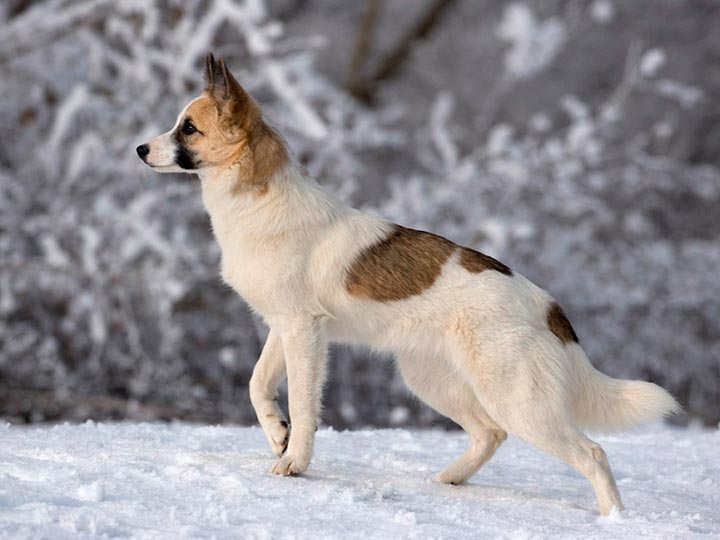
The coat is double, consisting of a fine undercoat and a short, straight topcoat. The shortest hair is on the bridge of the nose, on the ears, between the ears, and on the front of the legs. The longest hair is on the neck, under the tail, and the back of the thighs. The coat is white with distinct red or yellow spots.
Character and behavior
Norrbottens are intelligent, cheerful, and energetic dogs, self-confident and friendly, yet very alert and courageous. They are active, intelligent, and resourceful. They have a strong territorial and guarding instinct. They are wary of strangers and prone to excessive barking, especially when bored.
Other prominent traits of the Norrbotten Spitz include independence, courage, agility, stubbornness, vigor, and endurance. They are easily excitable, always ready for work and fun. This makes them wonderful companions for older children and active people. They love company and enjoy attention. They form strong bonds with their first owner and are very sensitive to family changes.
The Norrbotten Spitz gets along well with other dogs and small animals, but can make their lives miserable due to its excessive playfulness. Norrbotten Spitz have average trainability. Training and education should be organized in a way that keeps the dog interested. The stoic and dominant Norrbotten Spitz requires an equally persistent owner, otherwise it will do nothing unless it deems it necessary.
Content Features
Norrbotten Spitz are fairly clean dogs and adapt well to a variety of living conditions. They can live in a city apartment or in a country house enclosure. In either case, plenty of time should be devoted to training and walking. Norrbotten Spitz require daily physical and mental stimulation. Without this, they lose shape, become indifferent, lazy, and inactive.
The dog doesn't require complex grooming. The coat should be brushed periodically, more frequently during shedding season. Bathe the dog occasionally, and check the condition of its eyes, ears, and teeth. The claws are normally self-wearing.

Health and life expectancy
The Norrbotten Spitz is a strong, hardy dog, generally in excellent health. In the late 1980s, when the breed's popularity peaked, a high percentage of dogs were reported to suffer from cataracts. However, this problem was subsequently eradicated, and the Norrbotten Spitz has earned the status of the healthiest Swedish breed.
It's worth noting that Norrbottens are prone to obesity. Sometimes, one encounters:
- hip dysplasia;
- dislocation of the patella;
- other joint diseases.
Average life expectancy is 14 years.
Where to buy a Norrbottenspitz puppy
The Norrbotten Spitz is fairly common in Sweden, Denmark, Norway, Finland, and North America. According to registration data, there are approximately 1,200 Norrbotten Spitz in Finland, about 300 in Canada and the United States, and about 1,000 in Sweden. It's best to start your search for breeders and available puppies with breed clubs.
Price
The average cost of a Norrbotten Spitz puppy in Europe is 800 euros.
Photos and videos
You can see more photos of Norrbotten Spitz in the gallery.
Video about the Norrbotten Spitz breed
Read also:


Add a comment