
Nobivac for dogs
More and more people are spending time and money on maintaining the health of their pets. Nobivac dog products not only prolong the life of pets but also prevent the development of dangerous diseases. The world's largest vaccine manufacturer, Intervet International, is constantly developing new formulas to meet the high demands of veterinarians and pet owners.
Content
Types of vaccines
Nobivac preparations for dogs help prevent the development of the most common types of veterinary diseases:
- Nobivac Rabies and RL provide maximum protection against rabies;
- Nobivac DHPP and DHPPi are used to prevent diseases caused by the virus. canine distemper, adenovirus type 1 (hepatitis) and type 2 (laryngotracheitis), parainfluenza virus and parvovirus;
- Nobivac Lepto and L4 have proven effectiveness in the prevention of leptospirosis;
- Nobivac KC intranasal vaccine for the prevention of infectious canine tracheobronchitis, parainfluenza and bordetellosis.
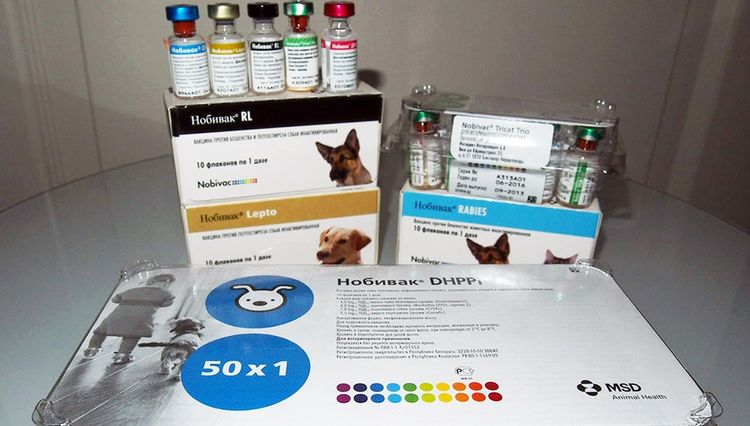
Nobivac prices for dogs vary depending on the vaccine type. The most expensive is the "KS" vaccine: one vial of the medication and diluent costs 650-700 rubles. DHPP and DHPPi vaccines cost 250-300 rubles. Rabies and RL rabies vaccines cost 100-150 rubles. A single ampoule of the leptospirosis vaccine costs 50-60 rubles.
Nobivac vaccines help the immune system develop its own defenses against diseases. Each ampoule contains inactivated viruses that mildly stimulate the immune system but do not infect the dog. If the animal encounters a real virus in the future, the body will quickly fight it off, producing the necessary antibodies. Not all vaccinations should be administered at once. A veterinarian develops a vaccination program individually for each animal, but if the owner plans to administer the injections themselves, it is important to understand the order of administration.
Mandatory vaccinations include:
- from rabies;
- plague;
- hepatitis.
The need for other vaccines should be discussed with a veterinarian. Based on the epidemiological situation in the region and the dog's living conditions, the veterinarian will be able to administer additional vaccinations against Bordetella, influenza, and respiratory viruses.
Instructions for use
Despite such a wide variety of medications, the instructions for them are not significantly different. Veterinarians recommend vaccinating animals starting at 8-10 weeks of age. During this critical period, the protection a puppy receives from its mother weakens. Therefore, it is important to help the animal develop its own long-term immunity. The instructions for Nobivac for dogs recommend booster vaccinations once a year.
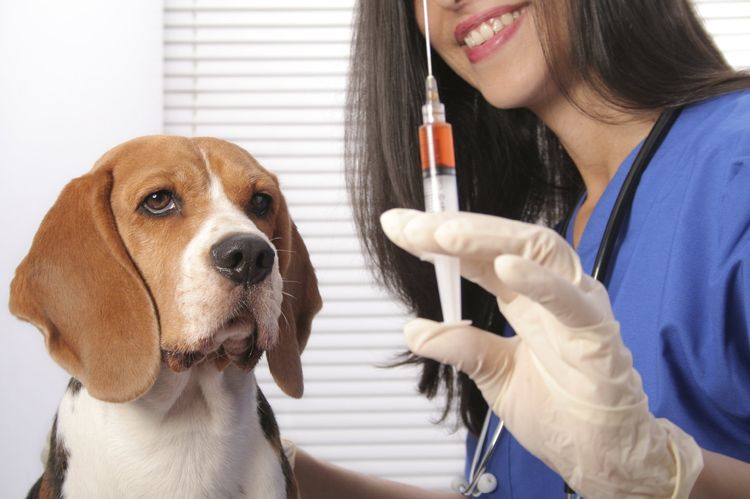
The safest vaccine for dogs is Nobivac's polyvalent vaccine: DHPP and DHPPi. These vaccines contain five different inactivated virus strains in a single vial. Essentially, instead of five injections, you only need to administer one.
Important! Nobivac's ready-to-use polyvalent vaccines are considered completely safe. However, this does not mean you should try to mix the contents of multiple vials in one syringe. This is strictly prohibited by the instructions.
If you cannot buy such a drug or contact a veterinarian, you need to make your own vaccination scheduleTo provide initial protection to your dog, two vaccines are sufficient: Nobivac Rabies (or RL) and Nobivac Lepto (or L4). A minimum of two weeks must be allowed to pass after the initial vaccine. Administering the vaccines two to three days apart risks causing an abnormal reaction. The immune system will actively produce antibodies to the first vaccine and will be unprepared for a second attack by a completely different strain of the virus. This could result in severe side effects.
Administration of intranasal and injectable vaccines to a dog
The first mandatory vaccinations are best administered at a veterinarian's office. The instructions for all Nobivac products clearly state that vaccinating a sick or weakened animal is strictly prohibited. It's quite difficult to detect any health issues in a puppy at home. However, you can try revaccinating yourself (provided the first injection didn't cause any allergic reactions or side effects). Before administering the injectable vaccine, observe the dog's behavior for several days. If there are no changes, the procedure can be performed.
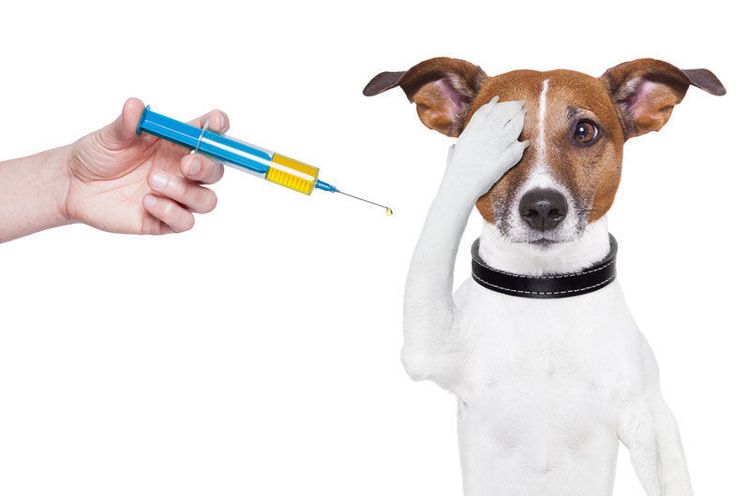
The sequence of actions should be as follows:
- Add 1 ml of Nobivac Diulent, a special diluent, to the vial containing the dry vaccine and shake vigorously. Nobivac Lepto and L4 are sold as a ready-to-use diluted suspension, so they can be drawn directly into the syringe.
- Prepare the animal's skin: clean the area on the withers from dirt, make sure there are no wounds or scratches.
- It is convenient to grab the dog so that the head is immobilized.
- All Nobivac injectable vaccines are administered subcutaneously only (not intramuscularly!), so a 2-3 mm needle insertion is sufficient.
- Slowly inject the medicine, remove the needle and treat the injection site with an antiseptic.
It's much easier to administer an intranasal vaccine. The instructions for Nobivac KS for dogs recommend starting prophylaxis as early as two weeks of age. Simply shake the bottle, draw the contents into a sterile syringe, and then (using the special nozzle included with the product) inject the vaccine into the dog's nostril.
Side effects
Vaccines from any manufacturer stimulate the immune system, so lethargy and drowsiness in animals for 24 hours after vaccination is considered normal. Nobivac vaccines are certified not only in Russia, but also in the European Union and the United States. This indicates the high quality of the medications used, but does not guarantee the absence of individual allergic reactions or intolerances. It is essential to monitor your pet closely for at least several hours after vaccination. Some side effects can be life-threatening and require immediate medical attention.
After using the intranasal vaccine Nobivac KS, the following complications may develop:
- swelling of the face;
- hives on the nose;
- difficulty breathing;
- profuse discharge of mucus from the nostrils.
Side effects from injectable vaccines are much more severe for dogs, so if at least one of the following symptoms appears, you should contact your veterinarian:
- fever;
- convulsions;
- vomit;
- foaming at the mouth;
- diarrhea that lasts longer than a day;
- severe irritation in the area of the skin puncture.
Of course, the instructions indicate that all Nobivac products are completely safe for dogs. However, no animal is immune to individual adverse reactions.
How to keep your pet safe
There are several simple rules that can significantly reduce the risk of complications after vaccination. First, it's essential to purchase certified medications. Nobivac vaccines are often counterfeited, so it's best to purchase only after checking all documentation. A list of certified sellers can be found on the manufacturer's official website. Second, don't skimp on veterinary services. Giving a dog an injection isn't difficult, but not everyone can provide emergency care on their own. A veterinarian not only has the necessary knowledge but also all the necessary tools to resuscitate an animal.
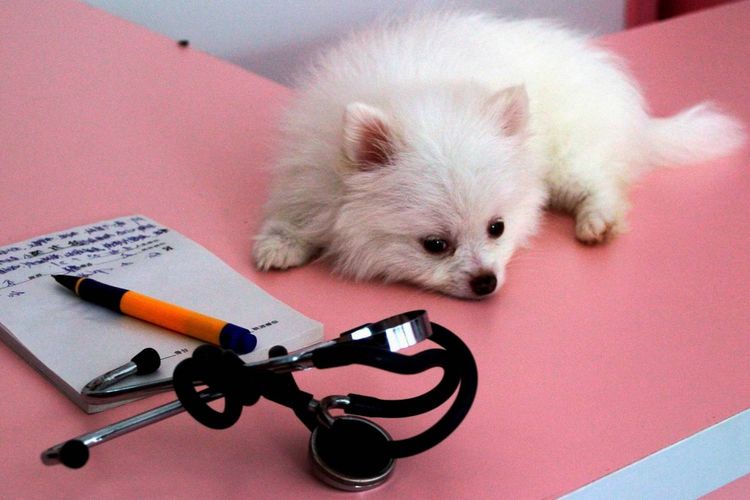
If your pet has previously shown a tendency toward allergies, it's recommended to give them antihistamines beforehand. During cascade vaccinations (when a new vaccine is administered every two weeks), it's important to support the dog's immune system with special vitamins and a fortified diet.
Reviews from veterinarians and pet owners
Nina Alekseevna, veterinarian:
"I'm a veterinarian and have been vaccinating animals with Nobivac for four years. There are statistics on the use of polyvalent and single-component vaccines. I want to say that no side effects will occur if the dog's initial diagnosis is thoroughly performed. I always check the feces and blood for key indicators. If there are any abnormalities, I treat the animal first and only then vaccinate. As a result, over 3,000 dogs have been vaccinated without any complications."
Elena, 25 years old
"I bought a Pomeranian puppy with all the vaccinations. But the breeder warned me that I'd have to re-vaccinate the dog after a year. We don't have a competent veterinarian in our city, so I asked the breeder about the vaccine (Nobivac DHPP) and purchased it through the official website. The injection itself is quite easy to administer, and there were no side effects. From now on, I'll vaccinate my dog myself."
Anna and Kirill
"We vaccinated our German Shepherd puppy with the Nobivac Rabies vaccine. Despite the injection being administered by a professional veterinarian, a lump developed on the withers. We have no doubts about the authenticity or expiration date of the product, as we purchased the ampoule ourselves and checked everything. The veterinarian attributed the side effect to an individual intolerance. However, after reading reviews online, we realized that such lumps occur in every other dog. In a year, we will be vaccinating with a vaccine from a different manufacturer, as we are very concerned about our pet's health."
Read also:
- When and what vaccinations should puppies receive?
- How to measure a dog's temperature
- Distemper in dogs


7 comments
Galya
Multikan 8 Priska gave the dog a pain in the back paw today
Lyudmila
We got the Nobivac vaccine three days ago. My 1.5-year-old VEO. On the day of the vaccination, she was lethargic, had diarrhea, and refused to eat. In short, she got sick. Her symptoms now look more like parvovirus. We're getting treatment. Owners, be careful with Nobivac! Although I've had shepherds for 15 years and have vaccinated them repeatedly with Nobivac. Today's incident is nonsense! I'm shocked. Take care of your little ones! I wish you all good health!!!
Elena
We gave him the second Nobivac vaccine. The reaction was terrible. His muzzle suddenly swelled up. We went to the vet and got diphenhydramine. The dog's condition didn't improve, and the swelling went down. But by evening, he was falling over and shaking violently. I went to the vet again. They took a blood test. His sugar was elevated. They gave him a saline drip and a suprastin injection—knock on wood, it got better. After the first vaccination, only his scruff hurt for a couple of days.
I didn’t expect such a reaction to the vaccination as I had now.
Dasha is a veterinarian
An allergic reaction to repeated exposure to the allergen. I do not recommend giving this vaccine to your pet in the future. This is most likely a hypersensitivity to the additional components. This is not the vaccine's fault, but simply a characteristic of the pet's body.
Elena Politova
I have the same situation! My shepherd is 4.5 years old! She's always been vaccinated! But this year the vet gave her a NOBIVAC *DHPPI shot and she had a strange reaction - she was shaking all night and into the morning! I tried to calm her down and she bit my hand where the wound was! So, I spent the whole day running around to hospitals to get rabies and tetanus shots! The dog felt better by the evening! And mine was terribly swollen at the injection site and had severe muscle pain (by the way, I only read the "reminder" they gave me after the vaccination at home! I was almost speechless - there were SO MANY SIDE EFFECTS from this vaccine! And I was only warned not to drink alcohol (I don't drink at all, I'm a former athlete) and not to scratch! THAT'S IT!
Daria is a veterinarian
Hello! Your veterinarian should have warned you that shivering (chills caused by a slight rise in temperature) during the first 24 hours is a common reaction. Think about yourself or your child getting a vaccination. During the first 24 hours, a temperature rise of up to 37.5°C (less commonly higher) CAN occur—this is the immune system trying to fight the incoming antigen, meaning antibody production has begun.
Second: if your dog is vaccinated, why did you get a rabies shot? Tetanus is obviously necessary (again, alcohol will be prohibited, as the pathogens are neurotropic), but immunity lasts for 10 years after vaccination. I had to get vaccinated myself this year, though because of a nail in the calf barn (we help recover not only companion animals).
Regarding side effects, this is a mandatory list from the manufacturer. Even if 1 in 100,000 subjects experienced such a reaction, the manufacturer MUST list it in the package insert. And this isn't necessarily what you'll have. A classmate of mine and her family were vaccinated with the full course because their unvaccinated Pomeranian was bitten by a rabid fox. They had no side effects other than a slight fever for the first few days after the injection and some swelling, redness, and mild soreness at the injection site (the lump lasted for 3-4 days). At work, virologists are also vaccinated because they come into contact with pathogenic material (collecting samples for testing on suspected rabies and delivering them to the lab). One colleague has been getting mandatory vaccinations every three years for 20 years. Children and the elderly really don't tolerate this vaccine well.
Daria is a veterinarian
P.S. A personal story, if you're interested. Take any medication and read the instructions. They're riddled with side effects. I bought an anthelmintic for my son, and I spent 45 minutes reading the instructions (including dosages and side effects)! Recently, my child was prescribed a cough medicine, and the package insert stated that an overdose could cause cardiac arrest. Do you think I risked giving it to a child? No! Because when calculating the dosage for a 6-year-old, the figure was higher than for an adult (for adults, it's listed in ml, but for children, you have to calculate the active ingredient per 1 kg of body weight). And the maximum daily dose for a child of 22 kg of body weight is higher than the minimum limit for an adult. Even I was scared, even though I know pharmacology =) I can imagine how scared you were by the side effects.
And for some drug (I can't remember, something like omeza/omeprazole), the package insert was the size of a sheet! We were really blown away by it =) The whole team laughed at how "simply" it was written, just for the "people." I wouldn't take this drug myself, because I'd be too lazy to read all that information. So don't worry.
So if nothing happens to your pet within 10-14 days, you can refuse the rabies vaccination.
Add a comment