
Low White Blood Cells in Cats: Symptoms and Treatment
Sometimes, when performing a blood test on cats, for one reason or another, a low white blood cell count is detected. If this result is confirmed on a repeat test, it indicates a health problem. In such cases, a veterinarian will usually order additional tests to identify and treat the underlying condition that caused the low white blood cell count. It's helpful for cat owners to understand what a normal white blood cell count is and what to do if it's too low or too high.

Content
Normal white blood cell levels in a cat's blood and urine
Leukocytes are the largest of the blood cells; their name comes from the Greek word "leukos" (colorless), meaning these blood cells are colorless. The primary function of leukocytes in the body is to destroy foreign elements: molecules, cells, microorganisms, and tissue breakdown products. The number of leukocytes in the blood serves as an indicator of the processes occurring within the body to fight infection or allergens.
The normal level of leukocytes in the blood of cats is considered to be 5.5-18.0x10⁹U/L. Leukocytes are virtually absent in the urine of a healthy cat; when examined under a microscope, 2-3 may be detected per field of view. A rise or fall in leukocyte levels in the blood, or their appearance in the urine, is considered abnormal and can have various causes.
Causes of increased and decreased white blood cell levels
An elevated white blood cell count in the blood most often indicates an inflammatory process. This could be as simple as a mild cold or exposure to allergens, or a serious illness caused by bacteria, viruses, or fungi. After treatment, white blood cell counts return to normal, as the increased number of these "foreign-fighting" cells is no longer needed.

The appearance of leukocytes in urine may be caused by:
- cystitis (inflammation of the bladder),
- urethritis (inflammation of the urethra),
- nephritis or glomerulonephritis (inflammatory diseases of the kidneys).
The type of leukocytes and the consistency of urine sediment help to determine the diagnosis.
A decrease in white blood cell count in a cat's blood can be caused by the same reasons as an increase, but this phenomenon is more dangerous if it persists for a long time. A deficiency of white blood cells can occur due to their death at sites of inflammation. Severe or chronic diseases result in long-term low white blood cell counts, indicating that the body is unable to produce them.
So, what does it mean if a cat's white blood cell count is low? When white blood cell counts are significantly lower than normal, the cat is diagnosed with leukopenia. The most common causes are:
- sepsis;
- malignant neoplasms;
- bacterial infections;
- pneumonia (inflammation of the lungs);
- infectious peritonitis;
- bone marrow diseases;
- pancreatitis;
- hepatitis (inflammatory liver diseases);
- poisoning;
- injury;
- severe allergy;
- long-term use of certain medications (such as corticosteroids), which have a side effect of reducing the production of white blood cells.
- chronic disease of any etiology in older animals.

Important! The most dangerous causes of leukopenia in cats are feline immunodeficiency virus (FIV), feline infectious peritonitis (FIP), and feline distemper (parvovirus enteritis, or feline panleukopenia). These pathogens penetrate white blood cells and destroy these protective cells. The mortality rate from these diseases exceeds 90%.
Manifestations of leukopenia
When a cat's red blood cell count drops, its immune system weakens, and its body becomes less resistant to disease. Animals diagnosed with leukopenia often suffer from gastrointestinal and upper respiratory tract diseases, and may develop gingivitis or conjunctivitis.
The cat becomes apathetic and loses its appetite. In severe cases, leukopenia may be accompanied by severe weakness. diarrhea, vomiting, and the animal's lymph nodes become inflamed and enlarged. The cat may develop chronic bronchitis or sluggish pneumonia, which are difficult to treat with a weakened immune system.
Good to know: Humans cannot contract leukopenia from cats. The risk may lie in the disease that causes the cat's low white blood cell count: some diseases are common to both humans and animals.
How is leukopenia treated in cats?
Elevated white blood cell count In cats, this level does not require specific treatment; it returns to normal after the underlying condition is treated. Once the infection or other inflammatory trigger is eliminated, a large number of "foreign element fighters" are no longer required.
If the white blood cell count is low, treatment will be much more complex and time-consuming. This will require not only eliminating the underlying cause but also measures to restore normal white blood cell levels. Therefore, treatment for leukopenia is usually comprehensive.
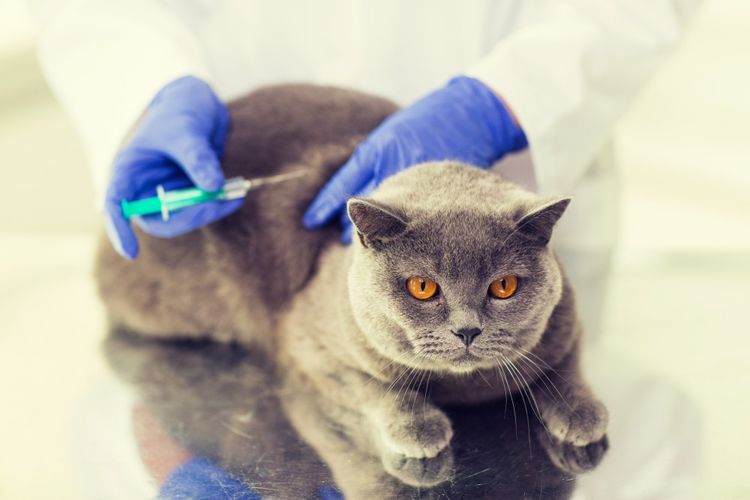
Treatment of the underlying disease
Depending on the type of disease detected during the cat's examination, the animal may be prescribed:
- For bacterial infections - antibiotics from the penicillin, tetracycline or cephalosporin groups (most often Amoxicillin or Clamoxil are used);
- For viral diseases, use the following medications: Neotim, Neoferon, Camedon, Anandin, Fosprenil, We will achieve;
- To neutralize toxins of anaerobic microbes - hyperimmune serums Vitafel, Globulin;
- For pancreatitis - painkillers and anti-enzyme drugs Aprotinin, Synulox, Cefazolin;
- To eliminate the gag reflex ― Verakol or Cerucal.

Restorative therapy
To help a cat's body restore normal white blood cell levels and strengthen its defenses, it is usually prescribed a course of treatment with medications that stimulate immune cell production and increase the immune system's resistance. The former are called immunostimulants, the latter are called immunomodulators. For leukopenia, Gamapren is used. Gamavit, Vetozal, Immunovet, Salmosan, Globfel, Kinoron.
In cases of severe dehydration (due to prolonged diarrhea or vomiting), the cat is given isotonic solutions to replenish fluids. Nutrients (glucose) are also administered intravenously. The cat is switched to a regular diet once vomiting has completely subsided and gastrointestinal function has returned to normal. For several days, the cat's food should be easily digestible and fed frequently, but in small portions.
Read also:
- Leukemia in cats: treatment and symptoms
- Cucumber tapeworm (dipylidiosis) in cats: treatment, symptoms
- Why does a cat go bald?


Add a comment