
Neozidin for dogs
Neozidin is a medication used to treat blood-borne parasitic diseases such as piroplasmosis, babesiosis, tryponosomiasis, and others. It is highly effective against protozoa. Before using Neozidin in dogs, consult a veterinarian and read the instructions carefully. Overdose can lead to serious consequences.
Content
Composition and pharmacological action
A broad-spectrum antiparasitic agent is produced in the form of a powder intended for the preparation of a solution for infections, and a ready-to-use solution (Neosidin M).
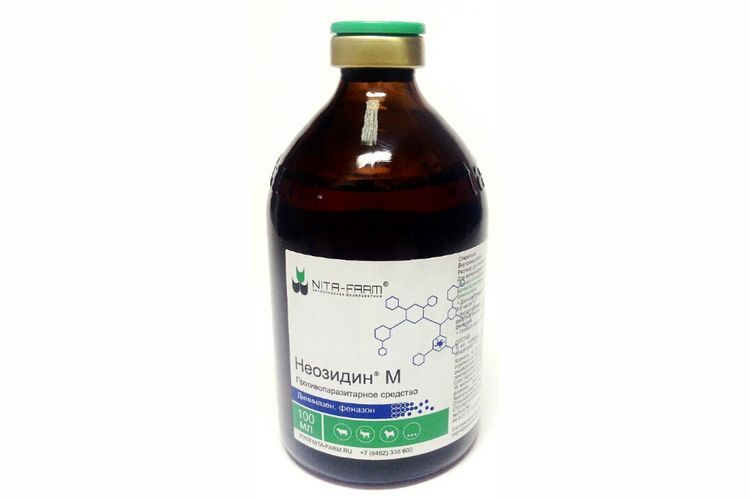
The powder is packaged in sterile dark glass vials containing 2.36 mg, although other packaging sizes are sometimes available. The vial is tightly sealed with a rubber stopper and covered with aluminum foil.
A ready-to-use solution is a more convenient solution for eliminating blood parasites. It is a clear, orange liquid, packaged in 20, 50, and 100 ml quantities, also in dark glass bottles. The sterile liquid is sealed with rubber stoppers.
Regardless of the form, the composition includes two components:
- Diminazene aceturate. Its main feature is its antiprotozoal action – increasing the permeability of the protozoan nucleus. The active substance destroys the cells of microorganisms that parasitize the animal's blood.
- Phenazone. Antipyrine has anti-inflammatory, analgesic, and antipyretic effects. It also helps reduce vascular permeability.
The combined effects of the medication's components not only destroy parasites in the blood, but also strengthen blood vessels, reduce capillary fragility, and stop bleeding.
Indications for use
According to the instructions for use, Neozidin M and its powder form are used for the treatment of blood parasitic diseases in dogs and other animals. Blood parasites can enter an animal's body through tick bites or other means and pose a serious risk. If prompt action is not taken, the pet may die. Therefore, if you notice a sudden deterioration in health, consult a doctor immediately. Do not self-medicate, as wasted time could cost your pet's life.
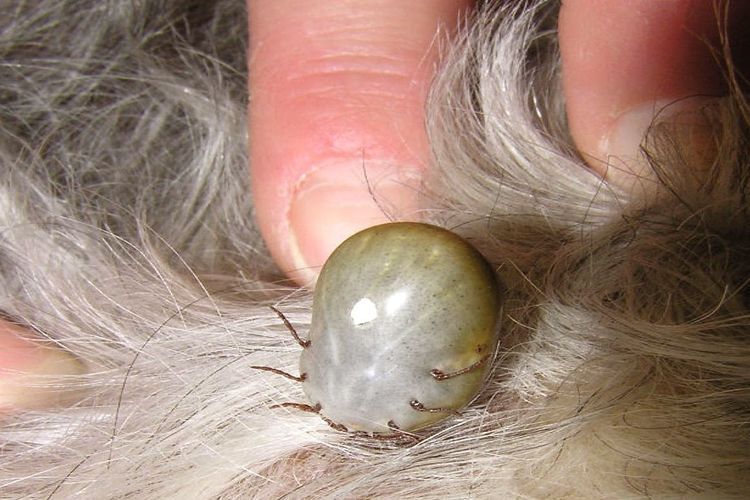
Veterinarians prescribe the drug to treat the following diseases:
- piroplasmosis;
- nuttalliosis;
- theileriosis;
- babesiosis;
- francaillosis;
- trypanosomiasis;
- mixed invasions.
Typically, the medication is used in combination with vitamin and mineral supplements, cardiac support medications, and laxatives. Only combination therapy can defeat such serious enemies, and medications for both primary and symptomatic treatment should be selected by a veterinarian.
The medication can also be used to prevent infection in the event of an epidemic or illness of one animal when kept together, for example, in a nursery.
Instructions for use
The medication is administered intramuscularly to animals. If powder is used, a 7% solution is first prepared. To do this, follow these steps:
- Add 12 ml of water for injection or saline solution to the vial containing 2.36 mg of powder using a sterile syringe.
- To infuse the liquid, do not open the bottle, but simply pierce it with a needle.
- Shake well until the powder is completely dissolved.
- Draw the required amount into the syringe.
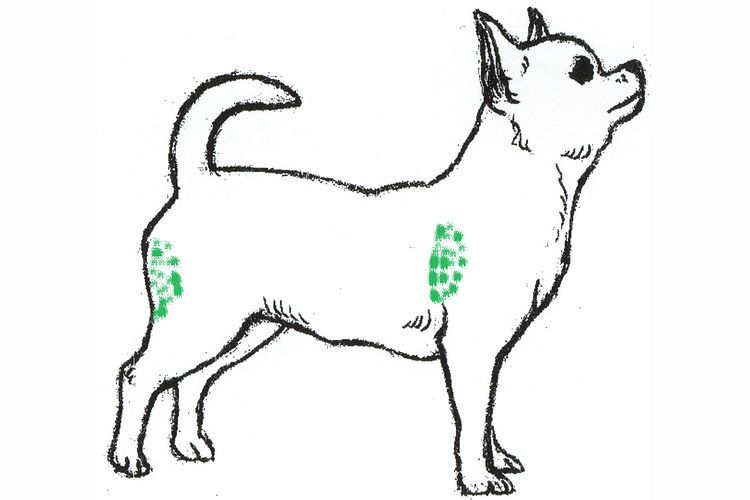
When using Neozidin M, draw the medication into a sterile disposable syringe. Many dog owners wonder how many times to inject Neozidin into dogs. Since the medication is painful, it is recommended to administer a single dose in divided doses, with an interval of 1-2 hours between injections, especially for the prepared solution. If the dose exceeds 2.5 ml, injections should be administered at multiple sites.
Dosage
According to the instructions, Neozidin M (ready-to-use solution) is injected into dogs at a dosage of 0.5 ml of liquid per 10 kg of animal. When using powder, the dosage is calculated based on the condition and the animal's weight.
If piroplasmosis, nuttalliosis, or franciellosis are detected, the dosage is 1 ml of the prepared solution per 20 kg of animal weight. For theileriosis, 1.5 ml of the solution is used per 1 kg of animal weight. If trypanosomiasis is detected, the dosage is 2.2 ml per 1 kg of animal weight.
Be sure to consult a doctor. Remember, an overdose can be harmful.
If the dog's condition does not improve within 24 hours and the fever persists, the injection is repeated. For preventative purposes, the medication is administered once at the recommended dose if one of the animals in the same household becomes ill or if the animal is in a high-risk area.
When using the medicine, it is important to follow several rules and recommendations:
- Adhere to the rules of asepsis.
- Before using an antiparasitic drug, the dog is given any antihistamine in the form of an injection.
- Sick animals should be provided with complete rest.
- When administering preventative injections to multiple animals, use a new, sterile syringe for each pet.
If your pet's condition does not improve or, on the contrary, worsens, go to the clinic immediately.
Contraindications and side effects
Although the drug is effective in treating blood parasitic diseases, it should not be used in some cases. It should be used with caution in patients with chronic diseases of internal organs, such as the liver, kidneys, and heart.
The drug is contraindicated for use in animals with hypersensitivity. Its use should be avoided in Sheltie and Collie breeds. Clinical studies on the drug's effects on pregnant females and puppies have not been conducted, so a doctor will assess the potential risks and make a decision on its use during pregnancy and in puppies on a case-by-case basis.

Swelling at the injection site may sometimes occur, but this resolves on its own within a few days. In case of overdose, dogs may experience the following side effects:
- convulsions;
- chills;
- allergic reactions;
- nausea and vomiting;
- disorders of the nervous system;
- muscle spasms;
- anxiety.
Depending on the animal's condition, calcium supplements and symptomatic treatments may be used.
Storage rules
Both powder and liquid forms must be stored at a temperature no higher than 25°C (77°F), away from ultraviolet light. Do not store the medication near food or animal feed, or in places accessible to children.
An opened bottle of Neozidin M can be used within 28 days. The reconstituted powder can be stored for up to 24 hours at room temperature, provided it is kept in a dark place or refrigerated for 24 hours.
It is prohibited to boil or heat the solution (ready or prepared) above 37°C.
Price
Below is the average price of Neozidin for dogs:
- powder 2.36 mg – 100-20 rubles per bottle;
- injection solution 20 ml – 150-195 rubles;
- 50 ml solution – 380-420 rubles.
Owner reviews
Oksana, the owner of a chow chow:
"After a tick bite, our dog's condition worsened significantly. He began to fade away before our eyes. He lay there, wouldn't get up, and wouldn't eat. We rushed to the hospital. There, without any tests, they gave us a shot of Neozidin. A couple of hours later, our beloved pet died. I don't know whether the incompetent doctors or the strong effects of the toxic drug were more to blame."
Tatyana, the owner of a yard dog:
"Our dog started acting strange – he wasn't eating well, became aggressive, and constantly hid in his kennel. I later discovered ticks on him. His condition continued to worsen. A neighbor with veterinary knowledge gave him an injection of Neozidin and some kind of hepatoprotector. The next morning, the dog began convulsing, and his heart rate increased. He died in agony a couple of hours later. I can't recommend this medication; it's very dangerous."
Victoria, the owner of the Spitz:
"We used Neozidin as part of a comprehensive treatment for piroplasmosis. Improvements in the dog's health only began on the third day, but we were still able to defeat this deadly disease thanks to an inexpensive injection from a domestic manufacturer."
Veterinarian Reviews
Alexey, a veterinarian and part-time biologist:
"Neozidin is an effective medication against piroplasms. I recommend using it only for treatment, not prevention. Even if ticks carrying piroplasmosis are found on a dog. It's a strong poison that negatively affects the liver, impairing its function. Additionally, when using this medication, it's necessary to use heart and liver medications, as well as vitamin supplements, to support the weakened body."
Olga, veterinarian:
"For piroplasmosis, I usually prescribe Pirotop, although Neozidin has similar properties. It's affordable and effective, but dog owners should be aware that it's toxic. It's important to follow all veterinarian recommendations. Additionally, antihistamines and liver and heart medications should be administered to reduce the negative impact of the active ingredients on the animal's body."
Read also:
- My dog was bitten by a tick: what to do
- Subcutaneous mites in dogs: symptoms and treatment
- Tick drops for dogs: which are the best?


1 comment
Elena
A rural vet gave my 3-month-old puppy an injection after he swallowed something nasty, causing his tongue to swell, develop a coating, and start salivating bloodily. I don't know how much Neosidin this doctor injected into the puppy. The puppy fell to his paws, lost his head control, lost the ability to move, can't eat on his own, and pees on himself, becoming completely crippled. I'm currently trying to revive him at various clinics, undergoing numerous injections and IVs, but I'm still on the verge of having to euthanize him. There's been no improvement. Be careful with this medication.
Add a comment