
Nenets Laika (reindeer herding Laika, Nenets Spitz)
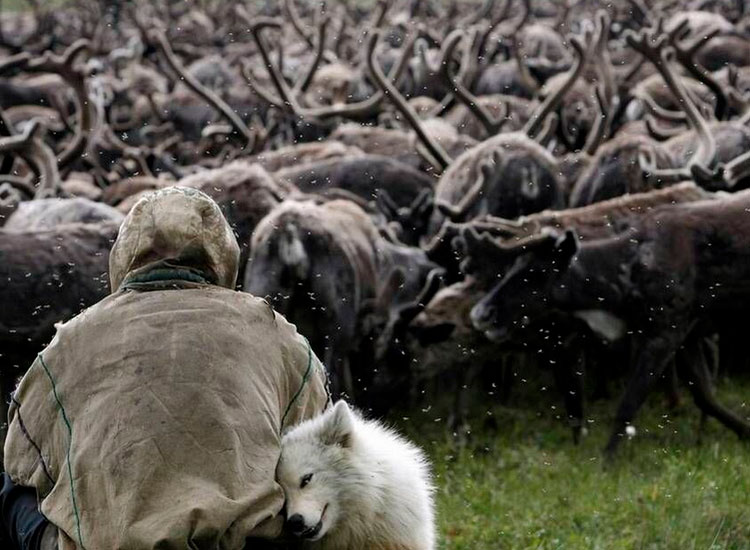
The Nenets Laika, also known as the Reindeer Herding Laika or Nenets Spitz, is an interesting and unique, pure-bred aboriginal breed. It is the only Russian herding dog. It is often poorly known even to Laika experts. The Nenets Laika is a versatile service dog, suitable for herding reindeer, hunting, and search and rescue missions. It is completely unpretentious, hardy, and generally healthy.
Content
History of origin
The Nenets Laika is believed to have descended from the peat dog, which inhabited a vast territory from Western Europe to Siberia over 5,000 years ago. It was bred for centuries in near-isolation, making it considered the oldest and purest breed. This dog was favored and useful by ancient hunters, then nomads, and reindeer herders. It adapted to humans and their needs virtually unchanged.
The Nenets Laika is distinguished by its natural harmony and highly functional exterior. Its "northern look" is immediately noticeable.
The breed belongs to the Arctic herding spitz group, which also includes the Finnish and Swedish Lapinkoir, and the Icelandic Shepherd. Nenets reindeer herders have always been beloved and popular among the Nenets people and were used by other peoples in Kamchatka and Chukotka, but were virtually unknown outside the reindeer herding regions.
In the late 19th and early 20th centuries, white Nenets Laikas were brought from Western Siberia to Western Europe, giving rise to the now popular breed Samoyed dog (Samoyed).
The Nenets Laika was first shown to the public at the anniversary exhibition of the Imperial Society for Proper Hunting in 1898. In the 1940s, it regularly appeared at the All-Union Agricultural Exhibition. The first standard was written in the 1950s. After its publication, the Nenets Laika began to be bred using factory methods. A large kennel was established in Petropavlovsk-Kamchatsky, where Nenets Laikas were imported from Koryakia and Chukotka. Later, dogs were exported to St. Petersburg and Moscow.
The Nenets Laika is not a sled dog. To the point that the Nenets considered harnessing one to a sleigh to be bad luck.
Modern times have had a dual impact on the Nenets Laika. On the one hand, their numbers have dwindled significantly. At one point, even reindeer herders found it virtually impossible to obtain a purebred dog. On the other hand, the breed has attracted interest from cynologists, including international dog breeders, spurred by the flood of information about reindeer herders, their uniqueness, and their remarkable abilities and talents.
Traditional use of Nenets Laikas
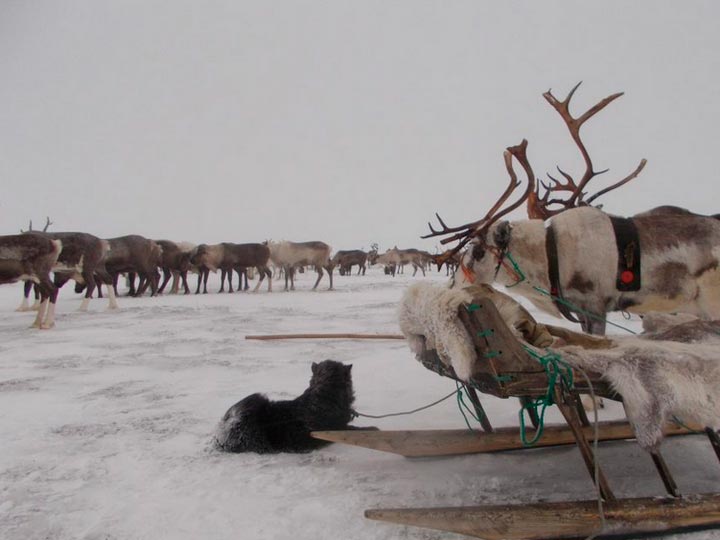
- Herding service. Nenets reindeer herders move at a significantly higher speed than herding dogs that work with sheep or cattle. They herd stray reindeer back to the herd, prevent them from dispersing into groups, and assist the herder in searching for lost or separated animals. On command, they round up the reindeer or bring a designated group back to their owner. The reindeer herding Laika never runs into the center of the herd, working only along the edges. They are very active and bark rarely.
- The hunting activities of Nenets Spitz dogs are quite limited. Their hunting behavior was often deliberately altered by shepherds. Other peoples, unlike the Nenets, often used Nenets Laikas for hunting small and large game. These dogs are capable of tracking, stopping game, and locating wounded animals.
- The dogs' sanitary function consisted of eating virtually all food scraps and garbage after butchering fish, deer, and other animals hunted. They also exterminated rodents within the camp.
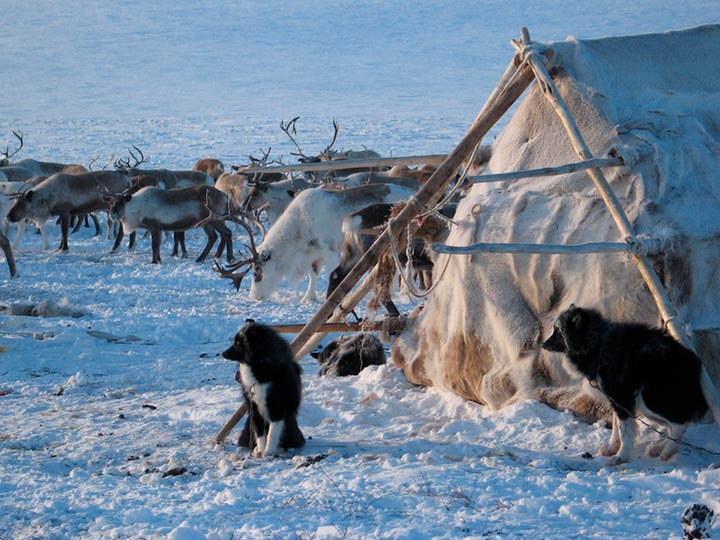
- Guard duty. Nenets Laikas are vigilant watchdogs, always alerting to the presence of strangers and dogs near their herd or tent. Very rarely, particularly aggressive Nenets Spitz were encountered; they were not used for herding, but for guarding.
The Nenets Laika is actually very versatile. Its name, "reindeer herding," often misleads those unfamiliar with the breed and does nothing to promote its popularity and spread.
- Accompanying humans. Being a loyal companion and helper is another important function of the Nenets Laika. There are numerous stories of these dogs rescuing their owners by leading wild animals away or helping them find their way in a snowstorm.
- Several dogs are used by the Ministry of Emergency Situations in rescue and search operations;
- Hybrids of a jackal and a Nenets Laika (Sulimov's dogs) work in the security service at Sheremetyevo Airport (Moscow).
Appearance
The Nenets Laika is a small, energetic Spitz-type dog with a wedge-shaped head, thick fur, erect ears, and a tail carried over the back. It has a strong frame, a proportional build, and well-developed muscles. Sexual dimorphism is pronounced. Its height at the withers is 40-52 cm.
The head is medium in size, wedge-shaped, and proportionate to the body. The skull is almost flat between the ears. The forehead is slightly convex, with a pronounced occipital protuberance. The stop is noticeable. The muzzle gradually tapers toward the nose. The earlobe is medium in size, pigmented to match the coat. The lips are tight and dry. The jaws are strong. The teeth are large and white, with a scissor bite; a level bite is acceptable. The cheekbones are not prominent but well developed. The eyes are oval-shaped, medium in size, and set slightly obliquely. Color ranges from dark brown to hazel. The ears are mobile, erect, relatively small, and triangular. They are set wide apart and fairly high, with slightly rounded tips directed slightly forward and upward. The guard hair inside the auricle is well developed.
The neck is of medium length. Set at an angle of 50 degrees to the horizontal, dry, oval. The body is almost square in format. Females may be more elongated. The length of the forelegs to the elbows is equal to or slightly exceeds the height at the withers. The depth of the chest is approximately 1/2 the height at the withers. The back is straight, strong, and wide. The loin is short, wide, slightly arched. The croup is wide, long, and slightly sloping. The belly is moderately tucked up. The tail is set high. When excited, it is thrown over the back in a loose ring or a semicircle. When calm, it is lowered like a sickle or a log. The limbs are straight, parallel, and muscular. The toes are well knit, the paws are oval with thick, hard pads and short, strong claws. The hair between the toes is thick and harsh.
White and large Nenets Laikas are practically indistinguishable from Samoyeds. Dogs of other colors can be confused with German Mittelspitz and Lapphunds.
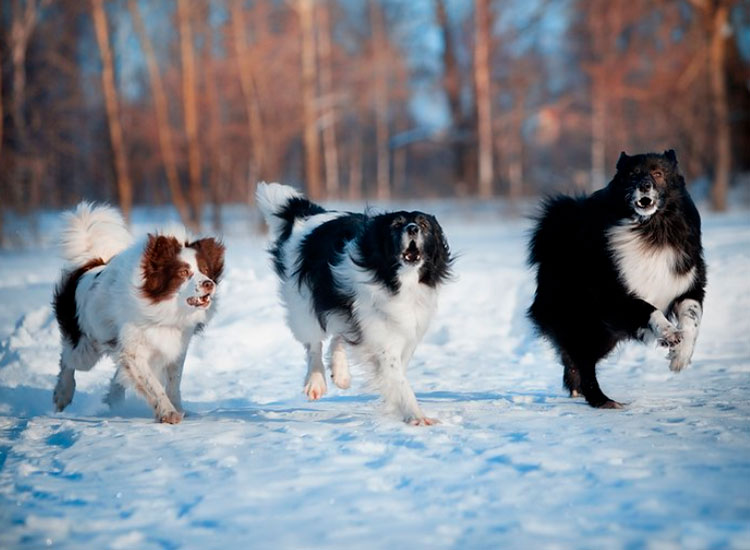
The coat is double. The outer coat is very well developed, straight, thick, long, and coarse to the touch. The undercoat is dense and waterproof. The hair on the body is 8-10 cm long. Decorative hair forms sideburns on the cheeks, a ruff on the neck and shoulders, and feathering on the back of the legs. The hair on the thighs can reach 20 cm, and on the croup, 25 cm. The hair on the muzzle and front of the legs is shorter and denser. Colors vary, often zoning.
Character and behavior
The Nenets Laika's temperament is balanced and active. They are highly emotional and energetic, with a well-developed exploratory and orienting ability, self-confident, intelligent, and easily trained for a variety of tasks. The Nenets Laika is light and quick in movement, and its gait and trot resemble those of a fox.
True breed enthusiasts admire these dogs' highly organized psyches and agile minds, their independence in solving complex problems, and their sometimes unconventional behavior. At the same time, they thrive in packs, develop a strong attachment to their owners and family members, and are very sociable and responsive.
Nenets Laikas are generally non-aggressive and rather wary, including of strangers. They readily make contact with strangers but remain loyal to their loyalties. Often, it's impossible to rehome an adult reindeer herder. The dog will refuse to work or run away in search of its former owner.
Education and training
Nenets reindeer herders are very intelligent and quick-witted, quickly understanding what's expected of them and picking up commands, so to speak, on the fly. They are very owner-oriented. Their training requires moderate strictness. Training mostly uses the carrot, but sometimes the stick will have to be used. The key to success is the dog's interest in learning.
Psyche, physiology and exterior The Nenets Laika's characteristics make it capable of a wide variety of services in various conditions and climates, with the exception of those requiring a large, vicious dog.
Traditional education of reindeer herders
Nenets Laikas are not introduced to work until they are about a year old. The dog is given time to grow and develop. If it is not mentally and physiologically mature, it will quickly weaken and will not work well. Young Laikas are trained to herd alongside experienced adult dogs. Distractions are not allowed, and they are praised for a job well done. Serious misbehavior is followed by severe punishment, after which the dog is leashed to prevent it from getting offended and running away. After some time, the Laika will be ready to work flawlessly.
Content Features
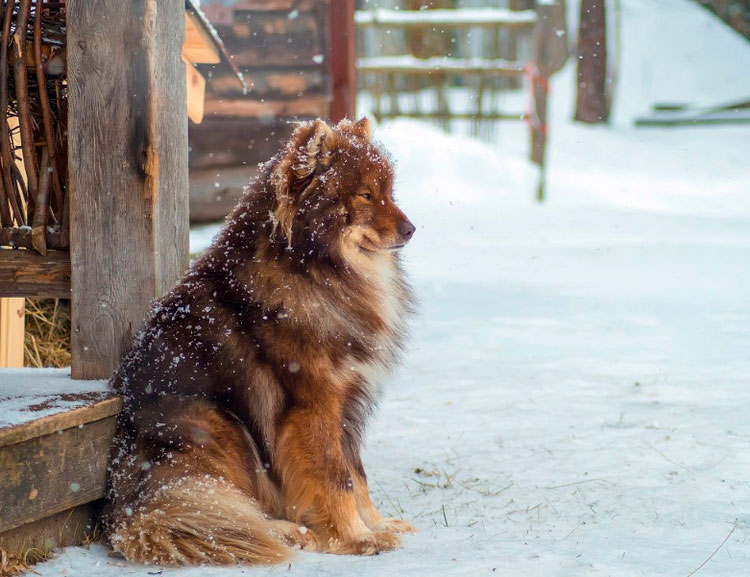
The Nenets Laika is best suited for free-roaming outside the city. It is well suited for life on a farm where its assistance is needed. The Reindeer Herder is very energetic and requires ample exercise. It is unlikely to reach its full potential in an apartment. In the north, puppies are usually born in late winter or early spring. The mother and her litter live in a tent until the puppies are six months old. Over the summer, the youngsters become accustomed to living outdoors and by winter they no longer enter human dwellings.
The Nenets reindeer herder's rich coat provides protection in both heat and cold. Thanks to this "coat," the Laika can live comfortably in the Arctic winter without a kennel and tolerates the hot sun better than many other breeds.
Care
Grooming the Nenets Laika involves periodic brushing and combing. Bathing is only necessary. Seasonal shedding is profuse. Like other native breeds, Nenets Laikas are trained to maintain their own hygiene. In modern times, owners often assist their pets with this: periodically cleaning their ears, trimming their nails, and wiping their eyes. The Nenets, however, never brushed or bathed their dogs, much less brushed their teeth.
Health and life expectancy
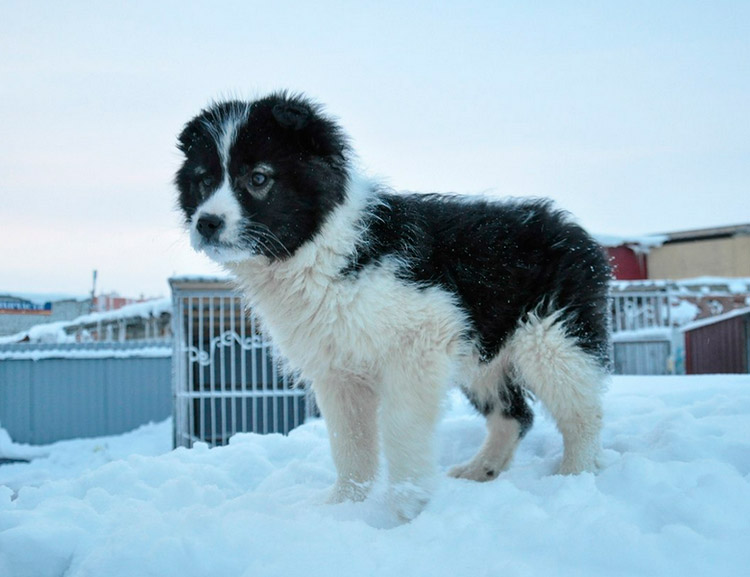
Nenets Laikas remain active even in old age. Life expectancy is 14-16 years. No hereditary diseases have been identified. This may be due to the breed's small population and a lack of research, or perhaps to natural selection and human cruelty. Sick puppies were always immediately killed to prevent them from infecting others. Sick adult dogs were never treated; they were kept tethered aside, and if they survived, they were considered lucky.
Where to buy a Nenets Laika puppy
Nenets Laikas are very few in number, but their geographic distribution is quite extensive. There are Nenets breeders in Western and Eastern Siberia, Moscow and St. Petersburg, and Ukraine (in Transcarpathia). A few dogs have been acquired by northern breed enthusiasts in Greece, Poland, France, Korea, Israel, and even Canada. As of 2018, the Nenets Laika population was estimated at approximately 2,000 individuals across Russia. To preserve and develop the breed, plans are underway to establish a kennel club and registry for the Nenets Reindeer Herding Laika in Naryan-Mar.
According to the Russian Cynological Federation, the majority of Nenets Laikas are concentrated in traditional reindeer herding areas in northern and northeastern Russia. Acquiring a reindeer herder puppy is extremely difficult. Almost no one breeds dogs for sale. And prices at breeder kennels can reach 100,000 rubles per puppy, notes Yan Turov, director of the Foundation for Economic Programs.
Price
There is very little data on Nenets Laika puppies for sale. The price of a puppy is usually set by the breeder individually, and therefore varies widely and depends heavily on geography. The price of a working reindeer herder in the Nenets Autonomous Okrug can be quite high. In remote regions where there is no reindeer and no demand for Northern Spitz, the price is generally lower.
Photos and videos
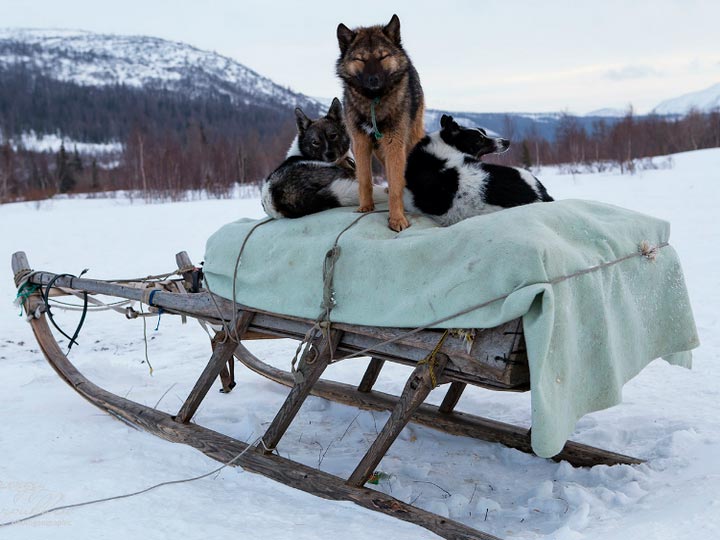
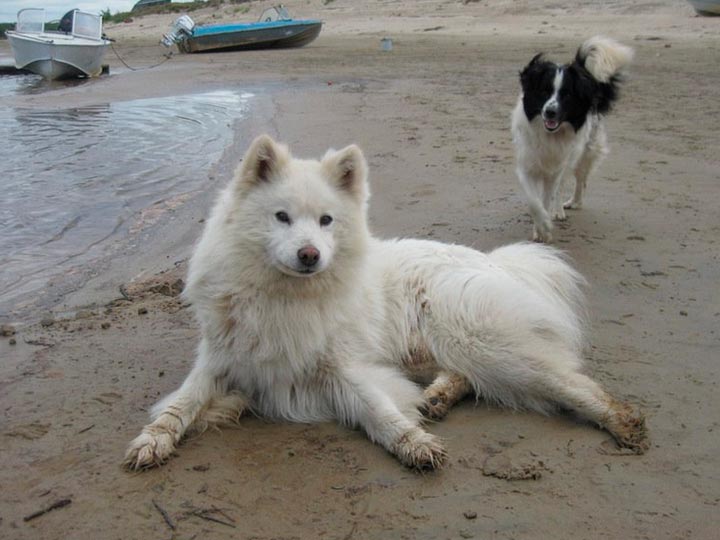
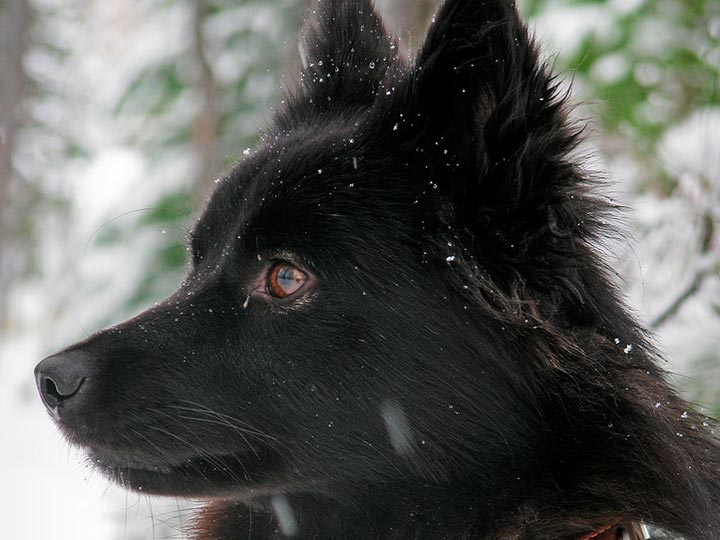
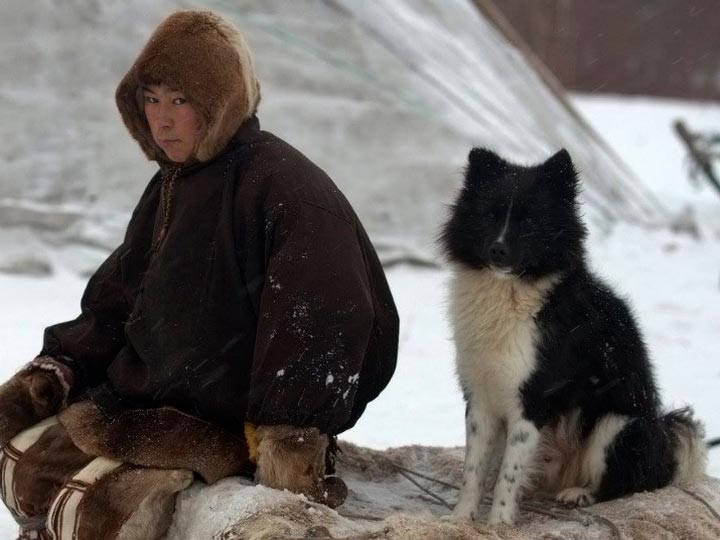
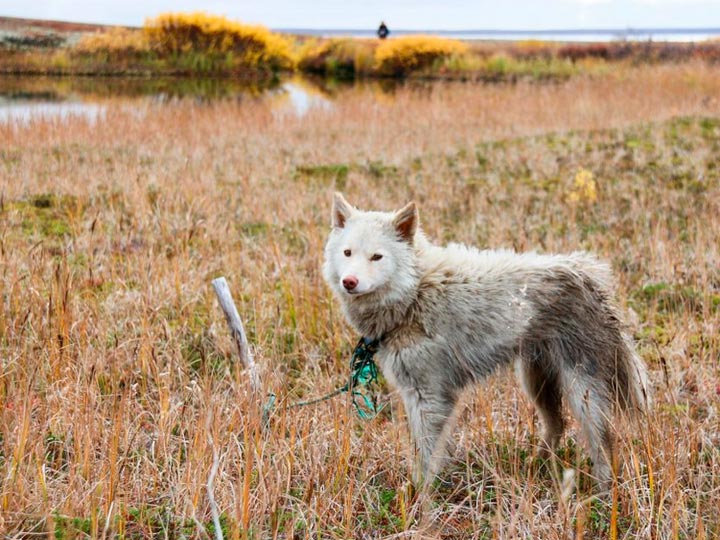
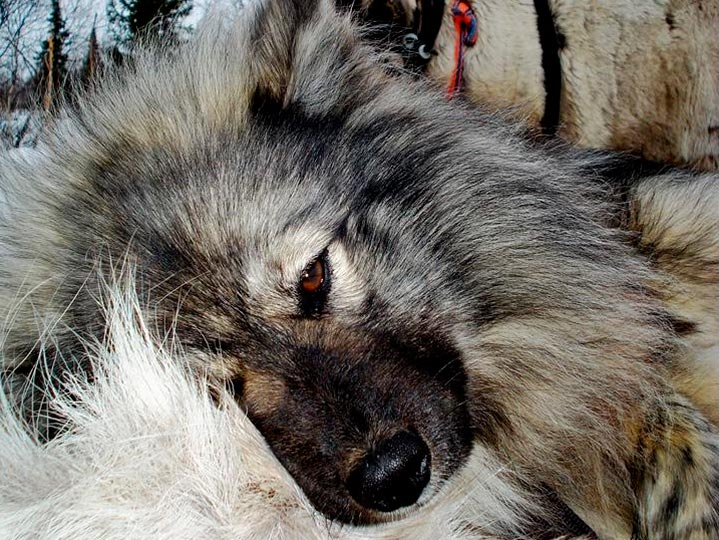
This gallery is dedicated to the Nenets Laika dog breed (also known as the Reindeer Herding Spitz). Here you can see photos of Nenets dogs of various ages, genders, and colors.
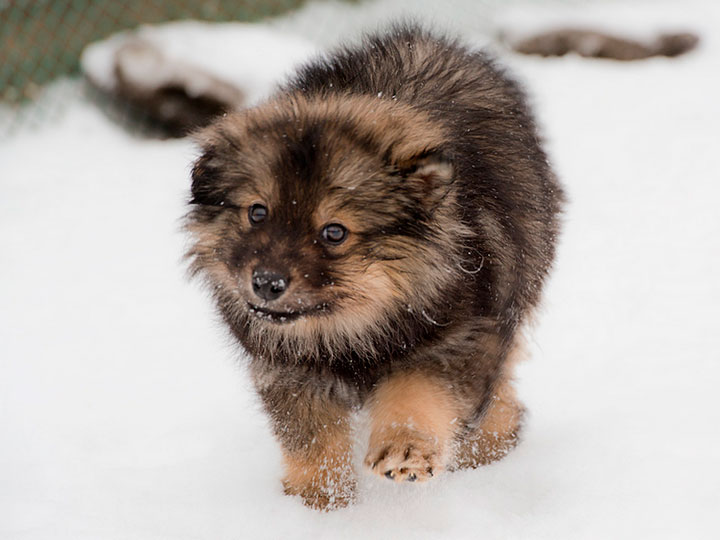
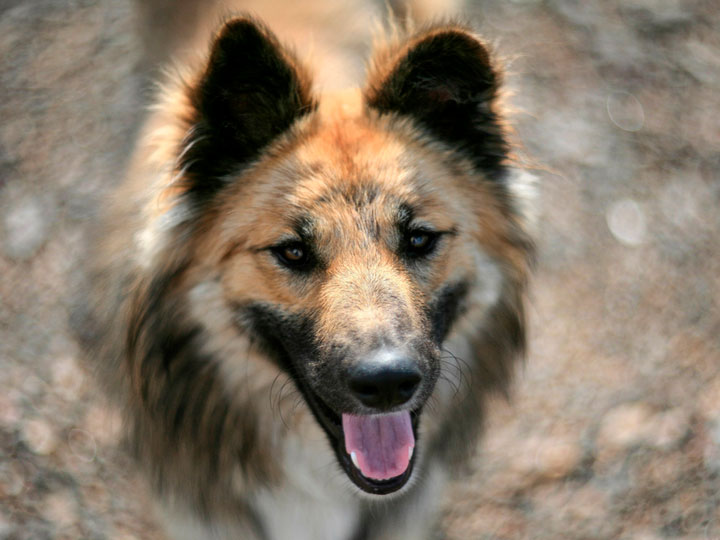
Video about the Nenets Laika dog breed
Read also:


1 comment
Svetlana
Excellent video story!
Add a comment