
German Rex: male and female cats
Today, the cat breed German Rex It's among the top hundred most popular, but... How did the breed's origin story begin? In East Prussia in the 1930s, in a small village, there lived a curly-haired cat namedMunch, the son of unremarkable parents. His mother was a tobacco-colored Angora, and his father was a Russian Blue.
Munk's curly coat enchanted the villagers and visitors. People loved to take photos with him as if he were an exclusive possession, but for some reason, no one even thought of breeding him. So, Munk decided to take up the breeding himself. He had children and grandchildren with curly coats. And at one point, one of his granddaughters was brought to Berlin and named Lammchen.
Berlin produced his first curly-haired kittens from a cross between Lammchen and her son. This is where the history of German Rex breeding began. To expand the breed, they began crossing them with shorthaired cats, resulting in the second generation having a wiry, wavy coat. The German Rex breed was recognized by the Federation of Cats of the World in 1983.
Content
General characteristics
What does a German Rex look like? What is its personality like?
Appearance
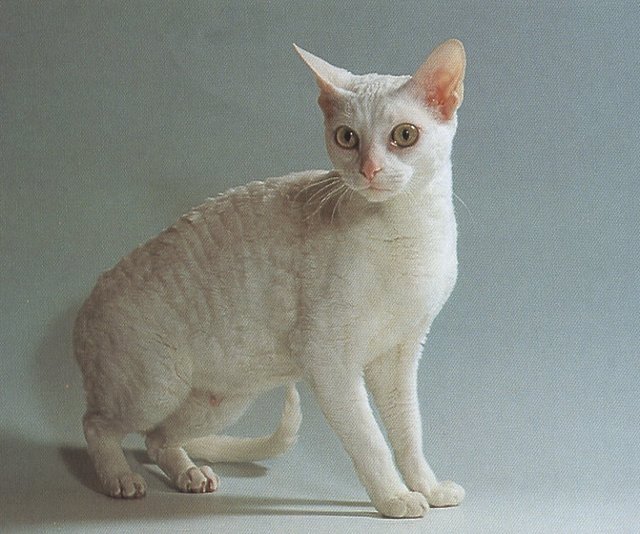
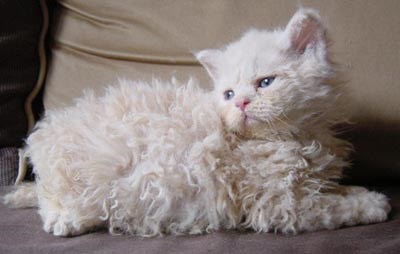
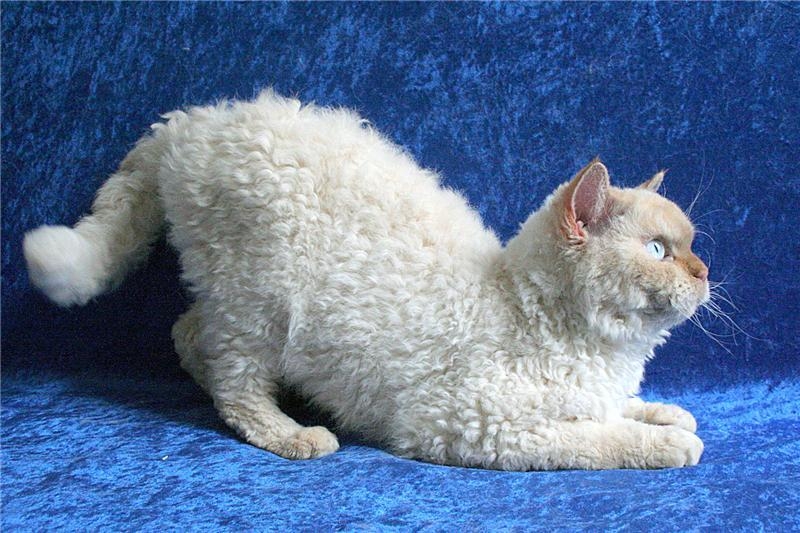
German Rex cats have a muscular, medium-sized body. They have beautiful, slender legs and a medium-length tail that tapers slightly toward the end. Their plump cheeks stand out against their wedge-shaped head. Their fur lacks guard hairs, making it feel very similar to mole fur. Their fur can come in any color, and white spots in any number and location are even acceptable.
Character
Each German Rex has a unique personality, but they share several common characteristics: they love order, are cheerful, intelligent, and sociable. If you have a German Rex in your family, they will quickly adapt to your routine and will faithfully wait for each family member to return from work or school. They won't view you as their masters, but rather as companions and friends.
Cats of this breed understand the purpose of toys perfectly well and will carefully collect them and move them to a designated place after active play, as if protecting them from prying eyes and the encroachment of other animals in your home. They are content with their lives and willingly display their positive outlook and optimism.
Rules of care and feeding
How to properly care for and feed German Rexes?
Care
German Rex cats are very clean. They quickly learn the purpose of a litter box and scratching post, as well as their location. If they are accustomed to a carrier from the first months of life, they can tolerate short trips well. Contrary to popular belief that German Rex cats do not tolerate the harsh winters that are common in our country, breeders claim the opposite—they do not require additional heating.
The only thing they need to do during shedding is to supplement their food with vitamin B, after discussing the dosage with your veterinarian. This approach can prevent excessive shedding and the appearance of bald spots.
When caring for their beautiful large eyes, pay special attention. Periodically wipe them with a swab dipped in herbal infusion or strong tea. Clean the ears with cotton swabs.
Also, don't forget to give your kitten all the necessary vaccinations.
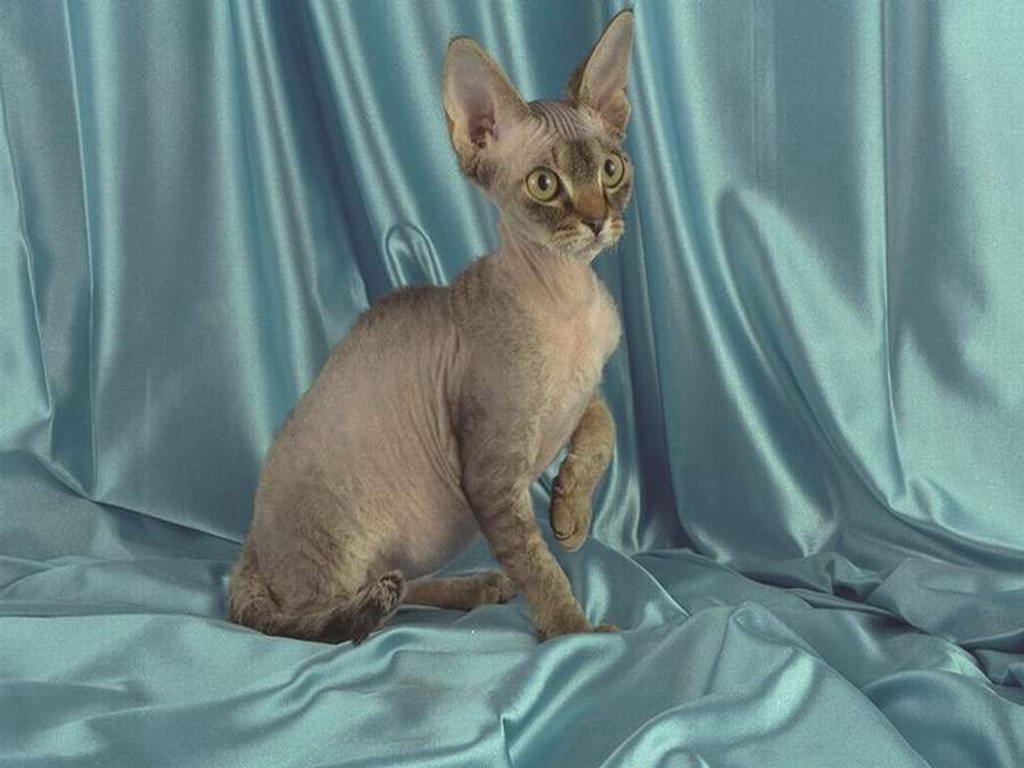
Koshis have L-shaped ears, so even with deep cleaning, there's no need to worry about damaging the canal. However, it's important to note that most members of this breed dislike this procedure, so be gentle when cleaning their ears.
Never use ether, alcohol or other irritating solvents to rinse your ears, as they can cause swelling and pain in soft tissues.
German Rex cats are a rare, exotic breed, yet they are well-known among cat lovers. Their temperament, cleanliness, and friendliness make them popular with discerning owners.
Nutrition
German Rex cats don't have any particular dietary preferences. However, owners should keep in mind that their cat doesn't have a thick undercoat, so their environmental temperatures are quite low. Therefore, try to stick to a high-calorie diet.
Health
German Rex cats are not prone to any specific diseases.
Since the breed was created through a natural mutation, proper care, timely vaccinations, and a balanced diet can ensure excellent health, well-being, and appearance. German Rex cats are no strangers to feline illnesses, and they can become ill at any time.
Therefore, keep an eye on your pet every day to see if there are any changes in their personality or habits. If you notice any new behavior that raises concern, take them to a specialist immediately. Remember that any illness is much easier to treat in its early stages.
Read also:


Add a comment