
Great Dane
Breed characteristics Great Dane - belongs to the group pinschers, schnauzers, molossers, Swiss Mountain Dogs, section - molossers, subsection - mastiff-type.
Content
History of the breed
The Great Danes are believed to be descended from ancient Roman fighting dogs that participated in gladiatorial combat. Serious breeding of the breed began in the 19th century. Today, Great Danes are considered the national breed of Germany.
Great Dane standard
There are several renowned kennels worldwide that are popular for breeding and raising purebred Great Danes. These pedigreed dogs have a superb physique. They have a proven ability to handle increased physical activity, which quickly blossoms with consistent exercise. Their majestic appearance, proud stance, and natural intelligence allow them to be calm and composed, without being overbearing. However, Great Danes are not timid, and it's best not to provoke them unnecessarily with strangers.
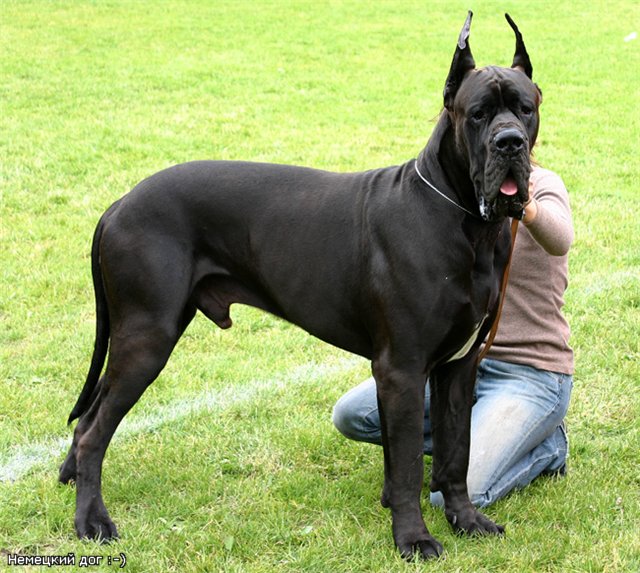
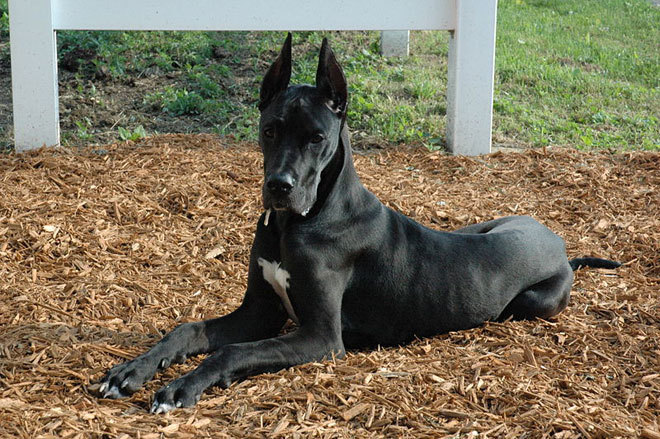
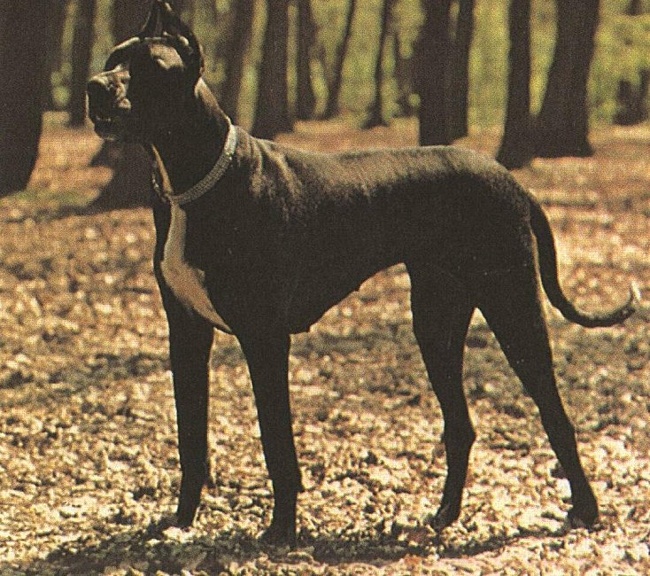
The breed standard allows for red, brindle, and black colors, as well as variations of blue and harlequin. Great Danes are characterized by a fairly large, massive body and a tall stature. The height at the withers for males reaches 76-86 centimeters, and for females, 71-81 centimeters. Males weigh between 54-90 kilograms, while females weigh between 45-59 kilograms.
Representatives of the breed are distinguished by a strong build and harmoniously developed muscles. These dogs have well-defined body proportions and impeccable posture. Furthermore, they are incredibly intelligent, proud, and possess a well-developed sense of dignity.
General information
Great Danes are distinguished by their pride and independence. But behind their stern exterior lies a kind and compassionate nature. From the very first moment they meet, they develop a sense of respect and devotion for their owner, and they are willing to repay their good treatment with affection and kindness. They are quite wary of other animals in the house, but in some cases they can be willing to interact and even become friends. Great Danes are best kept in a private or country house, as they require long walks and a high level of exercise. They feel rather constrained and uncomfortable in a city apartment.
Purebred dogs require constant attention and active involvement from their owners, so they're not recommended for people who are often short on time. It's crucial to dedicate at least a couple of hours a day to training your pet.
In addition, Great Danes get dirty frequently and suffer from drooling, which, accordingly, requires the allocation of additional time for grooming.
Puppies tend to be noisy and mischievous, so they need to be supervised constantly.
Dogs bond quickly with children if they grow up with them, but their large size can cause problems when interacting with a small child.
Fortunately, Great Danes are not aggressive or dominant, but it's best to let them know right away who's boss and teach them house rules, which they'll need to be reminded of periodically.
Training
If you've adopted a Great Dane, you can rest assured that you've got a guaranteed companion for long walks. This breed is successfully used as guard dogs. They also make reliable companions and bodyguards. These dogs require training from a very young age, as they have a strong will that needs to be channeled in a timely manner. After all, they can be quite stubborn once they reach adulthood.
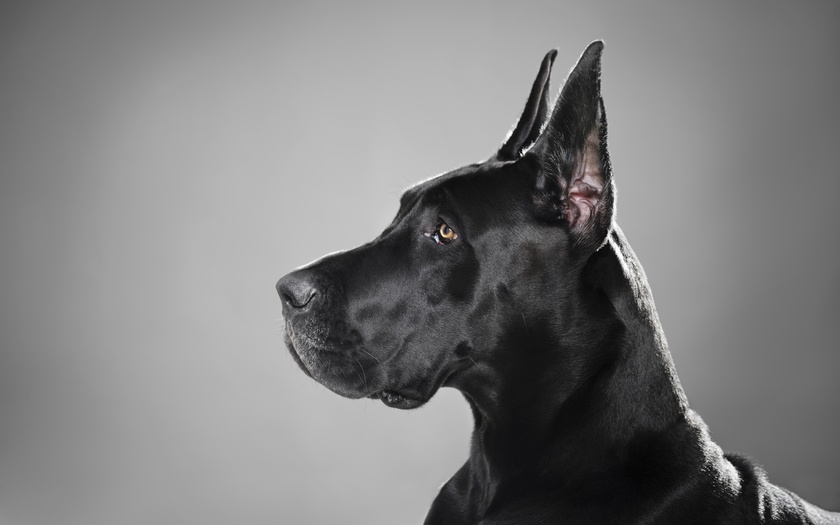
Great Danes are highly trainable and will happily repeat any exercises you suggest. Active exercise can help prevent the development of hip dysplasia.
Obedience training is very beneficial for this breed. To successfully train a Great Dane, use only calm and encouraging training methods, avoiding harsh punishments. These animals are very sensitive and quickly learn to recognize positive or negative words and gestures. To alert a Great Dane to misbehavior, the owner simply needs to say a firm "no" and stop paying attention.
Nutrition
Representatives of the breed require a well-balanced diet, including:
- meat products;
- milk porridges;
- boiled vegetables and dry food.
In addition, various dietary supplements can be used.
It's best to regularly feed this purebred breed high-quality commercial food, but if you choose a balanced feeding method, you can switch to natural nutrition. At six months, the puppy will already be an adult dog, but will love milk until old age; if possible, don't deprive it of this joy.
Dogs are prone to glaucoma and cataracts, dermatoses and gastrointestinal diseases.
Although Great Danes are generally healthy, not everything is perfect. The most common illnesses and ailments they experience are:
- excessive accumulation of gases;
- hip dysplasia;
- entropy;
- osteosarcoma;
- demodicosis;
- hypothyroidism;
- cardiomyopathy;
- interdigital dermatitis;
- skin lesions;
- eye diseases (cataracts and glaucoma).
Sometimes they become deaf, develop acne, or develop bone diseases in different parts of the body.
Character
Great Danes are majestic and stately dogs. They appear proud and independent. But behind their strong exterior lies a kind and compassionate nature. They are incredibly loyal to their owners throughout their lives. Show your dog the respect and care it deserves, and you'll receive affection and kindness in return.
Great Danes are individualistic creatures, so it's difficult to predict how your pet will behave toward other animals in the house. They may be quite aggressive toward them, or they may find a new friend in, for example, your cat.
Maintenance and care
The short coat of Great Danes does not require much grooming.
Dogs can easily survive a short period of minor shedding.
Dry shampoo is better than bathing a Great Dane for grooming. This is primarily because bathing a large dog is quite a complicated procedure, and frequent washing damages their coat and requires particularly thorough rinsing.
Dogs should be brushed and bathed as needed, such as before a show. The breed standard requires cropped ears. Regular cleaning of the ears and eyes is essential.
However, a dog's claws should always be level with the floor, so they need to be trimmed regularly.
To trim them, it's best to use guillotine-type nail clippers designed for large breeds. Dark nails should be trimmed carefully, being careful not to cut the sensitive area, otherwise the nail will bleed.
Great Danes also need regular teeth cleaning.
Great Danes are ideal for country living, as apartments are too small for them. They require intense exercise and active play.
Before getting a Great Dane puppy, it's important to remember that they require constant interaction, which is key to shaping their future disposition and character. Thanks to their short coat, they are low-maintenance and can be bathed as needed. With proper care and maintenance, the life expectancy of Great Danes reaches 9-13 years.
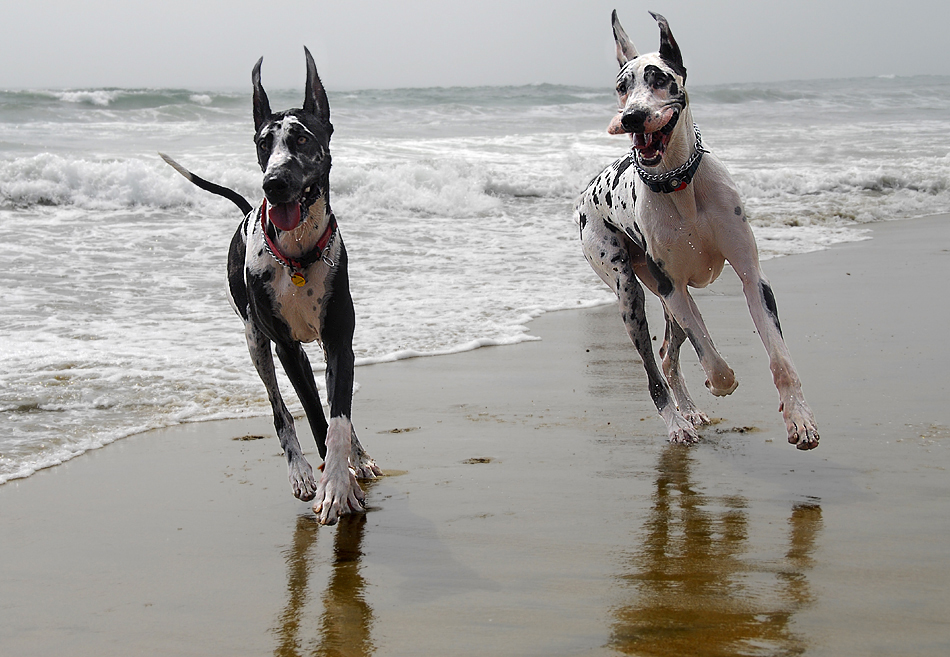
Ear cropping: is it necessary or not?
Cropping a puppy's ears is not necessary. When deciding whether to perform this procedure, first examine the parents' ears and evaluate their characteristics:
- high or low setting of the ears on the skull;
- cartilage - hard or soft;
- whether the ears are cropped or not;
- whether they are erect if they are trimmed;
- If not, do they fit the cheeks properly?
The parents' ears are examined when the pup's ears are still difficult to see and identify, i.e., at approximately 1-2 months of age. Once the puppy reaches 2-4 months of age, the ears are assessed using the same criteria as those of adult animals.
Ears should be cropped if the following signs are detected:
- The ears of both parents are set high, erect and cropped;
- high setting of the ears on the puppy's skull;
- no creases;
- light, hard cartilage;
- the ears seem to be slightly raised on cartilage.
Ears should not be cropped if the following signs are present:
- the ears of one or both parents are low-set, cropped, but do not hold an erect shape;
- or their ears are not cropped and lie properly against their cheeks;
- low position of the ears on the baby's skull;
- heavy soft cartilage;
- traces of creases on the ears that cannot be removed during cropping.
Each pair of ears should be examined individually, even if the pets are littermates. When assessing the ears, whether you choose to crop them or not, remember that never pet a Great Dane puppy's head, as this can damage both cropped and uncropped ears.
The decision to perform this delicate procedure is ultimately up to the dog owner, but before doing so, they should consult with a dog trainer or professional breeder.
Knitting features
Large breed dogs typically reach puberty later than medium and small breeds. Although their first heat cycle occurs between 8 and 14 months, physical growth and overall development continue actively. Therefore, mating at this age is not recommended. Early mating can result in stunted development and the production of weak and non-viable litters.
Only a completely healthy, physically developed female dog at least 22 months old is allowed to mate.
To obtain high-quality offspring, breeding bitches must be prepared for mating. It has been noted that both emaciated and obese individuals experience decreased sexual activity, leading to loss of fertility, and the quality of the offspring suffers. Therefore, pregnant and pre-breeding animals require more careful care and strict adherence to a specially developed feeding system.
In addition, before this important event, it's important to ensure the bitch has been vaccinated no more than a year ago. If the vaccination was administered more than a year ago, it must be repeated, followed by mandatory deworming. The vaccination should be administered approximately one month before the expected start of estrus. The bitch also needs to be dewormed before mating. Using anthelmintics during heat and immediately after mating can be unsafe, and is prohibited after 30 days of pregnancy.
Peculiarities of buying a puppy
When deciding to buy a Great Dane puppy, you need to take into account that this breed is difficult to breed.
Therefore, you can “stumble upon” a “fake” that does not meet the standard requirements at all.
How to choose the right Great Dane puppy? It's a good idea to consult a specialist who can verify the puppy's pedigree. It's best to pick a puppy between 3 and 5 months old. It should be friendly, moderately well-fed and muscular, with strong bones and symmetrical limbs. Pay special attention to the head. The axes of the skull and nose should be long and parallel when viewed in profile.
In addition, a “purebred” is distinguished by a clearly defined transition from the forehead to the nose and a large upper lip.
Once you bring home a Great Dane puppy, you need to start training it right away, instilling proper behavior. It's important to note that raising a puppy is challenging, so be prepared with patience, love, and firmness.
Little by little, your pet will learn to recognize intonations and commands. If things get stuck, avoid resorting to harsh measures and physical punishment: such behavior on the part of the owner will foster negative traits typical of this breed.
To prevent your pet from damaging furniture and other interior items, give him a rubber toy in advance so that if he's tempted to chew on something, he can direct his attention to his favorite object. It's important that the objects he plays with are large, so he can't accidentally swallow them. An old slipper, for example, might become an object of desire and passion for him, as it retains his beloved scent.
Photos
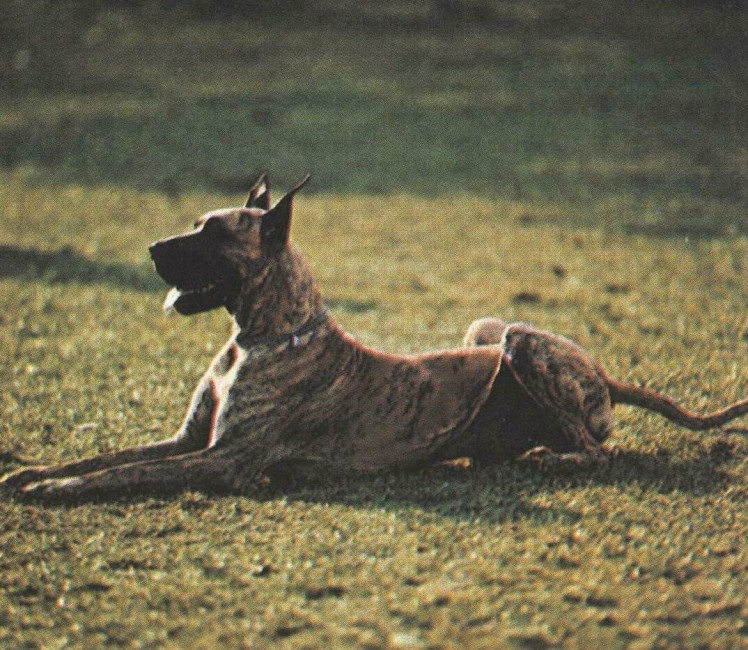
Photos of Great Danes:
Read also:
- German dog breeds
- Wachtelhund (German Spaniel, Quail Dog)
- German Longhaired Pointer (German Longhaired Pointer)


Add a comment