
German Shepherd: The History of the Breed's Popularity
Outside of its homeland, the German Shepherd gained popularity relatively late—between 1910 and 1920. This was spurred by the First World War, during which the breed proved itself to be highly successful.
Another reason for the rather intense interest in the dog was a series of films released during that time. The main character was a dog named Rin-Tin-Tin. As a result of these factors, the German Shepherd quickly gained popularity and won worldwide acclaim.
Content
German Shepherd in the United States
The breed first conquered the United States. The breed's founder was John Gans, who co-founded the American German Shepherd Club in 1913. Gans had excellent business connections in Germany, and he imported only the best breeding dogs from there, which played a decisive role in the development of German Shepherds in America.
Meanwhile, an economic crisis raged in Germany, forcing breeders to sell their high-quality breeding dogs for next to nothing. All of them were shipped to the United States. When war broke out in Europe, breeding efforts in America were unaffected, demand for puppies steadily increased, and America's favorite breed entered the top ten most popular breeds in the country.
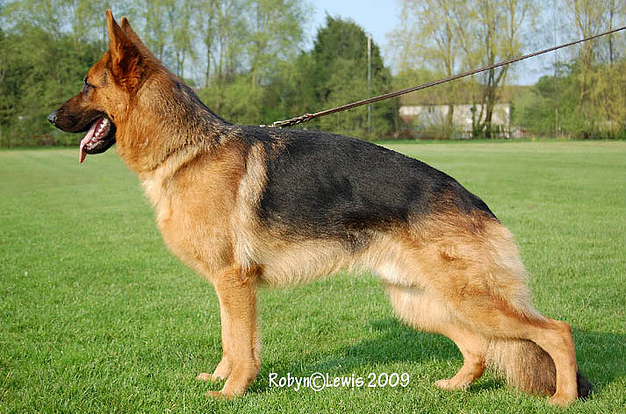
German Shepherd in France and Great Britain
German Shepherds arrived in France in 1920. Initially, however, the animals didn't take root. After several unsuccessful attempts to introduce the breed, a breeder named Georges Baré took matters into his own hands. In 1920, he founded the Société du Chien de Berger Allemand (SCBA) with the goal of breeding purebred dogs. Excellent males were purchased from Germany: Walter am der Neustrasse (born 1923), Aribert von Wildweibschenstein, then Gockel von Holzstockrand, and finally, in 1949, Baré personally imported the famous male Faust von Wickkrather Schloss from Germany.
Until January 1, 1958, the SCBA maintained a stud book where information about dogs was recorded. Beginning in 1958, all records were entered into a single French stud book. In 1971, a decision was made to require mandatory tattooing of all dogs registered in the book.
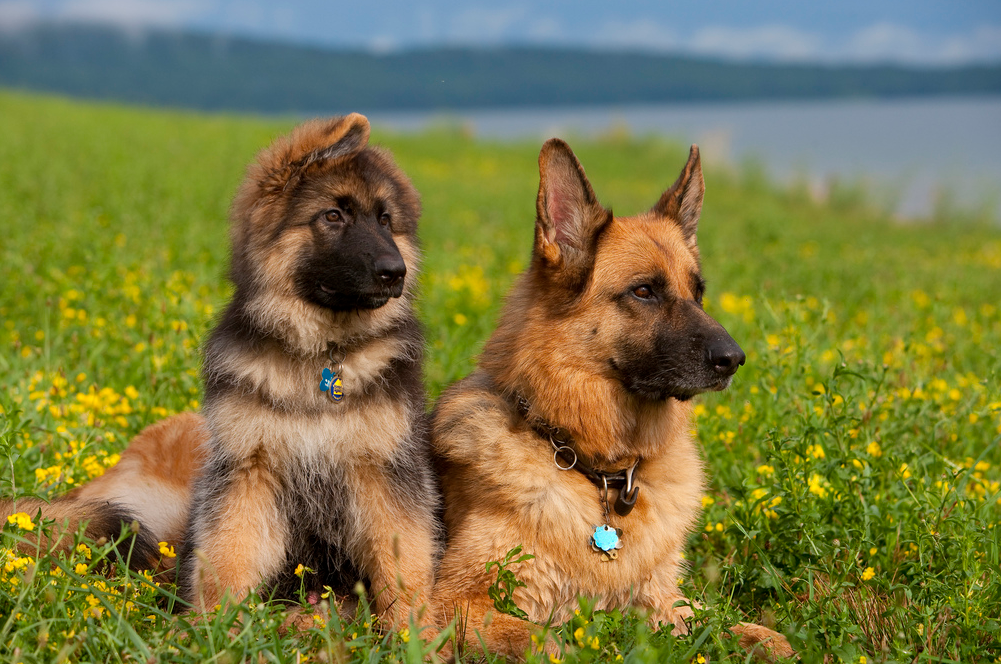
In Great Britain, the German Shepherd quickly gained a reputation. In 1919, the first breed club, The German Shepherd Dog League of Great Britain (GSDL), was founded. It is now one of the leading members of the World Union of German Shepherd Clubs. The club is headed by Percy Elliott, a breeder with 60 years of experience.
In England, there are two types of German Shepherds: the Alsatian (English) type and the type that meets the German SV standard. Alsatian-type shepherds are more good-natured, and in terms of appearance, they are more powerful and shorter-legged than their German-standard counterparts. Dogs of the SV standard have a distinctive coat and a distinctively graceful gait.
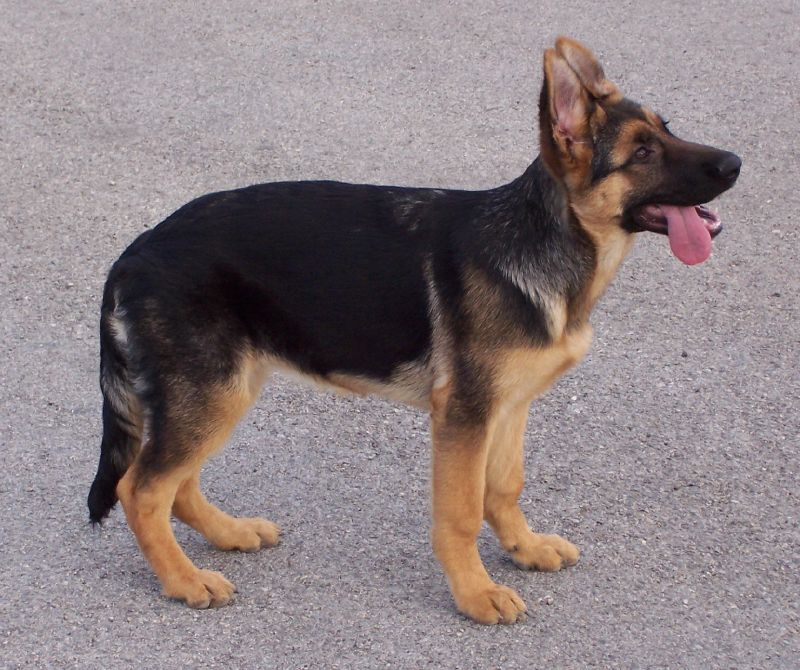
German Shepherd in Switzerland and Italy
In Switzerland, the national club for breed lovers was founded in 1902 and has become the largest cynological organization in the country. Currently, breeding work is conducted in two directions: sporting dogs (kennels "VD Drei Tanen," "V Balsinger," and others) and show dogs (the most famous kennel is "Vom Haus Robinson"). Since the 1950s, local dogs have competed in championships in Germany. One of the most famous females, who received the championship title in Duisburg (1987), is the renowned Senta von Basilick.
Italy is one of the leading countries in German Shepherd breeding. The breed has been at the peak of popularity in the country for over 30 years, as evidenced by data from the Italian Stud Book (LOI). Count Leonardo Gatto-Roissard founded the German Shepherd Society (SAS) in 1949. Nowhere in the world are more dogs born than in Italy—over 25,000 annually.
Breeding has undergone significant changes over the past 20 years. Nutrition and objective criteria for monitoring producers are receiving the utmost attention. These include: dysplasia (X-ray examination of the hip joint), DNA testing, morphological and behavioral breeding tests. Also, dog breeding is monitored using a database that includes character assessments, breeding test results, DNA testing, and hip dysplasia.
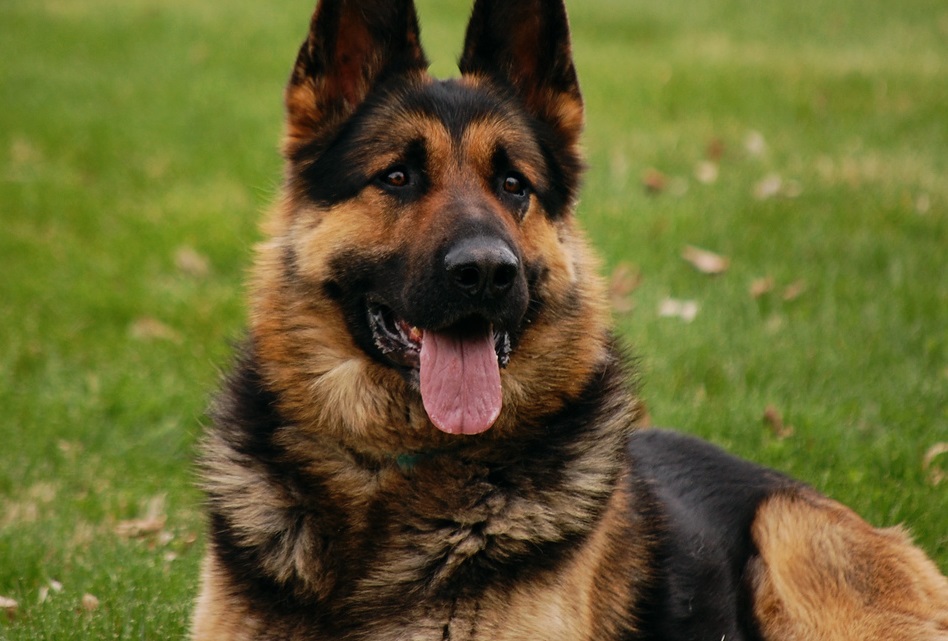
German Shepherd in Russia
And finally, the German Shepherd in Russia. The German Shepherds imported from Germany in the 1920s were considered, as they say, rejected in their homeland. Males reached 68-70 cm at the withers, and such oversized dogs were removed from breeding by the creator of the breed in Germany, Max von Stephanitz. Also, the dogs imported to the USSR were distinguished by their large and powerful build, which was another significant drawback of the SV standard.
In the 1950s, the breed being bred in the USSR increasingly deviated from the standard. These dogs were distinguished by thick coats, excessive height, great physical strength, and a large frame. Breeding efforts of those years were aimed at developing working qualities, not exterior appearance, as cynologist A. Mazover (1954) wrote in his book. This type of dog was standardized in 1964 and was named the East European Shepherd.
Western-type German Shepherds only appeared in the Soviet Union in the 1980s. This type somewhat discouraged breeders, but the classic type surprisingly quickly took hold in the USSR. Breeding criteria began to be revised, with seminars to which German experts were invited playing a crucial role. The famous Kanto and Quanto von der Wehnerau left a noticeable mark on Russian dog breeding, as did dogs imported from Hungary. In 1989, the first exhibition of the National Association of German Shepherd Fanciers was held in Moscow, and in 1991, the SV standard was finally adopted in Russia as the "foundation of breeding work."
Read also:
- Czechoslovakian Wolfdog
- White Swiss Shepherd (American-Canadian Shepherd)
- Wachtelhund (German Spaniel, Quail Dog)


Add a comment