
German shepherd
The German Shepherd was the result of a search for a versatile breed whose working qualities and intelligence would allow it to be used in any field. Initially, they were primarily used as herders, but soon they were actively trained for customs and police work, where they demonstrated outstanding results in detecting drugs and contraband. Shepherds often accompany the blind, making excellent watchdogs and reliable companions.
Country of origin: Germany.
Content
History of origin
Max von Stephanitz can rightfully be considered the breed's founder. It was he, an ordinary German military man, who set himself a seemingly impossible task: to develop a universal breed that would combine all the qualities necessary for humans. He began searching for a suitable animal, enlisting the help of his friend and comrade, Arthur Mayer.
In 1899, such a dog was found. Stefanitz saw it at a dog show. It was a medium-sized male named Hector, later renamed Horand von Grafrath. He was registered as the first German Shepherd, producing numerous, high-quality offspring, from whom all modern representatives of the breed descended. The development of a breed usually takes a long time, but this was not the case with the German Shepherd. It took no more than 20 years for it to gain popularity and recognition. By 1923, there were over 20,000 breeders and enthusiasts of the breed.
During World War I, German Shepherds excelled, but Germany's defeat had a negative impact on the breed's development. A negative attitude toward anything German emerged worldwide. After World War II, a new era began, a revival of the breed, and dogs from Germany now spread throughout the world.
Appearance and character
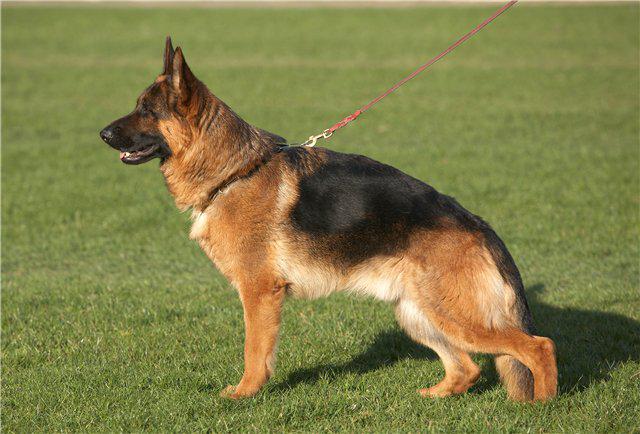
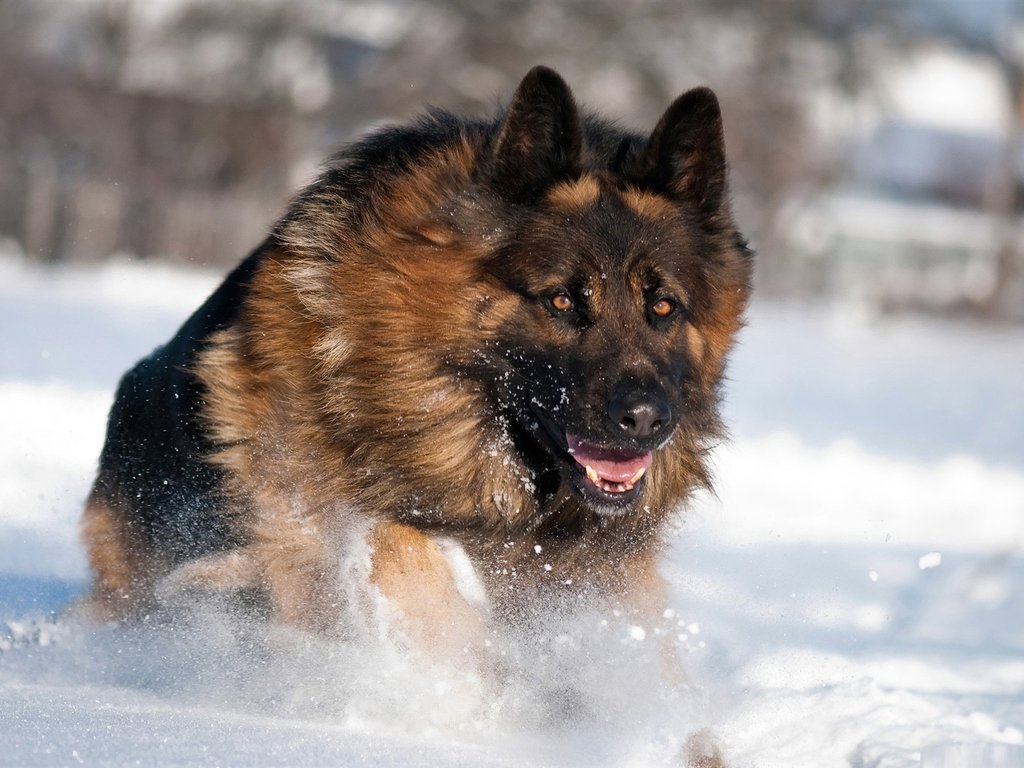
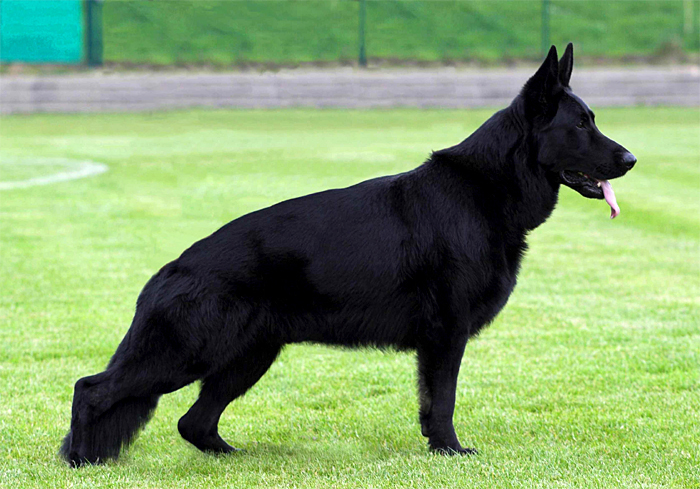
The German Shepherd is a medium-sized, strong dog.
- The head is wedge-shaped and moderately wide. The nose is straight; a hump is undesirable. The lips are dry and dark in color. The jaws are well developed, with a strong, scissor-like bite.
- The eyes are set slightly obliquely, almond-shaped, and dark in color. The ears are medium-sized, erect, and pointed forward.
- The neck is strong, without dewlap, and well-muscled. The body slopes toward the croup, approximately 20 degrees. The tail is carried in a curve. The chest is moderately broad. The forelimbs are straight, and the hind legs are slightly bent. The stride is long and the movements are light. The coat is harsh with a dense undercoat.
German Shepherds are known for their stable, strong nature, balanced, and noble character. "Pure" representatives of the breed should be completely free of negative character traits; this is what makes them unique. German Shepherds are extremely devoted to their families, and will defend them to the death. They love children very much. They cannot stand loneliness or idleness.
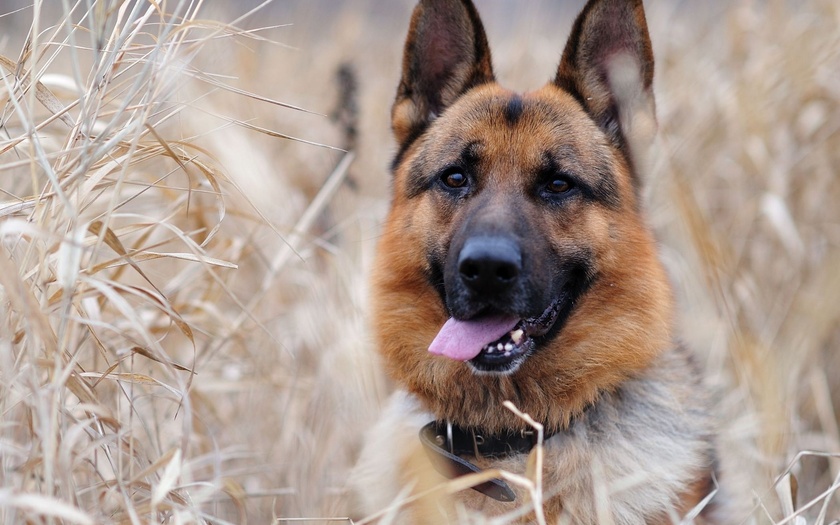
The character of this dog breed can be described for a very long time, but only in good words.
German Shepherds, contrary to popular belief, are not confrontational and are not prone to aggression toward people or other animals. They usually assess the situation adequately and are able to recognize approaching danger. Therefore, if a threat arises, the dog will not wait for your command but will react independently, successfully protecting you.
A hallmark of their character is their renowned fearlessness. A German Shepherd won't hesitate to fight a stronger adversary or retreat; they'll instantly pounce and fight back with all their might, neutralizing the enemy. The dog develops an attachment to one owner, who is responsible for its training. At the same time, it also loves other family members and doesn't neglect them. It especially enjoys interaction with children, with whom the serious dog can easily forget itself and indulge in mischief.
A German Shepherd, deprived of its owner's company for a long time, will deeply miss him. To prevent him from becoming depressed, it's best to assign him some responsible task, such as guarding the house territory or your owner's belongings.
Training
German Shepherd dogs of this breed are extremely smart and intelligent, but they need good upbringing and intensive training no less than other breeds.
This animal has long been recognized as one of the top three smartest dogs on the planet. This claim is constantly reinforced in the public's mind by films featuring intelligent and well-trained German Shepherds. However, when purchasing a purebred puppy, it's important to remember that only with regular training will the adult dog be able to demonstrate its unique intellectual abilities.
Fortunately, German Shepherds are easy to train; they pick up commands quickly and execute them immediately. Some dogs may have difficulty with obedience if the right approach isn't found.
If you want a dog like the one in the movies, then simply training him at home won't be enough. You'll need professional training from specialists, taking one or, better yet, several different training courses. It all depends on what you expect from your pet.
Of course, training should begin with a general, mandatory training course. For professional service, animals can be additionally trained in various professional skills, such as search and rescue or guard work.
Shepherds enjoy training and perceive it as a game, though they can get boring. Physical activity should be moderately vigorous, including long runs, obstacle courses, and, of course, games. Shepherds have a reserved, even temperament, and are distinguished by their high level of intelligence, courage, incorruptibility, and selflessness. These dogs are very devoted to their family and completely dependent on their owner.
Maintenance and care
Having heard of the German Shepherd's independent nature, some dog lovers believe they require minimal grooming. While this is true to some extent, it doesn't mean you can abandon your new pet to its own devices. Only a strong and healthy dog can demonstrate the breed's best qualities, so it requires constant attention and care from its owners.
Representatives of the breed feel great in an apartment, provided they are walked twice a day, they can live in a private house or in enclosure In the yard. They adapt easily to new surroundings and handle moving and traveling without difficulty. The worst thing for them is separation, even for short periods. They are very affectionate with children, sometimes even overprotective. They are generally friendly with other animals, but without early socialization, they may try to take a dominant position. Grooming a German Shepherd's coat is easy: just brush it once a week and as needed during shedding season. Bathe them a couple of times a year. Nail trimming is usually not necessary.
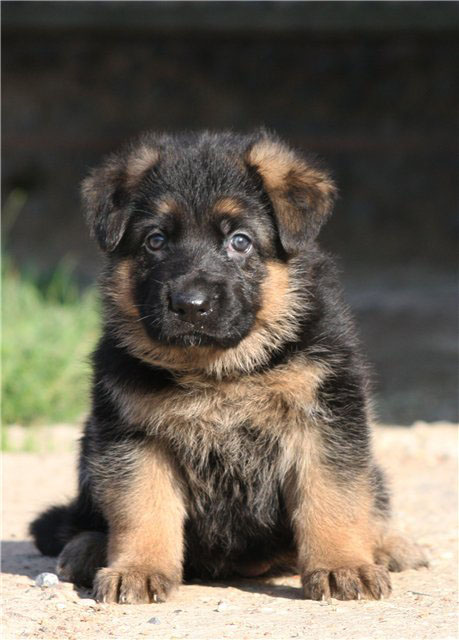
German Shepherds are fairly clean and tidy, and can be kept in an apartment, provided they receive ample exercise. They thrive in a kennel and can easily withstand severe frosts. Grooming is simple; regular brushing is sufficient. They need to be bathed infrequently, no more than three times a year. Even when they are feeling well, their ears and skin should be checked periodically.
Diet and health
German Shepherds are completely unfussy eaters. They can be fed natural food or prepared formulas, but it's important that the diet is complete and adequate for their exercise needs. Portions must be carefully monitored; overfed pets will become lethargic, sluggish, and quickly gain weight. German Shepherds enjoy excellent health if their diet and exercise levels are appropriate.
Of course, there are a number of hereditary diseases to which the breed is particularly predisposed, including elbow and hip dysplasia, ear infections, atopy, and degenerative myelopathy. German Shepherds are also prone to intestinal volvulus.
To maintain a healthy dog, it's important to adhere to the vaccination schedule, administer timely treatments for internal and external parasites, and regularly monitor the condition of the skin and coat. Care must be taken to distinguish a reaction to a food or non-food allergen from signs of a skin condition.
Life expectancy up to 14 years.
As you can see, acquiring this strong, independent dog doesn't relieve you of the need for constant care and monitoring. Insufficient attention and failure to follow important feeding and maintenance guidelines can have a very negative impact on your pet's health and personality. Therefore, before purchasing a German Shepherd, consider whether you can devote a significant amount of time to caring for it.
Photos
Photos of German Shepherds: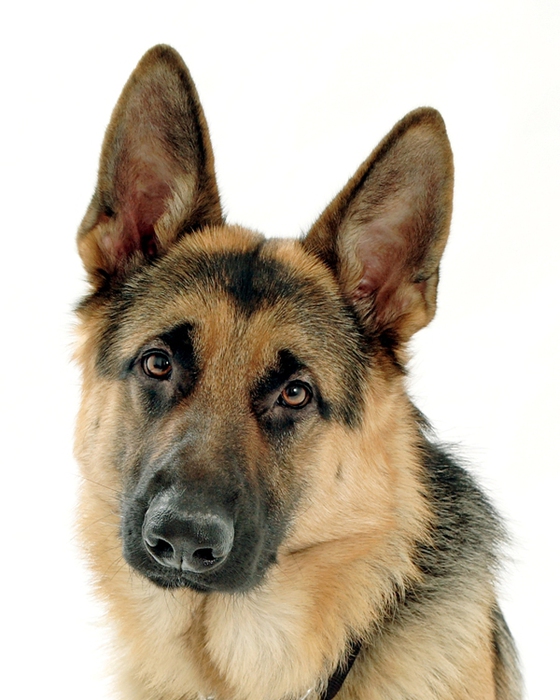


Add a comment