
Dog halter: what is it and what is it for?
A halter, or halter, is an accessory essential for training a dog to obey. It's essential for controlling dogs that don't obey their owner's commands or pull too hard on the leash during walks. The design is so simple that you can sew one yourself. This device doesn't cause pain to the pet; it simply creates discomfort, forcing them to reduce their pressure.
Content
Why does a dog need a structure?
The first dog halter was developed around 30 years ago by Dr. Roger Macford, based on horse tack with a snap-fastener attachment to the lead rope or cord. The invention was designed to enhance control over animals that love to pull on the leash. The accessory fits on the muzzle, causing no discomfort during obedient behavior—allowing the dog to open its mouth or retrieve treats.
The harness consists of several straps—a nose strap, a neck strap, and cheek straps—that attach to a ring located under the muzzle. All components of the harness must fit as snugly as possible to securely hold the dog.
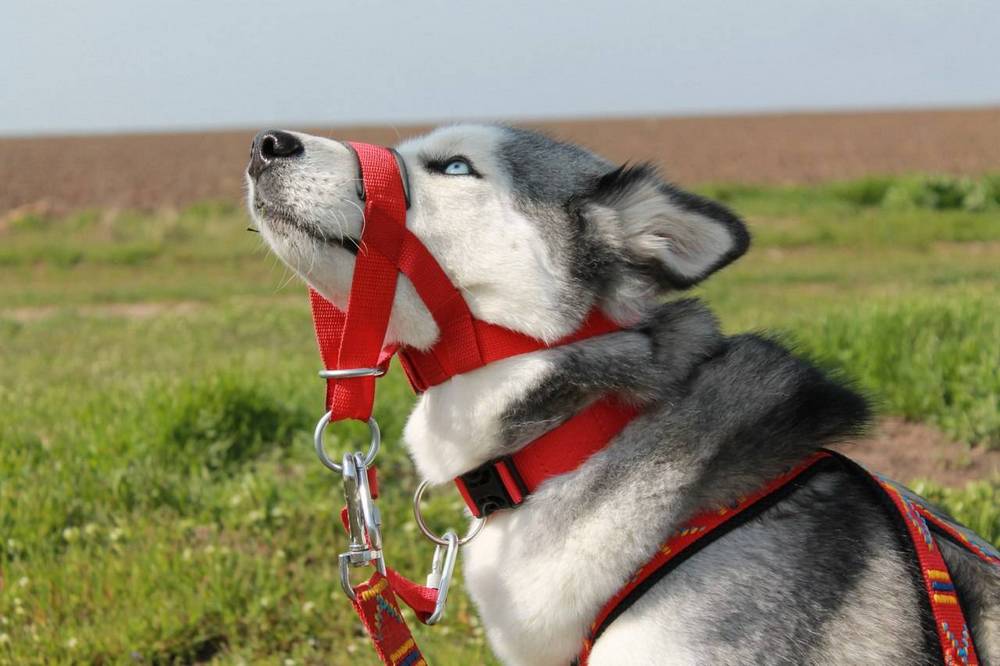
Differences from a muzzle and collar:
- Tugging leash when using a collar Causes discomfort or pain to the pet. A sudden enough jerk could cause injury.
- A muzzle is used to limit the mobility of the jaws - the animal cannot bite or pick up something from the ground.
The sole purpose of a halter is behavior correction and command training. The principle is simple: when the harness is tightened, the pet experiences discomfort, so it is forced to release the pressure.
The name "halti" is often used to describe this accessory. The word originates from the name of a company that specializes in making harnesses for cats and dogs. According to customer reviews, the Halti brand is currently the top-rated halter brand.
Criteria for choosing an accessory
When purchasing a halter, you need to pay attention to two factors that determine the comfort of use for both the animal and the owner: the material and the size.
Material and fasteners
Previously, tanned cow or pig hide was used to make ammunition—a material strong enough to withstand the force of a large dog. This design typically featured heavy metal carabiners, significantly increasing the overall weight of the weapon.
In recent years, nylon has become a popular choice for harnesses. The lightweight material is highly durable, but it quickly stretches under the weight of the metal carabiner. Therefore, nylon harnesses are sometimes equipped with plastic fasteners. This design is suitable for small dogs, but is unable to withstand the tension of larger breeds. A combination of nylon and metal fasteners, with the ability to periodically tighten the straps, is considered the best.
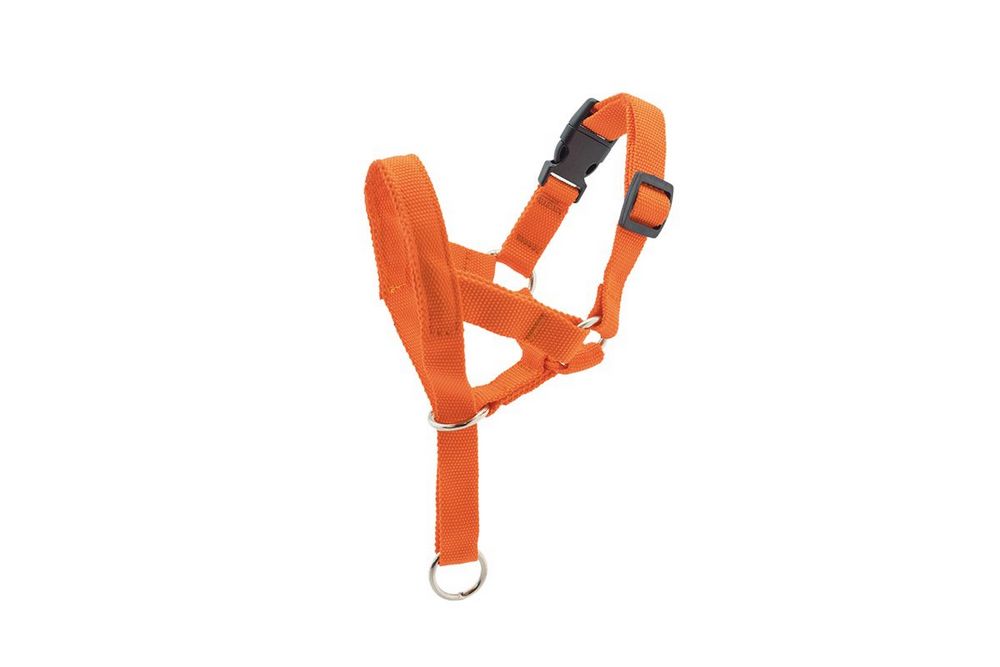
To prevent abrasion of the wool in areas of contact with the straps and ring, special neoprene inserts are used.
Size range
Before choosing a halter, carefully measure the circumference of the muzzle. You'll need two measurements: the widest part and the length from the back of the head to the nose. If the halter is too loose, the dog won't respond to leash tension. An excessively tight halter can injure the pet's jaw. When purchasing in-store, it's best to try it on right away. When choosing online, you can use the description, photos, and size chart as a guide:
|
Marker |
Length in cm |
Circumference in cm |
For which breeds? |
|
0 (XS) |
30-35 |
15 |
Papillon, miniature poodle, Yorkie, rabbit dachshund, lapdog, Chihuahua |
|
1 (S) |
35-42 |
22 |
Miniature Schnauzer, Corgi, Basenji, Jack Russell, and Border Terrier |
|
2 (M) |
40-48 |
27 |
Scottish Terrier, Beagle, Border Collie, English Cocker Spaniel, Italian Greyhound |
|
3 (L) |
50-57 |
31 |
Setter, German Shepherd, Bull Terrier, Doberman, Labrador |
|
4 (L-XL) |
48-60 |
37 |
Dalmatian, Rottweiler, Great Dane, Ridgeback, Deerhound |
|
5 (XL) |
54-66 |
46 |
Bloodhound, St. Bernard, Mastiff, Mountain Dog, Alabai |
XL-k models are produced specifically for large breeds with short noses. This size is ideal for bulldogs, bullmastiffs, and boxers.
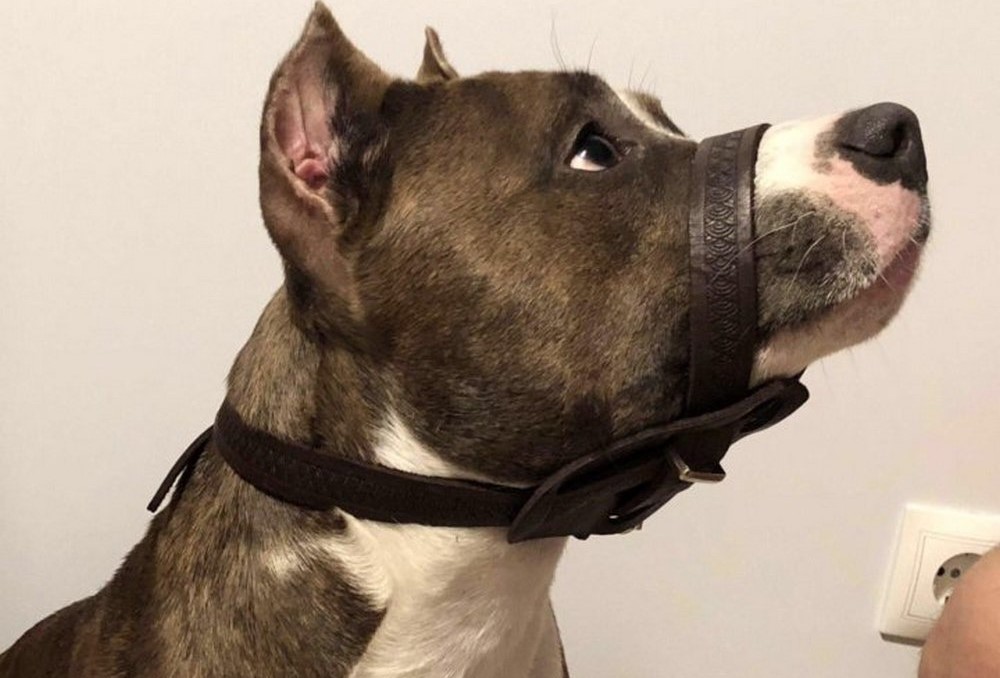
The standard size range is not recommended for breeds due to the presence of flews - the dog bites its lips when closing its mouth.
How to make a durable halter with your own hands
If you can't find a perfectly fitting halter, it's easier to sew one yourself. You'll need:
- belt sling – about 2 m;
- 2 rings – diameter 25 mm, solid, plastic or metal;
- 2 carbines;
- one plastic fastener - the size is selected according to the width of the strap.
Step-by-step instructions:
- Cut pieces of a predetermined size from the webbing, adding 2 cm for seams.
- The clasp is sewn to the neck strap, and the ring is sewn to the tape intended for the muzzle.
- The second ring is attached to the shortest strap. The free end is folded in half and sewn to the middle of the neck strap.
- A loop is formed from the nasal belt and securely fastened with threads.
- From the remaining piece of tape, make a safety leash and secure it to the collar with a carabiner.
Assemble the harness and try it on your pet. Adjust the strap lengths if necessary.
Halter training
It's recommended to use the accessory from an early age, when the puppy is being taught basic commands. Here's a step-by-step guide to getting your pet accustomed to the harness:
- The dog is allowed to sniff the object, rewarding it with a treat and praise – the accessory should provoke a pleasant impression.
- Holding the harness by the nose strap, pull a piece of treat through the formed ring.
- When the animal puts its nose through the loop, the ring is removed from it and the procedure is repeated several times.
- As soon as your pet stops being afraid of the new object and starts poking its nose through the ring to get a treat, you can attach the structure to its muzzle, remembering to reward it.
Once the pet has become accustomed to the new object, attach the leash. First, walk the dog around the apartment. At first, the dog will actively try to remove the bridle from its muzzle.
Long-term wear is not recommended - it may cause chafing of the skin, and if the straps are too tight, it may disrupt blood circulation.
How to use the accessory correctly is described in detail in the video.
A halter is used to develop obedience and break a dog's habit of pulling its owner. Positive results are usually seen after two weeks of training. The pet quickly understands that too much loose behavior leads to discomfort and stops being unruly during walks. You can buy a halter at any specialty store, but it's even easier to sew a simple, essential dog harness yourself.
Read also:
- When can I start walking my puppy?
- How to stop a dog from pulling on a leash during a walk
- How to choose a muzzle for a dog


Add a comment