
The name of the dog breed from the film Beethoven
You watched the cult family comedy "Beethoven" and wondered what the official name of the dog breed in the film was and whether the description of the intellectual abilities and psychological profile of the main character and other representatives of the breed matched.
Content
About the film
This family comedy about a dog named Beethoven first hit theaters in 1992. Today, the film ranks in popularity alongside such classic American films of the 1990s as Home Alone, The Nanny, Curly Sue, and Problem Child.
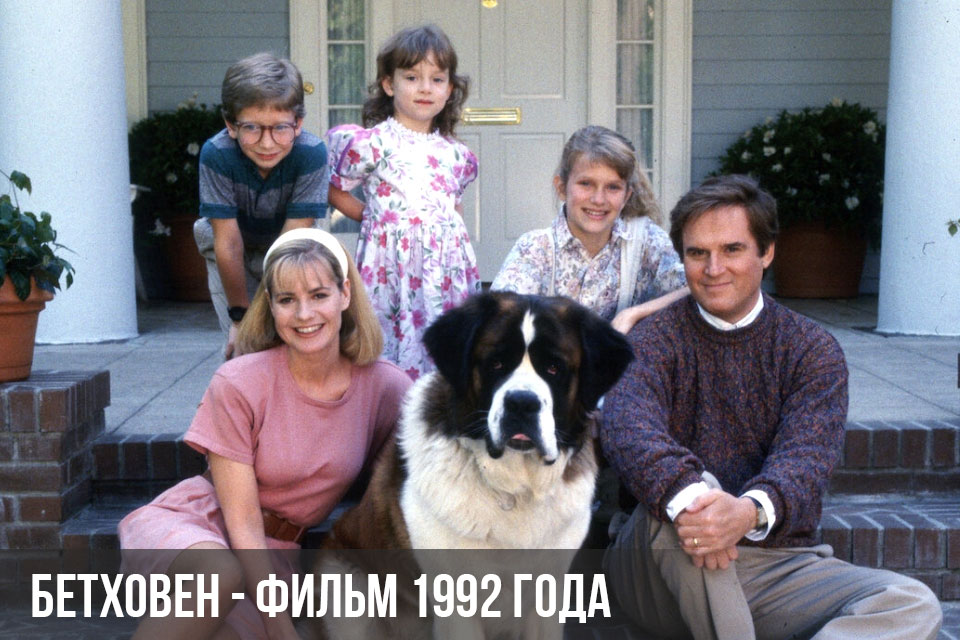
Basic information about the film:
|
Original title |
Beethoven |
|
Company |
Northern Lights Entertainment (USA) |
|
Distributor |
Universal Pictures |
|
Director |
Brian Levant |
|
Screenwriter |
Amy Holden Jones (under the pseudonym Edmond Dantès) |
|
Year of release |
1992 |
|
Budget |
$18 million |
|
Rental income |
$147 million |
The film tells the story of a small purebred puppy who escapes from kidnappers and finds a new family. The dog gets its unusual name in the film for its peculiar reaction to a piece of Ludwig van Beethoven's 5th Symphony played by little Emily.
The dog breed from the film Beethoven
Beethoven is a purebred St. Bernard. The breed is named after the Catholic saint (Bernard of Menton) who founded a refuge for pilgrims at the Great St. Bernard Pass in the Alps.
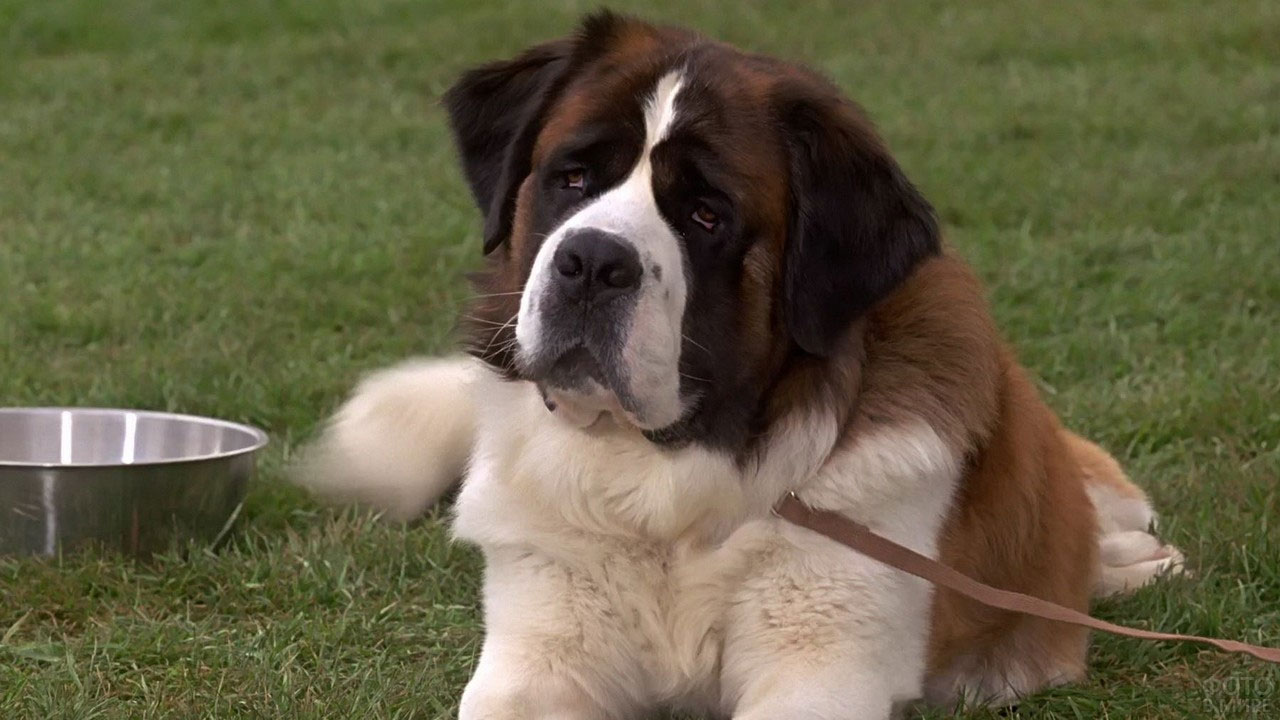
Brief description of the breed
|
Name of the breed |
Saint Bernard |
|
Country of origin |
Switzerland |
|
Weight |
from 70 kg |
|
Height |
K (70-90 cm) C (65-80 cm) |
|
Color |
white with red spots and black edging on the head |
|
Character |
calm, balanced, kind |
|
Purpose |
shepherd's |
|
Life expectancy |
9-11 years old |
Beethoven's breed in the film comes in both smooth-haired and long-haired varieties (the actor used a long-haired St. Bernard).
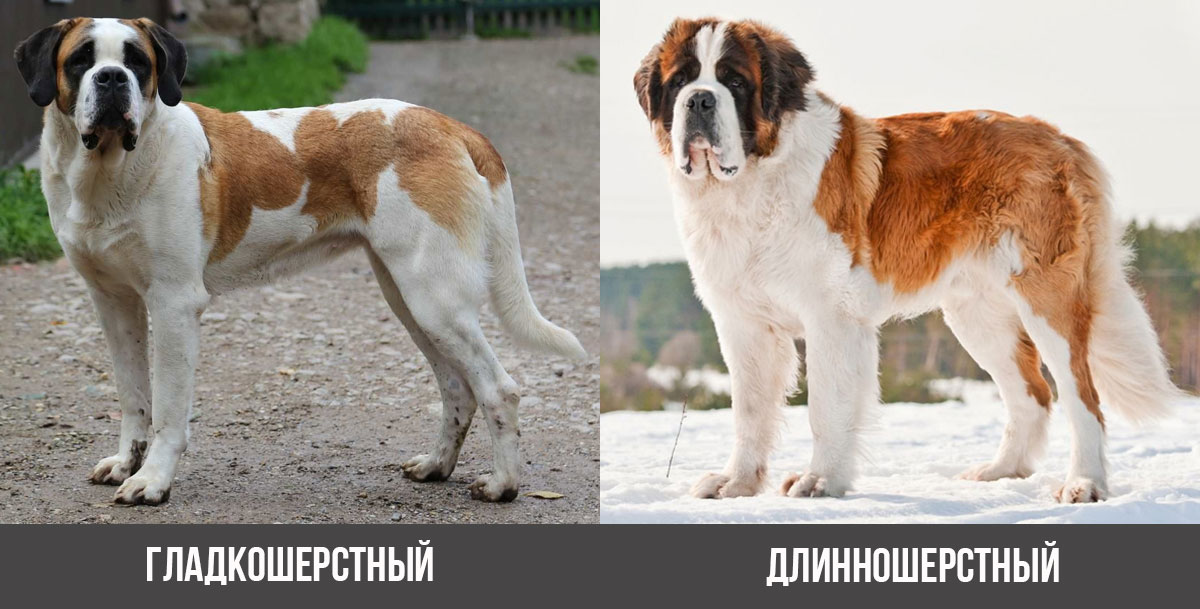
When choosing a shaggy actor for the role of Beethoven, the dog was looked for according to the following criteria:
- large, massive;
- very smart;
- cheerful, playful (after all, the film was conceived as a comedy).
The filmmakers didn't plan to make a film specifically about a St. Bernard. The dog named Beethoven could have been a completely different breed, as intelligent large dogs are indeed plentiful, and the filmmakers initially considered the St. Bernard too phlegmatic and incapable of the mischief-making that abounds in the film.
Character
What are St. Bernards really like?
In the film, Beethoven is a mischievous and playful puppy, ready to support his young owners in their mischief, but with age, he transforms into a sedate and intelligent member of the family. Saint Bernards are exactly that. As puppies, they are incredibly active pets, requiring socialization, as well as intellectual and physical stimulation, for harmonious development.
Important! Physical activity should be moderate. Very long runs or jumps from heights can cause joint deformities in puppies of such large breeds.

Adult Saint Bernards are calm, even-tempered, and even slightly phlegmatic. They are extremely devoted to their family, willing to protect and support not only their main owner but also other members of their pack.
Dogs raised with love and properly socialized are not wary of strangers and will genuinely welcome visitors. However, if you want a reliable guard dog and have your pet undergo the appropriate training, a large and strong St. Bernard will be a reliable protector for all family members.
Most representatives of the breed get along well in homes with children and other pets.
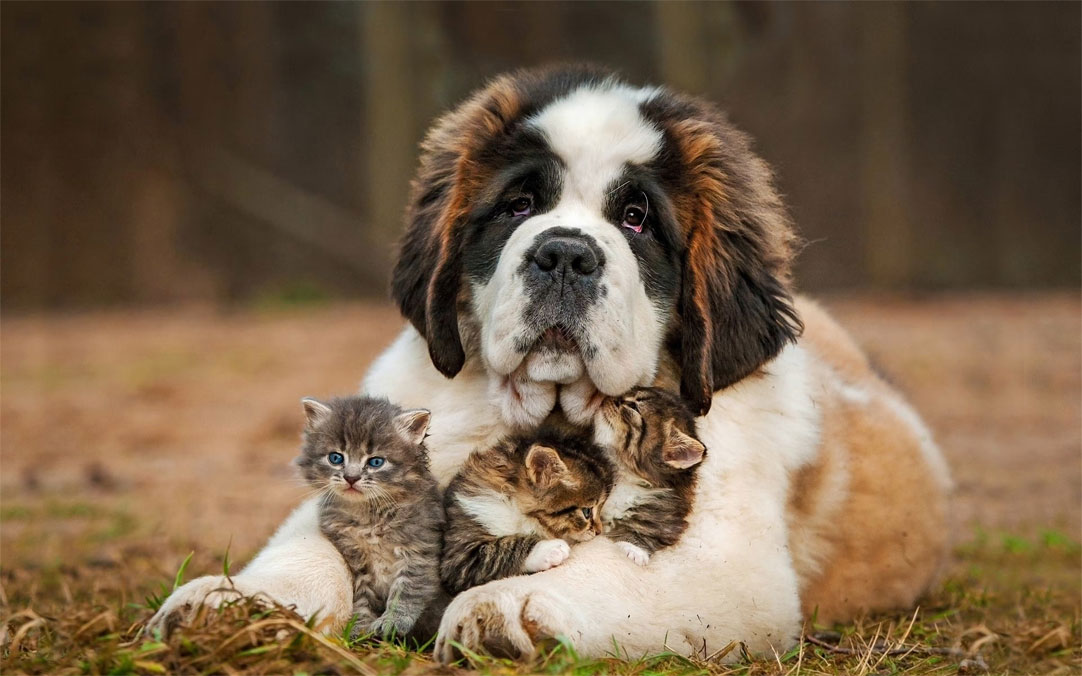
Content Features
Although in the film, Beethoven the dog shared the house with other family members, in reality the breed feels much better in a spacious, properly equipped enclosure.
Remember! Lack of exercise can lead to obesity in these dogs and the development of a whole range of related health problems.
When kept in an apartment, the dog should receive at least 3-4 hours of walking with active games and the opportunity to run.

This breed's shedding is quite intense and usually occurs twice a year, but if the temperature regime is disrupted, which occurs when kept in heated rooms, it can be a constant nuisance.
It is recommended to bathe a St. Bernard no more than 2-3 times a year, but in the summer months, dogs enjoy water treatments in open water.
Health
Unfortunately, the Saint Bernard, like most other very large dogs, doesn't live long. However, most members of the breed are generally healthy.
Most often these dogs suffer from diseases:
- musculoskeletal system (joint dysplasia, patellar dislocation, osteosarcoma);
- eye (cataract, entropion, cherry eye);
- poor hearing (complete deafness is rare);
- epilepsy;
- obesity.
Price of a puppy
Today, you can buy a puppy that looks like Beethoven in almost any region of Russia, as the breed is quite popular and there are many kennels specializing in breeding St. Bernards.
The average price for a puppy ranges from 25,000 to 35,000 rubles, but a promising show-class boy or girl can cost up to 50,000 rubles.

Breeder Advice (video about the breed)
10 interesting facts about the film
- The lead character (a dog named Beethoven) in the comedy was played by a St. Bernard named Chris, originally from Voronezh, Russia, but the lead actor had at least 10 stunt doubles, all of whom can be distinguished in the photo upon close inspection.
- The trainer of all the dogs that portrayed Beethoven on screen was Eleanor Norris Keaton (wife of the famous American silent film actor Buster Keaton).
- Not all of the stunts in the film Beethoven were performed by a dog; in some takes, the lead role was played by a human dressed in a faux fur suit, which was tailored to match the main character's coloring.
- The rich facial expressions that the dog Beethoven impresses with in the film were recreated with the help of a robot dog (animatronic).
- The American Humane Society closely monitored every moment of filming and was completely satisfied, as not a single furry actor was harmed or harmed in any way during the making of the film.
- The only people unhappy with the film were representatives of the American Veterinary Society, who believed that the main character's image tarnished the good name of a veterinarian (they even tried to remove the film from distribution).
- The film has seven sequels, filmed between 1993 and 2014, but they are significantly weaker than the first part, so they were not released in American cinemas, but are now available in good quality on online platforms.
- The animated series based on the film about Beethoven was equally popular. Dean Jones (the actor who played the evil veterinarian in the film) also voiced George (the head of the Newton family) in the cartoon.
- The film was adapted into a Super NES and Game Boy game called Beethoven: The Ultimate Canine Caper, as well as a series of lesser-known smaller computer games.
- When writing the script, the breed of the main character's dog was not specified, so initially they wanted to cast a Golden Retriever for the role of Beethoven.
Read also:
- Puberty in dogs: age
- Changing teeth in a puppy: at what age do they change, diagram
- DIY Insulated Dog House


Add a comment