
Causes and treatment of runny nose in cats
All animals are susceptible to viral diseases. Furry pets who live with humans can also contract infections. A runny nose in a cat can be a sign of serious illnesses.
Content
- 1 Symptoms of a runny nose in cats
- 2 Colds – causes, symptoms, treatment
- 3 Allergic rhinitis in cats
- 4 Infectious causes of runny nose
- 5 Foreign body inhalation
- 6 Nasal polyps, growths, and tumors in cats
- 7 Other causes of a runny nose
- 8 Diagnosis of rhinitis
- 9 Treating a runny nose in pets with home remedies
- 10 Alternative treatments for runny noses in cats
- 11 Possible complications after rhinitis
- 12 Preventing runny noses in pets
Symptoms of a runny nose in cats
The external signs of the disease in a pet are similar to those in humans. The cat loses activity and is uninterested in playing, sleeps a lot.
Symptoms of a runny nose in cats:
- There is nasal discharge, the animal has difficulty breathing, only through the mouth, and drooling.
- Sneezes frequently, coughs, and has an unkempt appearance. A sick cat neglects grooming.
- Tearing often accompanies a runny nose and can be severe.
- Decreased appetite or even complete refusal to eat. If your pet hasn't eaten for more than two days and refuses even water, consult a veterinarian immediately.
- Red mucous membranes in the mouth indicate an inflammatory process.
- Body temperature remains high throughout the day. In healthy cats, it fluctuates depending on activity.
If the discharge is festering, as in the photo, the disease is serious.
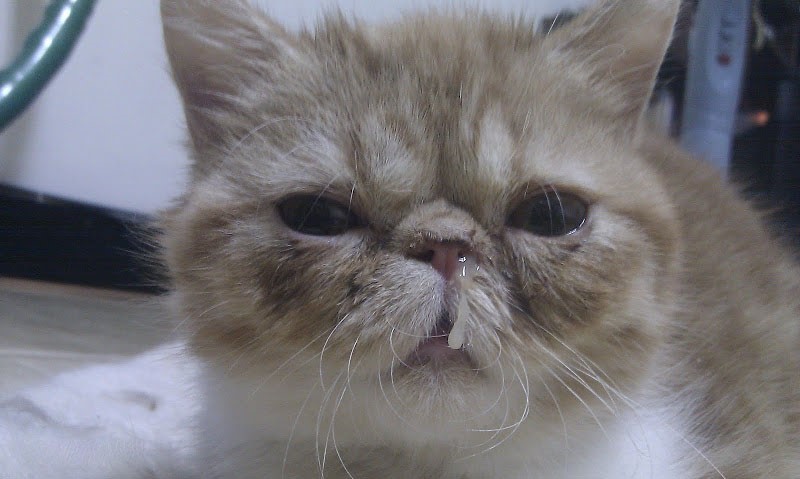
If a runny nose is detected, you should observe your pet before giving medication.
A healthy cat may exhibit runny nose symptoms unrelated to illness in a normal environment. It's important to confirm persistent signs of illness before treating a cat's runny nose.
Colds – causes, symptoms, treatment
When a person gets sick, they go to the doctor. A cat doesn't understand what's happening and can't communicate anything to its owner. It simply becomes lethargic and drowsy. The owner, by noticing the dangerous symptoms early, can help the animal.
Causes of colds in cats:
- The pet lives in cold, damp, drafty conditions. A comfortable temperature for a cat is +20°C. At lower temperatures, the cat may become ill.
- A monotonous diet without vitamins and microelements does not allow maintaining immunity at the proper level.
- Hypothermia can occur if a cat's fur gets wet or in windy weather. In these cases, the animal's thermoregulation is impaired.
- If there is another disease, immunity is reduced and the cat easily catches a cold.
Cold symptoms include nasal and eye discharge, coughing or sneezing, and refusal to eat or drink. Also cold accompanied by a high temperature, the animal has a dry and hot tip of the nose.
You can support your pet by doing the following:
- leave the cat alone in the place in the house that it has chosen;
- provide clean drinking water;
- give a massage by stroking the cat, which will get the blood flowing and improve your well-being;
- apply a warm compress with a heating pad if the animal has chills;
- Clean your nose and eyes with a cotton swab using cooled boiled water.
The listed actions improve the pet's condition.
To cure a cat's runny nose, you need to rinse the nose with the medication prescribed by the veterinarian.
These steps will improve your pet's condition. To treat a cat's runny nose, you should rinse the nose with the medication prescribed by your veterinarian. A simple solution—slightly warmed saline solution (available at any pharmacy without a prescription)—will do.
Allergic rhinitis in cats
Allergic diseases are caused by dangerous substances in food and air.
Symptoms of allergic rhinitis in cats:
- clear or colored discharge from the eyes and nose;
- dryness and redness of the mucous membrane;
- frequent sneezing, nasal congestion;
- lack of appetite, weakness;
- rubbing nose with paws.
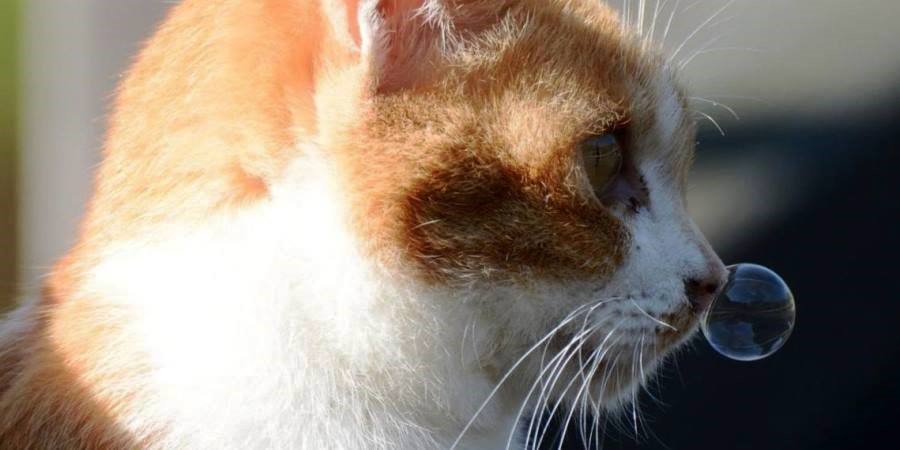
The reaction can occur to food, pollen, and insect bites. Symptoms and treatment of allergic rhinitis in cats A veterinarian determines the diagnosis through a blood test. If contact with the hazardous substance is eliminated, the cat will recover within two to three days.
Infectious causes of runny nose
Inflammation of the respiratory system is accompanied by mucus. Clear mucus may become darker and have an unpleasant odor. In severe cases, blood may be mixed in.
Infectious types of rhinitis and symptoms:
- Calicivirus. Runny nose with mucosal damage and high fever. In a cat. are teary-eyed eyesThe disease is not dangerous for people.
- Rhinotracheitis. In addition to a runny nose, the animal will drool, not eat, and move little. Another name for this contagious disease is feline herpes; it is not transmissible to humans.
- Mycoplasmosis. Purulent nasal discharge, airway swelling, and swollen eyes. Serious complications are possible, including pneumonia, liver inflammation, and joint damage.
- Panleukopenia (also known as distemper). Symptoms include runny nose, vomiting, and upset stomach. The disease causes chronic heart complications.
- Chlamydia. Cough, snot and wheezing. The condition is contagious to other animals, requiring quarantine.
Infectious rhinitis in cats can be treated with antibiotics under the supervision of a veterinarian.
When prescribing a course of treatment, the cat's possible allergic reaction to medications is taken into account, so you cannot select medications yourself.
Foreign body inhalation
While playing, a cat may accidentally get a foreign object lodged in its nose. Most often, the foreign object is expelled by sneezing, but it can become caught in the sharp edges and cause severe inflammation.
What foreign bodies enter the respiratory system:
- small items not intended for cat play;
- plant seeds, sand and trash on the street;
- small insects;
- food particles or fish bones;
- eggs and larvae of worms.
A sign that a cat has a foreign object in its nose is a change in behavior. The animal will sneeze frequently, shake its head, and back away. Nasal discharge may be bloody if there is a sharp object in the nose.
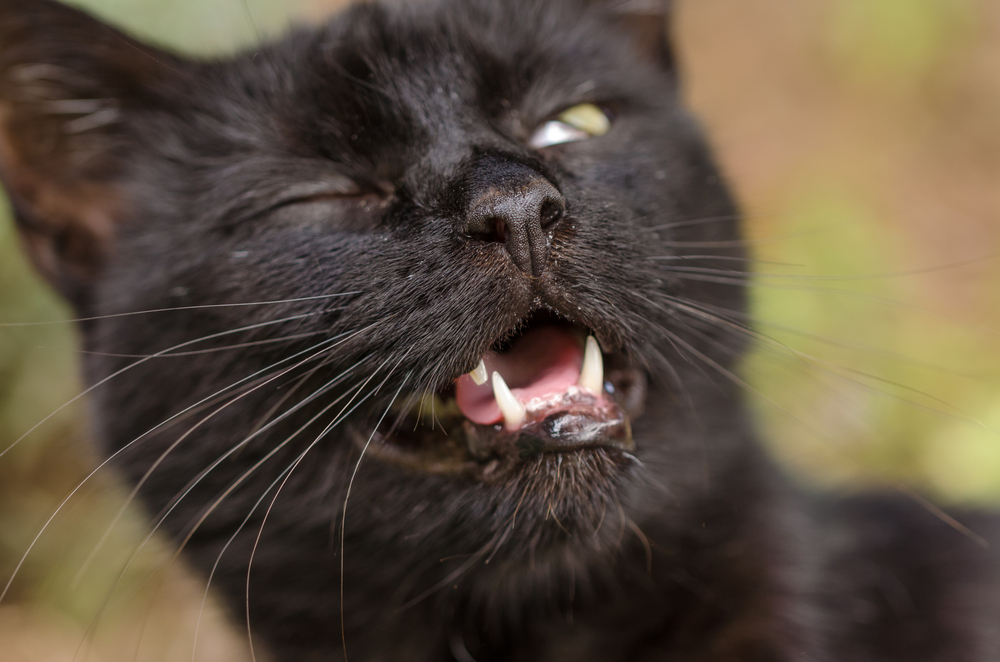
You can determine what's in your cat's nose by visual inspection or using an endoscope. The most reliable method is an ultrasound, which will determine the location and size of the foreign body. The owner can remove the object with tweezers if it's near the nostrils; otherwise, surgery at a veterinary clinic will be required.
Nasal polyps, growths, and tumors in cats
The second most common respiratory disease in cats is nasopharyngeal polyps. These growths, overgrown areas of epithelium, are dangerous because they continue to grow.
Causes of polyps:
- chronic inflammation of the nasal cavity and inner ear;
- infectious rhinitis in cats;
- allergic asthma;
- congenital defects of the nasopharynx.
Polyps are most often diagnosed in young animals under 2 years of age. The growths gradually grow from the nasal cavity into the ears, becoming large and interfering with the cat's breathing and eating.
External manifestations of disease symptoms:
- mucus discharge from one nostril;
- sneezing and coughing;
- The pet snores and makes grunting sounds.
Polyps can be detected using an endoscope by palpating the soft palate with a finger.
Only magnetic resonance imaging can provide an accurate diagnosis, since soft tissues are not visible on x-rays.
Polyps are removed surgically under anesthesia, using forceps to grasp the body of the neoplasm along with the stalk.
Other causes of a runny nose
A pet's immune system reacts to the onset of illness. Germs and toxins are eliminated along with mucus, resulting in a runny nose. Causes of runny nose in indoor cats include sudden temperature changes, allergies, and frozen food.
Other causes of runny nose in cats:
- Tumors in the nasal cavity come in various forms. The symptoms are similar to those of a runny nose, but the underlying cause is different. Surgery is required.
- Viral diseases. Accompanied by high fever and decreased activity. Dark nasal discharge may be observed.
- Age-related diseases such as diabetes, kidney stones, and heart failure can cause chronic rhinitis. It's impossible to completely cure this condition.
- Fungal infection of the nasal cavity. Surgical and medical treatment are required. If left untreated, the disease can lead to skull deformities and even death.
- Otitis. It can trigger a runny nose due to its inflammatory nature.
- Congenital defects of the nasopharynx, deviated septum. Surgery will correct the deviation.
- Strong odors irritate the mucous membranes and cause swelling. Provide your pet with clean air and rest to allow recovery.
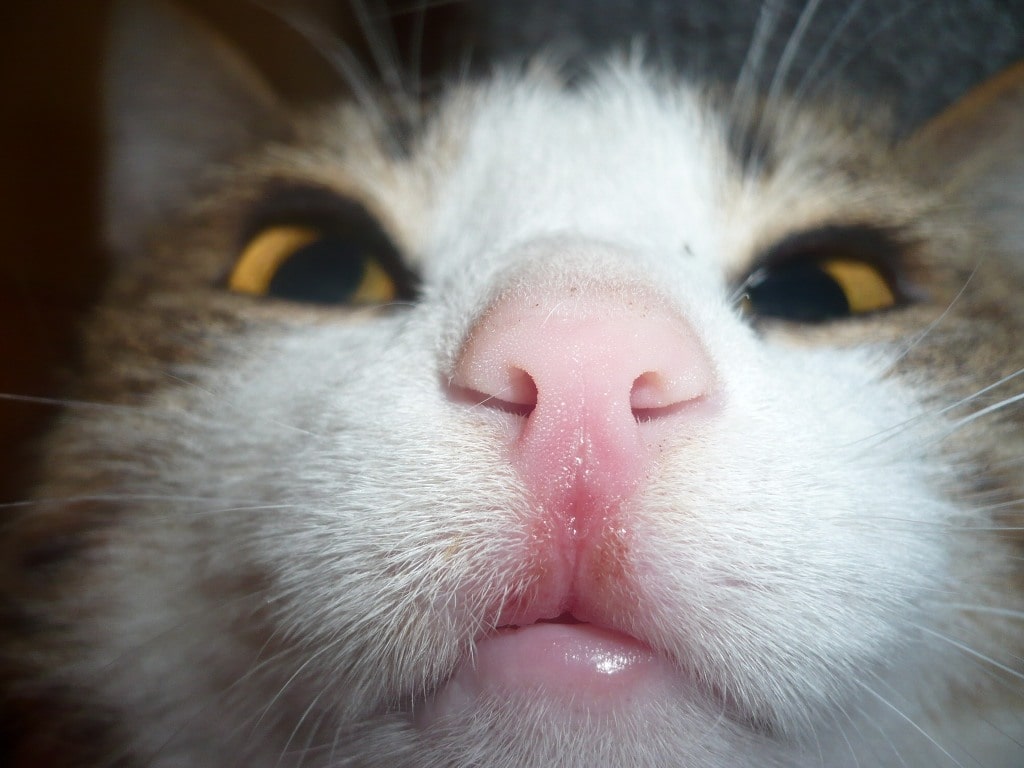
There are certain cat breeds that suffer from rhinitis more often than others. British and Scottish Fold cats regularly suffer from runny noses due to the shape of their ears and noses. Therefore, owners should regularly take their cat to the veterinarian.
Diagnosis of rhinitis
If your pet shows obvious signs of illness, the cause must be determined before treatment. Diagnosis of rhinitis in cats is made at a veterinary clinic.
Steps to determine the cause of a runny nose:
- Physical examination – external examination and diagnosis using an endoscope.
- Laboratory tests of blood and urine to determine the nature of inflammation (bacterial, viral).
- X-rays allow us to examine the shape of the nasal cavity and foreign objects.
- Mucosal swabs are analyzed for microflora. The type of pathogen is determined to determine a treatment plan.
The more detailed the examination, the more effectively a cat's runny nose can be treated. Without treatment, the animal can develop chronic diseases that cause irreparable harm.
Treating a runny nose in pets with home remedies
In mild cases, when your pet is feeling well and there is no bloody discharge, you can treat your cat's runny nose yourself. Place your pet in a warm, draft-free area. Treat the eyes and nostrils with an antiseptic, and remove any dried nasal discharge with a cotton swab.
Treatment methods for various types of runny nose in cats:
- Mild runny nose without fever. Zinc sulfate drops, inhalations with a soda or saline solution are used. Streptocide powder is used, or Anandin drops are administered.
- Infectious rhinitis is treated with Galazolin moisturizing drops and Doxycycline tablets. For severe cases of rhinitis with difficulty breathing, intravenous drips and immune support medications are administered.
- Allergic rhinitis in cats is treated with antihistamine tablets, just like in humans, but the dosage must be followed.
- If foreign objects get into the cat's nose, it is necessary to administer moisturizing drops, and if the object is within reach, remove it with tweezers.
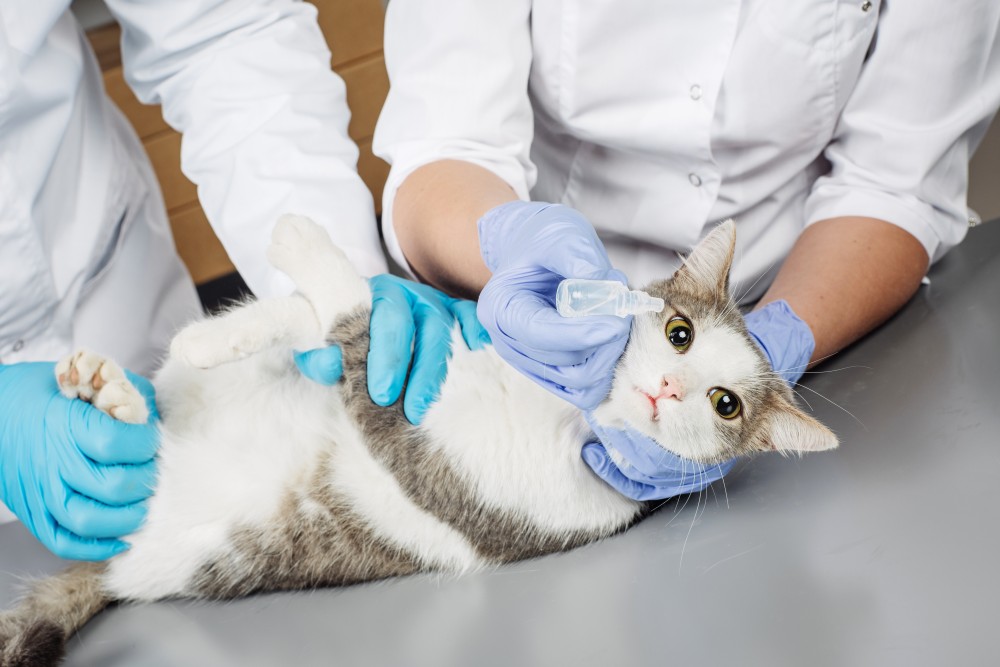
If the treatments used are ineffective and your pet's condition does not improve, you should contact a veterinary clinic immediately. Delaying treatment will lead to complications.
Alternative treatments for runny noses in cats
You can cure your pet of rhinitis and colds using home remedies.
Traditional methods of treatment:
- Warm compress. Heated salt in a cloth bag is applied to the nose. Discharge is removed with a cotton swab. Warming is permitted only if there is no purulent or bloody discharge.
- Antiseptic rinsing. Using a syringe without a needle, inject 0.5 ml of a solution of baking soda or salt into the nose. The solution is prepared by mixing 1 teaspoon of salt or baking soda with 250 ml of water. To prevent resistance, wrap the cat tightly, including its paws, in a blanket.
- Herbal drops. Use beetroot juice or aloe vera leaf drops. Do not use pure juice; dilute it 50/50 with boiled water. One drop in each nostril 3-4 times a day is sufficient.
- Eucalyptus inhalation. Boil 1 tablespoon of the dry infusion in 0.5 liters of water for 15 minutes. Let it steep for half an hour. Wrap the cat in a blanket and hold it over the steam for 10 minutes, being careful not to burn it.
- Pouring Streptocide powder into the nostrils helps quickly relieve inflammation and stop the formation of pus.
- Rinsing with a warm solution of Furacilin.
The flowing snot and tears irritate the skin, so you need to wipe your nose and eyes with strong tea, and then sprinkle with Streptocide powder.
A cat loses its appetite when it's sick. To speed up its recovery, offer your pet's favorite food warmed up.
Possible complications after rhinitis
It is essential to treat a cat's runny nose, otherwise there is a risk of consequences:
- chronic bronchitis and pneumonia;
- kidney dysfunction, urolithiasis;
- chronic disease - plasmacytic rhinitis;
- lymphocytic gingivitis – a lesion of the oral mucosa;
- persistent decrease in immunity - the cat often gets sick;
- damage to the cornea of the eye - can lead to blindness;
- formation and growth of polyps - surgical removal will be required.
A neglected illness and delayed veterinary care can lead to complications after a runny nose. Self-treatment at home can also have serious consequences.
Preventing runny noses in pets
Proper care will protect your pet from serious illnesses and ensure a healthy, long life. Here are some steps to prevent runny noses:
- Timely vaccination to protect against the most dangerous infections.
- Avoid drafts and dampness. Keep your pet warm. Do not dry wet fur with a hairdryer.
- Balanced food with added vitamins to maintain good immunity (Pro Plan, Sirius, Hills Ideal Balance).
- Eliminating potential allergens: changing litter, frequent wet cleaning, removing houseplants. Using hypoallergenic food (Brit Veterinary Diet, Acana Pacifica for cats, Brit Care Lucky I'm Vital Adult).
- Once every six months - treatment for worms (drugs Profender, Milbemax, Prazicide).
The owner's attention, care, and timely treatment will give the pet a long and happy life.


23 comments
Olga
Good afternoon! We adopted a 7-month-old Maine Coon from a cattery at 1.5 months old. He was vaccinated. However, as soon as we got home, we noticed a runny nose. His nose was stuffy. We tried rinsing it with saline solution, as recommended by the breeder, but there was no improvement. He would sneeze, and the snot would come out, but then it would build up again. His nose was dry and warm. His appetite was good. We took him to the vet, who prescribed the antibiotic Sinulox, Maxidin drops, and to continue rinsing. He said he was severely underweight (3.8 kg at 7 months) and that was why his immune system was weakened. We treated him. He seemed to improve, but after a week, everything returned to normal. There was no severe congestion, but he still had snot, and after rinsing, thick white or clear clumps would fly out when he sneezed. His nose is still dry, and his appetite is normal. The diet is mixed, but mostly natural: beef, turkey, and seafood. Dry food is always on the table, and she chews on it occasionally. Could these be signs of a polyp? What should we do?
Olga
Hello, my cat had a poor rhinoscopy—a polyp could not be removed due to respiratory arrest. He took a long time to recover from anesthesia. The discharge problem persists, and his white blood cell count is elevated by 82%. Are there any other treatments besides rhinoscopy, or alternatives, to remove the growth in his nose if it's bothering him? Rhinos are not recommended.
Daria is a veterinarian
Hello! Unfortunately, no. Surgery is the most effective method. No drops, injections, or ointments will help. This growth is a kind of "tumor," which, as you understand, cannot be removed with medication. How old is the cat? Has a cardiac ultrasound been performed? Have you ruled out an allergic reaction to the anesthetic?
Elena
Hello. Please help, my cats have developed runny noses. We have two cats, 6.5 and 3 years old (one is in foster care; a friend kept them for a while) and a 3-year-old male cat. All are sterilized. About five days ago, my friend's cat started sneezing, then mine, and then my male cat. They are active and eating normally, but they sneeze frequently. There is no heavy discharge from the nose, only a spitting sound when they sneeze, and their eyes are clear. Their noses are cold and wet. What should I do? They live in an apartment and go out onto the balcony periodically. This is the first time this has happened. It's warm outside, and they still run out onto the balcony even in winter.
Daria is a veterinarian
Hello! Let me guess: all three cats are not vaccinated against viral diseases. In the future, if your animals aren't vaccinated, don't take in strangers' animals, as they could be sick or carriers of an infectious disease. By the way, be sure to deworm the cats after you give away a stranger's cat. Now, you can administer anandin, maxidin, or similar medications into each pet's nose for about 5 days. Intramuscularly, 1 ml of catosal per animal (one injection is enough). Antibiotics are recommended (usually amoxicillin-based, as it's the easiest and most readily available). But ask your friend's permission to avoid any problems later. Treat all three equally.
Liubov
Excuse me, but I'm very surprised by the advice to use beetroot juice drops in my nose (the first time I was given it as a child, I was climbing the walls). And how can you "rinse" with naphthyzinum? The dosage should be very limited. Also, the recommendation to inhale streptomycin powder seems suspicious to me.
Dasha is a veterinarian
Hello! Honestly? I'm generally against such folk remedies in veterinary medicine. Why torture an animal like that when you can use sea salt drops: safe, non-addictive, and readily available. Regarding naphthyzine: it says to mix it half and half with Dioxidine, and below it says the dose is 1 drop in each nostril. So, 1 drop of naphthyzine + 1 drop of Dioxidine, and divide the resulting "mixture" between the two nostrils. But that's just a waste of time. Besides, naphthyzine is addictive.
But believe me, in practice, owners use all sorts of things in their pets' noses, it's downright scary. Some mix onion and garlic juice, others wash their noses with potassium permanganate—a solution so potent it burns the mucous membrane. If they're so determined to self-medicate, at least they should use safe medications. I'd ban all these "home" treatments altogether; pharmacies are full of inexpensive, effective, and safe medications.
Vita
Hello, could you please help? I have Canadian Sphynx cats. One of the cats has a runny nose, but there's no discharge, the mucus is a normal color, there's no discharge from the eyes, and no fever. The others don't have runny noses. He has some nasal congestion (sniffling), has been vaccinated, and doesn't leave the house. He recently had a PCR test and biopsy, all normal. Maybe he has a cold. I gave him a bath and he started sneezing in the evening; today is the third day. Can you tell me what I can give him or use IVs for? I don't see the point in going to the branch yet; it's stressful for him. He's 9 and a half years old.
Dasha is a veterinarian
Hello! Have you checked your cat's temperature? If you suspect a cold (they're hairless animals, after all, and their body temperature will be higher than that of their furry, meowing cousins, and they get cold much faster in a draft), then there's no need to give them any injections. If they're eating natural food, feed them something warm. You can dress them (many people have clothes for Sphynxes). You can add vitamins to their diet. But if there's no runny nose, fever, or eye discharge (for example), then antibiotics aren't necessary yet. The same applies to a common cold: rest, warmth, warm drinks and food, and vitamins.
Vita
I wrote that she doesn't have a fever. Everything's normal. I put clothes on everyone when she's cold, but I just didn't put them on that day. I certainly won't give her antibiotics, but she's been sneezing (not often) for three days now and snoring a little. I was thinking maybe I should give her anandin drops? It's just that for me, it's everything... Like my child. I know the temperature of my Sphynx cats. I've had them for a long time. I love them.
Dasha is a veterinarian
I'm clarifying because the situation could have changed by evening. If you have clothes, dress the animal now, let it warm up. You can try anandin, but it's more often prescribed for viral diseases. But try it, remember that all immunostimulants need to be given for at least five days in a row to see a visible effect. If you want to give it an injection, you can try catosal (it contains vitamin B12, so the injection is painful, but it works quite well).
Vita
Thanks for the reply! What's the dosage? IM or subcutaneous? My cat lets me give him any injection.
So, is he okay? I'm just worried... I went through Crimea and Ryma with my family.
Dasha is a veterinarian
Hello! Catosal is administered to cats at a dose of 0.5-2.5 ml, but I'm used to 1 ml. Your cat doesn't have hypovitaminosis or vitamin deficiency, so you don't need to give it every day. Administer intramuscularly; it's easier. Subcutaneous injections often leave lumps (the medication is quite painful, and sometimes even intramuscular injections leave lumps for the first 24 hours). Give it once and observe.
Anton
Hello, please help! My cat has yellow-green snot under his eyes and has become disoriented. He's started pooping where he sits, is very lethargic, and isn't eating. What should I do and what could it be? It's a shame we picked him up as a kitten in freezing temperatures 1.5 years ago.
Dasha is a veterinarian
Hello! Was the cat vaccinated? Did they take his temperature? Why did you wait so long to contact the vet?
A veterinary clinic for help? Why wait so long that the animal is already disoriented (and this could be a symptom of brain damage, as a bacterial infection spreads quickly throughout the body). Run to the clinic for an in-person examination, since I feel sorry for the cat! I can only suspect that it's infectious rhinotracheitis. This is a fatal disease in 70% of cases, and if the immune system can't cope, the animal dies quickly. Immunostimulants, antibiotics, vitamins, IVs, and improved feeding and care—that's the bare minimum! But first, an accurate diagnosis is needed. Based on the symptoms you described, at least four infectious diseases can be suspected.
Yuri
Hello. My six-month-old Maine Coon kitten has had a slight but persistent runny nose for the last month, some difficulty breathing (when running), and occasional sneezes. There is no discharge from the eyes, no redness, no soreness, or other symptoms. He is very active and eats well. I only use chlorhexidine around the nose, and he doesn't mind. I don't want to take him to the vet for nothing; it's unnecessary stress for him. We'll be neutering him in two months anyway, and I think I'll consult with him there as well. It's possible he has an allergy to construction dust, as the apartment is new, but I haven't been able to significantly change that yet.
What do you advise: to wait, or to treat it somehow, or to drag it in for tests right now?
(By the way, authorization via VK isn't working for you; it's giving you a security error...)
Dasha is a veterinarian
Hello! It could be an allergy, or perhaps the fine dust irritates the nasal mucosa, causing a runny nose (animals are much more sensitive than us). Take their temperature first. Ideally, take your pet to a dust-free location. This might not be a big deal for you, but this fine dust, firstly, will clog the lungs and settle in the apical lobes (causing problems in the future, possibly leading to frequent pneumonia), and secondly, constant "contact" with the allergen leads to increased sensitization. As a result, the animal will become extremely allergic in the future (even the most common things can cause an allergic reaction later). Ask friends or relatives to foster the animal.
Yuri
Thank you. His temperature is normal, but unfortunately, there's no way to transport him anywhere right now.
Elena
Hello! I have a question: my cat is sneezing, but there's no discharge from his nose, and his eyes are clear. He sneezes frequently and rubs his nose.
Dasha is a veterinarian
Hello! Is your pet only rubbing their nose? Is there any other itching anywhere? Have you ruled out allergies? Has their temperature been taken? Have they had any tests done? What happened after this? Has your pet had a cold? Ideally, a blood test would be necessary to determine whether it's an allergy, inflammation, or an infection. Sneezing alone won't be enough to diagnose the problem.
Galina
Hello! Please help me cure my Maine Coon's runny nose. He is 1.2 years old. In the spring of 2017, he was diagnosed with calicivirus and rhinotracheitis. He had a severe runny nose, mouth ulcers, swollen and red gums, and watery eyes. He was prescribed Ceftriaxone for 10 days, Forvet for 7 days, Gamavit 3 ml for 7 days, and Immunofan for 5 days. After treatment, everything cleared up for exactly 3 weeks. Then the runny nose returned, and one eye started watering. We gave him injections of Maxidin and Fosprinil. He also gave Ciprovet to his eyes. Things improved. A month later, the symptoms returned. We retested, and calicivirus was confirmed. He was treated with Amoxicillin and Roncoleukin, and his nose was rinsed with Pharmacidin and Anandin drops were applied to his nose and eyes. Streptacid was applied to the mouth ulcers. Things got better, but not for long. The post-treatment test was negative. However, the runny nose, dry nose, and watery eye remained. They assumed it was an allergy. I took Zodak for five days, but there was no improvement.
We took the kitten from the cattery at 3 months and we can’t vaccinate him due to illness.
Dasha is a veterinarian
Good afternoon. It's strange that the cat has contracted the same viral disease again in such a short period of time. Typically, after such illnesses, a strong immune system develops that can protect the pet (usually for a year). It's possible that you didn't properly disinfect your home. You didn't treat the cat's bed, food bowl, and toys. And the weakened immune system was once again attacked by viruses. Now, be sure to thoroughly wash and disinfect everything (ask your veterinarian for special products). Clean the food and water bowl with boiling water and disinfect it. Also, disinfect the toys.
It's likely that the simultaneous presence of calicivirus and rhinotracheitis caused complications with the nasal mucosa. Try giving vitamin A (preferably an oil solution, as it's fat-soluble). It's great for restoring the mucosa (cells regenerate much faster). You can also try Aevit. Ideally, of course, you should take a multivitamin with minerals, administered in a course lasting a week or two. Immunofan can also be given (to strengthen the immune system). For dry eyes, try Brilliant Eyes (drops with a composition identical to natural tears).
Have you considered a food allergy? Have you tried changing your dog's diet? Could a particular food be triggering this reaction?
Catherine
I have the same problem, my cat is a stray (calicivirus and rhinotracheitis). We've already undergone three courses of treatment with different medications, but the disease keeps coming back. The doctor is shrugging his shoulders, and we don't know what to do...
Add a comment