
Folk remedies for fleas in cats and dogs
Fleas in the fur of dogs and cats are an extremely unpleasant problem faced by most pet owners. These parasites cause significant discomfort, disrupt sleep, and can affect behavior and appetite. You can get rid of fleas by visiting a veterinary clinic or by consulting a specialist at home. However, owners often prefer to use home remedies for fleas in cats and dogs.
Content
Pros and cons of folk remedies
Folk methods for combating fleas have been developed over many decades, when veterinary care for pets was not yet so widespread in our country.
All such methods have undergone natural testing, as a result of which the best of them were identified empirically.
Such methods have clear advantages:
- there is no need to travel outside the house, which relieves the animal from unnecessary stress;
- Folk remedies, as a rule, are much cheaper compared to synthetic drugs, which allows you to save a decent amount;
- most often, due to the lower aggressiveness of the drugs, they can be used even for minor injuries (wounds, scratches) on the skin;
- lower toxicity allows the use of folk remedies for kittens and their mothers, since mothers thoroughly lick kittens or puppies;
- The use of folk remedies is most often permitted for pregnant females.
Despite all the advantages, folk methods also have obvious disadvantages:
- Often such methods are designed for long-term use and do not bring about recovery in the shortest possible time, so the owner needs to be patient;
- It is important to carry out the procedures at regular intervals, since any missed treatment can suddenly return the cat or dog's condition to its previous level;
- Natural compounds do not eliminate parasites, but only force them to leave the host's skin, so fleas are likely to return after treatment is stopped;
- Your pet may have a severe allergic reaction to some of the ingredients.
Folk remedies show good results for low-intensity infestations. They are also a priority for treating kittens and puppies, who are very sensitive to synthetic medications.
The most effective folk methods
Folk methods used to combat fleas are divided into two main categories:
- chemical (decoctions, infusions, drops, etc.);
- mechanical.
The appropriateness of each treatment is determined based on the individual characteristics of the animal: coat thickness, age, presence of skin lesions, the pet's reaction to the procedures, etc.
Chemical methods
All methods of controlling insects that irritate dogs and cats with their bites are aimed at driving fleas away from the pet's body. However, it's important to know that pet fur isn't the parasites' primary habitat: they prefer secluded spots (cracks in the floor, the backs of furniture, etc.). They only jump on animals to obtain another meal. Therefore, methods based on various mixtures and solutions should be accompanied by disinfection of the entire apartment. Otherwise, the fleas will immediately return to their host.
Wormwood decoction with garlic
This method relies on the pungent odor of its ingredients to repel parasites. It's a very effective remedy, but it must be applied in a way that prevents the animal from licking it, as this can cause digestive upset.

The solution is prepared as follows:
- Take a peeled head of garlic and crush it to a mushy state.
- Prepare a strong decoction of dry wormwood.
- Mix the decoction thoroughly with garlic and apply to the coat.
The first time, a small amount of treatment is sufficient: this will allow you to determine whether your dog or cat is allergic to any of the ingredients.
Garlic-yeast mixture
A folk remedy based on yeast and garlic has proven itself effective in the fight against fleas in cats and dogs, allowing you to safely and quickly alleviate your pet's condition.
The recipe for its preparation:
- Chop the garlic.
- Infuse a small amount of yeast in warm water (use live yeast, not powdered yeast);
- Combine garlic with the infusion and apply to the coat.

The animal should be treated with this solution at least twice a day. A fresh infusion must be prepared daily, as it loses its properties during storage.
Herbal decoction
To prepare this solution, you'll need dried eucalyptus, tansy, and wormwood. Prepare it as follows:
- Take all ingredients in equal proportions (1 teaspoon each).
- Add 150 ml of water and prepare a strong decoction.
- Treat a cat or dog with it.
This same solution can also be used to treat potential flea hiding places; this folk remedy, when used periodically, can completely drive insects out of the home.
Herbal decoction
This folk remedy also involves the use of herbs with an unbearable smell for ectoparasites in cats and dogs.
- Take 1 teaspoon each of dry lavender and pelargonium leaves.
- Pour 150 ml of water over them and simmer for 5 minutes.

The advantage of this method is that the prepared decoction does not lose its properties for a week if stored in the refrigerator.
Essential oils
They can be applied directly to the animal's fur or added to shampoos, or dropped in small quantities onto the collar.
Rosemary, peppermint, cedarwood, eucalyptus, and citrus oils are most commonly recommended for flea control in cats and dogs. To treat your pet, dilute the oil with water at a ratio of 3 drops per 150-200 ml.
Important: Tea tree essential oil is not recommended for use on cats and dogs, as its scent can cause weakness and dizziness in animals, and ingestion can cause poisoning.
Mechanical methods
These products are completely safe, so they are ideal for use in young pets.
Combing
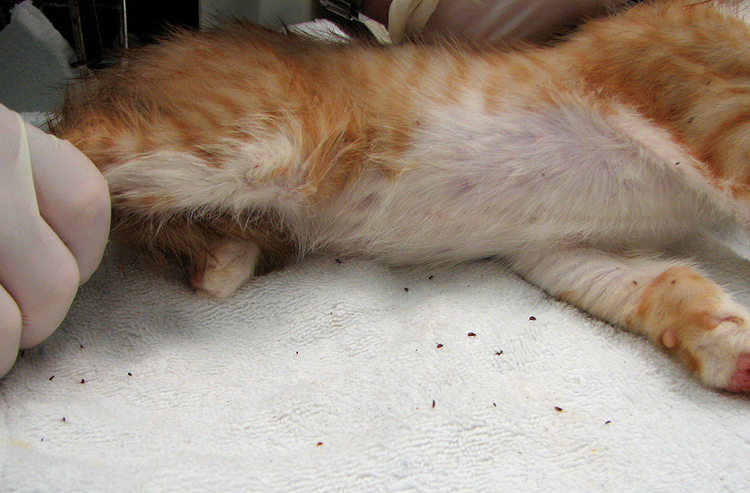
This folk method involves using a fine-toothed comb. Combing removes not only adult fleas and larvae, but also their waste products, which often cause irritation and dermatitis in cats and dogs.
This product is not suitable for all pets: some of them do not like being brushed, so they begin to actively resist.
The main disadvantage is that this method requires long-term repetition to achieve complete elimination of ectoparasites.
Baking soda
You can treat your cat's or dog's fur with baking soda. It's an excellent flea repellent, and its fine particles also prevent the larvae from clinging tightly to the fur. After using this folk remedy, brush the animal and thoroughly remove the powder. You can also treat the animal's sleeping area with baking soda.
The only downside to this treatment is that the baking soda will spread throughout the house, but this problem is easily solved with a vacuum cleaner.
Sawdust and shavings
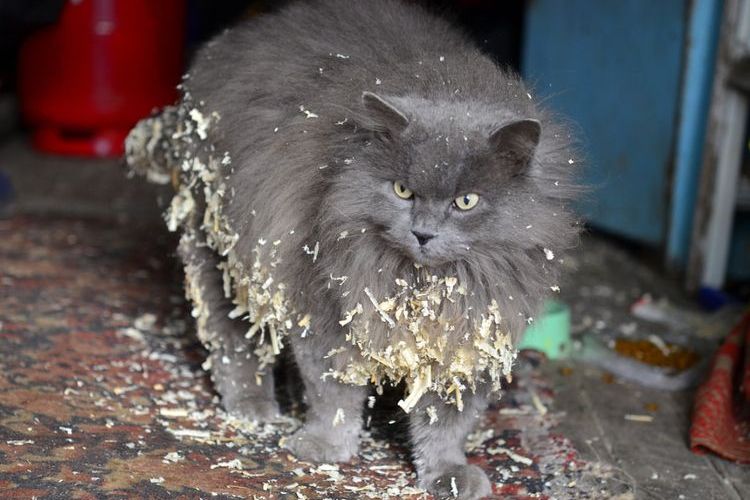
A completely safe method involves placing pine sawdust in a cat or dog's regular sleeping area. Firstly, the sawdust will act as a mechanical deterrent to fleas, and secondly, the smell of this wood is highly disliked by insects.
The most effective treatment is considered to be the combined use of chemical and mechanical agents, which, when used together, help rid a cat or dog of parasites more quickly. It's also important to periodically check the animal's coat to ensure these methods are used early in the disease's development.
You can also ask our website's staff veterinarian a question, who will answer them as quickly as possible in the comments box below.
Read also:


Add a comment