
Cat litter: which is best?
It seems like nothing could be simpler than cat litter. However, with the development of the pet industry, a multitude of types of this product have emerged, each with radically different compositions and properties, yet all serving the same purpose. And navigating this diversity can seem daunting at first glance. Today, we'll examine the main types of cat litter, explore their pros and cons, and explore which cat sorbent is best and why.
Content
Types of fillers
All commercially available hygienic granules for cats can be divided into three large groups:
- wood (made from wood waste by pressing);
- mineral (obtained from natural clays and materials);
- silicate (or, as they are also called – silica gel).
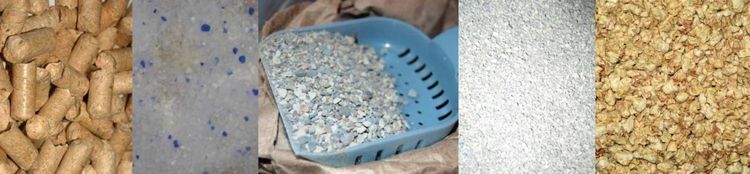
They all serve the same purpose: to absorb liquid animal waste without allowing the odor to escape. However, the effectiveness and operating principle of each type of sorbent differ.
Wood pellets
This product is made by pressing sawdust, producing neat, high-density granules. When exposed to moisture, they instantly absorb it, swelling and crumbling into a uniform mass. It's an excellent option for kitten litter—even if a kitten chews a few pieces out of curiosity, it won't cause any harm.
However, these pellets also have a downside: the smell of cat urine is too strong to be contained by wood shavings. It's best to remove any swollen pellets immediately to avoid creating a distinctive odor throughout the house.
Positive aspects:
- environmentally friendly, safe for pets;
- quickly absorbs large amounts of moisture;
- the cheapest in any store's assortment;
- can be flushed down the toilet (in small portions);
- economical (due to the increase in volume, a thin layer at the very bottom of the tray is sufficient).
Cons:
- does not retain the smell of ammonia well (the main “flavoring agent” of urine);
- It is lightweight and therefore can fly outside the litter box when particularly diligent cats bury it.
There's another caveat: many manufacturers, trying to improve their products, add fragrances to the sawdust to make it smell more pleasant. However, not all cats agree with this: some particularly sensitive cats may refuse such a "fragrant" litter box altogether and choose another place in the house, which is not ideal.
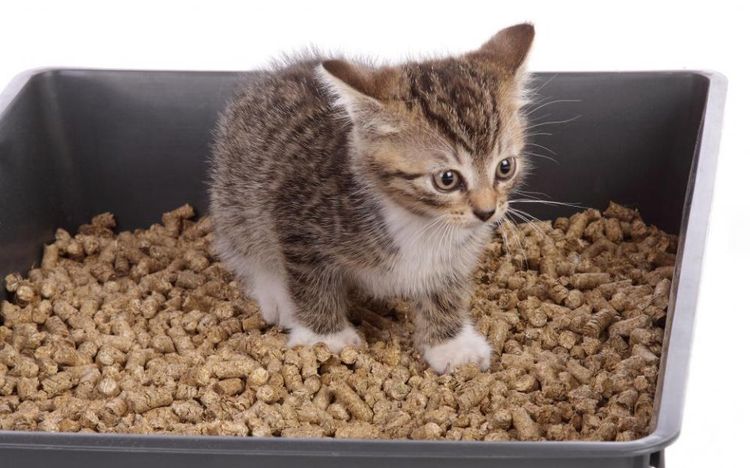
Trying to figure out which wood litter is best for a cat can be confusing: there are so many manufacturers of this type of pellet. Many consumers believe there's no point in overpaying for an imported pack—and they're partly right: the composition of imported wood pellets will be identical to that of any Russian manufacturer. Among the most popular domestic brands of compressed wood chips are:
- TM "Kuzya" has been produced by Arkada for 18 years. According to the manufacturer, the technology has been continuously improved. Judging by the reviews, it is a truly high-quality product. Price: from 120 rubles for 4.5 kg.
- "Barsik" is a product of Intel, a company established in the market since 1991. Over this long period, the company has earned the trust of thousands of consumers and is a leading domestic manufacturer of wood pellets for cat litter boxes. The pellets start at 140 rubles per 4.5 kg pack.
- "Clean Paws" is a product of a Ukrainian plant located in Dnipro. It has been in production since 2008 and has long held a leading position in the pet sorbent market. Prices start at 170 rubles for 4.5 kg.
Mineral fillers
All mineral sands can be roughly divided into bentonite (palygorskite, clay) and zeolite. These sands are much more practical than wood pellets and retain fecal odors well. However, they have a number of drawbacks: they are not recommended for flushing down the toilet, and they are not the best litter for kittens. If swallowed, the kitten may experience esophageal obstruction or more serious injuries.
Clay-based minerals clump very quickly, forming a dense, sticky texture. This keeps pets' paws clean and keeps the scent securely contained within the litter.
Zeolite granules have a highly porous structure, allowing them to absorb much more liquid than their own weight.
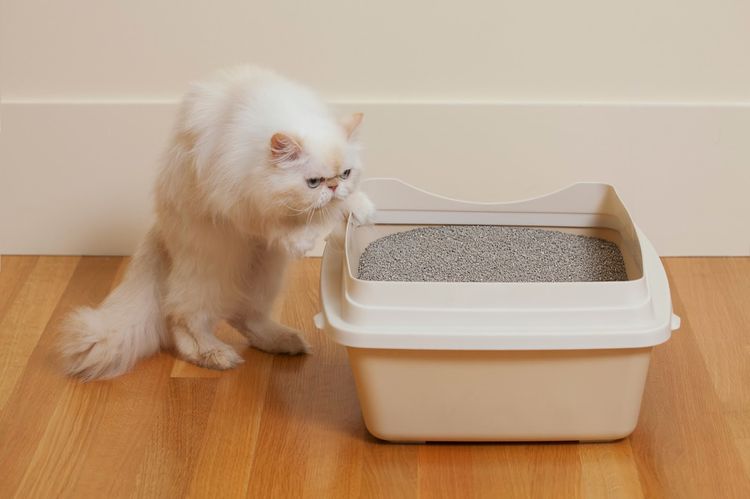
Many animals enjoy these types of cat litter—it reminds them of the wild, and they dig around in it with all their might. Therefore, when choosing this hygienic litter, it's essential to choose a litter box with a high side, or even a... closedThese sands are more expensive than sawdust, but they also retain odor better.
Opinions on disposal vary: some experts (and even manufacturers themselves) claim that clay sand can be flushed down the toilet, while others warn of inevitable sewer clogs. The truth lies somewhere in the middle: small clumps can be flushed down the toilet, but dumping a full tray of clay is almost guaranteed to clog the drain.
The best mineral adsorbents for cat litter, according to reviews from Russian customers, are:
- Catsan is a white mineral pellet available at any pet store. Manufactured by Mars, it guarantees that the pellets will effectively trap odor and won't stain your pet's fur. They require a complete replacement every 5-7 days (in addition to removing any clumps and solid waste). A 5-liter pack starts at 400 rubles.
- "Sibirskaya Koshka" is one of the leaders in the Russian cat litter market. It produces a wide range of wood pellets and mineral cat litter. The raw material is high-quality bentonite clay mined in Khakassia. A 5 kg pack starts at 210 rubles.
- Fresh Step is a Clorox product, headquartered in the United States. Numerous cat breeders worldwide have already determined which cat litter is best, as Fresh Step is extremely popular in many countries and has long been recognized as a market leader. Prices start at 750 rubles for 6.35 kg.
- Pi-Pi-Bent is a Russian bentonite clay product manufactured by Liding LLC, and according to reviews, it is one of the most popular domestic products in this field. A pack costs from 270 rubles per 5 kg. The flavored series is slightly more expensive (from 290 rubles).
Silica gel fillers
The most practical, but also the most expensive, hygienic sorbent. It is made from dried silicic acid solutions. The resulting crystals have a huge surface area—up to 800 square meters per gram (!) of product. Thanks to this porosity, this material can absorb liquid 30 times greater than the sorbent itself. This guarantees long-term odor control, meaning there's no need to change the granules frequently. Simply remove solid waste, and a single batch of crystals will last for 14-25 days (depending on the pet's size).
The downsides of this type of granule include the high price and the fact that the crystals make quite a noise when a cat walks on them. This can frighten timid cats and disturb owners at night. Furthermore, silica gels are not recommended for use in kittens' litter boxes, as they can be poisoned by ingesting the crystals out of curiosity. Disposing of them by flushing the toilet is prohibited, as it is guaranteed to clog drain pipes, making clearing such a blockage very difficult. Read our website for information on what to do if the kitten eats litter.
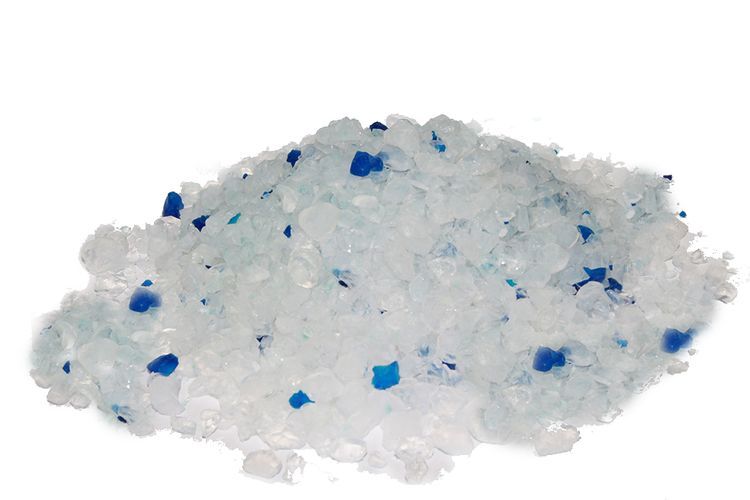
The most popular manufacturers in our country are:
- Fresh Step is made in the USA. Its price starts at 714 rubles for a 1.81 kg pack. Despite the high price, this litter remains in demand among Russian consumers.
- "Nasha Marka" (Our Brand) is a popular and affordable crystal brand manufactured in China for the Gatchina Crystal and Crystal Plant (Gatchinsky KKZ) company. Prices start at 430 rubles per 1.66 kg, making it a worthy competitor to more expensive brands.
- TM "Kotyara" is a domestically produced silica gel, quite popular among Russian pet owners. This product starts at 470 rubles per 1.5 kg package. In addition to silica gel crystals, the formula contains so-called "magic balls" designed to eliminate unpleasant odors.
- "Siberian Cat" is a familiar brand. Prices for these crystals start at 390 rubles for 1.85 kg.
Customer reviews
In an effort to determine which cat litter is best, we reviewed owner reviews from various sources. As a result, we were able to select the most vivid impressions shared by real users of each litter:
Olga, breeder of the British cat Boss:
"Right after we got our kitten, we bought him silica gel. He loved it—he dug like a tractor, and especially loved the sound of the crystals crunching against each other. But then, over time, the silica gel disappeared from the local pet store, and we had to switch to clumping mineral sand. We chose "Siberian Cat" and were right: it absorbs well and has virtually no odor. Plus, it's flushable, making it much easier to dispose of the used sand. We have no plans to change the brand or type of litter for now!"
Sergey, owner of the cat Myshka:
"Our Mouse is a regular alley cat. After we adopted her, the vet advised us to buy regular wood pellets for her litter, which are a dime a dozen at any pet store. We bought Barsik, and we still buy him to this day. I like everything about him: the pellets are inexpensive, absorb moisture well, and have virtually no odor. The swollen sawdust can be flushed down the toilet (at least that's what the store told me). Mouse also enjoys using compressed wood pellets, so we don't plan on changing her litter box."
Valentina, owner of a Maine Coon:
"We spent a long time trying different brands and types to figure out which cat litter would be best for our giant cat. After a long search, we chose silica gel from the brand Fresh "Step. It's certainly not cheap, but it does its job perfectly—there's no cat smell in the house, so to speak. The litter box is always dry and clean, although the pellets are not the most pleasant sound, especially at night. But over time, both we and the cat got used to it."
Veterinarian Reviews
Alexey, specialist at a state veterinary clinic:
«People often come to me with questions about litter box sorbents. I try to explain to owners that every cat is an individual, and there's no one-size-fits-all solution—what works for one may be completely unacceptable to another. The only thing I emphasize is that wood pellets are still preferable for kittens, as they're safe for curious kittens. The rest is up to the cat's preference!»
Elena Okoleva, a private practice veterinarian:
"When people ask me for help choosing a litter box for their cat, I often recommend silica gel products. They retain odors most effectively and are also less likely to be carried around by cats. I always emphasize the dangers of silica gel for kittens, but otherwise, I advise them to rely on their own resources—almost all brands of this type of litter are equally effective."
As the reviews show, all types of litter box pellets are consistently popular with cat owners. Therefore, when choosing, you should rely solely on your personal impressions and your pet's preferences. We hope this article is helpful and makes the choice easier!
Read also:
- How to litter train a kitten
- How to litter train a male or female cat
- How to train a cat to use the toilet?



Add a comment