
Marbled cat
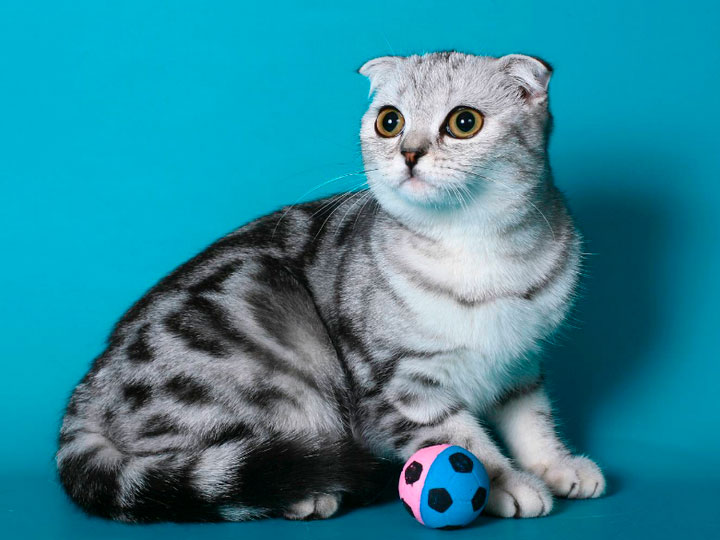
A marbled cat isn't a breed. "Marbled" refers to a specific recessive pattern. It looks particularly striking against a short, plush coat. British and Scottish Fold cats. The marbled pattern of Bengals is no less expressive; many even prefer it to the traditional rosettes.
Content
Genetics of marble color
Before discussing the genetics of tabby patterns, which include the marbled tabby, it's worth briefly digressing and noting that all cats, without exception, have a pattern in their fur, though not all of them are visible. For example, a black British Shorthair also has black stripes, but they're not visible against a dark background. The pattern is much more pronounced in cream and red cats, as well as in lilac and blue kittens of the British and Scottish Fold and Straight breeds. This effect is called moiré, but more on that later.
The visibility of the pattern is determined by a dominant gene, designated by the letter "A." In felinology, it's called agouti, after a small South American rodent whose hairs are unevenly colored, just like those of cats. Each hair is colored in transverse stripes of a different color. When placed together on the body, they "uncover" the pattern, like a puzzle. It is visible in male and female cats with the AA or Aa genotype. However, if a kitten inherits the recessive form of the gene, aa (called "non-agouti"), the pattern is "blocked," and the coat will be solid.
All colors with patterns are called tabby and there are 4 types in total:
- brindle;
- spotted;
- ticked;
- marble.
The agouti gene "opens" this pattern. Another gene, designated T, is responsible for the pattern's appearance. In its dominant form, TT, it produces stripes, but recessive forms also exist:
- tsts - spotted color;
- tbtb ― marble.
U Bengal cats There are also special tabby colors that they inherited from their wild ancestors: rosette and marble - a very contrasting marble with a wide stripe along the back.
In marbled British and Scottish cats, the color genetic coding always begins with the letters: A-tb-tb.
What does marble coloring look like?
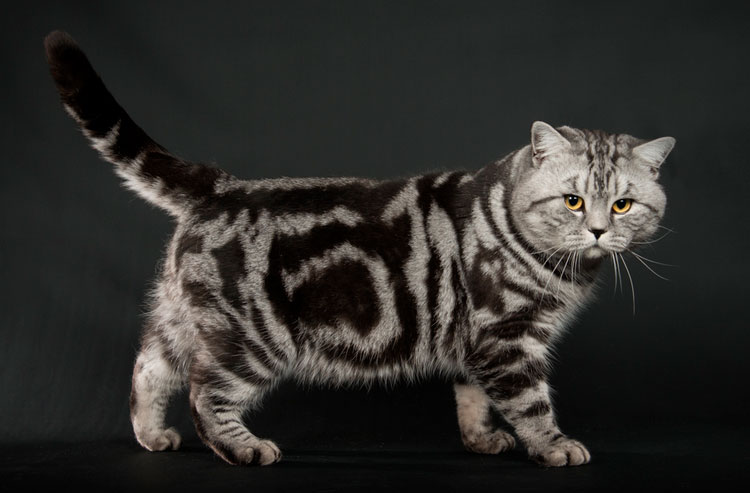
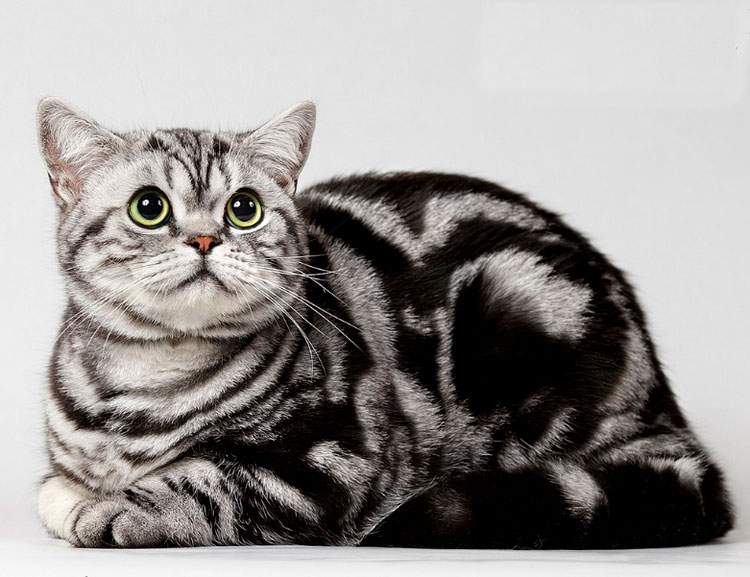
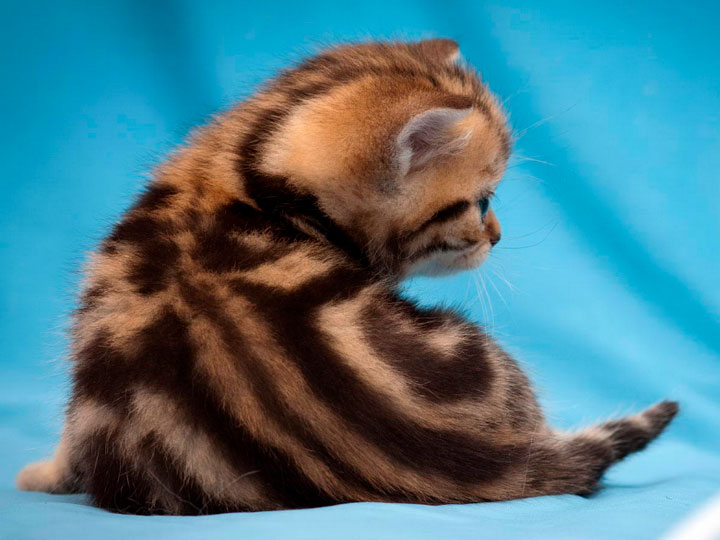
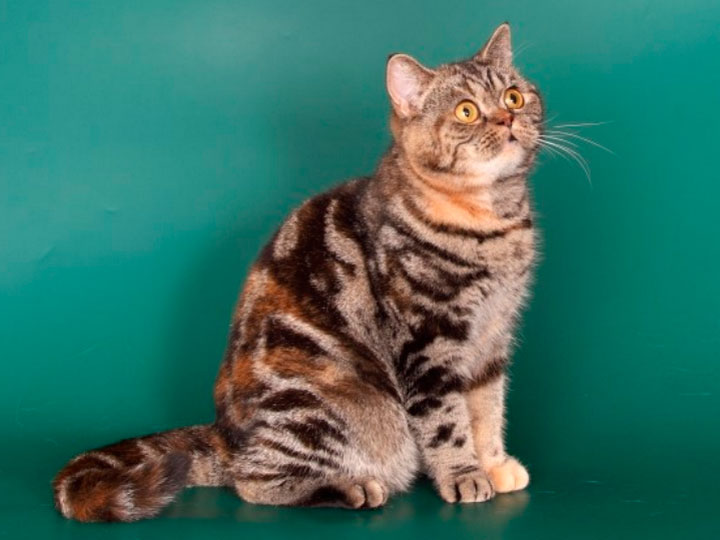
The marbled pattern is characterized by a distinct arrangement of dark lines against a light background. On the face, it appears as a "scarab" on the forehead and distinct wing marks from the outer corners of the eyes. The nose leather and eyes are outlined with eyeliner matching the base coat color, which is considered dark. Colored stripes around the neck form a "necklace," and three wide lines run along the body from the neck to the tail. On the sides, the stripes merge into a pattern reminiscent of butterfly wings or eyes. The tail is adorned with wide rings.
The standard only describes the correct arrangement of the stripes, but due to the unlimited number of color variations, the marble coloring is very diverse.
Special marble colors: "on gold" and "on silver"
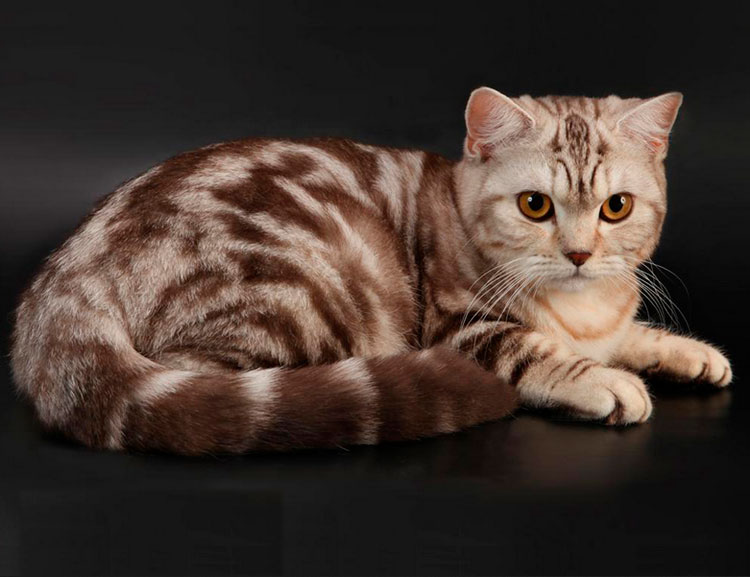
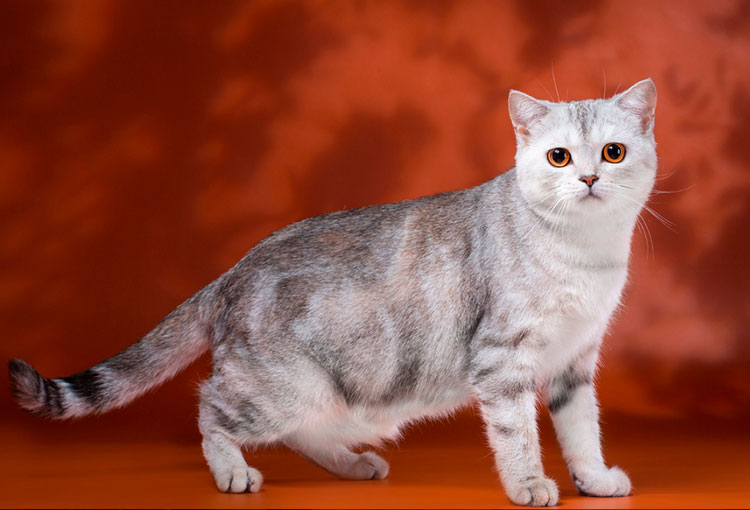
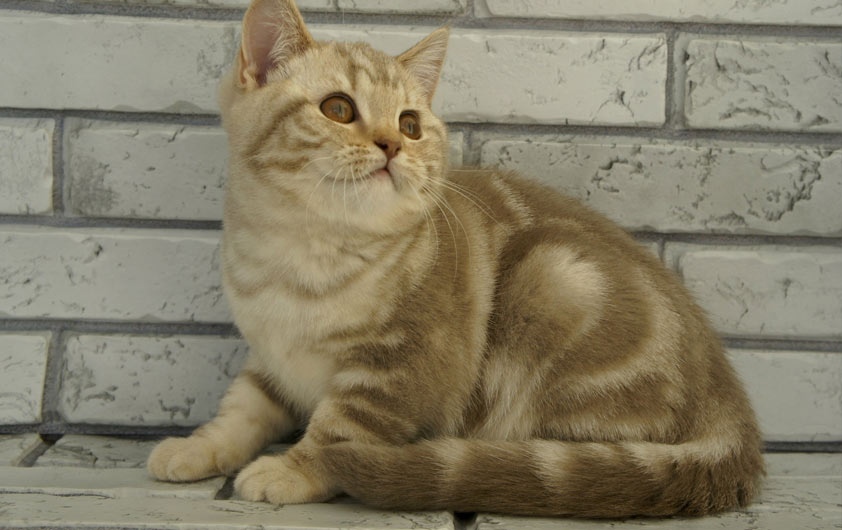
Marbled colors look even more beautiful and striking when breeders pay attention not only to the perfection of the pattern but also to the background color. For example, if a British marble cat's undercoat color can be changed from yellow-brown to golden-sand, it is called "marble on gold." When the undercoat is beige, for example, Scottish Fold, changes to white, they say "marble on silver." Even in photos, gold and silver cats immediately stand out from the "common" marble colors.
It has been noted that in breed lines where there is excellent “gold”, there are many rufisms on silver animals and vice versa.
The pattern requirements remain the same, but the undercoat, which forms the background, must be a sunny golden or pure white. The appearance of yellow (usually on the nose, whiskers, chest, or paws) is called rufism. In gold and silver cats, the desired eye color is green. However, orange (called pewter) can also be present.
Tortoiseshell marble color
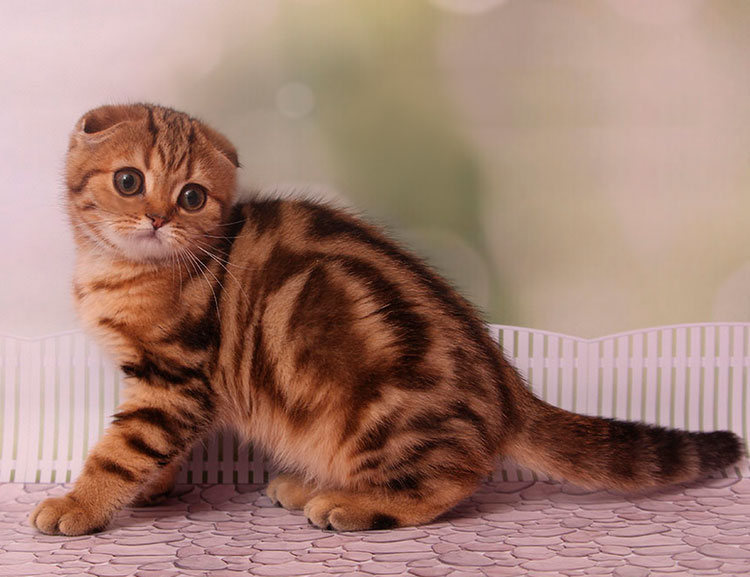
Marbled tortoises are a very interesting looking turtle. Their coloring manifests itself in a marbled pattern on a two-color background. In the world of phenology, this coloring is called torbie (from the English words tabby and tortie).tortoiseshell) = torbie (torbie)).
TOP breeds with marble coloring
Bengals
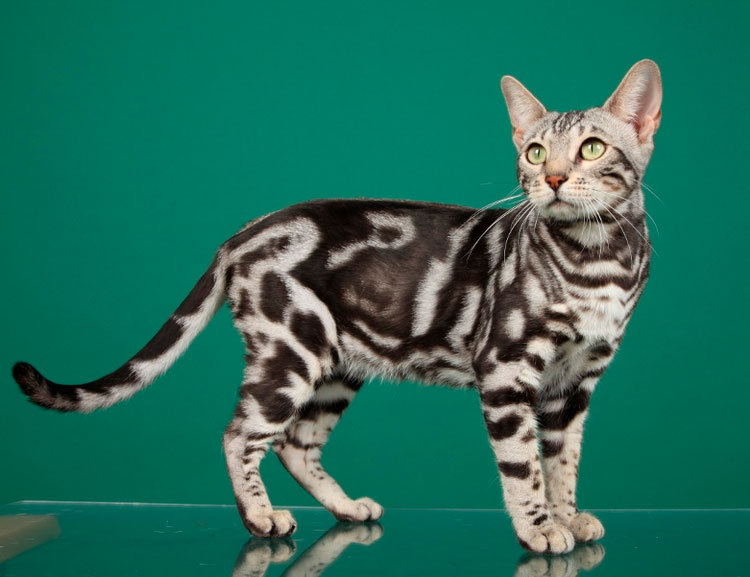
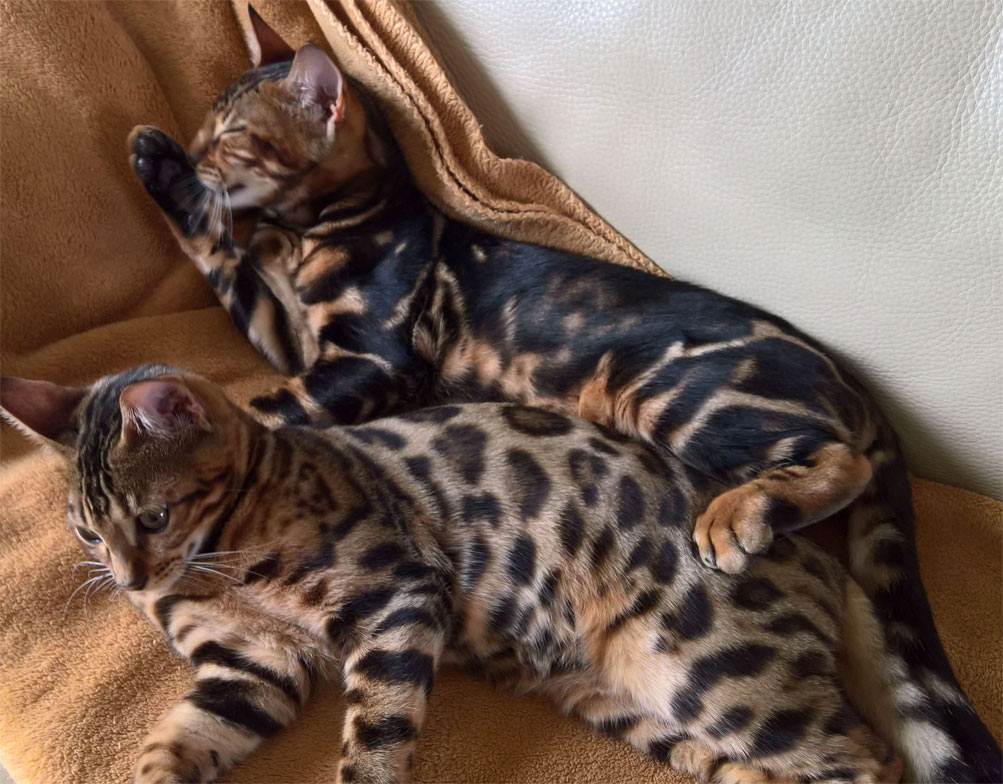
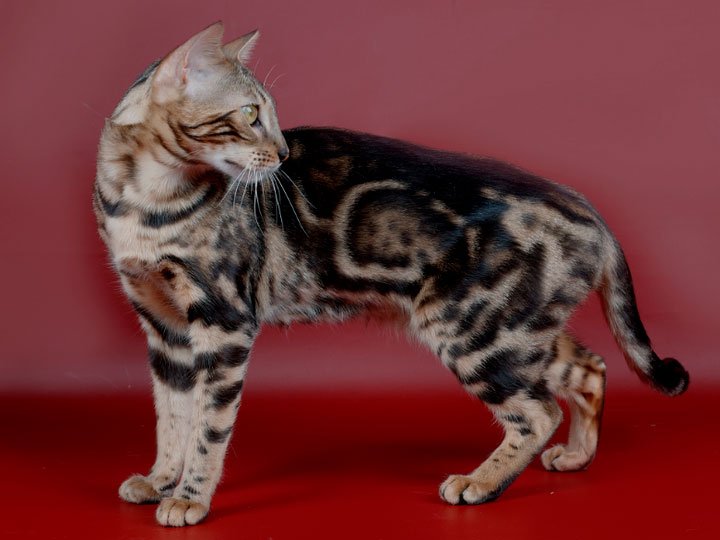
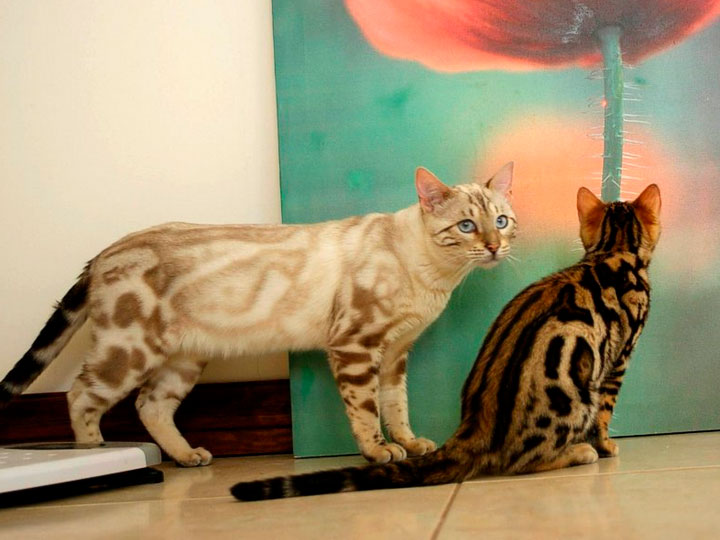
The marbled pattern in Bengals is called "marble" and is a modification of the classic tabby. According to the standard, the markings and pattern are the same as those of a classic marble, but the stripes may be broken and the rings may not be closed. The pattern consists of three elements: the background, the pattern, and the dark "edging." The belly is spotted. Marbled kittens are common, but the pattern rarely appears as specified in the standard.
Asian Tabby
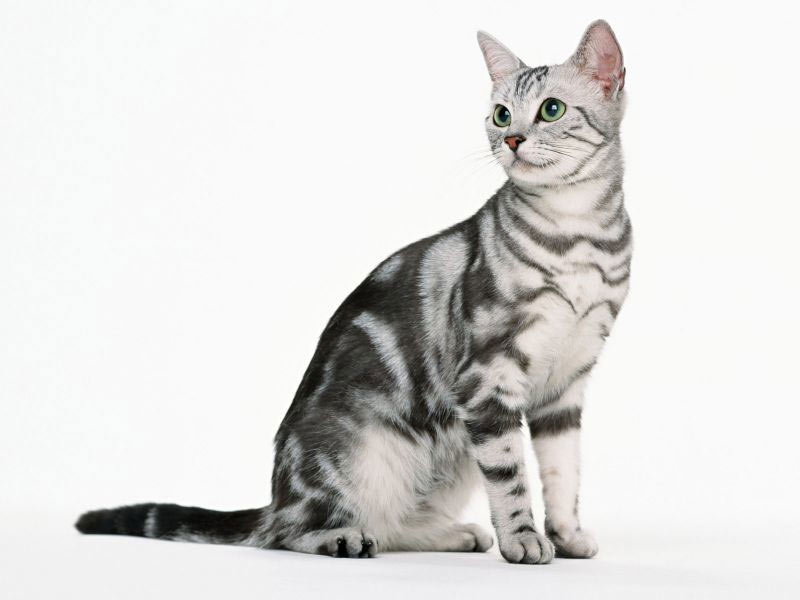
Representatives of this breed often have a Bengal type of marble pattern - black stripes on an ash base.
Maine Coon
Maine Coon breeders believe that these giant cats are magnificent in any color, but the marbled Maine Coon, as pictured, looks especially chic.
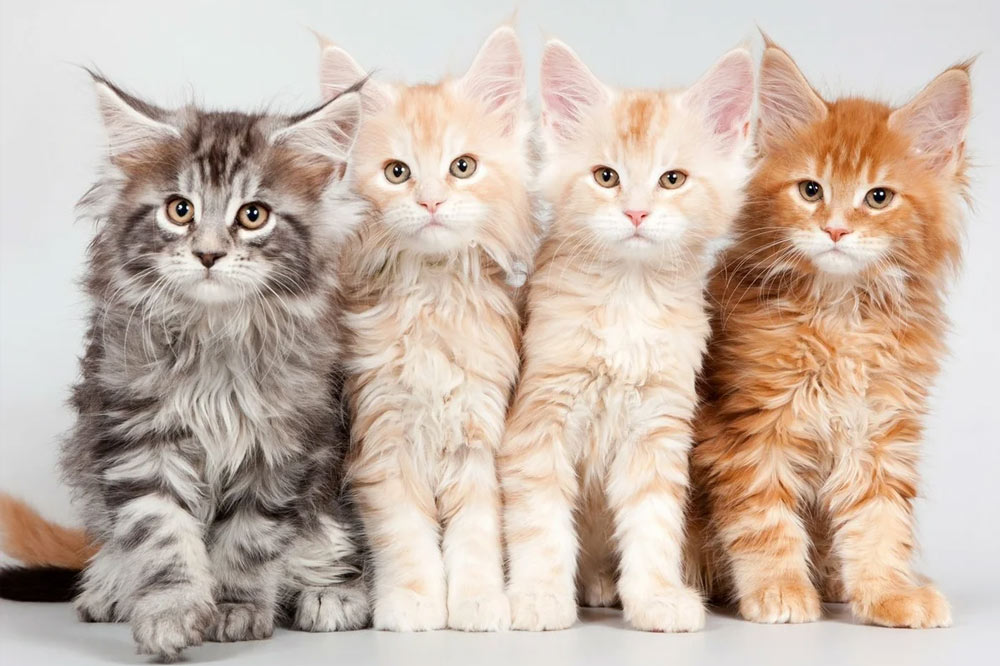
In fact, this color is a variety of the Tabby variant and is found in several variations in this breed.
Color "black marble"» Characterized by the presence of wide black stripes in Maine Coon representatives, between which a red base appears to be visible.
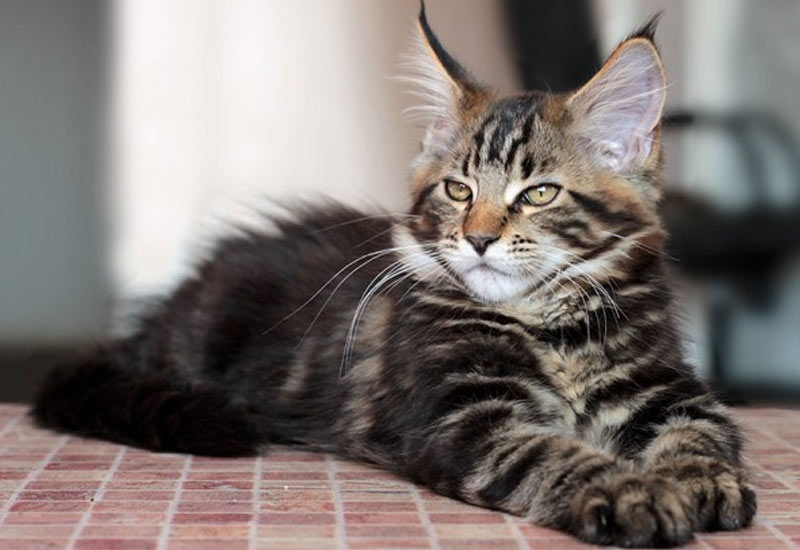
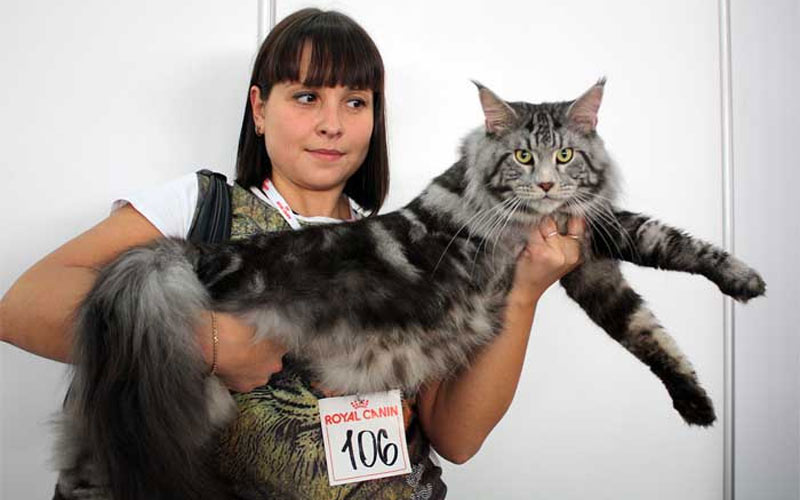
The Maine Coon is also magnificent in the "marbled on silver" pattern (sometimes called blue marble), where instead of brown-red, a light ash shade is visible between the black stripes. Of course, the pattern isn't as distinct as that of shorthaired Bengals, but these giants look simply magnificent.
We invite you to evaluate in the photo what an adult Maine Coon looks like in the “marble on silver” shade.
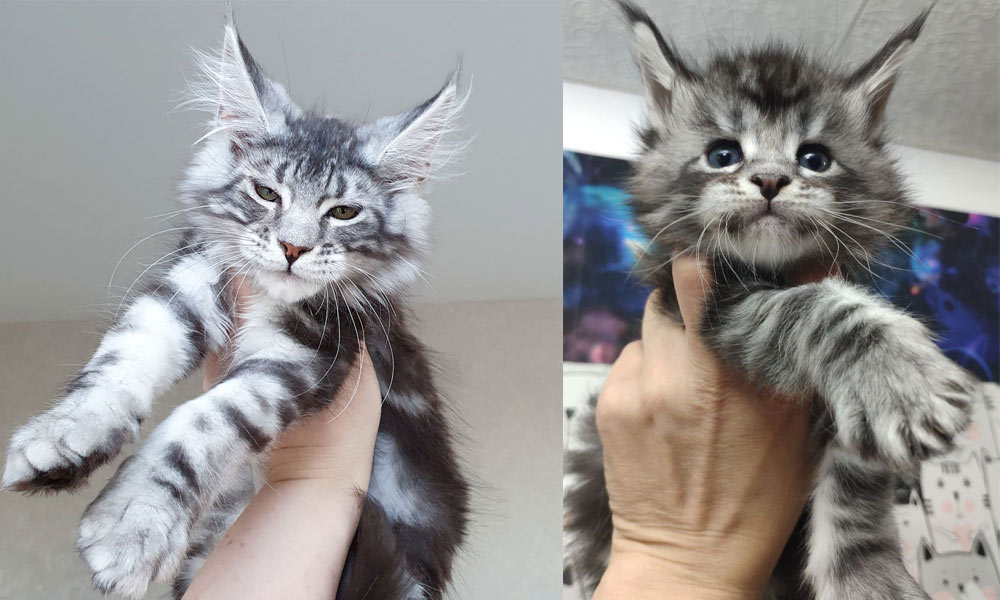
This is what silver marble looks like on the fur of promising Maine Coon kittens.
Perhaps the most popular and most striking is the "red marble" Maine Coon, which attracts attention with its rich hue and original coloring.
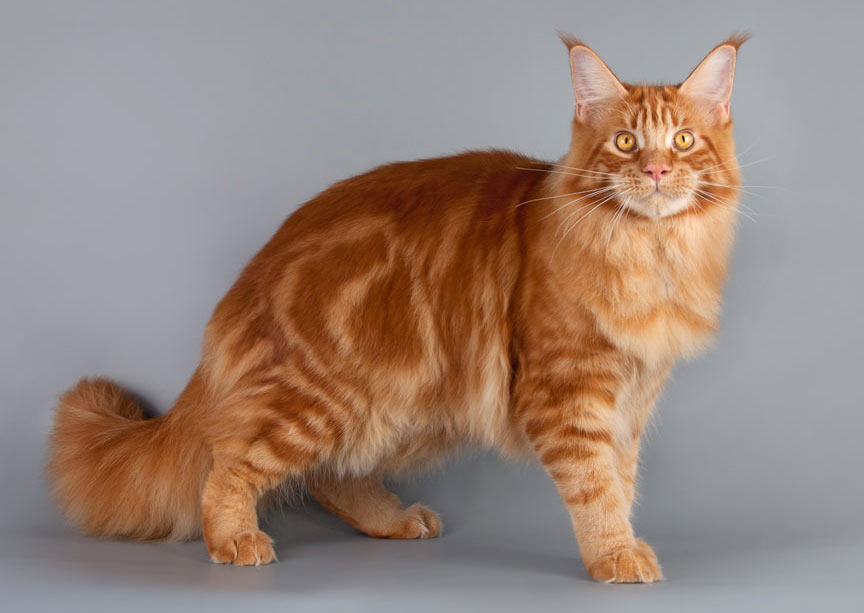
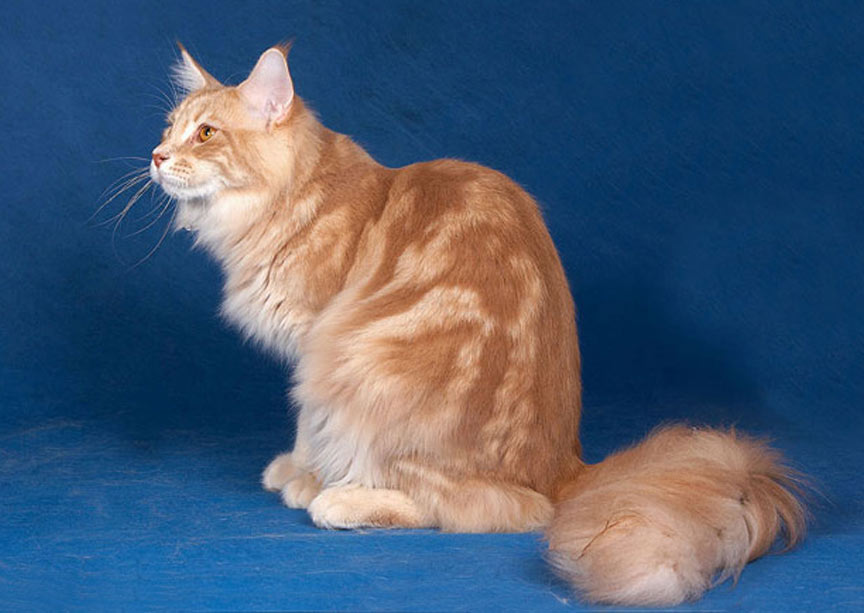
Another variation of red is "cream marble." Unlike the bright, contrasting, and rich "red," these Maine Coons have a softer coat color, often called "café au lait." The transitions between dark and light areas are clearly visible, but less contrasting.
British
The first marbled British Shorthair was registered in 1901. Since then, the number of tabby representatives of the breed has increased, and experienced felinologists from around the world are working to establish the color patterns.
The marbled tabby color is very popular among breed fans, and the price of such kittens can often even exceed the cost of solid-color classic representatives of the breed.
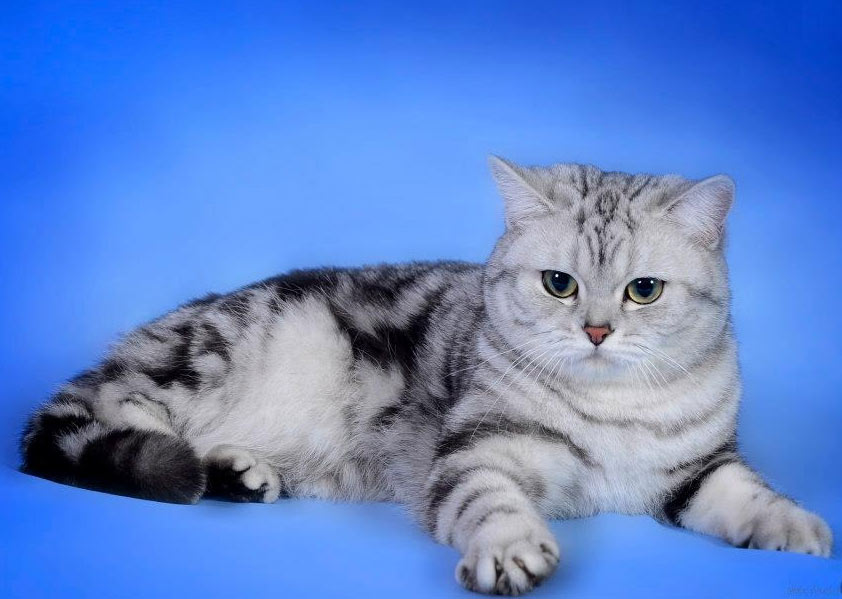
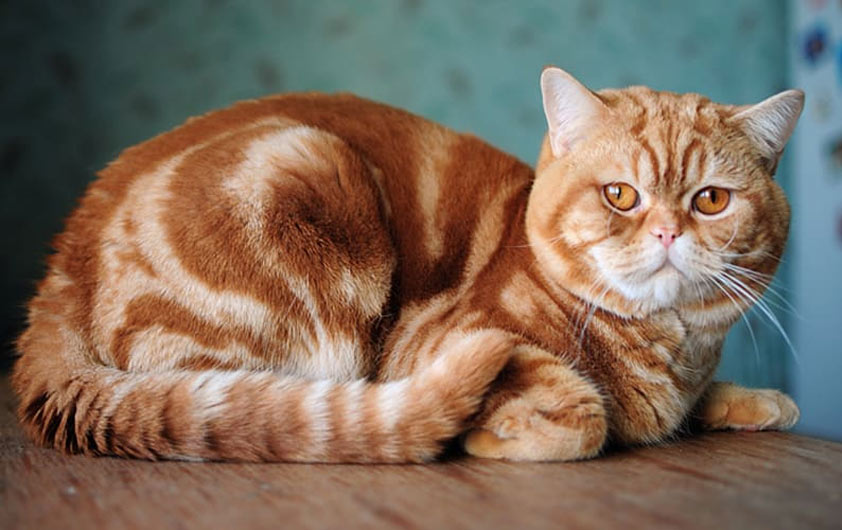
In addition to the previously presented classic black marble and its silver variation, British Shorthairs also have a "marble on gold" pattern. This British marble cat has a copper-gold coloring, made even more vibrant by black or dark brown stripes.
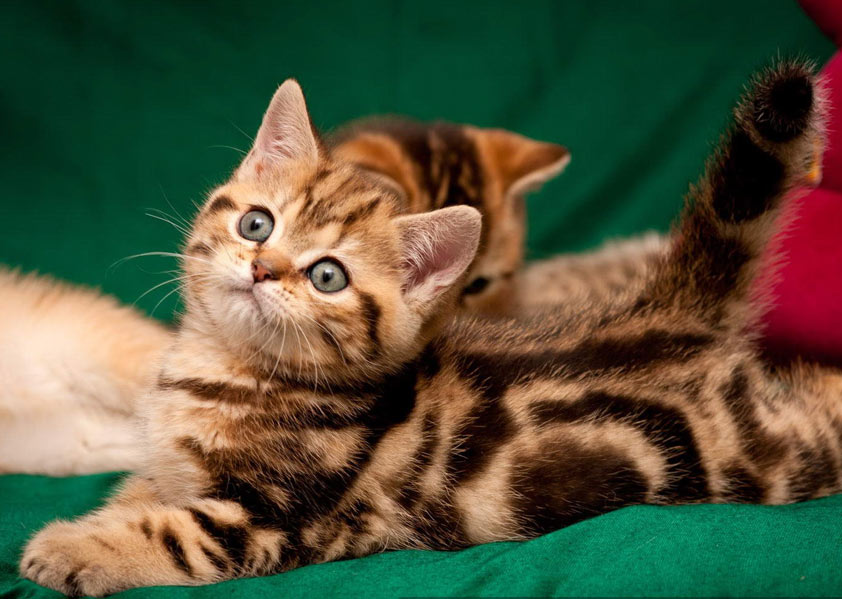
Please note that a kitten's price depends largely on its compliance with the strict requirements for the marbled pattern, so two kittens that look very similar in photos may have different prices and breeding values. Disadvantages include:
- presence of jagged lines;
- the pattern is too large or too small;
- too many rings around the eyes.
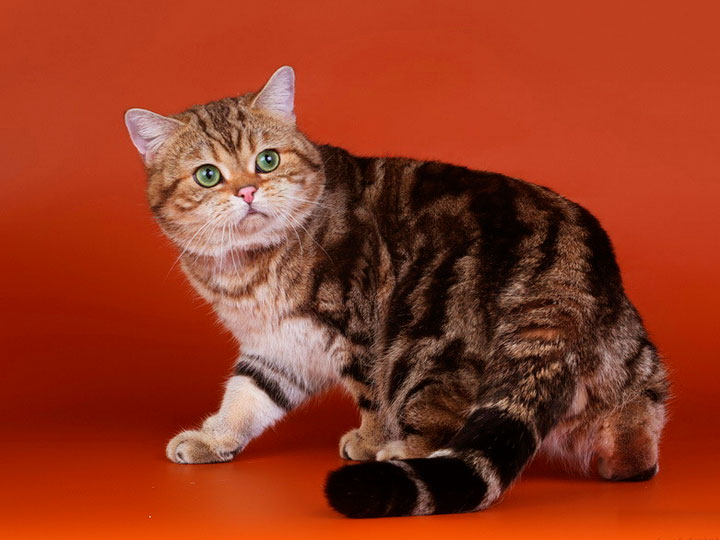
We suggest you take a look at the photo to see what a British marble cat might look like before finding out how much a kitten with this genetic trait will cost.
Bobtail
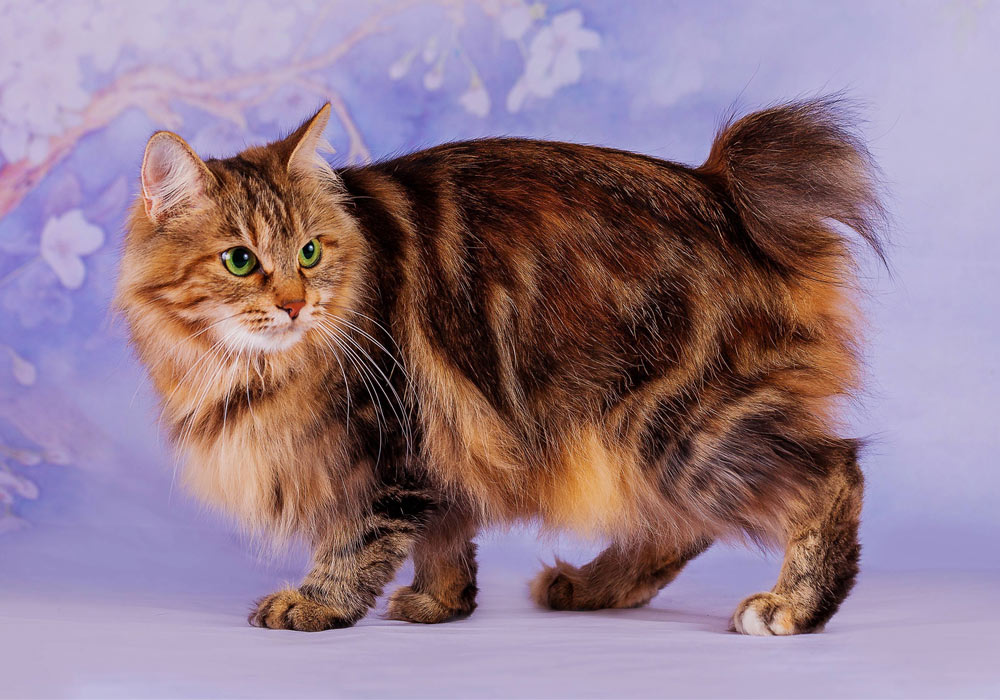
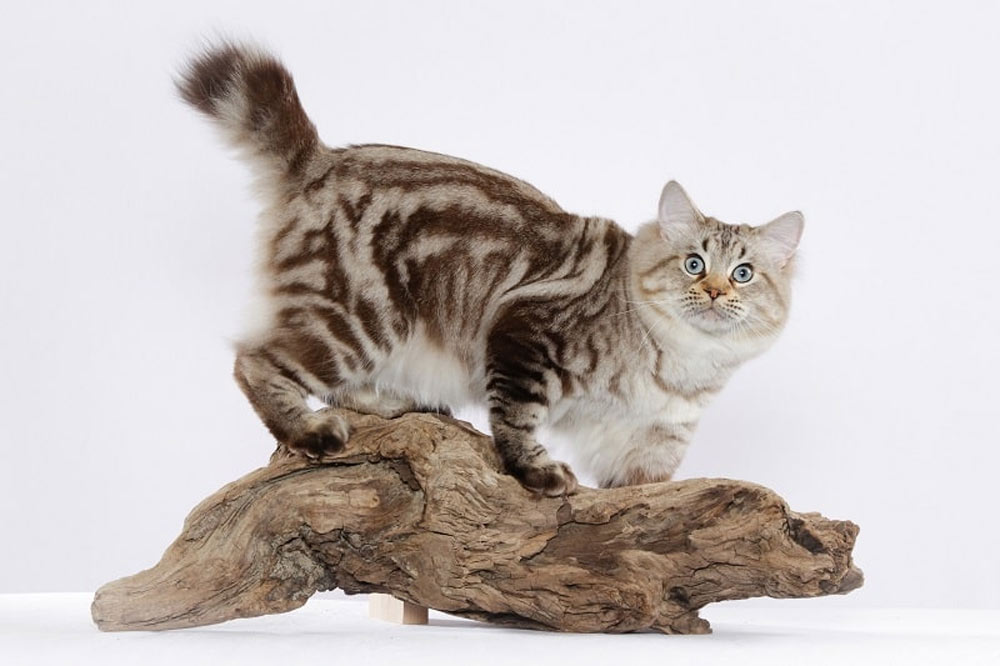
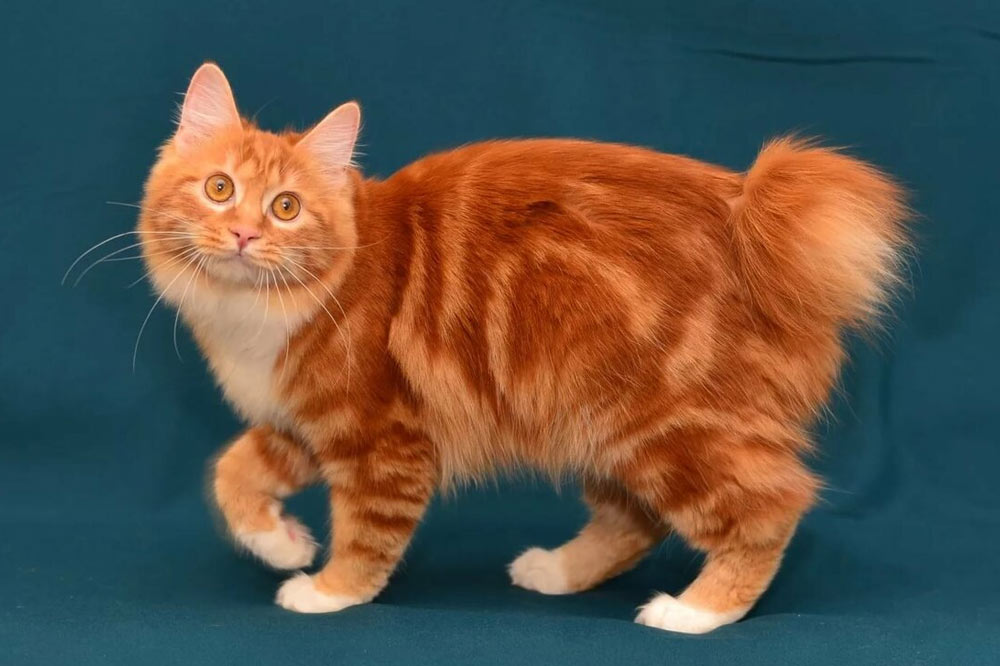
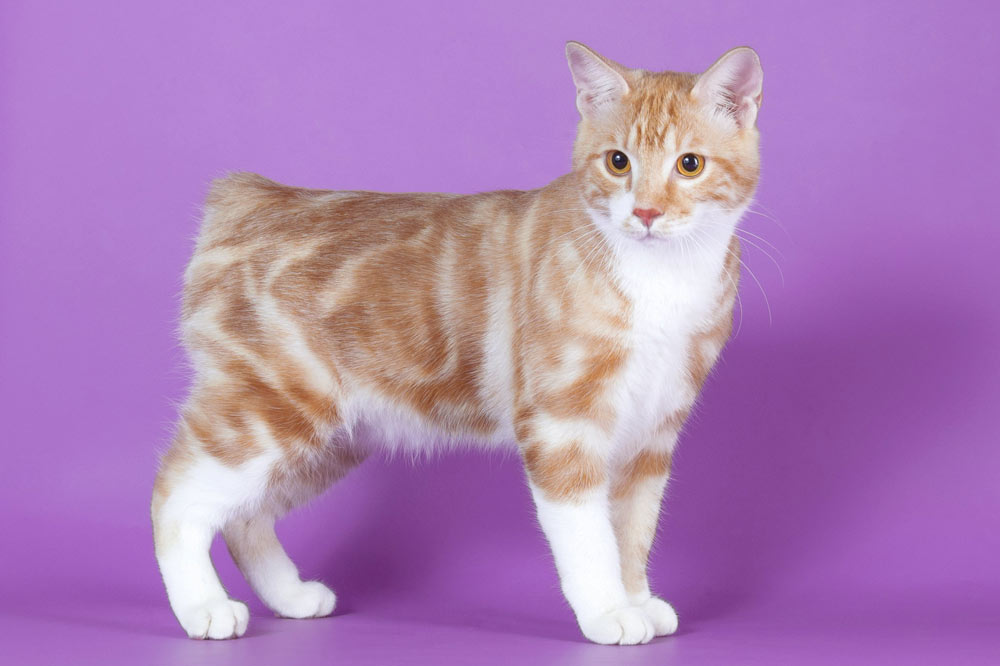
Marbled cats are found in both longhaired and shorthaired varieties. Check out the photos to see how charming Marbled Bobtails (American and Kurilian) can be.
Peculiarities of breeding marbled cats
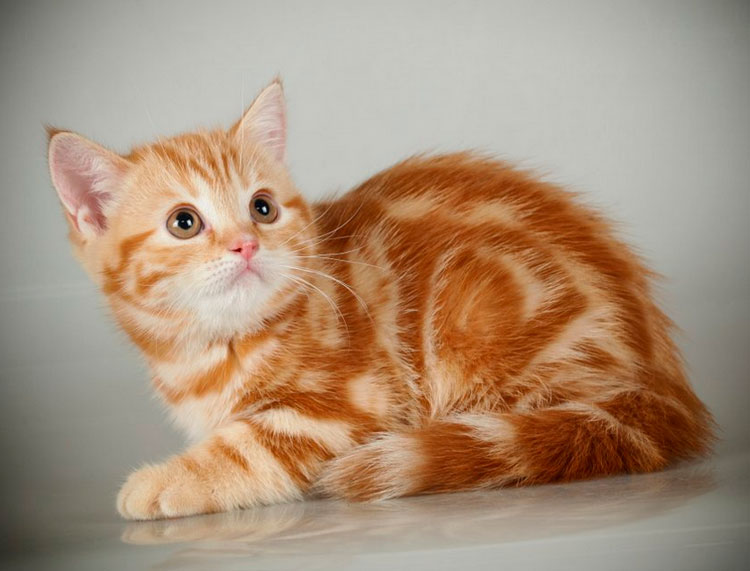
Marbled kittens are usually produced by mating two marbled female cats. Since the color is recessive, such a mating guarantees a marbled litter. Marbled kittens can also be produced if one parent is spotted and the other is brindle, but both parents carry the recessive marbled gene. Marbled kittens can be produced by matings of both brindle and spotted cats, but again, only if both parents are carriers of the marbled gene.
The complexities of marble colors
Breeders who breed marbled British, Scottish, Bengal and other breeds of cats encounter various problems in their work, due to which the color cannot fully correspond to the standard.
- Expressiveness - too much contrast between the design and the background;
- Feathering - discolored, as if erased, marble;
- Large width of elements through which the light background is barely visible;
- Excessive ticking - manifests itself externally as a blurry pattern;
- Torn pattern - stripes may simply break or even turn into spots;
False marbled or moiré pattern
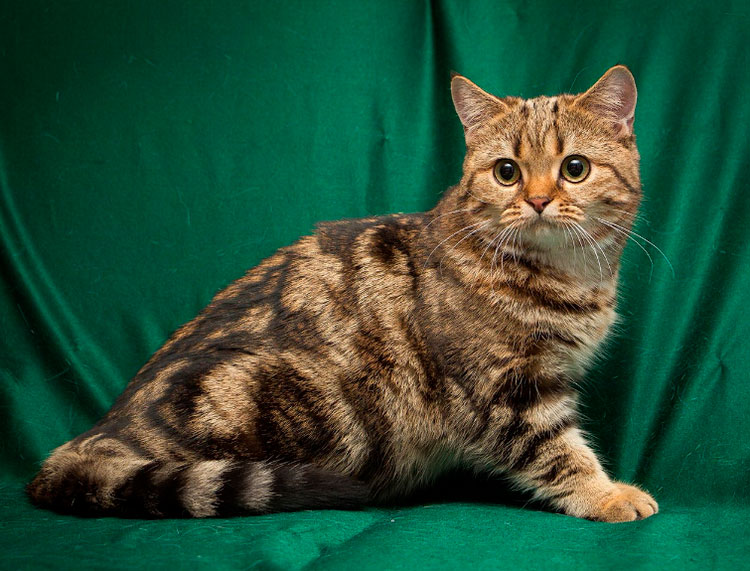
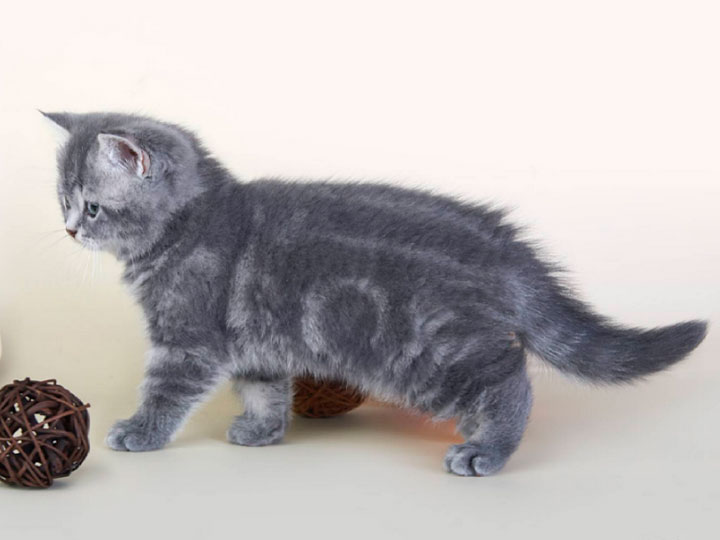
As mentioned above, the agouti gene A is responsible for the development of the pattern. When it is recessive, the cat's coat is uniform and solid. The pattern is still visible, but in the form of a moiré pattern. In kittens, it is relatively bright. With age, it almost completely disappears. Some breeders, either ignorantly or with malicious intent, sell kittens with bright moiré patterns as marbled, claiming that the color will become brighter with age.
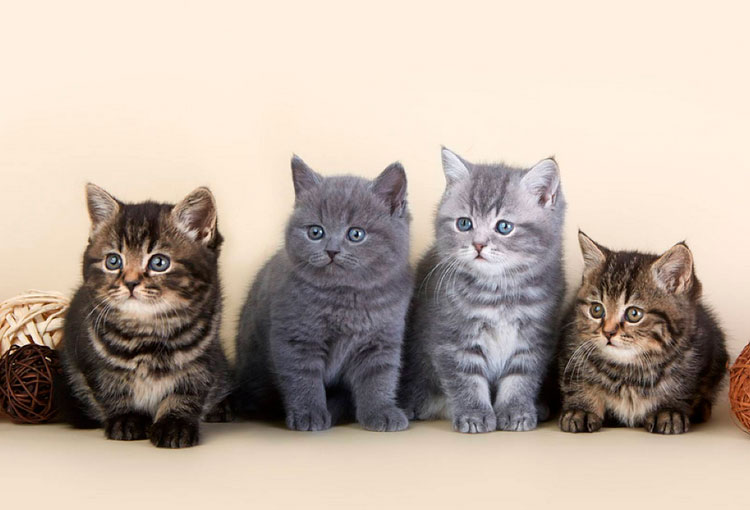
It's very easy to distinguish British, Scottish, and Bengal kittens with marbled (or other tabby) patterns from solid-colored kittens with bright moiré patterns. In solid-colored kittens, the pattern and background are different shades of the same color, while in marbled kittens, the pattern is not just darker, it's a different color.
Photos
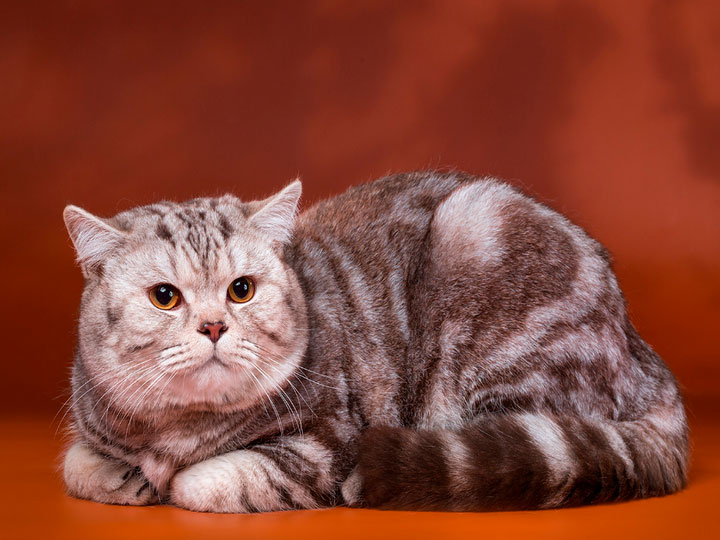
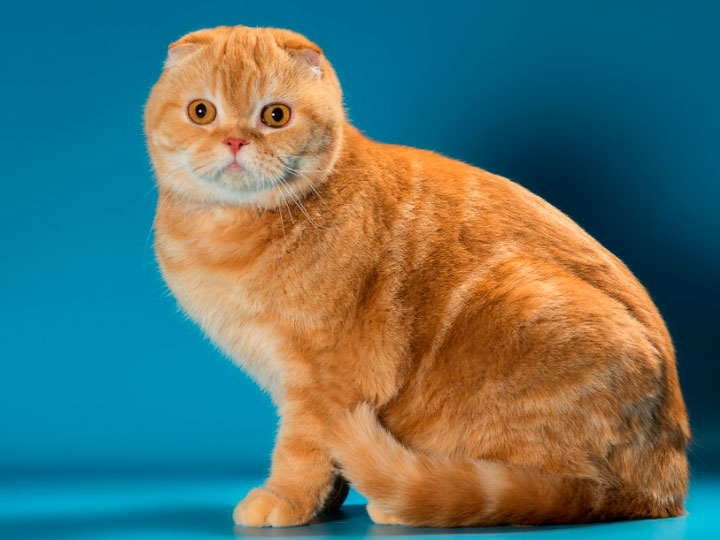
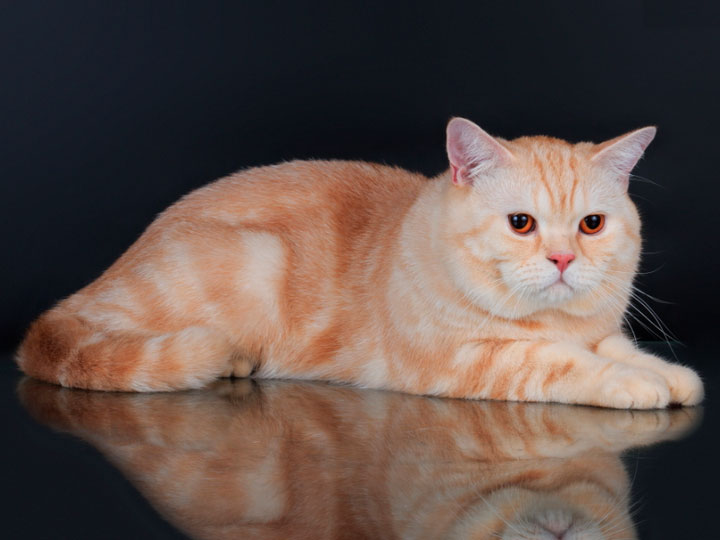
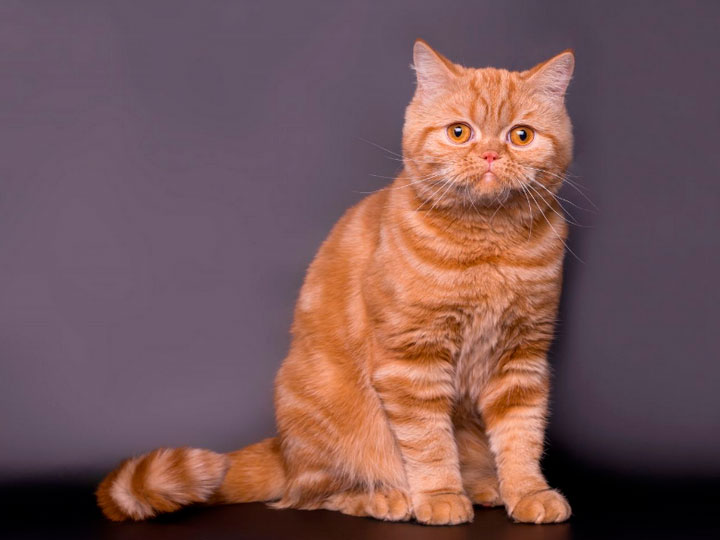
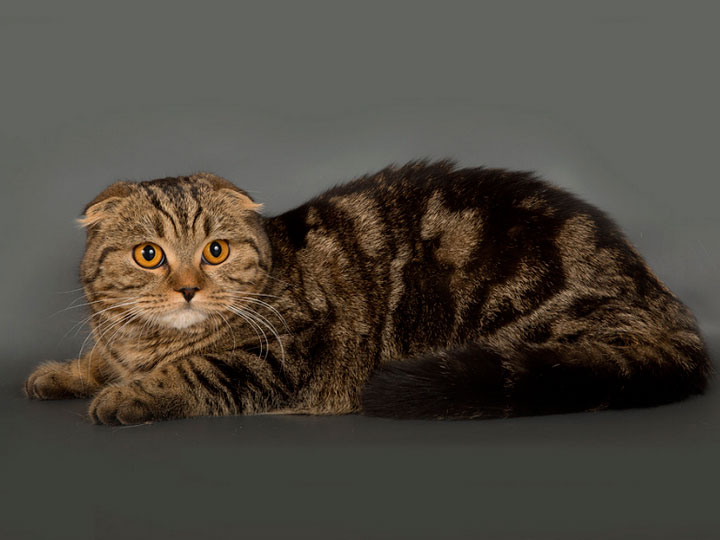
The gallery contains photos of British, Scottish, and Bengal cats with marbled markings.
Read also:


Add a comment