
Can I take my dog on the train and how much does it cost?
When traveling to their dacha or visiting friends, dog owners often want to take their pets with them rather than leave them in the care of strangers. However, if the trip involves a commuter train, it's important to first determine whether dogs are allowed on the train and what rules must be followed. If the owner ignores legal requirements, Russian Railways employees reserve the right to deny the dog travel on the commuter train.
What you should know
Legislative regulations regarding the transportation of pets (dogs, cats, etc.) are reflected in Order No. 473 of the Ministry of Transport of the Russian Federation "On Approval of the Rules for the Transportation of Passengers, Baggage, and Cargo Baggage by Rail" dated December 19, 2013, with subsequent amendments. Chapter XIV, for example, outlines the procedures for transporting different types of dogs on commuter trains:
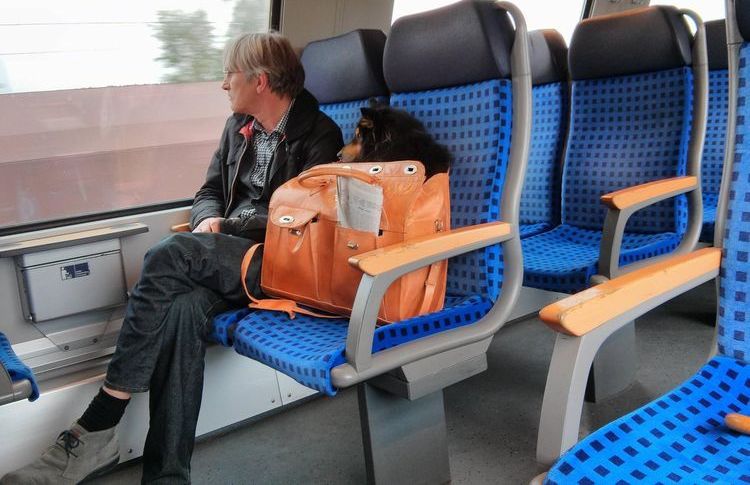
- Small pets are allowed to be transported without a “special” container (basket, container), provided that a leash and muzzle are used.
- Large animals must be muzzled and on a leash when transported in the train vestibule, with the owner/accompanying person present. However, please note that no more than two dogs are allowed in a single vestibule.
- Guide dogs may be carried by visually impaired passengers alongside them. The dog must be muzzled and collared and placed at the feet of the passenger requiring assistance.
It's important to remember that the owner is responsible for the safety of not only their pet but also those of their fellow passengers. Furthermore, it's important to eliminate threats to the animal during travel (for example, protect it from possible injuries), ensure proper hygiene on the train (keeping it clean, emptying the basket, etc.), and ensure the dog's physiological needs (such as thirst) are met.
Important! Transporting dogs whose presence could pose a threat to the life or health of passengers or train staff is prohibited. This includes animals that exhibit aggressive behavior, appear sick, are rabid, are stray, etc.

Documents required for travel and cost
According to new legal provisions that have been in effect since January 2017 (Order of the Ministry of Agriculture of the Russian Federation No. 589 of December 27, 2016), dogs can be transported on commuter trains (and on trains throughout the country) without veterinary documentation. This means there is no longer a need to obtain any certificates, vaccination and deworming certificates, veterinary passports, etc., before traveling.
Please note! Veterinary documents are required in two cases: if the owner is changing or if the train transport is related to any type of business activity, with the exception of travel to exhibitions.
Thus, in most cases, the only document required by the owner or companion of a dog is a special travel document, or ticket. It is usually marked "livestock" or "luggage on hand" (for small pets). A travel document is required for travel on commuter trains for every animal, regardless of its weight or size. The only exception is when traveling with a guide dog. All other animals must pay a fare, even if they are traveling in the vestibule. So, how much does it cost? The price of such a ticket should not exceed 25% of the fare charged to passengers on the same route.
Practical advice
A train ride, especially a first, is likely to be very stressful for a dog, so it's a good idea to prepare your pet for this unusual experience in advance. For example, you can purchase sedative tablets or drops from a veterinary pharmacy. These should be administered 3-5 days in advance. Firstly, the dog's body will adapt to the medication within a few days. Secondly, sedatives often have a cumulative effect, so your pet won't be overly anxious on the day of the "trip."
It's essential to provide your pet with water during the journey. Special drinking fountains or spill-proof bowls are convenient for this purpose. However, feeding your dog during the trip is not recommended. Furthermore, the last feeding should be done as early as possible before the train's departure to prevent motion sickness.
Experience shows that traveling on commuter trains with a small or medium-sized dog is possible without any hesitation, as many nuances are often simply overlooked, such as strict adherence to transportation regulations. The main thing is to have a ticket for transporting the animal. As for large breed pets, disagreements may arise both with Russian Railways representatives and with passengers themselves. In such cases, it is important to adhere to legal regulations and confidently defend your legal rights. After all, according to Russian law, traveling with a dog on commuter trains is permitted!
Read also:
- Can I take my dog on the metro? Transportation rules
- Sedatives for dogs
- Dog carriers: what types are there, how to choose one, and where to buy one?


1 comment
Tatiana
How much does it cost to transport small breed dogs?
Add a comment