
Can dogs eat apples?
Many dog owners often notice their pet watching you eat an apple with interest, sometimes even trying to bite into it themselves. For some dogs, this becomes a regular habit—they eat apples with relish, as if they were a treat. But can dogs eat apples? How safe are they? How should they be offered correctly, and in what form? We'll discuss this in detail, taking into account veterinarian recommendations and owner experience.
Content
- 1 The benefits of apples for dogs: why dogs eat apples with gusto
- 2 Features and precautions
- 3 Can a puppy
- 4 How many apples can a dog eat: acceptable norms
- 5 Green, dried, and baked apples: are other options acceptable?
- 6 When apples are not allowed: contraindications
- 7 How to properly feed apples to dogs of different breeds
- 8 Conclusion
The benefits of apples for dogs: why dogs eat apples with gusto
Apples are one of the most common fruits in the human diet, and they can actually be beneficial for dogs too. They are rich in vitamins (C, A, E, and B vitamins), contain fiber, pectin, and minerals such as iron, potassium, and calcium.
Some dogs are instinctively drawn to these fruits—not because they're hungry, but because of their juiciness, taste, or smell. Why a dog enjoys eating apples depends on their individual preferences, but most often it's because of the sweetness and crunch, which are perceived as pleasant.
In addition, apples help:
-
freshen breath,
-
clean dental plaque,
-
improve digestion,
-
strengthen the immune system,
-
remove toxins.
But even with all the benefits, it is important to know how many apples a dog can eat, in what form, and whether there are any restrictions.
Features and precautions
Fresh apples are safe to feed to dogs, but with a few caveats. The key is moderation. Despite their low calorie content and rich nutritional value, the fruit contains fructose, which, if regularly consumed in excess, can cause digestive problems and weight gain.
It's also important to remember that fresh apples can cause bloating, gas, or even allergic reactions in some dogs. Owners of small breeds, such as Pomeranians, should be especially careful: even a small amount of excess sugar or acid can cause diarrhea.
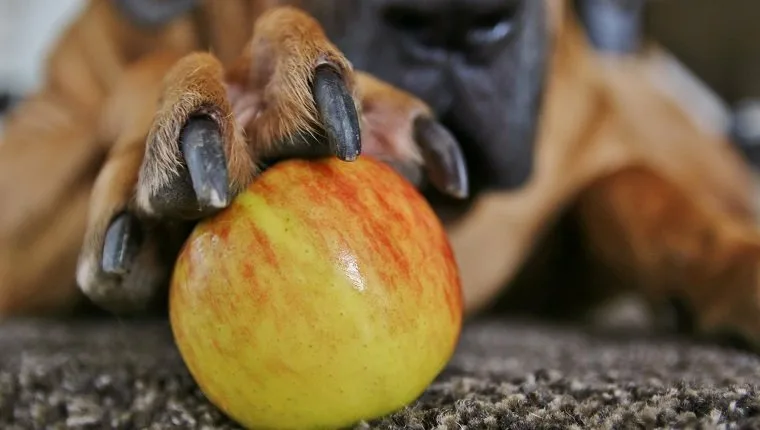
Before giving fresh apples to your dog, be sure to:
-
rinse the fruit under running water;
-
remove the seeds and cores - they contain amygdalin, which is converted into toxic cyanide in the body;
-
Cut the apple into small pieces - especially if you have a small breed dog.
Can dogs eat fresh apples with the peel? Yes, but only if the fruit hasn't been treated with wax or pesticides. The peel contains additional fiber but can be difficult for puppies and older dogs to digest.
Can a puppy
If you have a puppy, especially one under three months old, you should introduce apples very carefully. At what age can you start? Typically, after 2-3 months, once your pet has started solids and their digestive system has adapted to the new food.
Can a puppy eat apples? Yes, but start with a very small piece (literally the tip of a knife) and monitor their reaction. It's best to use sweet, rather than sour, varieties, peeled and, of course, without added sugar. Puppies often love apples for their crunch and sweet taste, but they should be introduced as a treat, not as a full-fledged part of their diet.
If after the first treat the puppy does not experience any upset stomach, itching, or rash, you can continue offering the fruit 1-2 times a week, gradually increasing the dose.
How many apples can a dog eat: acceptable norms
Veterinarians don't recommend feeding apples too often. The recommended dose is no more than 5% of the total daily diet.
On average for a dog weighing:
-
up to 5 kg - no more than 1-2 small pieces 1-2 times a week;
-
up to 15 kg - 2-4 slices of medium apple;
-
over 20 kg – 1/4–1/2 apple per day, not daily.
Can dogs eat apples often? No. Even without allergies or other problems, excessive consumption of fructose and acid can lead to gastrointestinal upset, tooth decay, and obesity.

Green, dried, and baked apples: are other options acceptable?
Green apples are more tart than red or yellow ones. Although they contain more vitamin C, they are best avoided by dogs with sensitive stomachs, gastritis, or high acidity. Healthy dogs can eat green apples, but only in small quantities and only sweet varieties.
Dried apples are acceptable, but they should be offered in limited quantities. When dried, the fruit loses some vitamins, but the sugar concentration increases. Furthermore, store-bought dried apples are often treated with preservatives or sulfur, making them unsuitable for dogs.
Baked apples can be given to dogs as an alternative to fresh ones. They are easier to digest, especially for older dogs, those with gastrointestinal issues, or those recovering from illness. Just be sure not to add sugar, honey, spices, or oil when baking.
When apples are not allowed: contraindications
Despite the general benefits, there are cases when apples are contraindicated:
-
individual intolerance;
-
gastritis, stomach ulcer;
-
diabetes (consultation with a veterinarian is required);
-
pancreatitis and pancreatic diseases;
-
intestinal disorders.
You should also be especially vigilant if your dog begins to reject its main food in favor of fruit. Apples are not a substitute for a complete diet.
How to properly feed apples to dogs of different breeds
Small breeds, especially those with sensitive digestion (such as Spitz dogs), should be given apples with extreme caution. It's best to choose sweet varieties, peeled and finely chopped.
Medium and large breed dogs can eat apples in slices. Be careful not to swallow large pieces whole, as this can cause choking or intestinal obstruction.
Introduce fruit gradually, and only after you've made sure your dog has no reaction.
Conclusion
Can dogs eat apples? Yes, as long as you follow a few rules. Apples are not only a safe but also a healthy treat that, when given correctly, will support your pet's health. Fresh apples are suitable for most dogs, as long as you don't exceed the recommended amount, choose sweet varieties, and omit the seeds and peel if necessary.
Can I give apples every day? It's best not to. Every 2-3 days, in small amounts, is optimal. Remember: every body is unique. Even natural products can cause reactions in animals, so observation and moderation are the key principles when adding apples to the diet.
If you're just introducing your dog to fruit, an apple is the perfect choice. And don't let this treat be just as tasty as it is healthy.
Read also:
- Can dogs eat tangerines?
- What vegetables and fruits can you give to a dog?
- What cereals can and cannot be given to a dog?


Add a comment